

A backyard pond is one of the few garden projects that changes how a yard feels the day it is filled: the sound of moving water, dragonflies within a week, frogs within a season. Most pond trouble (green water, dying fish, a dropping level) comes from skipping a step in the order things should happen. This guide is for homeowners who are planning a first pond, rescuing an inherited one, or simply want a water garden that looks after itself. It walks through the topic in the order you will tackle it: choosing the size and type, picking the pump and filter, adding waterfalls and edging, planting, balancing the water, stocking fish, keeping algae down, and running the pond through the seasons. Every section links to our detailed guides, so you can go deep on the part you are working on now and come back for the next step later.
Plan your backyard pond: size, depth and type
Start with what you want the pond to do. A wildlife pond wants shallow, sloping sides and no fish; a water garden is mostly about lilies and marginal plants; a koi pond is a piece of fish-keeping equipment that happens to sit in the yard. Browse our backyard pond ideas to settle on a style, then read the full walkthrough on how to build a backyard pond before you pick up a shovel. Site it where it gets at least five or six hours of sun (water lilies need it), away from overhanging trees that drop leaves, and within reach of an outdoor GFCI outlet for the pump. Call 811 before digging.
Bigger is easier. A pond under about 100 gallons swings in temperature and chemistry fast, while a few hundred gallons or more is far more stable. Our guide to how deep a pond should be covers the rules of thumb: around 18 to 24 inches for a plant-and-goldfish pond, at least three feet for koi, and deeper in cold-winter regions so fish have an unfrozen zone. Build a marginal shelf about 8 to 12 inches deep around part of the edge for plants.
The next decision is the shell. Compare preformed vs liner ponds, then read our pond liner guide for sizing (length plus twice the depth plus two feet of overlap, in each direction) and the EPDM vs PVC vs preformed comparison. Fish-safe EPDM rubber is the default for most flexible-liner ponds. If you have heavy clay soil and space for something natural, a natural clay pond with no liner is an option; if digging is not practical, consider building a raised pond.
Specific builds have their own walkthroughs: how to build a koi pond, how to build a wildlife pond and its companion on making a wildlife pond for frogs, birds and bees. No yard? A patio pond works surprisingly well. See our container pond ideas, half-barrel pond, stock tank pond and container water garden guides. More small builds: container water garden step by step, tabletop water garden.
Pumps, pond filters and aeration
Moving water is what keeps a pond clear and alive. As a rule, the pump should turn over the full pond volume at least once an hour (koi ponds closer to twice), measured at the height the water actually has to climb, not the zero-head figure on the box. Our guide on how to size a pond pump walks through the math, and setting up a pond pump covers placement, check valves and tubing diameter. Wider tubing and fewer elbows mean more flow for the same electricity.
A pond filter does two jobs: mechanical filtration catches debris, and biological filtration hosts the bacteria that turn fish waste (ammonia) into harmless nitrate. Mechanical vs biological filtration explained is the best primer. A skimmer box at the surface and a biofalls or pressurized filter at the return is the classic setup. If you like to build, follow our DIY pond filter guide or the barrel and tote filter build. A bog filter, a gravel bed planted with marginals that the pump water percolates through, is the most natural option and doubles as a planting area; see also bog filter plants and gravel.
A UV clarifier kills free-floating algae as water passes a bulb, which is the fastest fix for pea-soup water. Our UV clarifier sizing guide explains wattage per gallon and why the bulb needs replacing every season. Finally, oxygen: fish ponds benefit from an air pump and diffuser running around the clock, especially on hot nights. Read why and how to aerate a pond and ways to oxygenate a pond. More on this: how to aerate a pond for fish.
Waterfalls, streams, fountains and edging
A waterfall or stream adds sound, oxygen and a place for beneficial bacteria to colonize. Plan it at the same time as the pond if you can, since the excavated soil makes a ready-made berm. Our step-by-step on how to build a backyard waterfall covers the liner underlay, spillway stone and pump sizing (roughly 100 to 150 gallons per hour for every inch of spillway width). Already have a pond? See adding a waterfall to an existing pond, or extend the run with a pond stream or creek.
If you want water sound without open water (great for small yards or homes with toddlers), a pondless feature recirculates from a buried basin. See how to build a pondless waterfall, a disappearing fountain and a bubble rock fountain. More fountain projects: DIY water fountain ideas, solar pond fountains, fountain maintenance.
The edge is what makes a pond look natural or look like a tarp in a hole. Hide every inch of liner above the waterline. Our pond edging ideas and how to edge a pond naturally cover stone, plants and capillary barriers that stop the soil wicking water out. Use rounded river rock rather than sharp stone on the floor and shelves, as explained in adding rocks and gravel to a pond, and for a wildlife pond add a pebble beach so animals can get in and out.
Waterfalls, koi ponds and anything with buried plumbing and electrical are the point where many homeowners bring in a pro. Our pond and water feature installation page connects you with local installers, and the wider landscaping and hardscaping guide covers the patio, paths and planting around the pond.
Pond plants: lilies, marginals and oxygenators
Plants are your best algae control, because they compete with algae for the same nutrients and sunlight. Aim to cover roughly half to two-thirds of the surface by midsummer. Start with pond plants for beginners and our list of the best pond plants for a healthy pond. A balanced planting uses three groups: deep-water plants such as lilies, marginals on the shelves, and floating or submerged plants.
Water lilies are the signature plant. Plant hardy lilies in wide, shallow pots in heavy loam (never bagged potting mix, which floats and fouls the water), and lower them gradually to 12 to 24 inches. Our guides on how to plant water lilies and ongoing water lily care cover feeding with aquatic fertilizer tabs. Lotus need more heat and sun; see growing lotus in a pond and growing lotus in a pot.
Marginals (iris, pickerel rush, cattails, sweet flag) sit on the shelf with their crowns just under the surface. Read how to grow marginal pond plants and how to plant pond plants in baskets. Oxygenators such as hornwort and anacharis work underwater to absorb nutrients; see oxygenating pond plants and the submerged plants guide. Floaters like water lettuce shade the surface fast but can be invasive or illegal in warm states, so check the rules in our floating pond plants guide. Ease new arrivals in with how to acclimate new pond plants.
More on pond plants: planting pond margins and shelves, dividing water lilies, dividing and repotting pond plants, propagating pond plants, taro in a pond, creeping Jenny at the edge, and a soggy-soil transition zone in our bog garden guide or bog garden build. For the dry-land border, see the flowers and perennials guide.
Start up and balance the pond water
A new pond has no bacteria yet, so the first month is about patience. Fill it, run the pump and filter, dechlorinate if you used city water, add plants, and wait. Expect a green or cloudy phase in the first few weeks; it usually clears on its own as plants and bacteria establish. Our guide to how to balance a new pond walks through the cycle, and adding beneficial bacteria explains how bottled bacteria can shorten it.
Buy a test kit and use it. The numbers that matter are ammonia and nitrite (both should read zero once the pond is cycled), pH (roughly 7 to 8.5 is fine for most fish), and KH, the buffer that stops pH crashing. Our pond water testing guide shows how to read results; how to balance pond water and how to lower or raise pond pH safely cover the corrections. Make changes slowly; a pH swing stresses fish more than a steady, slightly-off reading.
Fish, frogs and other pond life
Add fish only after the pond has cycled, and start light. A conservative stocking rule is about one inch of fish per 10 gallons for goldfish, and far less for koi, which grow to two feet and produce a lot of waste. Compare koi vs goldfish, read how to choose fish for a pond, and see the best fish for a small pond if you have under a few hundred gallons. Our stocking guide covers numbers.
Float the bag to match temperature, then mix in pond water gradually, as described in how to acclimate new fish. Quarantine new koi before they join an established group (introducing koi to a pond). Feed only what fish clear in a few minutes, and stop when the water drops below about 50°F; our koi feeding guide and koi fish care cover the details. If you are losing fish, work through why pond fish keep dying, which usually comes back to oxygen or ammonia. More: adding fish for beginners.
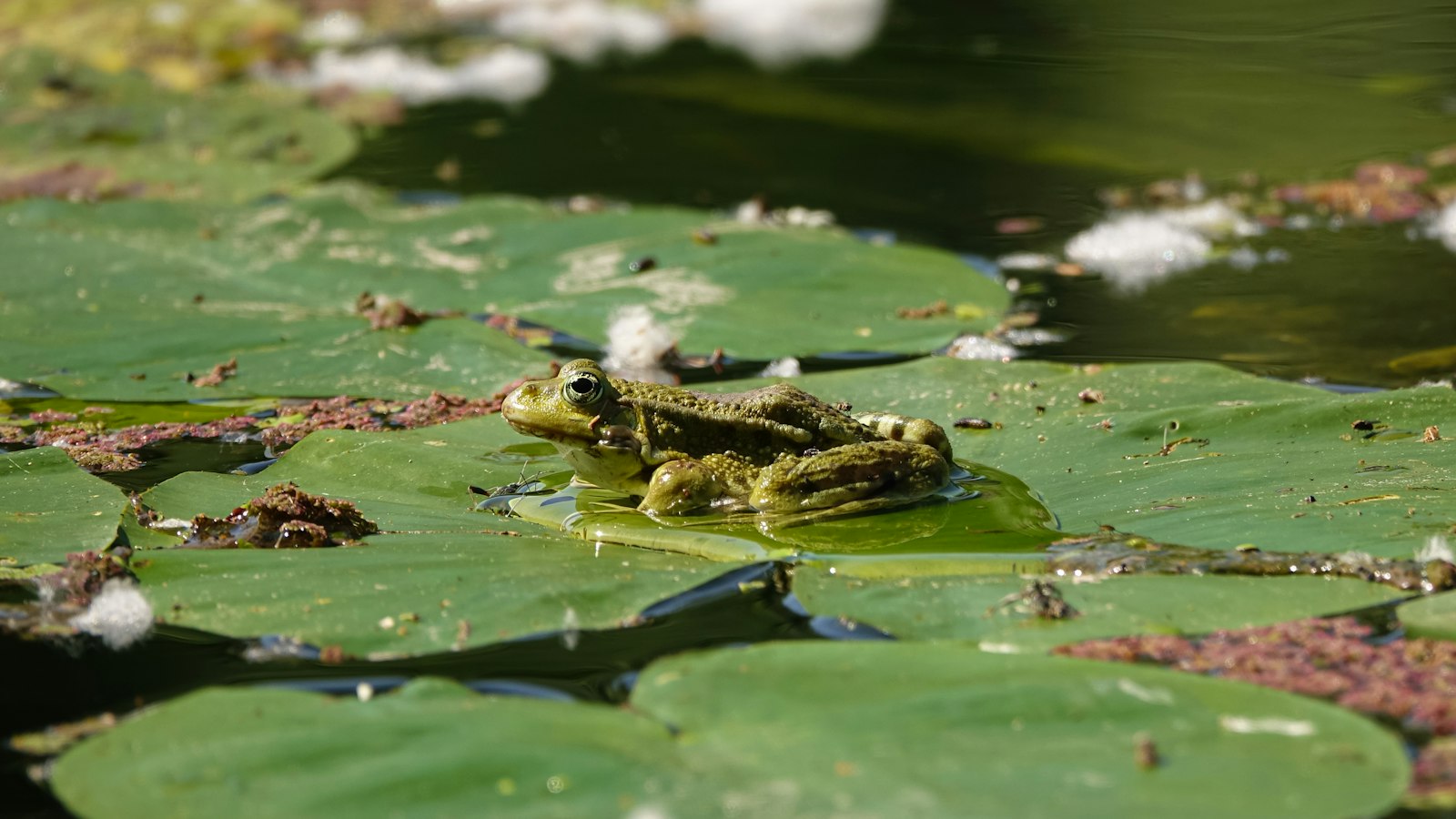
Herons can empty a pond overnight. Depth, caves and netting all help; see keeping herons away from a pond. On the welcome side, frogs and toads arrive on their own if there is a shallow edge and cover. Read how to attract frogs to a pond and frogs as natural pest control.
Algae, green water and keeping a pond clear
Some algae is normal and healthy; a pond with zero algae is usually over-treated. Green water (free-floating algae) and string algae are symptoms of too many nutrients and too much sun. The long-term fix is the same every time: more plant cover, fewer fish or less food, a properly sized filter, and less organic muck. Our step-by-step guide to getting rid of pond algae and the overview on controlling pond algae and green water are the place to start.
For quick results, a UV clarifier clears green water within a week or two, as covered in how to clear green pond water fast. Gentler, slower tools include barley straw and shading the pond. Our guides on keeping pond water clear naturally and keeping a pond clear without a filter pull it together. Avoid algaecides in fish ponds; killing a big bloom at once can crash oxygen.
Other water-quality puzzles: brown or tea-colored water usually means tannins from leaves; foam on the surface points to protein buildup from overfeeding. Sludge on the bottom feeds algae all year, so remove it with a net or pond vacuum, or follow how to get rid of pond sludge.
Seasonal pond maintenance
A pond runs on a yearly rhythm. Our season-by-season pond maintenance guide and year-round koi pond maintenance give the full calendar. In spring, follow the spring pond startup steps: restart the pump, clean out winter debris, divide crowded plants, and wait for water to pass about 50°F before feeding. A full drain-down is rarely needed; see how to clean a pond with or without draining.
Summer is about oxygen and evaporation. Warm water holds less oxygen, so run aeration overnight and top up with dechlorinated water regularly (an inch a week is normal in hot weather). Our summer pond care guide covers heat waves. Rinse filter media in a bucket of pond water, never tap water, to keep the bacteria alive, as explained in how to clean a pond filter.
Fall is the most important season. Cover the pond before leaves drop with netting for fall leaves, trim back dying foliage, and cut feeding as temperatures fall. Our fall pond care and how to winterize a pond guides give the checklist; koi keepers should also read winterizing a koi pond.
In winter, fish survive under ice as long as a hole stays open for gas exchange. A floating de-icer or a bubbler does the job; never smash the ice, which shocks fish. See how to keep a pond from freezing, how to overwinter pond fish and how to overwinter pond plants. More on winter: keeping pond fish alive in winter, protecting fish from ice, overwintering tropical lilies, overwintering a container pond.
Leaks, pump trouble and other pond problems
Every pond loses some water to evaporation, typically up to an inch or two a week in summer. More than that suggests a leak. Our guide why is my pond losing water explains the bucket test for telling the two apart. Most leaks are not holes in the liner at all but a low spot in the edge or a waterfall that splashes outside the lined area. Turn the pump off and see if the level stabilizes; how to find and fix a pond leak walks through the search, and how to patch a pond liner covers repairs for genuine punctures.
When flow drops, the cause is almost always a clogged intake, a kinked hose or a worn impeller. Work through the pond pump troubleshooting checklist and keep up with routine pump cleaning and care. Other common nuisances: an explosion of snails (how to control pond snails) and mosquitoes in still corners. Moving water and fish solve most mosquito issues; see getting rid of mosquitoes in a pond safely and our wider pest control guide for the rest of the yard.
Pond gear worth buying
Buy for the pond you will have in three years: fish grow, and barely adequate equipment struggles by midsummer.
Circulation: best pond pumps, best pond aerators, best pond skimmers.
Clear water: best pond filters, best UV clarifiers.
Building: best pond liners, best outdoor fountains.
Upkeep: best pond vacuums, best pond netting, best pond de-icers and heaters.
Frequently asked questions
How deep should a backyard pond be?
For a water garden with goldfish, 18 to 24 inches is enough in most of the US. Koi need at least three feet, and ponds in cold-winter regions should have a deep zone below the frost line so fish have unfrozen water through winter.
Do you need a filter for a pond?
A small plant-only pond can stay clear without a filter if it is well planted and lightly stocked. Any pond with more than a few fish needs biological filtration to process ammonia, and a pump to keep oxygen up.
Why is my new pond water green?
New ponds almost always go through an algae bloom while beneficial bacteria and plants establish. Keep the pump running, avoid overfeeding, add plants to cover half the surface, and it usually clears within four to eight weeks. A UV clarifier speeds it up.
How many fish can a pond hold?
A cautious rule is one inch of goldfish per 10 gallons, and far fewer koi because of their size and waste. Start below that limit and add fish gradually so the filter bacteria can keep up.
Should a pond pump run all the time?
Yes, during the growing season. Turning the pump off starves the filter bacteria of oxygen and can let the water stagnate. In freezing climates, many owners shut down waterfalls in winter but keep an aerator or de-icer running.
How do you keep a pond from freezing over?
You do not need to keep the whole pond ice-free, just a hole for gases to escape. A floating de-icer or an air bubbler near the surface does this; avoid breaking ice with force, which sends shock waves through the water.