

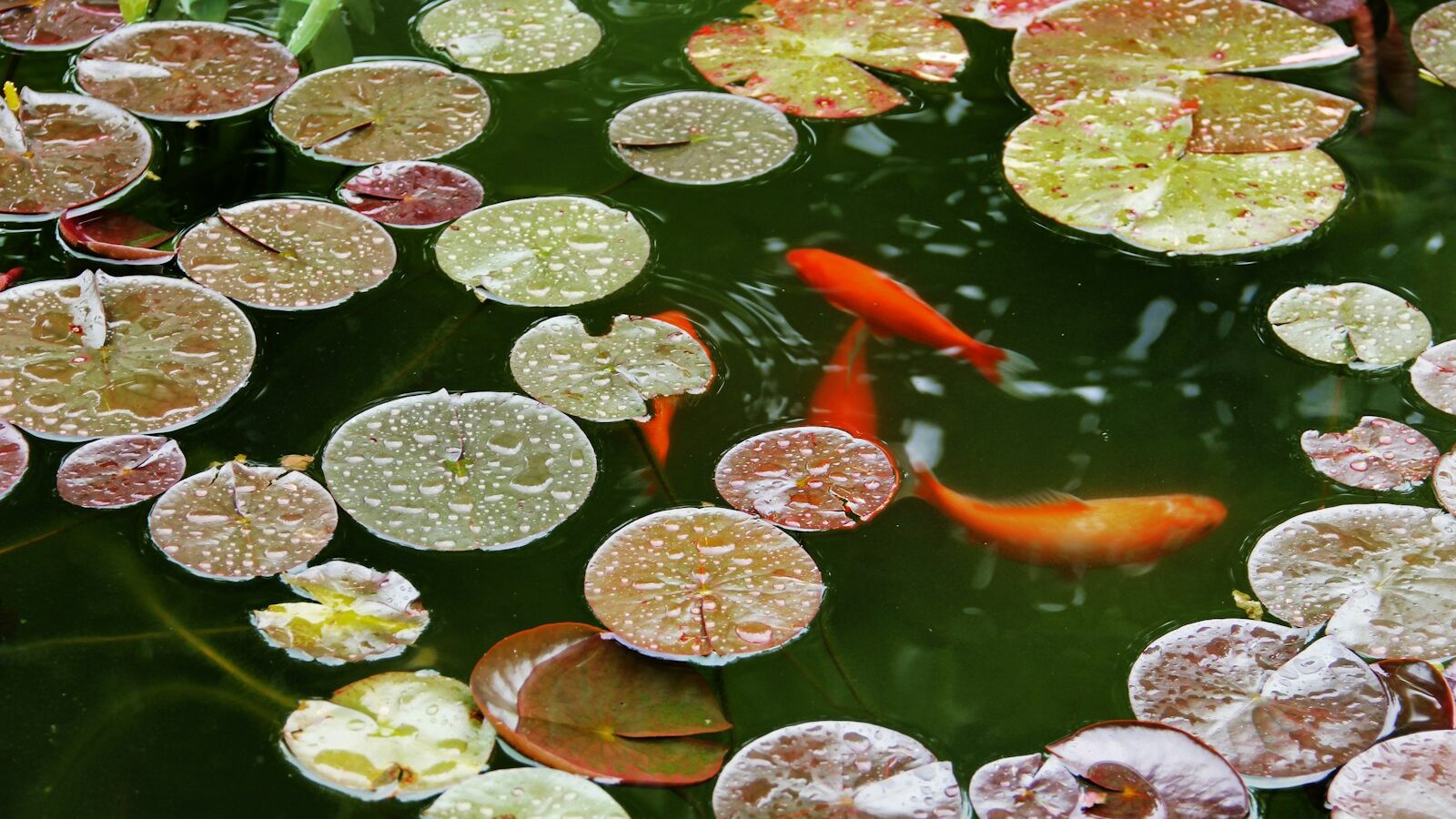
Winterizing a koi pond comes down to three jobs done in the right order: clean out the organic load before it freezes, taper and then stop feeding as the water cools, and keep one ice-free hole open all winter so toxic gases can escape and oxygen can get in. Do those three and healthy koi will ride out the cold in a slow, dormant state and surface again in spring. Skip them and you risk a “winter kill” – fish that quietly suffocate under a sealed lid of ice in February. This guide walks the whole fall checklist with the temperatures, depths, and equipment settings that actually matter.
Key Takeaways
- Stop feeding once water holds below 50°F (10°C) – a koi’s digestion shuts down and undigested food rots in the gut.
- Never let the surface freeze completely solid. A floating de-icer or an aerator must keep one hole open for gas exchange all winter.
- Depth is your insurance. A pond at least 24-36 inches deep holds a warmer, stable layer at the bottom where koi overwinter.
- Clean before the freeze. Remove leaves, cut back plants, and net the pond in fall so decaying debris doesn’t poison the water under ice.
- The “pump up or down” choice depends on your climate – keep flow at the surface in mild zones, lower or pull it in hard-freeze zones to protect the warm bottom layer.
Why Koi Ponds Need Special Winter Prep
Koi are cold-water fish and they are remarkably tough, surviving under ice in USDA zones as cold as 4 and 5 every year. But they are also cold-blooded: their metabolism tracks the water temperature exactly. As the pond drops through fall, koi slow down, stop eating, and eventually settle near the bottom in a torpor that resembles hibernation – it’s called dormancy, not true hibernation, because they still breathe and move slightly. The danger of winter isn’t usually the cold itself. It’s what happens in a small, enclosed body of water when biology keeps running while a lid of ice cuts the pond off from the air.
Leaves, fish waste, and dead plant matter on the bottom keep decomposing all winter, and that decomposition consumes oxygen and releases carbon dioxide, ammonia, and hydrogen sulfide. In an open pond those gases vent harmlessly into the air. Seal the surface with solid ice and they accumulate, oxygen falls, and the fish can be poisoned or suffocated even though the water never came close to freezing solid. That single mechanism – trapped gases under ice – is the cause of most winter koi losses, and nearly everything on the checklist below exists to prevent it.
Step 1: The Fall Clean-Out
Your single biggest lever for winter survival is reducing the organic load before the water gets cold. Every leaf and every inch of dying plant tissue you remove in October is oxygen your fish won’t lose in January. Start the clean-out while the water is still in the 55-60°F range and the fish are active enough to tolerate the disturbance.
Net out debris and trim plants
Use a long-handled pond net to lift settled leaves and muck off the bottom. If you run a skimmer, clean the basket every few days during leaf fall. Cut hardy marginal plants like cattails, rushes, and pickerel rush back to a couple inches above the waterline – their hollow stems can actually help vent gas if left tall in shallow water, but most keepers trim them to reduce the load. Lift tropical water lilies and any tender aquatics; hardy lilies can be cut back and lowered to the deepest shelf where they won’t freeze.
Net the pond surface
The most effective single tool in fall is a pond net stretched over the whole surface before the trees drop. A taut net suspended a foot or so above the water catches falling leaves before they sink and rot. Tent it over a center support or a few stakes so the weight of wet leaves and early snow doesn’t sag it into the water. Clear it as it fills. A pond that goes into winter clean stays clean – this one step prevents a remarkable amount of the bottom muck that causes spring “pea soup” and winter gas buildup.
A partial water change is optional, not required
If your water is heavily fouled, a 15-25% change with dechlorinated water in early fall helps. Avoid large changes once the water is cold – a big swing in temperature or chemistry stresses dormant fish, and they have little reserve to cope.
Step 2: Stop Feeding at the Right Temperature
This is the rule that trips up the most new koi keepers, so get a reliable pond thermometer and watch it daily through fall. Koi digestion is temperature-dependent, and the cutoff is clear.
- Above 60°F: Feed a normal, high-protein growth food.
- 50-60°F: Switch to a low-protein, wheat-germ-based “cold water” food and cut back to once a day or less. Wheat germ digests easily at lower temperatures.
- Below 50°F (10°C): Stop feeding entirely. Below this point a koi’s gut slows so much that food can no longer be digested – it sits and rots inside the fish, which can be fatal. The fish are not starving; their slowed metabolism needs almost nothing, and they live on fat reserves built up over summer.
Resist the urge to feed on a warm, sunny winter afternoon. A brief warm spell isn’t enough to restart digestion reliably, and a meal that can’t be processed does more harm than the skipped feeding ever would. Wait until spring water holds steadily above 50°F before you resume, again starting with wheat germ. If you want a deeper read on cold-water nutrition and dormancy, our guide on how to keep pond fish alive in winter covers the biology in more detail.
Step 3: Keep a Hole in the Ice – De-Icer and Aerator
If you live anywhere the pond surface freezes over, this is non-negotiable. You must maintain at least one ice-free opening all winter so the toxic gases described above can escape and atmospheric oxygen can enter. There are two tools for the job, and the best setups use both.
A floating de-icer (pond heater)
A floating de-icer is a thermostatically controlled heating element that switches on only near freezing and keeps a small area open. It does not warm the whole pond – it just holds a vent hole. Size it to your climate: a 250-watt unit suits mild winters and small ponds, while ponds in zones 4-5 often need 1,000-1,500 watts to keep up. Pair it with a GFCI outlet and a heavy outdoor-rated cord. For brutal cold, two smaller de-icers are more reliable than one large one. Our roundup of the best pond de-icers and heaters compares wattages and climates if you’re choosing a unit.
An aerator
An air pump feeding an air stone does two things at once: the rising bubbles add oxygen, and the moving water resists freezing, helping keep a hole open. In winter, position the air stone at a mid-depth shelf, never on the very bottom. Bubbling from the deepest point would stir the warm bottom layer up into the freezing surface water and chill the zone where your koi are sheltering – the opposite of what you want. Set it about halfway down or on a shallow shelf. The combination of a de-icer holding the hole and an aerator venting gas through it is the gold standard.
If the surface freezes over anyway
Never smash the ice with a hammer or hatchet. The shock wave travels through water and can stun, injure, or kill dormant fish. Instead, set a pot of hot water on the ice and let it melt a hole, or run a de-icer to reopen one. Gentle melting only.
Step 4: The Pump Debate – Run It, Lower It, or Pull It?
What to do with the main circulation pump is the most argued-over question in pond winterizing, and the honest answer is that it depends on how cold your winters get. The core principle is thermal stratification: in winter the warmest water (around 39°F, where water is densest) sinks and pools at the bottom, and that warm bottom layer is exactly where your koi overwinter. Anything that mixes the pond destroys that layer.
Mild climates (zones 7+, brief or rare freezes)
You can usually keep the pump and filter running through winter. The moving water helps prevent ice, keeps the biofilter alive, and the modest mixing isn’t a problem because the pond rarely chills enough to threaten the fish. Just watch for ice forming on the waterfall or stream that could divert and siphon the pond dry.
Cold climates (zones 6 and colder, hard sustained freezes)
Here most experienced keepers either shut the pump off or lower it. Running surface circulation in deep cold pulls warm bottom water up to be chilled, super-cooling the whole pond and stripping the koi of their warm refuge. The common approaches:
- Pull the pump entirely. Remove it, clean it, and store it indoors. Shut down and drain external filters and UV units so they don’t crack. Switch over to a de-icer and aerator for the winter. This is the safest choice in severe-freeze regions and protects expensive equipment from ice damage.
- Lower the pump. Some keepers raise the pump off the bottom but leave it running to keep some flow and bio-filtration. The risk is that it still mixes the layers, so this is a middle-ground option for moderate climates.
If you do shut the system down, never leave a waterfall pump running into a stream that can ice up – it can pump your pond empty in a night. When in doubt in a cold zone, pull the pump and rely on the de-icer-plus-aerator combo.
Step 5: Depth and the Warm Bottom Layer
Depth is the foundation of overwintering koi outdoors, and it’s the one thing you can’t fix in fall – so plan for it when you build. A pond needs enough depth that it never freezes solid to the bottom and retains a stable, slightly-warmer zone for the fish.
- Zones 7 and warmer: 18-24 inches is often adequate.
- Zones 5-6: aim for at least 24-36 inches.
- Zones 4 and colder: 3 feet or more, with deeper sections (4 feet) giving a real margin of safety.
The rule of thumb is that the ice rarely penetrates more than 8-12 inches in a typical northern winter, so the deepest part of the pond stays liquid and the koi pool there. If your pond is too shallow for your zone, your realistic options are to move the fish to an indoor tank or stock tank for winter, or add a stock-tank-style deep zone. A shallow pond can be made survivable with a strong de-icer and aerator in a borderline climate, but in a hard-freeze region, depth is what keeps the warm refuge intact.
Step 6: Final Fall Checklist and Through the Winter
Run through this before the first hard freeze:
- Bottom and surface cleaned of leaves and muck; net stretched over the pond.
- Hardy plants cut back and lowered; tropicals removed.
- Feeding stopped once water held below 50°F.
- De-icer installed and tested on a GFCI outlet; aerator stone set at mid-depth.
- Pump decision made and acted on for your climate; external filters and UV drained if shut down.
- Thermometer in place so you can monitor without disturbing the fish.
Through winter, the goal is to leave the pond alone. Don’t feed, don’t break ice, and don’t run the pump in a way that mixes the layers. Check after every storm that the de-icer hole is still open and the aerator is bubbling, and clear snow off any clear ice so a little light can reach the water. Top up evaporation with dechlorinated water only if the level drops noticeably, and add it slowly. Come spring, wait for sustained water above 50°F before restarting the filter, resuming gentle wheat-germ feeding, and easing the pond back to its summer routine. For broader seasonal pond care and equipment, the Water Gardens & Ponds hub collects related guides.
Frequently Asked Questions
At what temperature do I stop feeding my koi?
Stop feeding entirely once the water holds steadily below 50°F (10°C). Between 50 and 60°F, feed a low-protein wheat-germ food sparingly. Below 50°F a koi’s digestion shuts down, and undigested food rots inside the fish, which can be fatal.
Can koi survive the winter under ice?
Yes, as long as the pond is deep enough not to freeze solid and you keep one ice-free hole open for gas exchange. Koi go dormant near the warm bottom layer. The danger is a sealed-over pond where toxic gases build up and oxygen runs out – not the cold itself.
Should I leave my pond pump running all winter?
It depends on your climate. In mild zones (7+) you can keep it running to prevent ice. In hard-freeze zones (6 and colder), most keepers pull the pump or lower it, because surface circulation mixes the warm bottom water up to the freezing surface and chills the whole pond, removing the koi’s warm refuge.
Is it OK to break the ice on my pond?
No. Never smash pond ice with a hammer or anything else – the shock wave can stun or kill dormant fish. To open a hole, set a pot of hot water on the ice to melt it, or run a floating de-icer. Gentle melting only.
How deep should a koi pond be for winter?
At least 24-36 inches in zones 5-6, and 3 feet or more in zones 4 and colder, so the bottom never freezes and koi keep a liquid, slightly-warmer layer to shelter in. In mild zones 18-24 inches can be enough. If your pond is too shallow, overwinter the fish indoors.