

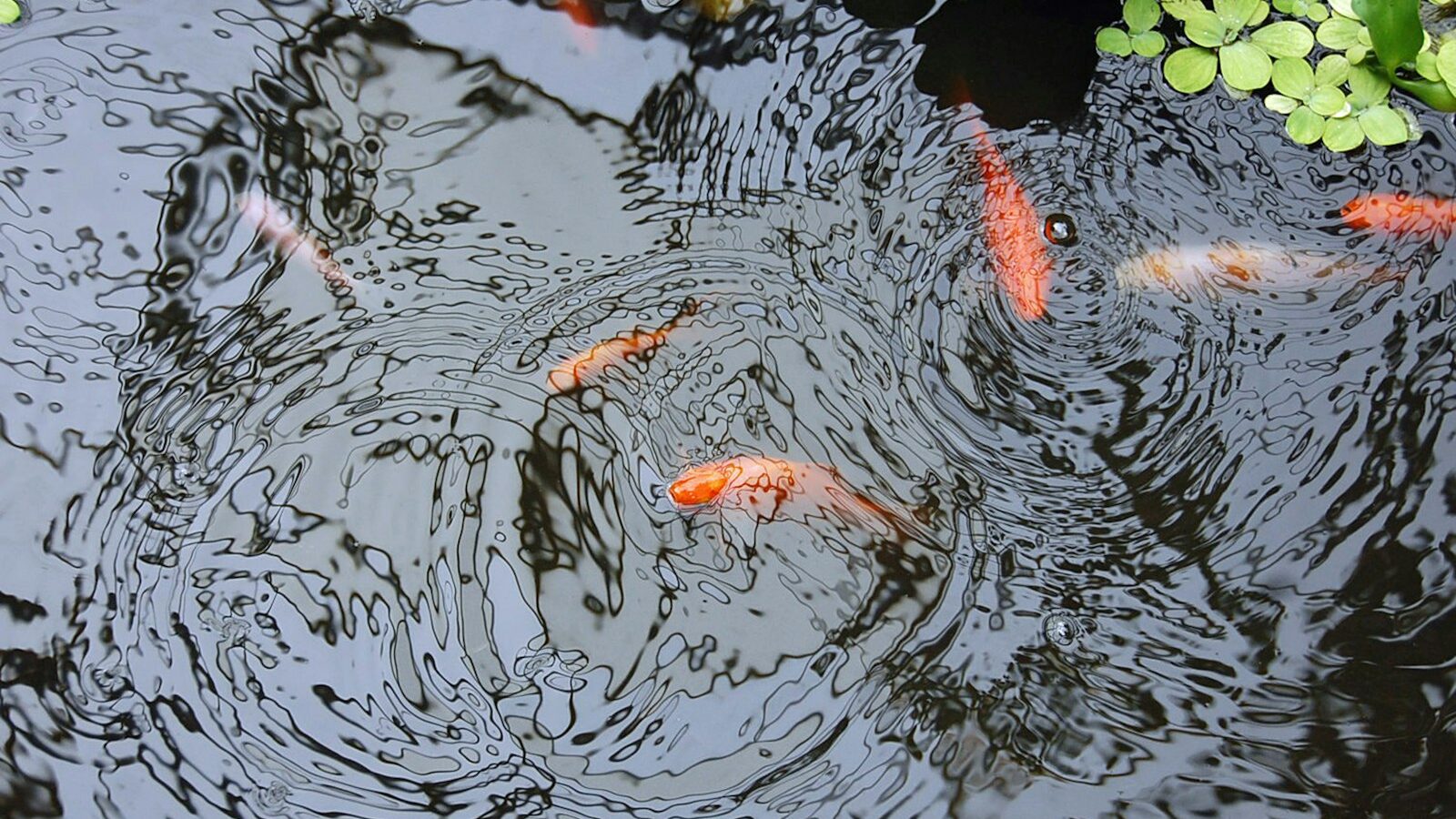
Koi and goldfish are tougher than they look. In a properly prepared pond they survive the winter outdoors by slowing right down and resting near the bottom, where the water stays warmest. The danger is not the cold itself — it is a sheet of ice that seals the surface and traps toxic gases underneath, plus the common mistakes of feeding fish that can no longer digest and disturbing them when they need to be left alone. Your job over winter is mostly about three things: keep a hole open in the ice, stop feeding once the water turns cold, and clean the pond out before it freezes. Do those, and your fish will wake up in spring as if nothing happened.
Key Takeaways
- Always keep a hole open in the ice with a floating de-icer or an aerator so toxic gases escape and oxygen gets in.
- NEVER smash or break the ice. The shockwave can stun or kill resting fish. Melt a hole gently instead.
- Stop feeding when the water drops below 50°F. Cold fish cannot digest food, and undigested food in the gut is deadly.
- Depth matters. Fish overwinter best in a pond with a zone at least 18–24 inches deep (more in very cold climates) that will not freeze solid.
- Clean out leaves and debris in fall. Rotting organic matter fouls the water and consumes oxygen under the ice.
Why winter is dangerous for pond fish
Fish are cold-blooded, so as the water cools their metabolism slows to a crawl. By the time a pond is near freezing, koi and goldfish are semi-dormant: they barely move, hover near the bottom, and stop eating entirely. In this state cold alone rarely kills them — healthy koi and goldfish are remarkably cold-hardy. What kills fish over winter is almost always one of two things: suffocation under a sealed sheet of ice, or being fed when they can no longer digest.
When ice forms a solid lid across the whole pond, it does more than block oxygen from getting in. Fish, plants, and decomposing debris all release carbon dioxide and other gases, and decaying matter on the bottom produces toxic gases like ammonia. With the surface sealed, those gases have nowhere to go and build up in the water until they reach lethal levels. A pond can lose fish in midwinter not because it got too cold, but because it iced over completely and the water turned toxic underneath. Everything in this guide is ultimately aimed at preventing that.
Keep a hole open in the ice (and never smash it)
This is the single most important thing you do all winter: maintain at least one open hole in the ice at all times. That opening is the pond’s vent — it lets toxic gases escape and lets oxygen exchange with the air above. There are two reliable ways to keep one open, and they work even better together.
Floating de-icer
A floating pond de-icer (sometimes called a pond heater) is a thermostatically controlled unit that floats on the surface and switches on only when needed, melting a hole in the ice around it. It does not heat the whole pond — it simply keeps one patch from freezing. This is the most dependable solution in genuinely cold climates where ice forms thick. Choose a model rated for your pond size and let the thermostat do the work; it will cycle on and off automatically through the winter.
Aerator
An air pump driving an air stone keeps water moving and oxygenated, and that motion helps hold a hole open while adding oxygen directly. In winter, position the air stone partway down rather than at the very bottom. You do not want to drag the warmest bottom water up to the freezing surface and chill the whole pond — you only want to keep a vent open and oxygen flowing in the upper layer. Set it on a shelf or hang it about halfway down. In milder regions an aerator alone may keep a hole open; in hard-freeze climates, pair it with a de-icer for security.
The one thing you must never do
Never smash, break, or hammer the ice to make a hole. The blunt shockwave travels through the water and can concussively stun or kill the dormant fish resting below — it is one of the most common ways well-meaning pond owners lose their koi. If your pond has frozen over solid and you need to open it, melt the ice gently: set a pot of hot water on the surface and let it slowly melt through, or run a de-icer. Slow and gentle, never a hammer.
Stop feeding below 50°F
Feeding is where good intentions do real harm. A fish’s digestion is driven by water temperature. As the water cools their metabolism slows, and below about 50°F (10°C) digestion essentially stops. Food sitting in a cold fish’s gut does not get processed — it rots inside the fish, which can cause fatal infections and water-fouling. Buy an inexpensive pond thermometer and watch the water, not the calendar.
- Above 60°F: normal feeding with a regular pond food.
- 50–60°F: switch to a wheat-germ or “cold-water” food, which is easier to digest, and feed less often.
- Below 50°F: stop feeding entirely. Do not resume until spring water consistently climbs back above 50°F.
It feels wrong to stop feeding fish you can still see, but a dormant fish needs nothing — it lives off reserves built up over summer and fall. That is exactly why a good autumn feeding routine matters: fatten them on quality food while it is warm so they enter winter strong. Once the water is cold, the kindest thing you can do is leave them alone and not feed.
Depth: give fish a safe zone
Fish overwinter in the deepest, warmest layer of the pond. Water is densest at about 39°F, so that slightly-warmer water sinks and pools at the bottom while ice forms on top. As long as part of your pond is deep enough that it will not freeze all the way to the bottom, your fish have a refuge to ride out the cold.
As a general rule, a pond that keeps fish through winter should have a zone at least 18 to 24 inches deep, and in cold northern climates 30 inches or more is safer to guarantee the bottom never freezes solid. If your pond is shallow, this is the one structural fix worth making — even a single deeper pocket gives fish somewhere to retreat. If you are still in the planning or building stage, our guide comparing a preformed pond versus a flexible liner covers how to build in enough depth from the start. Owners in mild climates that rarely freeze hard have an easier job, but the same principles apply: depth, oxygen, and a clean bottom.
Clean out leaves and debris before freeze-up
Autumn is the most important season for protecting your fish, because what you do before the ice forms determines the water quality under it. Every leaf, bit of dead plant, and uneaten scrap that sinks to the bottom will slowly decompose all winter. That decomposition consumes oxygen and releases ammonia and other gases — precisely the toxins you are trying to keep from building up under a frozen surface. A pond going into winter with a thick layer of rotting muck is far more likely to lose fish than a clean one.
Before the hard freeze: net out fallen leaves, cut back and remove dying foliage from marginal and hardy aquatic plants, and scoop or vacuum heavy sludge off the bottom. Stretching pond netting across the surface in fall is the easiest way to keep leaves out in the first place — it is far less work than fishing them out later. Trim back tender plants and move any tropical aquatic plants indoors, since they will not survive the cold. The cleaner the pond goes into winter, the safer the water stays beneath the ice.
What to do with pumps and filters in winter
Pumps and filters are a judgment call that depends on your climate, and getting it wrong can chill your fish. In regions with hard, sustained freezes, the common practice is to shut down and remove the main pump and filter for winter. Running a waterfall or fountain in freezing weather circulates water up to the cold surface and can supercool the entire pond, robbing fish of the warmer bottom layer they depend on. It can also cause dangerous ice dams as splashing water freezes. If you shut the pump down, remove it from the pond, drain it, and store it somewhere it will not freeze and crack — many pumps are damaged by being left to freeze. Filter media should be cleaned and stored too, since the beneficial bacteria go dormant in the cold anyway.
Switch over to winter equipment instead: a low-positioned aerator and, where needed, a floating de-icer. That combination keeps a hole open and oxygen flowing without stirring up and chilling the warm bottom water. In mild climates where the pond never freezes hard, you can often keep the pump running year-round, but even then it is wise to lower the flow and avoid blasting the surface in a cold snap. When spring arrives and the water warms back above 50°F, reinstall the pump and filter, restart gentle feeding with an easy-to-digest food, and let the system come back to life gradually. For broader seasonal pond care, the Water Gardens & Ponds hub has related guides on pumps, filters, and aquatic plants.
A winter checklist for pond owners
- Fall: net out leaves, cut back plants, remove sludge, and stretch netting over the pond.
- As water cools: switch to cold-water food at 50–60°F, then stop feeding entirely below 50°F.
- Before freeze: shut down and store the main pump and filter if you get hard freezes; set up an aerator partway down.
- Through winter: keep a hole open with a de-icer and/or aerator; check it after every freeze.
- Never: smash the ice or feed dormant fish.
- Spring: wait until water is reliably above 50°F, then reinstall the pump and resume light feeding.
Winterizing a pond is less about doing a lot and more about doing the right few things and then leaving your fish in peace. Keep the surface vented, the water clean, and the feeding stopped, and your koi and goldfish will sail through to spring.
Frequently Asked Questions
Will my pond fish survive winter outdoors?
Yes — healthy koi and goldfish are cold-hardy and overwinter outdoors in a properly prepared pond. They need a deep zone that will not freeze solid (at least 18–24 inches), an open hole in any ice for gas exchange, and a clean pond. They go semi-dormant near the bottom and need no feeding.
Can I break the ice on my pond to give the fish air?
No. Never smash or hammer the ice — the shockwave can stun or kill the dormant fish below. Instead, keep a hole open with a floating de-icer or aerator, or melt a hole gently by setting a pot of hot water on the surface.
When should I stop feeding my pond fish in winter?
Stop feeding once the water temperature drops below 50°F, because cold fish cannot digest food and it will rot in their gut. Between 50 and 60°F, switch to an easy-to-digest wheat-germ food and feed sparingly. Resume only when spring water rises back above 50°F.
Should I run my pond pump and filter in winter?
In hard-freeze climates, shut down and remove the main pump and filter for winter, since running a waterfall or fountain can supercool the whole pond and rob fish of the warmer bottom water. Use a low-set aerator and a de-icer instead. In mild climates that never freeze hard, you can often keep the pump running at reduced flow.
How deep does a pond need to be for fish to survive winter?
Aim for at least 18–24 inches of depth, and 30 inches or more in cold northern regions, so part of the pond never freezes to the bottom. Fish shelter in that deeper, slightly warmer layer through the coldest weather.