

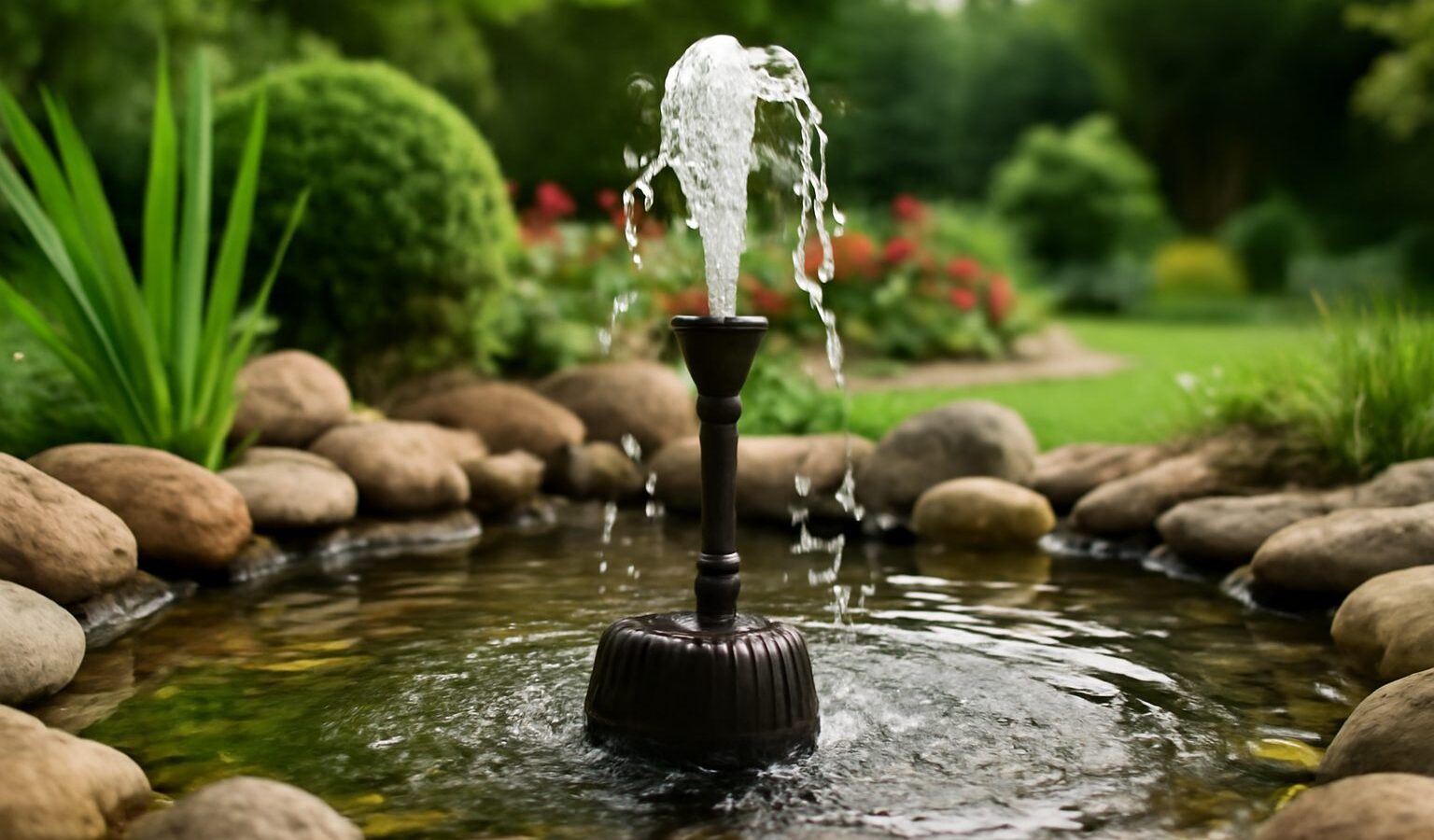
A pond pump is the heart of the whole system: it drives filtration, runs your waterfall, and keeps water moving and oxygenated. When it clogs or fails, water quality slides within days and fish are at risk. The good news is that pond pumps are simple machines, and the vast majority of “dead pump” calls are nothing more than a debris-clogged intake or a stuck impeller. This guide covers a realistic cleaning schedule, how to service the impeller, winterizing, sizing replacements by GPH, and a troubleshooting checklist that solves most problems in minutes.
Key Takeaways
- Most pump failures are clogs, not motor death; rinse the intake screen and pre-filter weekly to monthly.
- The impeller is the one wearing part; clean it every 1–3 months and inspect for cracked blades or a worn shaft.
- Always unplug the pump before reaching into the water; never run it dry, which burns out the motor in minutes.
- Winterize correctly: in freezing climates either run the pump continuously or pull it, clean it, and store it submerged in a bucket of water indoors.
- Size by turnover: a pump should move at least the pond’s volume per hour, measured at your actual waterfall height (head), where pumps lose significant flow.
How a pond pump works (and why it clogs)
A submersible pond pump pulls water through an intake screen, past a magnetically driven impeller (a small spinning rotor that flings water outward), and pushes it up a hose to your filter or waterfall. The impeller and its housing are the only moving parts. Because the pump constantly sucks in pond water, debris, string algae, leaves, and silt accumulate on the intake screen and inside the impeller chamber. As that buildup grows, flow drops, the motor works harder and runs hotter, and eventually it stalls. Ninety percent of maintenance is simply keeping debris out of the way.
The cleaning schedule
How often depends on your pond’s debris load, but this schedule works for most garden ponds. Always unplug the pump first.
- Weekly to biweekly (debris-heavy ponds): Lift the pump or pre-filter, rinse the intake screen and foam pre-filter in a bucket of pond water (never tap water, which kills beneficial bacteria). Skim floating debris before it reaches the intake.
- Monthly: Open the intake cage and clear string algae and leaves from around the impeller chamber. Check the hose connections for kinks and leaks.
- Every 1–3 months: Remove and clean the impeller (see below) and flush the volute (the spiral chamber around the impeller).
- Annually: Full teardown. Inspect the impeller shaft and bearings for wear, check the power cord for nicks, and descale if you have hard water.
Cleaning the impeller, step by step
- Unplug the pump and lift it out of the water.
- Remove the intake cover/cage. Most snap off or twist; some have a few screws.
- Slide out the impeller. The impeller assembly (magnet, shaft, and rotor) usually pulls straight out of its chamber. Note the orientation.
- Clean everything. Use an old toothbrush to scrub algae and silt off the rotor blades, the ceramic shaft, and the inside of the volute. String algae wrapped around the shaft is the #1 cause of a humming pump that will not spin.
- Inspect for wear. Look for cracked or chipped blades, a grooved or wobbly shaft, and worn rubber bushings. Replace the impeller kit if blades are damaged; it is a cheap part and the most common one to wear out.
- Reassemble and reseat. Slide the impeller back in the correct orientation, refit the cage, submerge the pump fully, and plug it in.
Never run the pump out of water even briefly to “test” it; submersible pumps are water-cooled and lubricated, and running dry burns the motor out fast.
Winterizing your pump
What you do depends on climate and whether you keep fish.
- Mild climates (no hard freeze): Keep the pump running year-round; moving water resists ice and maintains oxygen and filtration.
- Freezing climates, keeping the pump running: Lower the pump or run a separate de-icer/air pump so a hole stays open in the ice for gas exchange. Do not let a waterfall pump pull the pond level down by freezing the stream.
- Freezing climates, shutting down: Pull the pump out before the first hard freeze. Clean it thoroughly, then store it submerged in a bucket of water in a frost-free garage or basement. Storing a pump dry lets the seals and impeller bushings dry out and crack, shortening its life.
If you shut the pump down for winter, keep oxygen up another way; our guide on how to oxygenate a pond covers winter aeration and de-icers for fish ponds.
Sizing a replacement pump
When a pump finally dies, size the replacement by turnover and head, not by price.
- Turnover: The pump should circulate at least the entire pond volume once per hour. A 1,200-gallon pond needs a pump moving at least 1,200 GPH.
- Account for head height. Pumps lose flow as they push water higher. A pump rated 1,500 GPH at zero lift might deliver only 1,000 GPH at a 6-foot waterfall. Read the pump’s flow chart at your actual lift (vertical rise plus friction loss from hose length and fittings) and choose accordingly.
- Match the waterfall. A good rule for a sheeting waterfall is roughly 1,500 GPH per foot of spillway width, measured at your head height.
- Energy use matters. A pump runs 24/7, so wattage drives your electric bill. Compare energy-efficient mag-drive or asynchronous pumps; the cheapest pump is often the most expensive to run.
Pump health and water clarity are linked; a clogged pump that drops filtration can trigger algae. If green water appears after a flow drop, see our guide on controlling pond algae.
Habits that make a pump last longer
Beyond the cleaning schedule, a few habits separate pumps that run for years from ones that die in a season.
- Raise the pump off the bottom. Setting it on a flat stone or in a pump vault keeps it out of the heaviest silt and reduces how much sludge it inhales between cleanings.
- Add a pre-filter or skimmer. A foam pre-filter sleeve or an in-pond skimmer box catches leaves and debris before they reach the impeller, dramatically cutting clog frequency.
- Net leaves in fall. The single biggest debris event of the year is autumn leaf fall. A pond net stretched over the surface keeps leaves out of the water and off your intake.
- Watch the GFCI. Pond pumps must run on a GFCI-protected outlet. A pump that keeps tripping the GFCI may have a failing seal letting water into the motor; investigate rather than resetting repeatedly.
- Keep the water level up. Evaporation in summer can drop the level below a skimmer or intake, letting the pump suck air and overheat. Top off with dechlorinated water before that happens.
Troubleshooting a weak or dead pump
- Flow has dropped: Clogged intake screen, pre-filter, or impeller, or a kinked/blocked hose. Clean the intake and impeller first; this fixes most weak-flow cases.
- Pump hums but no water moves: Impeller is jammed, usually by string algae around the shaft or grit in the chamber. Unplug, pull the impeller, clean it, and free the rotor.
- Pump is dead silent: Check the GFCI outlet (reset it), the breaker, and the cord for damage. Test the outlet with another device before blaming the pump.
- Pump runs hot or cycles off: It is starving for water (low pond level or blocked intake) or overheating from a clog. Many pumps have a thermal cutoff that shuts them down; clear the blockage and top up the water.
- Air bubbles or sputtering at the waterfall: Pond level dropped below the intake and the pump is sucking air. Top off the water and check for a leak in the stream or plumbing.
- Noisy/rattling: Worn impeller shaft or bearings, or debris in the volute. Clean it; if the rattle persists, replace the impeller kit.
Frequently Asked Questions
How often should I clean my pond pump?
Rinse the intake screen and pre-filter weekly to monthly depending on debris load, and remove and clean the impeller every one to three months. Do a full teardown and wear inspection once a year. Always rinse parts in pond water, not tap water, to protect beneficial bacteria.
Why is my pond pump running but not pumping water?
The impeller is almost always jammed, usually by string algae wrapped around the shaft or grit in the chamber. Unplug the pump, remove the intake cage, pull out the impeller, clean the rotor and shaft with a toothbrush, and reassemble. A clogged intake or kinked hose can also stop flow.
Can I leave my pond pump running in winter?
In mild climates, yes, and it helps maintain oxygen. In freezing climates you can keep it running if you ensure a hole stays open in the ice, or pull it out, clean it, and store it submerged in a bucket of water indoors. Never store a pump dry, as the seals crack.
What size pond pump do I need?
Choose a pump that moves at least your pond’s full volume per hour, measured at your actual waterfall height. Pumps lose flow with lift, so a unit rated 1,500 GPH at zero head may deliver only 1,000 GPH at a 6-foot rise. Read the flow chart at your head height before buying.
How long should a pond pump last?
A quality pump lasts 3 to 5 years or more with regular cleaning, and the impeller (the main wear part) is a cheap replacement that extends its life further. Running the pump dry, neglecting clogs, or storing it dry over winter are the fastest ways to shorten that lifespan.