

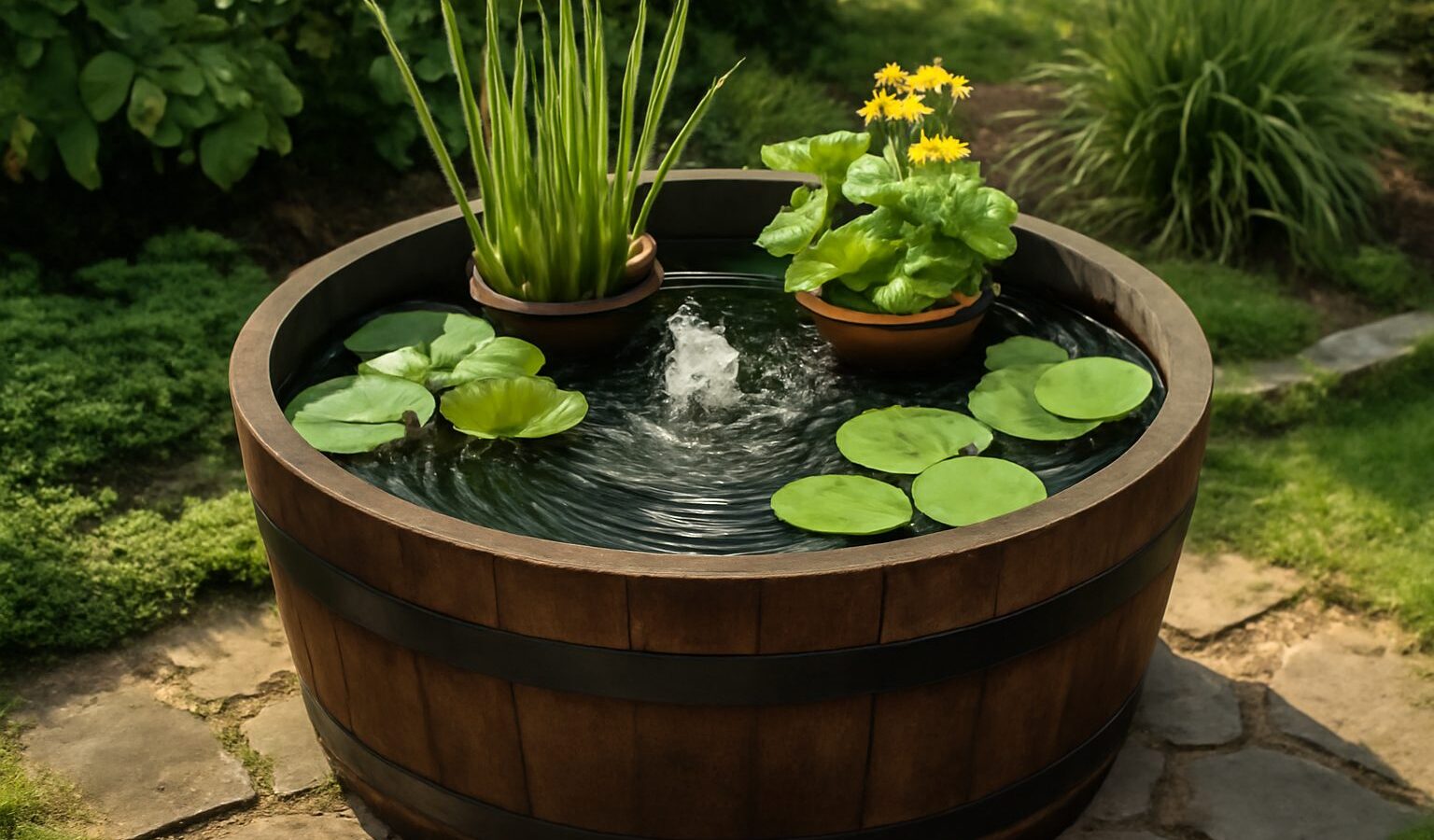
A half-barrel container pond is the simplest way to add the sparkle and movement of water to a patio, deck, or small garden. A repurposed whiskey or wine barrel holds enough water for a water lily, a clutch of marginal plants, and even a few small fish, yet it fits where a full in-ground pond never could. Built in an afternoon, it becomes a self-contained little ecosystem that draws dragonflies, birds, and pollinators within days. This guide covers everything from choosing and sealing the barrel through positioning, building plant shelves, selecting and layering aquatic plants, filling and conditioning the water, and the small maintenance routine that keeps it clear and healthy through the seasons.
Key Takeaways
- A genuine wooden half-barrel needs a flexible pond liner or a rigid plastic insert to hold water reliably — raw wood seeps and may leach tannins.
- Aim for a barrel at least 18-24 inches deep so plants and any fish have enough water volume to stay stable.
- Stock with one water lily or other deep plant, two or three marginals on bricks, and a floating plant to shade the surface and fight algae.
- Let filled tap water sit 24-48 hours (or use a dechlorinator) before adding plants or fish so chlorine dissipates.
- Balance — plant cover, no overfeeding, and a small pump or topping up — keeps the water clear without heavy filtration.
Choosing and Preparing the Barrel
Start with a sturdy half barrel — an oak whiskey or wine barrel sawn in two is the classic choice, sold at garden centers and home stores. Look for tight metal hoops and sound, unrotted staves. The bigger the better: a barrel at least 18 to 24 inches deep gives you the water volume to support a lily and keeps temperatures and water chemistry more stable than a shallow tub. Wide barrels also give more surface area for marginal plants around the edge.
Raw wood will eventually seep and leach tannins that stain the water brown, so you’ll want a waterproof barrier. New oak barrels can also carry residues, so scrub the interior with plain water (no soap or bleach) and let it dry before lining.
Sealing or Lining the Barrel
You have two reliable options:
- Rigid plastic insert: The easiest route. Many barrels are sold with a snug black plastic liner, or you can buy a tub-shaped insert. Drop it in and you’re done — no folding or fastening.
- Flexible pond liner: Use a piece of fish-safe EPDM or PVC pond liner. Drape it inside, smoothing it down the sides and into the base, and pleat the folds neatly around the rim. Fill with a few inches of water to settle the liner, then trim the excess to a few inches above the waterline and tack it just under the top hoop with stainless staples or trim it flush and hide the edge.
Avoid old barrels that previously held chemicals, and skip generic plastic sheeting or roofing membrane that may leach toxins into the water if you plan to add fish. A purpose-made fish-safe pond liner is inexpensive insurance.
Positioning the Pond
Place the barrel before you fill it — water weighs about 8 pounds per gallon, and a full barrel can top 200 pounds, making it impossible to move. Choose a level, firm surface; a soft lawn can let a heavy barrel tilt and leak. Most aquatic plants, especially water lilies, want four to six hours of sun a day, so a bright spot is ideal. However, full all-day sun in hot climates encourages algae and overheats the water, so a position with some afternoon shade is often the sweet spot. Keep it away from overhanging trees if you can, since falling leaves foul the water as they decay.
Building Plant Shelves
Different aquatic plants need to sit at different depths, so you’ll create shelves with simple supports rather than a tiered liner. Use food-safe or inert risers — clean bricks, upturned plastic pots, or sturdy plastic crates — stacked inside the barrel to lift each plant’s pot to its correct depth.
- Deep zone (bottom): Water lilies and other deep-water plants sit with their crowns roughly 8 to 18 inches below the surface, often right on the base or on a low brick.
- Marginal shelf (high): Bog and edge plants want their pot rims just 1 to 4 inches under the surface, so raise them on a stack of bricks near the top.
Plant aquatics in mesh aquatic baskets filled with heavy aquatic soil or plain garden loam (never light potting mix, which floats and clouds the water), and cap each basket with a layer of pea gravel to hold the soil in place and stop fish stirring it up.
Choosing Plants for a Balanced Pond
A balanced container pond uses three plant groups working together. Aim to cover roughly half to two-thirds of the surface with leaves — shade starves algae of the light it needs.
- One deep-water plant: A dwarf or pygmy water lily is perfect for a barrel; full-size lilies overwhelm it. The pads shade the water and the flowers are the centerpiece.
- Two or three marginals: Dwarf cattail, pickerel rush, marsh marigold, water mint, or a miniature iris add vertical height around the edge.
- A floating plant: Water lettuce or a small clump of frogbit drifts on the surface, shading the water and absorbing excess nutrients. (See our guide to growing water lettuce in a pond.)
- An oxygenator: A bunch of submerged hornwort or anacharis below the surface pumps oxygen into the water and competes with algae for nutrients.
For more options on surface plants, see our roundup of floating pond plants.
Filling and Conditioning the Water
Fill the barrel slowly with a hose, resting the stream on a saucer or your hand so it doesn’t gouge the plant baskets. If you’re on municipal tap water, the chlorine or chloramine it contains is harmless to plants in small doses but stresses fish and beneficial bacteria. Either let the filled barrel stand uncovered for 24 to 48 hours so chlorine off-gasses, or add a liquid dechlorinator that neutralizes it instantly. Rainwater collected in a barrel is even better if you have it.
Set the planted baskets on their risers, arranging the lily centrally, the marginals around the rim, and the floaters on the surface. Top up to about an inch below the rim. The water may turn cloudy or green in the first week or two as the mini-ecosystem finds its balance — this is normal and usually clears on its own as plants establish.
Pumps, Fish, and Mosquitoes
A small pond can thrive without a pump if it’s well planted, but a small solar or low-watt fountain pump adds gentle movement and sound, raises oxygen, and discourages mosquitoes from laying eggs in still water. Avoid a powerful fountain that thrashes the surface — water lilies dislike turbulence on their pads.
Standing water can breed mosquitoes, so either keep the surface moving with a pump, add a couple of small fish, or drop in a mosquito-control “dunk” of Bti, a bacterium that kills larvae but is harmless to plants, fish, and pets. If you’d like fish, a barrel can support two or three small ones such as white cloud minnows, mosquito fish, or a single fancy goldfish in a larger barrel — but stock lightly, never overfeed, and remember that fish need the water dechlorinated and may need to come indoors in a hard winter.
Maintenance Through the Seasons
Upkeep is minimal. Top up with dechlorinated or rainwater as the level drops through evaporation, especially in summer. Skim out fallen leaves and pinch off yellowing foliage before it decays and fouls the water. Thin floating plants when they cover too much surface, and divide overgrown marginals every year or two. Feed water lilies with an aquatic plant tablet pushed into their basket a couple of times during the growing season for the best blooms.
In cold-winter regions, hardy plants can overwinter if the barrel doesn’t freeze solid — move it to a sheltered spot, or sink the baskets into a larger pond or store them somewhere cool and frost-free. Tender floaters like water lettuce die off with frost and are usually replaced each spring. With a little seasonal attention, a half-barrel pond delivers years of low-effort tranquility. Explore the water gardens and ponds hub for more aquatic projects.
Frequently Asked Questions
Do I need to line a wooden half-barrel?
Yes. Raw oak seeps water and leaches tannins that stain the water brown. Use a snug rigid plastic insert or a piece of fish-safe EPDM or PVC pond liner so the barrel holds water reliably and stays safe for plants and fish.
Can I keep fish in a half-barrel pond?
A barrel at least 18-24 inches deep can support two or three small fish such as white cloud minnows, mosquito fish, or one fancy goldfish in a larger barrel. Dechlorinate the water first, stock lightly, never overfeed, and bring fish indoors if the barrel would freeze solid in winter.
How do I stop the water turning green?
Algae feed on light and nutrients. Cover half to two-thirds of the surface with plants like lily pads and floaters to shade the water, add an oxygenator such as hornwort to compete for nutrients, avoid overfeeding fish, and keep decaying leaves skimmed out. Early cloudiness usually clears on its own.
Will a container pond breed mosquitoes?
It can if the water sits perfectly still. Add a small pump to keep the surface moving, keep a couple of small fish that eat larvae, or drop in a Bti mosquito “dunk,” which kills larvae but is harmless to plants, fish, and pets.
What plants are best for a small barrel pond?
Use one dwarf or pygmy water lily, two or three marginals such as pickerel rush or dwarf cattail on bricks near the surface, a floating plant like water lettuce or frogbit, and a bunch of submerged oxygenator like hornwort. Avoid full-size lilies, which overwhelm a barrel.