

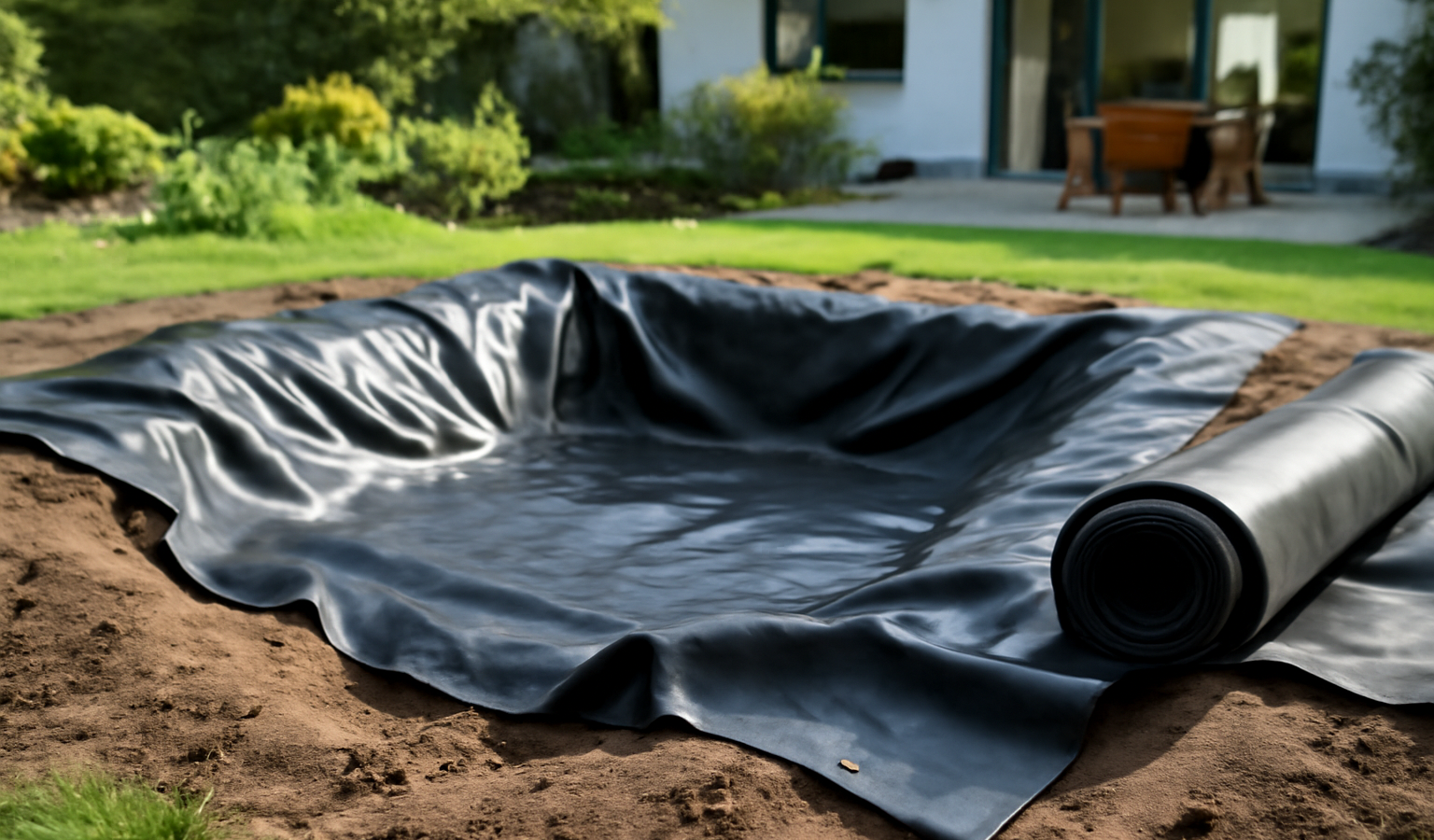
The liner is the single most important component of any backyard pond. Choose the wrong material or get the size wrong, and you are looking at leaks, dead fish, or a complete rebuild. This guide walks you through every flexible and rigid liner option, shows you the simple formula for calculating exactly how much liner you need, and takes you step by step through installing a flexible liner the right way.
As an Amazon Associate we earn from qualifying purchases.
Key takeaways
- EPDM rubber is the popular fish-safe flexible liner
- Size = length + 2x depth + ~2 ft overlap (both ways)
- Always use underlayment to prevent punctures
- Preformed is easy but limited in shape/size
- Quality liners last 20+ years
Flexible liners vs. preformed (rigid) ponds
There are two basic families of pond liner, and your choice shapes the entire project. A flexible liner is a large, foldable sheet of waterproof material that you drape into a hole you have dug yourself. Because it conforms to any shape, it gives you complete creative freedom: curves, plant shelves, streams, and irregular outlines are all possible. Most ponds larger than a few hundred gallons use a flexible liner.
A preformed or rigid pond is a pre-molded shell, usually high-density polyethylene or fiberglass, that you set into a matching hole. It is fast, the shape is already decided for you, and the rigid walls hold their form even with kids and pets around. The trade-off is that you are limited to whatever shapes and sizes the manufacturer sells, and large preformed shells get expensive and awkward to handle. For a small, simple water feature, preformed wins on convenience. For anything custom or sizeable, a flexible liner is almost always the better value. If you are still deciding on the overall project, start with our pillar guide on how to build a backyard pond.
Liner materials compared: EPDM, RPE, PVC and more
Among flexible liners, the material matters as much as the thickness. The three you will encounter most often are EPDM rubber, RPE (reinforced polyethylene), and PVC. Each has a distinct balance of flexibility, durability, weight, and fish safety.
EPDM rubber is the go-to choice for water gardens and fish ponds. It is a synthetic rubber that stays flexible in cold weather, drapes easily into complex shapes, and is sold in a fish-safe grade. Critically, make sure you buy a liner specifically labeled “pond grade” or “fish safe.” Roofing-grade EPDM is treated with algaecides and fungicides that are toxic to fish and plants, so the two are not interchangeable. You can browse EPDM pond liner options to compare sizes and thicknesses.
RPE (reinforced polyethylene) is a newer high-performance option. It is much lighter than EPDM for the same coverage, extremely puncture-resistant thanks to its woven reinforcement layer, and rated for very long lifespans. It is stiffer and harder to fold into tight curves, so it shines on larger, simpler shapes. PVC is the budget option: inexpensive and lightweight, but it becomes brittle with UV exposure over time and is not the best long-term choice for a fish pond. Two other materials round out the list: HDPE, a rigid plastic used mainly for preformed shells and large lined reservoirs, and butyl rubber, an older premium rubber similar in performance to EPDM.
| Liner | Pros | Lifespan |
|---|---|---|
| EPDM rubber (pond grade) | Fish-safe, very flexible, easy to fit and patch, cold-tolerant | 20-30+ years |
| RPE (reinforced polyethylene) | Lightweight, highly puncture-resistant, long warranty, fish-safe | 25-40 years |
| PVC | Cheap, lightweight, easy to handle | 5-15 years |
| Butyl rubber | Fish-safe, flexible, durable (premium price) | 20-30+ years |
| HDPE / preformed shell | Rigid, holds its shape, fast to install | 15-25 years |
Free, no-obligation quote · Connect with a local pro
How thick should a pond liner be?
Liner thickness is measured in mils (thousandths of an inch) or millimeters. For most flexible liners, thickness is a balance: thicker liners are tougher and more puncture-resistant, but heavier, pricier, and harder to fold into tight contours. For a typical backyard water garden, 45 mil EPDM is the standard recommendation and handles the vast majority of installations beautifully. Step up to 60 mil EPDM for larger ponds, koi ponds with sharp rockwork, or any site with roots and rocky soil where extra protection is worth the cost and weight.
RPE liners achieve the same puncture resistance at much lower thicknesses, often 24 to 30 mil, because the woven reinforcement does the heavy lifting. The key point: thickness alone does not protect against punctures. The right underlayment beneath the liner matters just as much, and we cover that next. If you want to dig deeper into specific products and brands, see our roundup of the best pond liners.
Underlayment: the layer you should never skip
Underlayment is a cushioning fabric layer that goes between the soil and the liner. Its job is to protect the liner from below, where the threats are sharp stones, roots, settling debris, and burrowing pests that can puncture even a thick liner over time. Skipping underlayment to save money is the single most common cause of slow, mysterious leaks a year or two down the road.
Purpose-made pond underlayment is a non-woven geotextile fabric, usually rated around 6 to 8 ounces per square yard. In a pinch, old carpet, thick cardboard, or a layer of sand can work, but geotextile is breathable, rot-proof, and far more reliable. Buy enough to cover the entire excavation, including shelves and walls. Compare pond underlayment in the same square footage as your liner so the two pieces match.
How to calculate pond liner size
Sizing a flexible liner is simple once you know the formula. You need the liner to reach across the bottom, up both sides at full depth, and have enough left over to overlap the edge and anchor it. The formula is the same for both length and width:
- Liner length = maximum pond length + (2 x maximum depth) + ~2 ft overlap
- Liner width = maximum pond width + (2 x maximum depth) + ~2 ft overlap
The “2 x depth” accounts for the liner climbing up both walls, and the roughly 2-foot overlap (about 1 foot on each side) gives you material to fold over the edge and tuck under your border stones. Always use your maximum measurements: the longest, widest, and deepest points of the planned pond.
Here is a worked example. Say your pond will be 10 ft long, 7 ft wide, and 2 ft deep at its deepest point:
- Length: 10 + (2 x 2) + 2 = 16 ft
- Width: 7 + (2 x 2) + 2 = 13 ft
So you would order a liner at least 16 ft x 13 ft. When in doubt, round up to the next standard liner size; trimming off a few extra inches at the end is easy, but a liner that comes up short cannot be stretched. Order the same dimensions in underlayment.
How to install a flexible pond liner, step by step
With your liner and underlayment sized and ready, installation follows a clear sequence. Work on a calm, mild day; cold liners are stiff and hot sun makes EPDM slippery to handle.
- Dig with shelves. Excavate your outline, building in a shallow shelf (about 9-12 inches deep) around part of the perimeter for marginal plants, then sloping down to your full depth in the center. Gently sloped walls (around 20 degrees) hold the liner better than vertical ones and are safer for any wildlife that falls in.
- Clean and cushion. Remove every visible root, sharp stone, and protruding object from the hole. Then lay your underlayment over the entire excavation, pressing it into the contours and overlapping seams generously.
- Fit the liner. With a helper, drape the liner loosely and centered over the hole. Do not stretch it tight. Press it down into the deepest point first, then work outward, tucking and pleating the excess into neat folds around curves and shelves. Leave the overlap resting on the surrounding ground.
- Fill and settle. Begin filling with water from a garden hose. As the weight of the water pulls the liner snug, step in (clean, soft-soled or bare feet) to smooth wrinkles and adjust pleats. Let the water do the work of seating the liner into every contour.
- Trim and edge. Once full, let it settle for a day so the liner finishes stretching. Then trim the excess overlap, leaving about 12 inches all around. Fold that flap back over the edge and secure it under a border of flat stones, pavers, or soil and turf so no liner is exposed to sunlight, which degrades it over time.
Free, no-obligation quote · Connect with a local pro
Patching leaks and liner lifespan
Even a well-installed liner can take a puncture from a falling branch, a heron’s beak, or an errant garden tool. The good news is that EPDM and most flexible liners are easy to repair. A patch kit uses a primer and a self-adhesive or seam-tape patch rated for the same material. To patch: drain the water below the hole, clean and dry the area thoroughly, apply primer, then press the patch firmly over the damage with several inches of overlap on all sides. Keep a pond liner patch kit on hand so a small leak never becomes an emergency.
As for lifespan, a quality pond-grade liner is a long-term investment. Properly installed EPDM and butyl liners routinely last 20 to 30 years or more, RPE can exceed that, and most reputable brands back this with a 20-year-plus warranty. The biggest enemies of liner life are UV exposure on uncovered edges and physical abuse, both of which good edging and underlayment prevent. Keep your water healthy too; our guides on how to clean a pond and, if you are stocking fish, how to build a koi pond will help your whole system last as long as the liner does.
Frequently asked questions
Is EPDM pond liner safe for fish?
Yes, but only pond-grade or fish-safe EPDM. Roofing-grade EPDM contains algaecides and fungicides that are toxic to fish and plants, so always confirm the liner is labeled for ponds before buying.
What size pond liner do I need?
Use the formula: liner length = pond length + (2 x depth) + about 2 feet of overlap, and the same for width. Always measure to your deepest point and round up to the next available size.
Do I really need underlayment under my pond liner?
Yes. Underlayment cushions the liner against sharp stones, roots, and settling that cause slow punctures. Skipping it is the most common cause of mysterious leaks, and good geotextile fabric is inexpensive insurance.
How thick should my pond liner be?
For most backyard ponds, 45 mil EPDM is the standard. Step up to 60 mil for koi ponds, larger ponds, or rocky soil. RPE liners reach similar strength at 24-30 mil thanks to internal reinforcement.
How long does a pond liner last?
A quality pond-grade liner lasts 20 to 30 years or more. EPDM, butyl, and RPE all carry long lifespans, especially when the edges are covered to block UV and underlayment protects the liner from below.
Featured project by Gensou Aquascaping
Want a pro to build your pond?
Compare free, no-obligation quotes from vetted local pond pros near you.