

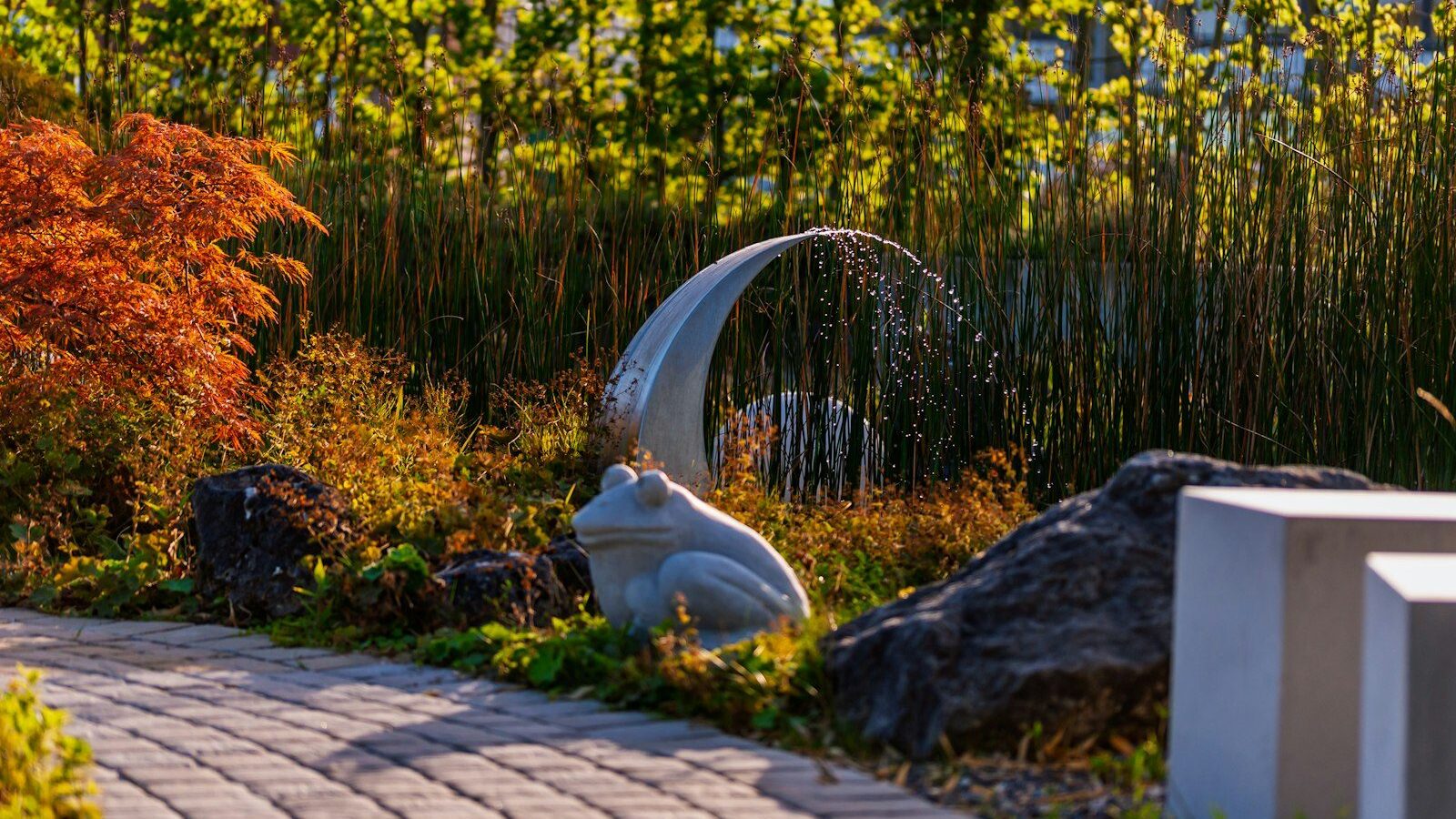
Most homeowners spend somewhere between a few hundred dollars and about $15,000 to add a backyard water feature, and the type of feature drives that range more than anything else. A plug-in container fountain on a patio can be a weekend DIY job for a few hundred dollars. A professionally installed bubbling rock or pondless waterfall typically lands in the low-to-mid thousands. A lined garden pond with a waterfall and filtration usually runs well into five figures once you add excavation, rock and plants, and a full koi pond costs more again. The other big cost drivers are electrical work, site access, soil and slope, and the amount of natural stone. Below are typical US price ranges for each feature type, a breakdown of where the money goes, and the choices that raise or lower the bill.
In this guide
- Typical Installed Cost by Water Feature Type
- Fountains
- Bubbling Rocks and Pondless Waterfalls
- Garden Ponds and Koi Ponds
- Cost Breakdown: Where the Money Goes
- Factors That Raise or Lower the Price
- Ongoing Costs
- DIY vs Professional Installation
- Questions to Ask Before You Sign
- Ways to Save
- Frequently Asked Questions
Key Takeaways
- Self-contained fountains are the cheapest water features; pondless waterfalls are mid-range; lined ponds and koi ponds cost the most.
- Rock, excavation and labor often add up to more than the pump, liner and filter combined.
- Budget for power. A dedicated GFCI outdoor outlet near the feature is required, and trenching a new circuit can add significantly.
- Pondless waterfalls give the sound of moving water with less maintenance and no open standing water.
- Plan for yearly running costs: electricity for the pump, water top-offs, cleaning and occasional part replacement.
Typical Installed Cost by Water Feature Type
These are typical ranges for professionally installed features in the US, reflecting common sizes and materials. Your quote can fall outside them depending on your region, access and design. DIY projects usually cost a fraction of these numbers, mostly for materials.
| Water feature | Typical installed range | DIY materials range |
|---|---|---|
| Plug-in container or tabletop fountain | $150 to $800 | $75 to $500 |
| Tiered or freestanding garden fountain | $800 to $5,000 | $300 to $2,500 |
| Wall fountain or water wall | $1,000 to $6,000 | $300 to $2,500 |
| Bubbling rock or disappearing fountain | $1,500 to $5,000 | $500 to $2,000 |
| Pondless waterfall (small to medium) | $3,500 to $12,000 | $1,000 to $4,000 |
| Small preformed garden pond | $1,500 to $5,000 | $400 to $1,500 |
| Lined garden pond with waterfall | $6,000 to $20,000 | $2,000 to $7,000 |
| Koi pond with full filtration | $15,000 to $50,000 or more | $5,000 to $15,000 |
Fountains
Fountains recirculate water from a small hidden basin or the bowl itself, so they need no excavation beyond a level pad. Small resin or ceramic patio fountains are often plug-and-play. Larger cast-stone tiered fountains are heavy, frequently 300 to 1,000 pounds or more, and need a compacted gravel or concrete base plus two or three people or equipment to set. That handling, the base and running power account for much of the installation cost. Natural stone, cast concrete and copper cost more than fiberglass and resin, but last longer and look better outdoors.
If you are leaning toward a fountain, our roundup of the best outdoor fountains compares styles and materials.
Bubbling Rocks and Pondless Waterfalls
These features hide a reservoir under gravel. Water is pumped up through a drilled boulder, urn or waterfall and drains back underground. Because there is no open water, they are safer around small children and need far less cleaning than a pond. A single bubbling boulder is the most affordable of this group. A pondless waterfall adds a stream bed, a waterfall spillway and multiple tons of rock, with costs climbing with stream length and boulder size. A 6- to 10-foot stream with a 2-foot drop is a common residential size; long streams with large boulders set by machine sit at the top of the range.
For a DIY approach, our guide on how to build a pondless waterfall walks through sizing the basin, liner and pump.
Free, no-obligation quote · Connect with a local pro
Garden Ponds and Koi Ponds
A pond is a living system, so cost includes not just the hole and liner but filtration, circulation and planting. Small preformed ponds of 50 to 200 gallons are the most affordable. Flexible-liner ponds allow natural shapes, shelves for plants and larger volumes; installers often price them by surface area, with typical small-to-medium garden ponds adding a skimmer, biological filter or waterfall filter, and pump. Koi ponds need depth (often 3 feet or more), larger pumps and filtration, bottom drains on high-end builds, and sometimes UV clarifiers, which is why they cost the most. Our comparison of preformed vs liner ponds covers the trade-offs.
Cost Breakdown: Where the Money Goes
On a typical mid-size pond or pondless waterfall, the main line items look like this. Percentages vary widely, but labor and stone usually dominate.
| Cost component | What it covers | Typical range or share |
|---|---|---|
| Design and site prep | Layout, permits, utility locating, removing turf | Often a few hundred dollars, more for custom design |
| Excavation | Digging by hand or mini excavator, hauling soil | $500 to $3,000 depending on size, soil and access |
| Liner and underlayment | EPDM rubber liner and protective fabric | Varies by size; roughly $1 to $2 per sq ft for EPDM material |
| Pump | Submersible or external pump sized to flow | $100 to $1,000 or more |
| Filtration | Skimmer, biological filter, UV clarifier | $200 to $2,500 |
| Rock and gravel | Boulders, river rock, gravel, delivery | Often 20 to 30 percent of total |
| Electrical | GFCI outlet, trenching, conduit, licensed electrician | $200 to $2,500 |
| Plants, fish and lighting | Aquatic plants, fish, underwater lights | $100 to $2,000 |
| Labor | Installation crew time | Often 40 to 50 percent of total |
Factors That Raise or Lower the Price
Size and volume
Bigger features need more excavation, more liner, more rock and larger pumps. Pump size and flow scale with the waterfall width; a common rule of thumb is about 1,500 gallons per hour for every foot of waterfall width for a moderate sheet of water.
Site access
If a mini excavator and skid steer can reach the spot through a wide gate, labor drops. If boulders and soil must be moved by wheelbarrow through a narrow side yard, expect higher labor charges.
Soil and slope
Rocky soil, heavy clay or tree roots slow digging. A natural slope can reduce cost for a waterfall because you use the grade instead of building it up, but a steep slope may require retaining walls.
Power supply
Pumps must plug into a GFCI-protected outdoor outlet. If one exists within reach, cost is minimal. If an electrician has to run a new circuit and trench conduit across the yard, it adds meaningfully to the job. Solar fountains avoid wiring but only run in direct sun; see our solar pond fountain guide for limits.
Materials and finish
Natural fieldstone, large boulders and custom stonework cost more than cast concrete or fiberglass forms. Underwater and landscape lighting, decorative edging, stepping stones and auto-fill valves all add to the total.
Region and season
Labor rates vary by metro area. Installers are busiest in spring; booking for late summer or fall can sometimes mean better scheduling.
Ongoing Costs
- Electricity: a small fountain pump uses little power, but a large waterfall pump running 24 hours a day is a noticeable line on the electric bill. Energy-efficient pumps and timers help.
- Water: evaporation and splash loss mean regular top-offs, more in hot, windy weather.
- Cleaning: an annual spring cleanout of a pond by a professional typically costs several hundred dollars; pondless features need less.
- Parts: pumps generally last a few years to a decade, UV bulbs need yearly replacement, and filter media needs periodic cleaning.
- Winterizing: in cold zones, budget for a de-icer or for shutting down and storing the pump.
Free, no-obligation quote · Connect with a local pro
DIY vs Professional Installation
Container fountains, small preformed ponds and single bubbling rocks are reasonable DIY projects with a free weekend and a strong back. Pondless waterfalls and liner ponds are doable for experienced DIYers, but getting the liner edges, water level and waterfall lip right takes care, and moving tons of rock is hard work. Hire a pro for large ponds, koi ponds, anything requiring machine-set boulders, and all new electrical circuits. Ask installers for references, photos of finished projects, the warranty on labor and liner, and an itemized quote so you can compare like for like. The ponds and water gardens hub has planning and maintenance guides to help you decide.
Questions to Ask Before You Sign
- Is the quote itemized, with pump model, flow rate, liner thickness, filter type and the tonnage of rock spelled out?
- Who handles the electrical work, and is a licensed electrician and permit included?
- How is excavated soil handled: hauled away, regraded on site, or left for you?
- What warranty covers labor, the liner and the pump, and for how long?
- Will the installer return for a startup check after the first few weeks, and is a spring cleanout or winterizing service offered?
- Can they show photos of similar features they built two or more years ago, not just fresh installs?
- How long will the job take, and what happens if weather delays it?
Get at least three quotes. Large differences between bids usually come down to rock quantity, filtration quality and how much of the electrical and cleanup work is included, so line them up item by item before choosing on the total.
Ways to Save
- Choose a pondless waterfall or bubbling rock instead of a pond for the sound of water at lower cost and upkeep.
- Site the feature near existing power.
- Use local stone, which avoids long-distance freight.
- Do the planting, edging and finishing yourself after a pro installs the structure.
- Start small and design for expansion; a stream can be lengthened later.
Frequently Asked Questions
What is the cheapest backyard water feature?
A plug-in container or patio fountain is the cheapest, often a few hundred dollars and installable in an afternoon near an existing outdoor outlet.
How much does a pondless waterfall cost?
Professionally installed small to medium pondless waterfalls typically fall in the mid four figures to low five figures, depending on stream length, rock size and access.
Does a water feature add value to a home?
A well-designed, low-maintenance feature can add curb appeal, but large ponds can deter some buyers because of upkeep. Fountains and pondless waterfalls are the safest choices for resale.
Do I need a permit for a backyard pond?
Some towns require permits or fencing for ponds over a certain depth, often around 18 to 24 inches. Electrical work usually needs a permit. Check with your local building department.
How much does it cost to run a water feature pump?
It depends on pump wattage and hours. Small fountain pumps cost little to run; large waterfall pumps running continuously cost more. Multiply watts by hours and your utility rate to estimate.
Get free quotes from local pros
Compare pond and water feature installers in your area and get a price for your yard, not an average.