

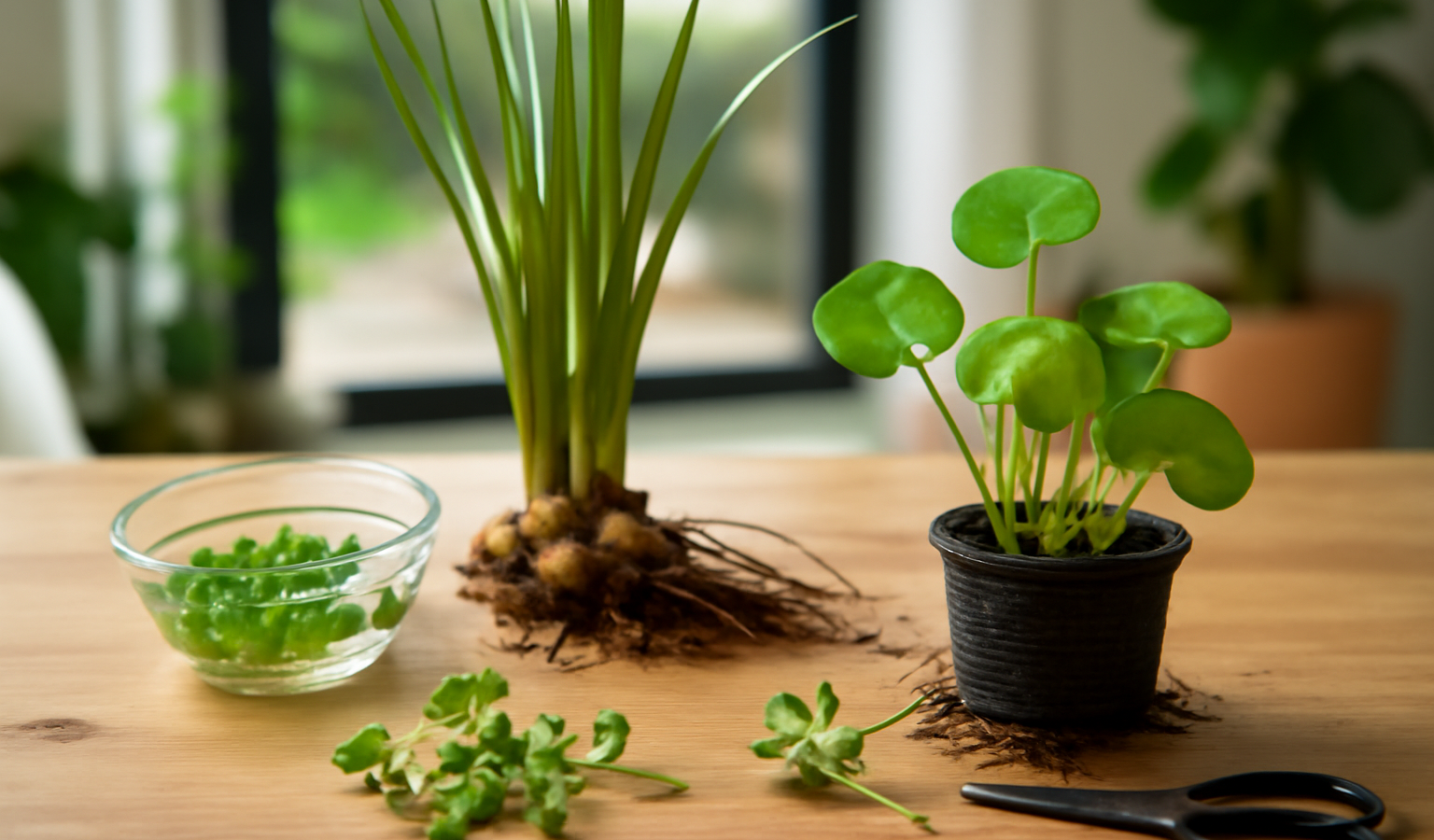
Pond plants are some of the easiest plants in the entire garden to multiply, because the same vigor that lets them colonize a pond margin in a single season also makes them quick to root, divide, and re-establish. By late spring most water gardeners have more plant than pot, and rather than throwing the excess on the compost heap you can turn one healthy clump into five or six new plants. The trick is matching the propagation method to the plant type: marginals and lilies want division, soft-stemmed aquatics root from cuttings, and floaters and many bog plants spread themselves on runners and plantlets that you simply detach. This guide walks through each method by plant category, with the timing, water depth, and aftercare that make the difference between a thriving division and a rotting one.
Key Takeaways
- Divide in late spring to early summer (water 60°F+/16°C+), when plants are in active growth and recover fastest — division is the workhorse method for marginals and hardy lilies.
- Match method to type: marginals and lilies = division; soft-stemmed aquatics like watercress and pennywort = stem cuttings; water hyacinth, lettuce, frogbit = detached runners/offsets; oxygenators = cuttings bundled and weighted.
- Use heavy aquatic soil, not potting mix — loam or clay-based aquatic compost won’t float out or fuel algae the way peat-based bagged mixes do.
- Top-dress every pot with 1 inch of pea gravel to hold soil down and stop koi and goldfish from rooting plants out.
- Trim foliage back by a third to half after dividing to balance the reduced root mass and cut transplant shock.
- Quarantine and rinse floaters before sharing — they carry snails, eggs, and sometimes invasive hitchhikers, and several are banned in warm-climate states.
When to propagate pond plants
Timing is everything in a pond because water temperature, not air temperature, drives root growth. The sweet spot for most propagation is late spring through early summer — roughly May into July across USDA zones 4–8 — once the water has climbed above 60°F (16°C) and plants have broken dormancy and are pushing fresh shoots. Divide or take cuttings then and the new plants have the whole growing season to bulk up before winter. You can squeeze in a second round of cuttings on fast growers in mid to late summer, but avoid dividing in autumn: a freshly cut, half-rooted plant going into cold water is far more likely to rot than to root. Tropical plants are the exception in reverse — they want even warmer water, ideally 70°F (21°C) and up, so wait until the pond is thoroughly warmed before propagating tender species.
Read the plant, not just the calendar. A marginal that has filled its basket, is bulging at the rim, or has a hollow, woody, flowerless center has told you it needs dividing. A lily that produces lots of leaves but pushes them straight up out of the water on long stems is overcrowded. Oxygenators that have turned into a dense raft choking the surface are ready to be thinned and the trimmings re-used. In every case you are working with a plant that wants to grow, which is exactly why pond propagation has such a high success rate compared with, say, slow-rooting woody cuttings on land.
Dividing marginal pond plants
Marginals — irises, pickerel rush, sweet flag, marsh marigold, cattails, rushes, and the like — grow in the shallow shelf zone with their roots submerged and their tops in the air. They are the bread-and-butter of pond division because they form clumps with multiple growing points that pull apart cleanly. Lift the whole basket out of the water and tip the plant out onto a tarp. You’ll usually see a tangle of roots and a crown made up of several fans, rhizomes, or shoots.
For fibrous-rooted clumps like rushes and sedges, prise the clump apart with two hand forks back-to-back, or simply pull it into chunks by hand. Each division should carry several healthy shoots and a fist-sized mass of roots — divisions smaller than that take a full extra season to look like anything. For rhizomatous marginals such as flag irises (Iris pseudacorus, Iris versicolor) and sweet flag, use a clean sharp knife to cut the rhizome into sections, making sure each piece has a visible growing tip (a fan of leaves) and a length of firm, light-colored rhizome behind it. Discard the old, dark, hollow center of the clump; it has flowered itself out and won’t regrow well.
Potting up marginal divisions
Pot each division into an aquatic planting basket using a heavy loam-based aquatic compost — never standard bagged potting mix, which floats out and feeds algae. Set the crown so the growing tip sits at the soil surface, firm the soil, and top-dress with at least 1 inch of pea gravel to lock everything down and deter fish from rooting it out. Trim the foliage back by a third to a half to balance the reduced roots, then lower the basket back onto the marginal shelf at the depth that species prefers — typically 2 to 6 inches of water over the crown for most marginals. New growth should appear within two to three weeks. If you are reworking your shelf plantings entirely, our guide to building a planted pond margin covers depth zoning in more detail.
Dividing water lilies
Hardy water lilies (Nymphaea) grow from a thick horizontal or upright rhizome and are divided much like a bearded iris. Lift the basket and wash the soil off the rhizome so you can see what you’re cutting. The growing tip is at one end — look for the crown with its coiled new leaves and pinkish growing point. Using a clean knife, cut the rhizome into sections 3 to 6 inches long, each with at least one strong growing eye or “nose” and a fan of roots. Dust cuts with nothing more than a few hours’ air-drying if you like, then pot each piece at a 45-degree angle with the cut end down and the growing tip exposed at the soil surface, pointing up toward the light. Top with gravel, leaving the nose clear.
Start newly potted lilies shallow — set the basket on bricks so there is only 6 to 10 inches of water over the crown while the plant re-establishes, then gradually lower it as the leaves lengthen until the rhizome sits at its mature depth of 12 to 24 inches (more for vigorous varieties). Divide hardy lilies every two to four years; the tell-tale signs are leaves crowding above the surface, smaller flowers, and a basket bursting at the seams. Tropical water lilies grow from a central tuber rather than a spreading rhizome and are propagated differently — by the small daughter tubers and, in viviparous varieties, by plantlets that form on the leaves. Because tropicals can’t survive a cold winter outdoors, dividing and storing them is bound up with overwintering; see our companion guide on how to overwinter tropical water lilies for handling those tubers.
Taking cuttings from soft-stemmed aquatics
Many marginal and bog plants have soft, juicy stems that root from a node almost as readily as they sit in water — which is to say, almost instantly. Watercress, water mint, brooklime, pennywort, water forget-me-not, and creeping jenny all propagate beautifully from stem cuttings. Snip a healthy non-flowering shoot 4 to 6 inches long, cut cleanly just below a leaf node, and strip the lower leaves. You can root these two ways: stand the cuttings in a jar of pond water on a bright windowsill until white roots appear in one to two weeks, then pot up; or push them directly into a basket of wet aquatic soil, three or four to a pot, and set it in shallow water where the soil stays saturated. Either route works because the cut node is the site where roots emerge, and warm, oxygenated water is exactly the environment these plants evolved in.
For trailing oxygenator-adjacent plants and bog perennials, take cuttings in late spring or early summer when stems are firm but not yet woody. Keep them out of harsh midday sun while they root, and don’t fertilize until you see new top growth — a cutting has no roots to take up feed, and excess nutrients just feed algae in the rooting jar.
Propagating oxygenators
Submerged oxygenators — hornwort, anacharis (elodea), and similar — barely need a method at all. They grow so fast that you propagate them every time you thin the pond. Cut or pull a handful of healthy stems, gather six to ten of them into a bunch, and either weight the base with a lead-free plant anchor or push the cut ends into a gravel-topped basket. Drop the bunch in and it carries on growing; hornwort in particular often roots loosely or simply floats and photosynthesizes without rooting at all. Because oxygenators do the heavy lifting of keeping water clear and balanced, propagating extra bunches in spring is a cheap way to stock a new pond or boost an algae-prone one. Just thin aggressively in summer, because the same vigor means they can blanket the surface and crash the oxygen at night if left unchecked.
Floaters: runners, offsets, and plantlets
Free-floating plants propagate themselves and ask only that you separate the babies. Water hyacinth and water lettuce throw out stolons (runners) with daughter rosettes on the end; once a daughter has a few leaves and its own dangling roots, pinch through the connecting runner and you have a new plant. Frogbit and duckweed multiply by tiny offsets and simply double their numbers across the surface — scoop and share. Floaters need no soil, no pot, and no rooting time; they are genuinely the fastest pond plants to “propagate.”
Two cautions, though. First, that same speed makes several floaters invasive: water hyacinth and water lettuce are banned or restricted in many warm-winter states because they escape and choke natural waterways, so never dump excess into a storm drain, ditch, or wild pond — bag and bin it or compost it on land. Second, floaters are notorious hitchhiker carriers, ferrying snail eggs and pest larvae between ponds. Rinse and inspect any plant you share with another gardener. With those provisos, dividing floaters is as simple as it gets: lift, separate, redistribute.
Aftercare for new pond plants
Whatever method you used, the first few weeks decide success. Keep newly divided and freshly cut plants in warm, shallow water — the warmth speeds rooting and the shallow depth keeps leaves near the light while the plant rebuilds its root system. Hold off on fertilizer for two to three weeks; an aquatic plant tablet pushed into the soil once new growth appears is plenty, and loose granular feed in a pond just fuels algae. Watch for yellowing or mushy crowns, which signal a division that was too small or planted too deep; pull anything that’s clearly rotting before it fouls the water. Protect tender new shoots from fish: a temporary mesh cover or extra gravel keeps koi and goldfish from grazing or uprooting fresh plantings. Once a plant is growing strongly and has filled its basket, you can move it to its final depth and let it earn its keep — and in a couple of seasons you’ll be dividing it all over again. For a broader look at keeping the whole system balanced, our overview of building a low-maintenance backyard pond ties plant choice to filtration and stocking.
Frequently Asked Questions
What is the best time of year to propagate pond plants?
Late spring through early summer, once water temperature is above 60°F (16°C) and plants are in active growth. This gives divisions and cuttings the full season to establish before winter. Avoid dividing in autumn, when cold water makes freshly cut plants rot rather than root. Tropical species want even warmer water, around 70°F (21°C), so wait until the pond is thoroughly warmed.
Can I just use regular potting soil for pond plant divisions?
No. Standard bagged potting mix is light and peat-based, so it floats out of the basket, clouds the water, and releases nutrients that feed algae. Use a heavy loam- or clay-based aquatic compost instead, and top-dress every pot with about an inch of pea gravel to hold the soil in place and stop fish from rooting plants out.
How do I divide a water lily?
Lift the basket, wash off the soil, and cut the rhizome into 3–6 inch sections, each with a strong growing eye (the “nose”) and some roots. Pot each piece at a 45-degree angle with the growing tip exposed at the soil surface, top with gravel, and start it shallow on bricks before lowering to full depth as it establishes. Divide hardy lilies every two to four years.
Why are some floating pond plants illegal to share?
Water hyacinth and water lettuce grow so fast that they choke natural waterways and are banned or restricted in many warm-winter states. Never release excess floaters into ditches, drains, or wild water — bag them or compost on land. Floaters also carry snail eggs and pests between ponds, so rinse and inspect anything you give away.
How long until propagated pond plants establish?
Soft-stemmed cuttings and oxygenators root within one to two weeks, marginal divisions show new growth in two to three weeks, and floaters establish instantly. A divided lily takes a few weeks to push fresh leaves and a full season to bulk up. Keep everything in warm, shallow water and delay feeding until new top growth appears.