

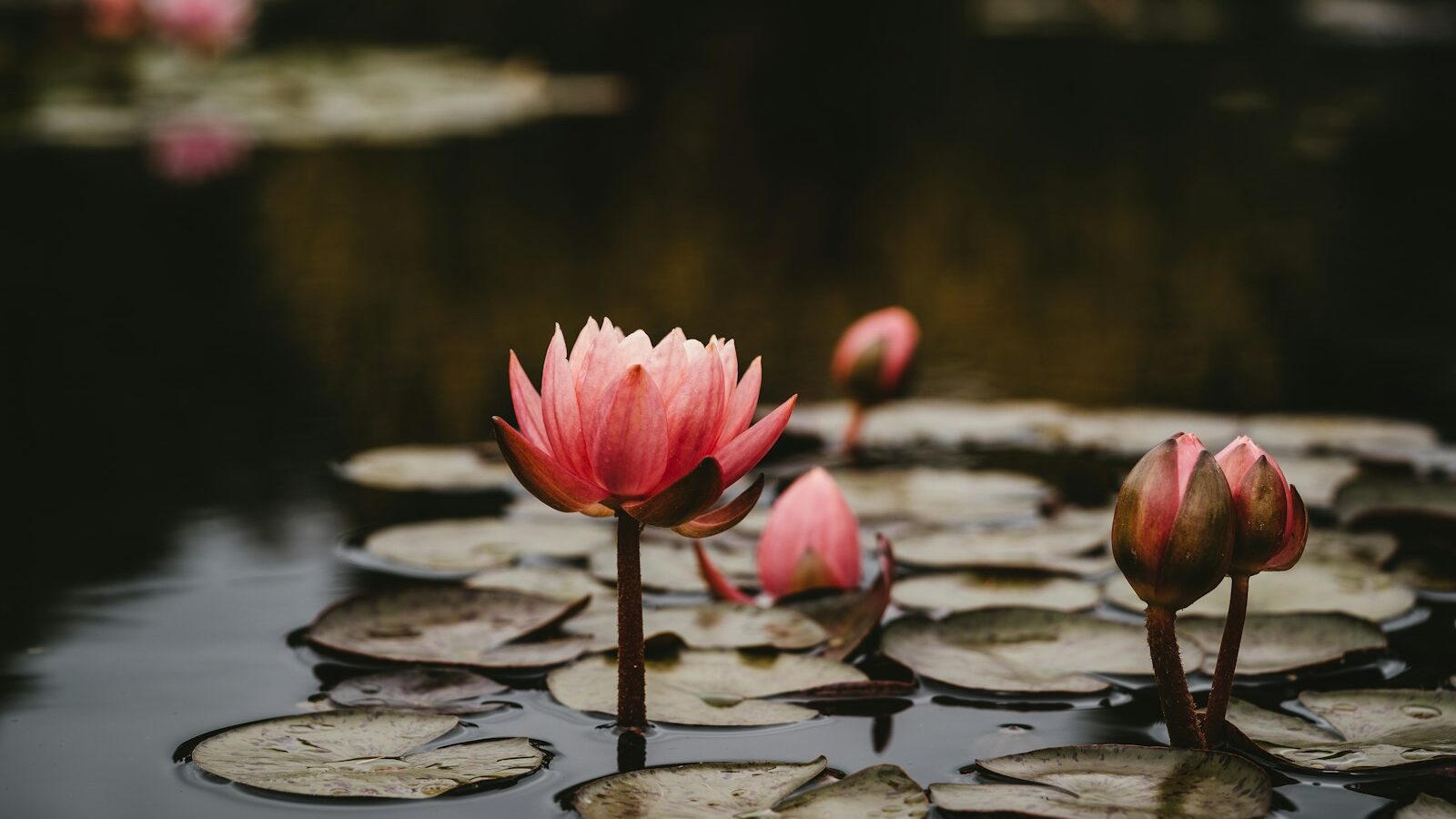
Summer is the season that tests every backyard pond. As water temperatures climb, oxygen levels fall, algae explodes, and evaporation quietly drops your water level day after day. This guide walks you through the practical, seasonal adjustments that keep your fish healthy and your water clear when the heat is at its worst.
Key takeaways
- Warm water holds less oxygen — aerate more, especially at night
- Top up with dechlorinated water for evaporation
- Shade 40-60% of the surface with plants/lilies
- Watch for fish gasping at the surface
- Clean filters more often in summer
As an Amazon Associate we earn from qualifying purchases.
Why summer is the hardest season for ponds
It is easy to assume that warm, sunny weather is good for a pond. In reality, summer stacks several stressors on top of each other at exactly the same time, and they compound one another. Understanding the chemistry behind the heat helps you respond before a crisis hits rather than after.
The oxygen problem
Water’s ability to hold dissolved oxygen drops sharply as temperature rises. Water at 50°F (10°C) can hold nearly twice as much oxygen as water at 86°F (30°C). At the same time, warm water speeds up the metabolism of your fish and the beneficial bacteria in your filter, so everything in the pond is demanding more oxygen precisely when the water can supply less. This is the single most important reason summer ponds get into trouble.
Algae, evaporation and concentration
- Algae blooms: long daylight hours plus warm water plus nutrient-rich runoff create perfect conditions for both green-water algae and string algae.
- Evaporation: a typical pond can lose an inch or more of water per week in peak summer, exposing pumps and concentrating waste.
- Waste concentration: as water evaporates, ammonia, nitrates and minerals become more concentrated, adding chemical stress to the heat stress.
If you are still planning or rebuilding your pond, getting the depth and shape right makes summer far easier to manage — see our pillar guide on how to build a backyard pond for sizing and depth recommendations that buffer against heat.
Aerate more, especially on hot nights
Aeration is your most powerful summer tool. Adding extra oxygen directly counteracts the warm-water oxygen deficit, and it also helps off-gas excess carbon dioxide. The key insight most pond owners miss is when the danger peaks.
Why nights are riskiest
During the day, aquatic plants and algae produce oxygen through photosynthesis. After dark, that production stops — and the plants, algae, fish and bacteria all keep consuming oxygen. The lowest oxygen reading of any 24-hour cycle almost always occurs just before dawn. That is why fish gasping at the surface is most common in the early morning, and why your aerator should run around the clock through summer, not just during the day.
How to boost aeration
- Run an air pump with diffuser stones 24/7; size it generously for your gallons.
- Angle a fountain or spitter to break the surface and increase gas exchange.
- Add a second air stone near the deepest point where oxygen is lowest.
- Keep the waterfall running overnight rather than switching it off to save power.
A dedicated pond aerator air pump is inexpensive insurance against a summer fish kill. For a full walkthrough of sizing and placement, read how to aerate a pond.
Free, no-obligation quote · Connect with a local pro
Top up with dechlorinated water
With evaporation pulling levels down, you will need to add water regularly — often weekly. How you add it matters as much as how much you add.
Why you cannot just use the hose
Municipal tap water contains chlorine or chloramine to keep it safe for drinking. Both are toxic to fish gills and will kill the beneficial bacteria in your filter. Always treat new water with a dechlorinator before or as it enters the pond, and add water slowly so the temperature does not shock your fish.
- Top up no more than about 10-15% of total volume at once to avoid temperature and chemistry swings.
- Dose pond dechlorinator for the full pond volume when in doubt.
- Let a slow trickle run rather than a blast — it mixes and de-gasses better.
If you have well water, have it tested — it can be low in oxygen and high in iron or other minerals, which create their own summer issues.
Provide shade to cool the water
Shade does double duty in summer: it lowers water temperature (which raises oxygen capacity) and it starves algae of the sunlight it needs to bloom. Aim to cover roughly 40-60% of the surface.
The best shade sources
- Water lilies: their floating pads are the gold standard — beautiful, fish-friendly, and excellent at blocking light.
- Floating plants: water lettuce, water hyacinth (check local regulations, as some are invasive) and frogbit spread quickly to cover open water.
- Marginal plants: tall reeds and irises along the edges cast shade and provide shelter.
- Shade sail or pergola: for ponds in full sun, a temporary shade cloth over part of the pond is a fast fix.
Plants also absorb the nutrients algae would otherwise feed on, so they fight blooms from two directions at once.
Control algae naturally
Reaching for chemical algaecides in summer is risky: when algae dies off in bulk, its decomposition consumes huge amounts of oxygen — exactly what your fish cannot spare in the heat. A sudden algae crash can trigger the very fish kill you are trying to prevent. Lean on natural methods instead.
Natural algae control that works
- Add beneficial bacteria: these out-compete algae for nutrients and break down sludge. A regular dose of pond beneficial bacteria keeps the biological balance tilted in your favor.
- Increase plant coverage: more plants means fewer free nutrients for algae.
- Manually remove string algae: twist it out with a stick or net before it dies and rots.
- Reduce feeding and overstocking: less fish waste means fewer nutrients fueling blooms.
- Consider a UV clarifier: for persistent green water, a properly sized UV unit clears it without chemicals.
For a deeper dive on water clarity strategies year-round, see how to keep pond water clear.
Feed fish appropriately and watch for stress
Summer feeding is a balancing act. Warm water speeds fish metabolism so they want more food, but excess food and waste add to the oxygen demand and nutrient load.
Smart summer feeding
- Feed only what fish can finish in a few minutes, and remove leftovers.
- Feed in the cooler morning hours when oxygen is recovering, not at the peak of afternoon heat.
- During extreme heat waves, reduce or skip feeding for a day or two — fish handle a short fast far better than low oxygen.
- Use a high-quality, easily digestible food to minimize waste.
Watch for fish gasping at the surface
The clearest warning sign of low oxygen is fish gathered at the surface, mouths working at the air — often worst at dawn. If you see this, act immediately: turn on every aerator and fountain you have, splash the surface with a hose to add oxygen, do a partial dechlorinated water change, and provide shade. Do not feed until the fish recover. Other red flags include lethargy, fish hovering near the waterfall, and a sudden sulfur or rotten smell from decaying organic matter.
Free, no-obligation quote · Connect with a local pro
Clean filters and keep water levels up
Your filtration system works overtime in summer. Higher fish activity, more feeding, and faster organic breakdown all mean filters and skimmers clog faster and need more frequent attention.
Summer maintenance routine
- Rinse mechanical filter media weekly — use pond water, never tap water, so you do not kill beneficial bacteria.
- Empty skimmer baskets every few days to keep flow and surface skimming strong.
- Check water level frequently and top up before pumps run dry and burn out.
- Net out fallen leaves and debris before they sink and decompose.
- Inspect pump flow — reduced flow often signals a clog that is also cutting aeration.
A consistent routine prevents most summer emergencies. For a season-by-season checklist, bookmark our pond maintenance guide.
Frequently asked questions
Should I run my pond aerator at night in summer?
Yes — running it overnight is the most important time. Plants and algae produce oxygen only in daylight, so oxygen levels fall to their lowest just before dawn. Run aeration 24/7 through the summer to protect your fish during those low-oxygen overnight hours.
How much of my pond surface should be shaded?
Aim for roughly 40-60% coverage with water lilies and floating plants. That keeps the water cooler and starves algae of light, while still leaving open water for oxygen exchange at the surface.
Why are my fish gasping at the surface?
Gasping almost always means low dissolved oxygen, which is common in warm water — especially early morning. Immediately boost aeration, splash the surface with a hose, add shade, and do a partial dechlorinated water change. Stop feeding until they recover.
Can I use algaecide to clear summer algae?
Be very careful. When large amounts of algae die at once, decomposition consumes oxygen your fish cannot spare in the heat, which can cause a fish kill. Natural methods — beneficial bacteria, more plants, manual removal, and a UV clarifier — are far safer in summer.
How often should I top up my pond in summer?
Most ponds lose an inch or more per week to evaporation, so weekly top-ups are typical. Add no more than 10-15% of the volume at a time, always treat the new water with a dechlorinator, and add it slowly to avoid shocking your fish.
Featured project by Gensou Aquascaping
Want a pro to service your pond?
Compare free, no-obligation quotes from vetted local pond pros near you.