

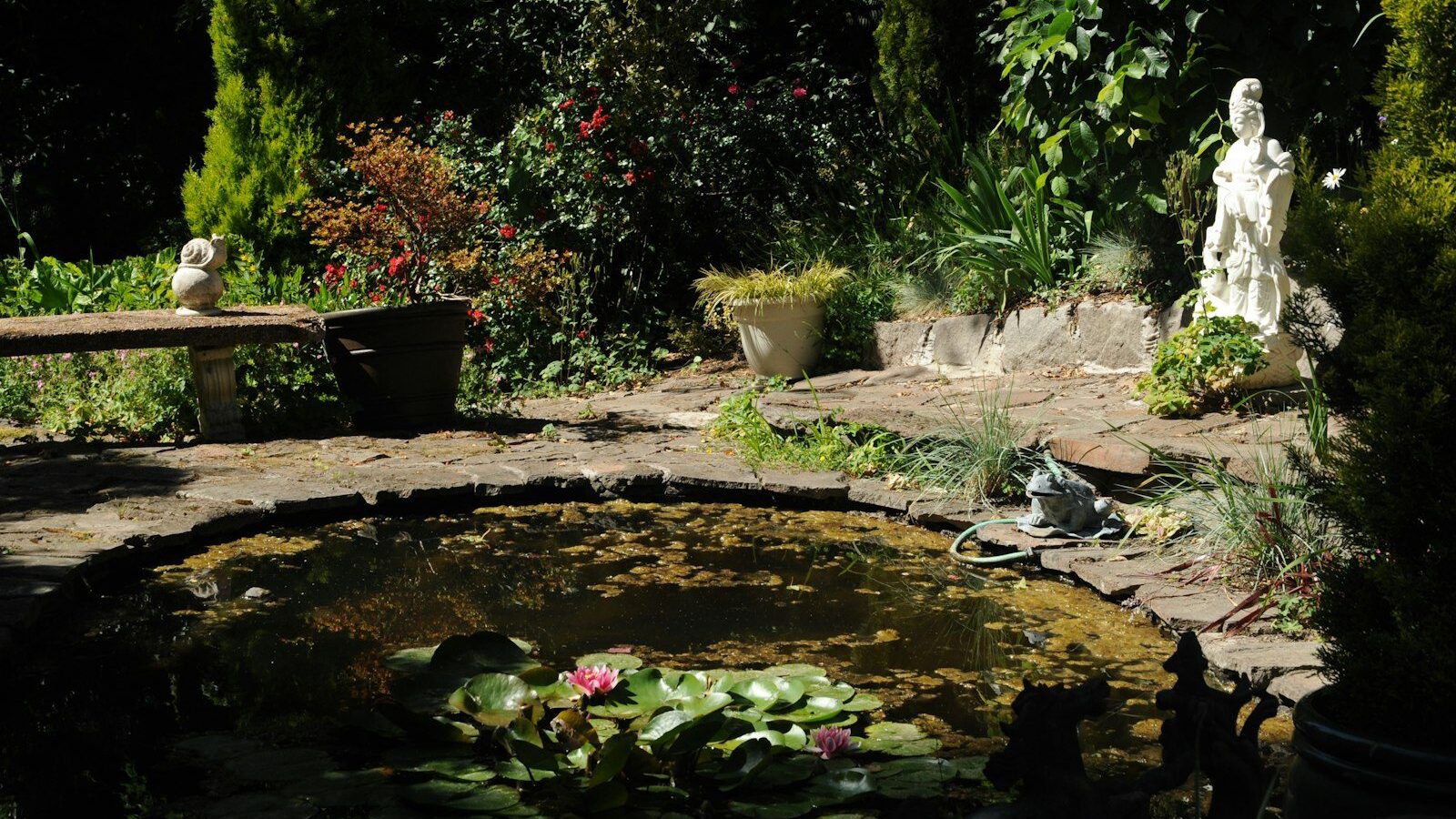
If your pond turns into pea soup every spring, no amount of barley straw or water changes will fix it permanently. Single-celled suspended algae multiply faster than you can net them out, and the only reliable cure is an ultraviolet clarifier. A UV clarifier passes pond water past a UV-C bulb that clumps free-floating algae cells together so your filter can trap them. Within a week or two of correct operation, the water goes from murky green to genuinely clear. The catch: a clarifier only works if the wattage matches your pond volume and the water moves past the bulb slowly enough to get a lethal UV dose.
It is worth being clear about how the technology differs from a UV sterilizer. The terms get used loosely, but a clarifier is tuned to a flow rate and dose that flocculates green-water algae so your mechanical filter can capture the clumps, while a true sterilizer runs water past the bulb far more slowly to kill bacteria and parasites. For 95 percent of backyard ponds, clearing green water is the goal, so a clarifier is what you want. The three variables that decide whether it works are bulb wattage relative to your gallons, the flow rate through the unit, and how clean you keep the quartz sleeve. Get those right and the difference is dramatic; get them wrong and the pond stays green no matter how long you run the thing. Below are seven units worth considering across every pond size, followed by a buyer’s guide.
As an Amazon Associate we earn from qualifying purchases. This page contains affiliate links at no extra cost to you.
Key Takeaways
- Size by wattage: roughly 1 watt of UV-C per 100 gallons in a sunny, fish-stocked pond; double that for heavy bioloads.
- Flow rate matters more than people think. Slower flow through the unit means a stronger UV dose and clearer water.
- A clarifier only kills suspended green-water algae. It will not touch string algae on rocks or fix the underlying nutrient problem.
- Replace the UV-C bulb roughly every 11 to 12 months of continuous use, even if it still glows. Output drops long before it dies.
- Stainless-steel housings reflect more UV back into the water and run cooler than plastic, but cost more.
- Run the clarifier continuously through the warm months; cycling it on and off lets algae rebound.
UV Clarifier Comparison
| Product | Best For | Key Spec |
|---|---|---|
| TetraPond GreenFree 36W | Large ponds up to 8,800 gal | 36W, inline, multiple sizes |
| Jebao 55W Stainless | Heavily stocked koi ponds | 55W, polished steel housing |
| TotalPond UV Clarifier | Small backyard ponds | Up to ~800 gal, easy setup |
| TetraPond GreenFree 18W | Mid-size ponds | 18W, up to ~5,500 gal |
| TotalPond Pressurized Filter + UV | All-in-one filtration | Combined filter and UV |
| TetraPond GreenFree 5W | Tiny ponds and containers | 5W, up to ~660 gal |
| Jebao Stainless (smaller W) | Premium mid-size builds | Reflective steel, high efficiency |
TetraPond GreenFree UV Clarifier 36W
The TetraPond GreenFree line is the default recommendation for most home ponds because it spans the full size range, from a 5-watt unit for container ponds to this 36-watt flagship rated for ponds up to 8,800 gallons. It installs inline after your pump and before the filter, with stepped hose fittings that adapt to common tubing sizes. Tetra rates it to clear green water within about five days of continuous operation when sized correctly.
The kit ships with the UV-C lamp, a quartz sleeve, hose adapters, and the ballast and power cord, so you do not need to buy extras to get running. The quartz sleeve is the part you wipe clean each season; a filmy sleeve blocks UV and is the most common reason a clarifier “stops working.” Plan on a fresh bulb roughly once a year.
Pros
- Widely available in multiple wattages for any pond size
- Complete kit with hose adapters and ballast included
- Simple inline installation
Cons
- Plastic housing runs warmer than steel
- Replacement bulbs add to long-term cost
Jebao 55W Stainless Steel UV Clarifier
When you are fighting persistent algae in a heavily stocked koi pond, the Jebao 55W stainless unit brings the firepower. At 55 watts it is one of the strongest single-bulb clarifiers in the home category, rated for ponds up to roughly 8,000 gallons with a serious fish load. The polished stainless-steel housing reflects UV back toward the water, which Jebao says adds meaningful efficiency over a plastic body, and the metal sheds heat better during long summer runs.
This is overkill for a small water feature, but for a large, sunny, fish-dense pond it is exactly the right tool. As with any clarifier, match it to a pump that pushes water through at the recommended flow rate; too fast and the algae never gets a killing dose.
Pros
- High 55W output for stubborn green water
- Reflective stainless housing boosts efficiency
- Handles large, heavily stocked ponds
Cons
- Far more power than small ponds need
- Heavier and more expensive than plastic units
Free, no-obligation quote · Connect with a local pro
TotalPond UV Pond Clarifier
For a typical backyard pond up to about 800 gallons, the TotalPond UV clarifier is an inexpensive, no-drama way to get clear water. It is sized for the smaller ponds most homeowners actually build, and it plumbs inline with your existing pump and filter using standard fittings. If you have a preformed liner pond with a few goldfish and a fountain, this is the bracket you fall into.
It will not muscle through a green algae bloom in a 3,000-gallon koi pond, so be honest about your volume before buying. Within its size range, though, it does the job and is one of the easier units to find and service.
Pros
- Affordable entry point for small ponds
- Simple inline hookup
- Easy to find replacement bulbs
Cons
- Limited to small pond volumes
- Plastic build less durable than premium units
TetraPond GreenFree 18W Clarifier
The 18-watt GreenFree sits in the sweet spot for mid-size ponds in the low-thousands of gallons. It uses the same proven inline design as the 36W model but at a lower wattage and price, which suits a pond with a moderate fish load and partial sun. If you are between sizes, err up: a slightly oversized clarifier clears water faster and gives you headroom as fish grow and the bioload climbs.
Like its bigger sibling, it includes the lamp, quartz sleeve, and ballast. Keep the sleeve clean and swap the bulb annually and it will hold the water clear season after season.
Pros
- Well-matched to mid-size home ponds
- Same reliable design as the 36W model
- Complete out-of-the-box kit
Cons
- Undersized for large koi ponds
- Plastic housing
TotalPond Pressurized Pond Filter with UV Clarifier
If you are building from scratch or want to consolidate gear, the TotalPond pressurized filter with a built-in UV clarifier handles mechanical filtration, biological filtration, and algae clearing in one canister. A pressurized filter can sit below water level or be buried to the rim, which hides it better than an open box filter and lets you run the outflow uphill to a waterfall.
The integrated UV is convenient, but it ties the bulb life and the filter together, so factor in that you are servicing one unit instead of two separate ones. For a tidy, single-box pond system on a small-to-mid pond, the all-in-one approach is hard to beat.
Pros
- Filtration and UV in one buried-rim canister
- Can push water uphill to a waterfall
- Cleaner install with fewer hoses
Cons
- UV and filter must be serviced as a unit
- Best for small-to-mid ponds only
TetraPond GreenFree 5W Clarifier
The smallest GreenFree, a 5-watt unit rated for ponds up to roughly 660 gallons, is the right answer for container ponds, small preformed liners, and patio water features. It is inexpensive and draws very little power, so running it continuously through the warm season costs almost nothing. Pair it with a modest pump and you can keep a tiny pond crystal clear without overspending.
Just respect the size limit. A 5W bulb cannot clear a bloom in a pond much larger than its rating no matter how long you run it, because the water moves through too fast to absorb a killing dose.
Pros
- Cheap and energy-sipping for tiny ponds
- Perfect for container and patio water features
- Same trusted GreenFree design
Cons
- Only for the smallest ponds
- No headroom for a growing fish load
Free, no-obligation quote · Connect with a local pro
How to Choose a Pond UV Clarifier
Match wattage to volume and bioload. A rough rule is 1 watt of UV-C per 100 gallons for a lightly stocked, partly shaded pond, climbing toward 2 watts per 100 gallons for a sunny pond packed with koi. Manufacturers list a gallon rating on every model; treat it as a maximum, not a target, and size up if your pond gets full sun or carries a heavy fish load.
Mind the flow rate. The clarifier works by giving each drop of water enough exposure time under the bulb. Pumping water through too fast slashes the UV dose and leaves the pond green. Check the unit’s recommended flow range and pick a pump that lands inside it. Many ponds that “won’t clear” are simply over-pumped.
Plan for maintenance. UV-C bulbs lose output long before they stop glowing, so replace them about once a year of continuous use. Wipe the quartz sleeve clean each season; mineral film and biofilm block UV just as effectively as a dead bulb. Keep a spare bulb on hand so a clarity drop does not become a two-week wait.
Know what UV can and cannot do. A clarifier kills free-floating single-celled algae, the kind that turns water pea-green. It does nothing for string algae clinging to rocks and liner, and it will not fix the root cause, which is excess nutrients from fish waste, leaves, and overfeeding. Pair the clarifier with good biological filtration, sensible stocking, and a leaf net in autumn. For more on keeping fish-friendly water balanced, see our guide to planting pond margins and shelves, which adds nutrient-hungry plants that starve algae, and browse the full Water Gardens & Ponds hub for filtration and pump help.
Get the wattage and flow right and a UV clarifier is close to magic: a green pond turns clear within a week or two and stays that way all season with minimal fuss. Pick the unit that matches your real pond volume, keep the sleeve clean, and replace the bulb on schedule. For more outdoor water and landscape projects, our Tools & Gear hub has buyer guides for pumps, filters, and pond accessories.
Frequently Asked Questions
How long until a UV clarifier clears my green pond?
With a correctly sized unit and proper flow rate, most ponds go from green to clear within five to fourteen days of continuous operation. If two weeks pass with no change, your wattage is too low, your flow is too fast, or the quartz sleeve is dirty.
Will a UV clarifier kill string algae on my rocks?
No. UV only kills single-celled algae suspended in the water column. String or filamentous algae attached to surfaces is unaffected and must be removed manually or controlled with phosphate binders and shade.
Is UV light safe for my fish and pond plants?
Yes. The water passes through an enclosed chamber, so fish and plants are never directly exposed to the UV-C light. It only treats free-floating algae and some waterborne pathogens as water flows through the unit.
How often do I replace the bulb?
Replace the UV-C bulb after roughly 11 to 12 months of continuous use. The bulb may still glow but its germicidal output fades well before it burns out, so the calendar, not the glow, tells you when to swap it.
Should I run the clarifier all the time or only when the water is green?
Run it continuously through the warm growing season. Cycling it on only when you see green lets algae rebound between runs. Many people turn it off over winter when algae growth stalls and the pond is dormant.
Rather hire a pro?
Prefer to skip the DIY and have it done right? Compare free, no-obligation quotes from vetted local landscaping pros near you.