

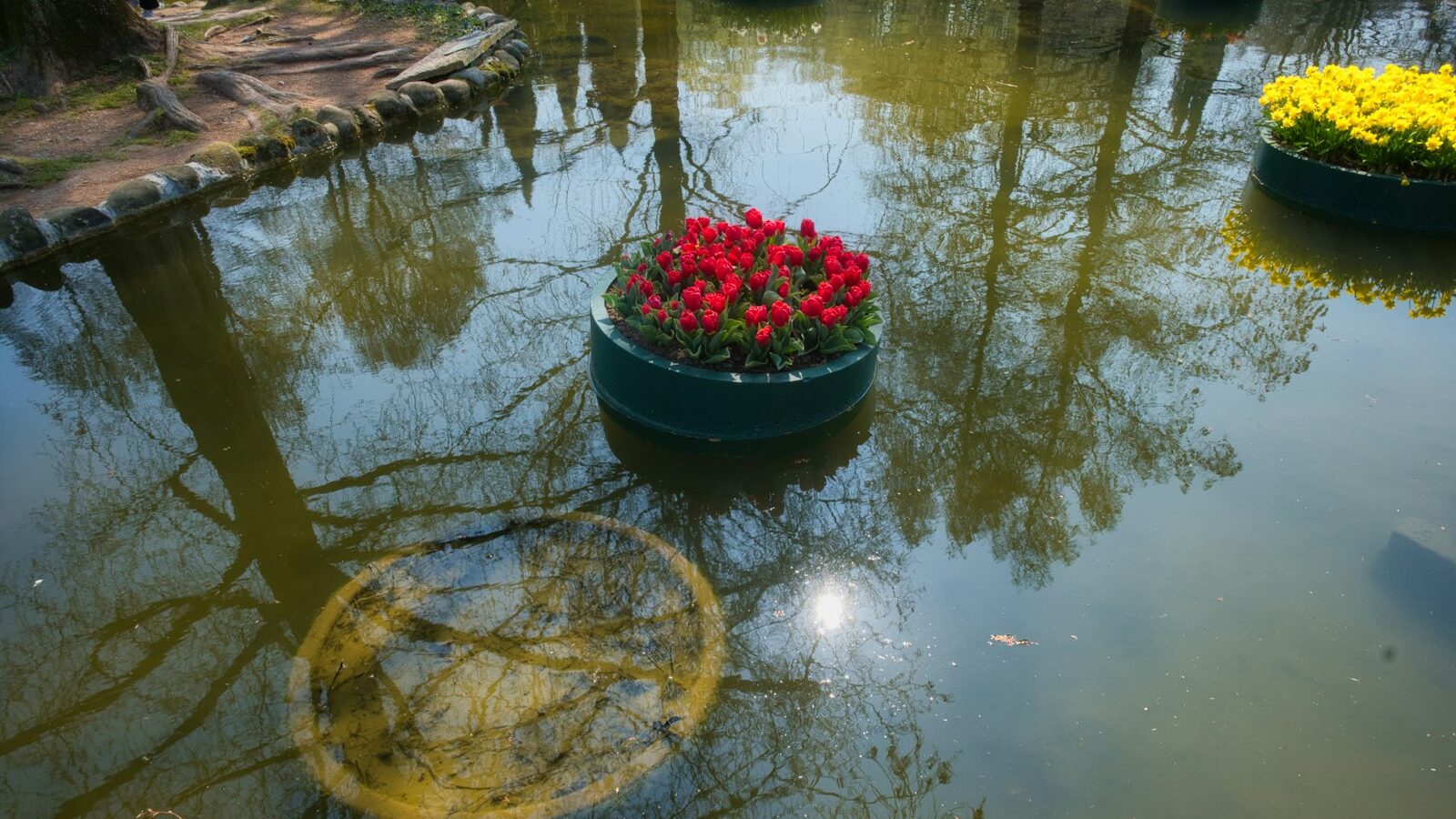
Plant pond plants in aquatic baskets, not loose in the pond, because baskets contain the soil, control vigorous spreaders, and let you lift and reposition plants by season. The short version: use a mesh aquatic basket, line fine-mesh baskets with hessian or burlap, fill with heavy clay loam or aquatic soil (never potting mix), set the crown at the soil surface, top with a 1-inch layer of pea gravel, and lower the basket onto the depth shelf that matches the plant. Get the soil and depth right and pond plants are close to foolproof.
Key Takeaways
- Use aquatic baskets, not solid pots, so water and gases pass through the roots. Line fine work with hessian or geotextile.
- Use heavy clay loam or proper aquatic soil. Standard potting mix floats out, fouls the water, and feeds algae.
- Top-dress with 1 inch of pea gravel to hold soil down and stop fish from rooting it out.
- Match plant to depth shelf: marginals at 0 to 6 inches over the crown, lilies in deeper water from 12 to 24+ inches once established.
- Repot every 1 to 2 years in spring; vigorous plants outgrow their baskets fast.
Why Plant in Baskets at All?
You can plant directly into a soil-bottomed natural pond, but for any lined or preformed pond, baskets are the standard method, and for good reason. A basket contains the root mass so aggressive plants like cattails, water iris, and some lilies cannot colonize the entire pond. It lets you lift a plant to divide it, move it to a different depth, or pull it out for winter protection. It keeps soil from clouding the water every time a fish or pump current disturbs the bottom. And it makes seasonal maintenance, fertilizing, deadheading, repotting, a five-minute job instead of a wading expedition.
Baskets also protect the rest of your build. If you keep fish, koi in particular love to root through soft substrate; a gravel-topped basket resists their digging far better than open soil. If you are still planning your livestock, our guide on choosing fish for a pond covers how koi and goldfish interact with plantings.
Choosing the Right Aquatic Basket
Aquatic baskets (also called planting baskets or pond pots) are mesh-sided containers that let water and dissolved gases reach the roots while holding the soil in place. They come in two broad styles.
- Lattice/coarse-mesh baskets: the traditional open-weave design. Cheap and durable, but the large holes need a fabric liner to keep soil in.
- Fine-mesh (micropore) baskets: tighter weave that usually needs no liner. More convenient, slightly pricier, and excellent for smaller marginals.
Size the basket to the plant’s vigor, not its current size. A small marginal is happy in a 4 to 6 inch basket; a mature waterlily wants a wide, shallow 10 to 14 inch basket (lilies spread sideways, so prioritize width over depth). Use round baskets for open water and long planting troughs for shelves where you want a continuous band of marginals. Avoid solid-walled nursery pots entirely, they trap stagnant water and starve the roots of oxygen.
The Right Planting Media (and What to Avoid)
Media choice is where most first-time pond planters go wrong. Aquatic plants need a dense, low-nutrient, mineral soil, the opposite of what you would use in a container of annuals.
- Best: heavy clay loam or a dedicated aquatic planting soil. Heavy, mineral-based soil anchors roots, holds nutrients in place, and does not float away.
- Acceptable: a topsoil/clay blend with no added organic matter or fertilizer.
- Avoid: standard potting mix, compost, peat, and anything with perlite, bark, or added fertilizer. These are buoyant, so they float out of the basket and cloud the water; worse, their high nutrient load fuels green-water algae blooms that can take over a pond in days.
For feeding, do not mix fertilizer into the soil where it will leach straight into the water. Instead, push aquatic plant fertilizer tablets into the soil near the roots during the growing season, typically one tablet per few liters of basket volume every month from spring through midsummer for hungry feeders like waterlilies. Stop feeding by late summer so growth hardens off before cold weather.
Step-by-Step: Planting a Basket
The process is the same for marginals and lilies, with depth being the main variable. Work over a tarp or wheelbarrow, it is messy.
- Line the basket if needed. For coarse-mesh baskets, line the inside with hessian, burlap, or a sheet of permeable geotextile so soil cannot wash through the holes. Fine-mesh baskets can skip this step.
- Part-fill with aquatic soil. Add enough heavy soil that the plant’s crown will sit at the eventual soil surface, an inch or two below the basket rim.
- Position the plant. Set marginals and most plants with the crown level with the soil surface, never buried. For waterlilies, plant the rhizome at a 45-degree angle with the growing tip pointing up and just proud of the soil, pressing the older cut end down into the soil at the basket edge.
- Backfill and firm. Fill around the roots with more soil and press it down firmly to eliminate air pockets and anchor the plant.
- Top-dress with pea gravel. Add a 1-inch layer of washed pea gravel or small river stone over the whole soil surface. This holds the soil in place, stops fish from rooting it out, and keeps the water clear. Keep gravel clear of the crown itself.
- Soak before submerging. Water the basket thoroughly or lower it slowly so trapped air escapes and the soil does not billow out when it hits the pond.
- Lower onto the correct shelf (see depths below), tilting slightly as you submerge to release air bubbles.
Planting Depths and the Pond Shelf Plan
“Depth” for pond plants means the water depth measured from the surface down to the top of the soil in the basket, not the bottom of the pond. A well-designed pond has a series of shelves at different depths so each plant type sits at its preferred level. Match plants to zones like this.
Bog and waterside (0 to 2 inches over the crown)
Marsh marigold, creeping jenny, and bog primulas like saturated soil with barely any standing water. Set these on the highest shelf or in a separate bog filter area.
Marginal shelf (2 to 6 inches over the crown)
This is the workhorse zone for most upright pond plants, water iris, pickerel rush, sweet flag, dwarf cattail, marsh marigold, and the like. Build a shelf 6 to 10 inches below the water surface and set the baskets on it so 2 to 6 inches of water covers the soil. These marginals provide vertical structure, soak up nutrients (starving algae), and give fish cover.
Deep marginal / transitional (6 to 12 inches)
Plants like water hawthorn and some rushes tolerate or prefer slightly deeper placement. This zone also suits young waterlilies that are not yet strong enough for full depth.
Deep-water zone for lilies (12 to 24+ inches)
Hardy waterlilies ultimately want 12 to 24 inches of water over the crown, with vigorous varieties happy at 30 inches or more. The trick is to start shallow and lower gradually: place a newly potted lily so only 6 to 8 inches covers the crown, then move the basket deeper (set it on stacked bricks and remove them over a few weeks) as the leaves lengthen and reach the surface. Lowering it straight to full depth can leave the young pads unable to reach light. Aim for lily pads to eventually cover 40 to 60 percent of the surface, enough to shade the water and suppress algae without smothering it.
Aftercare: Keeping Basket Plants Thriving
Basket planting is low-maintenance, not no-maintenance. A short seasonal routine keeps plants healthy and the pond balanced.
- Fertilize in season only. Push aquatic fertilizer tablets into the soil monthly from spring to midsummer for lilies and heavy feeders; most marginals need little or none.
- Deadhead and trim. Remove yellowing leaves and spent flowers before they sink and decay, decaying foliage releases nutrients that feed algae.
- Divide and repot every 1 to 2 years in spring. When roots fill the basket or the plant pushes itself up out of the soil, lift it, split the rhizome with a clean knife, and replant the healthiest divisions in fresh aquatic soil.
- Overwinter appropriately. Cut hardy marginals back after the first frost and lower hardy lilies to the deepest part of the pond below the ice line. Treat tropical lilies as annuals or store their tubers indoors.
- Balance plant coverage. A rule of thumb is to cover 50 to 70 percent of the water surface with plants (lilies plus floaters) to shade the water, oxygenate it, and outcompete algae for nutrients.
Pair the right plants with the right depth and a healthy fish load and the pond largely self-regulates. For the broader picture of building a balanced water feature, browse the rest of our water gardens and ponds guides.
Frequently Asked Questions
What soil should I use for pond plants in baskets?
Use heavy clay loam or a dedicated aquatic planting soil, never standard potting mix or compost. Lightweight, organic-rich mixes float out of the basket, cloud the water, and release nutrients that fuel algae blooms. Top the soil with a 1-inch layer of pea gravel to hold it in place.
Why do pond baskets have holes?
The mesh sides let water and dissolved gases reach the roots, keeping them oxygenated, while still containing the soil. For coarse, wide-mesh baskets you line the inside with hessian or geotextile so the soil cannot wash out; fine-mesh baskets usually need no liner.
How deep should I plant a waterlily?
Hardy waterlilies ultimately want 12 to 24 inches of water over the crown. Start the basket shallow, with only 6 to 8 inches covering the crown, then lower it gradually (for example by removing supporting bricks) as the leaves lengthen so the young pads can always reach the surface and light.
Do I need to line my aquatic basket?
Only if it has coarse, wide mesh. Line those with hessian, burlap, or a permeable geotextile to stop soil washing through. Modern fine-mesh (micropore) baskets hold the soil on their own, so you can skip the liner and just top-dress with gravel.
How often should I repot pond plants?
Every one to two years in spring, or whenever roots fill the basket and the plant starts pushing itself out of the soil. Lift the basket, divide the rhizome with a clean knife, and replant the strongest divisions in fresh heavy aquatic soil with new gravel on top.