

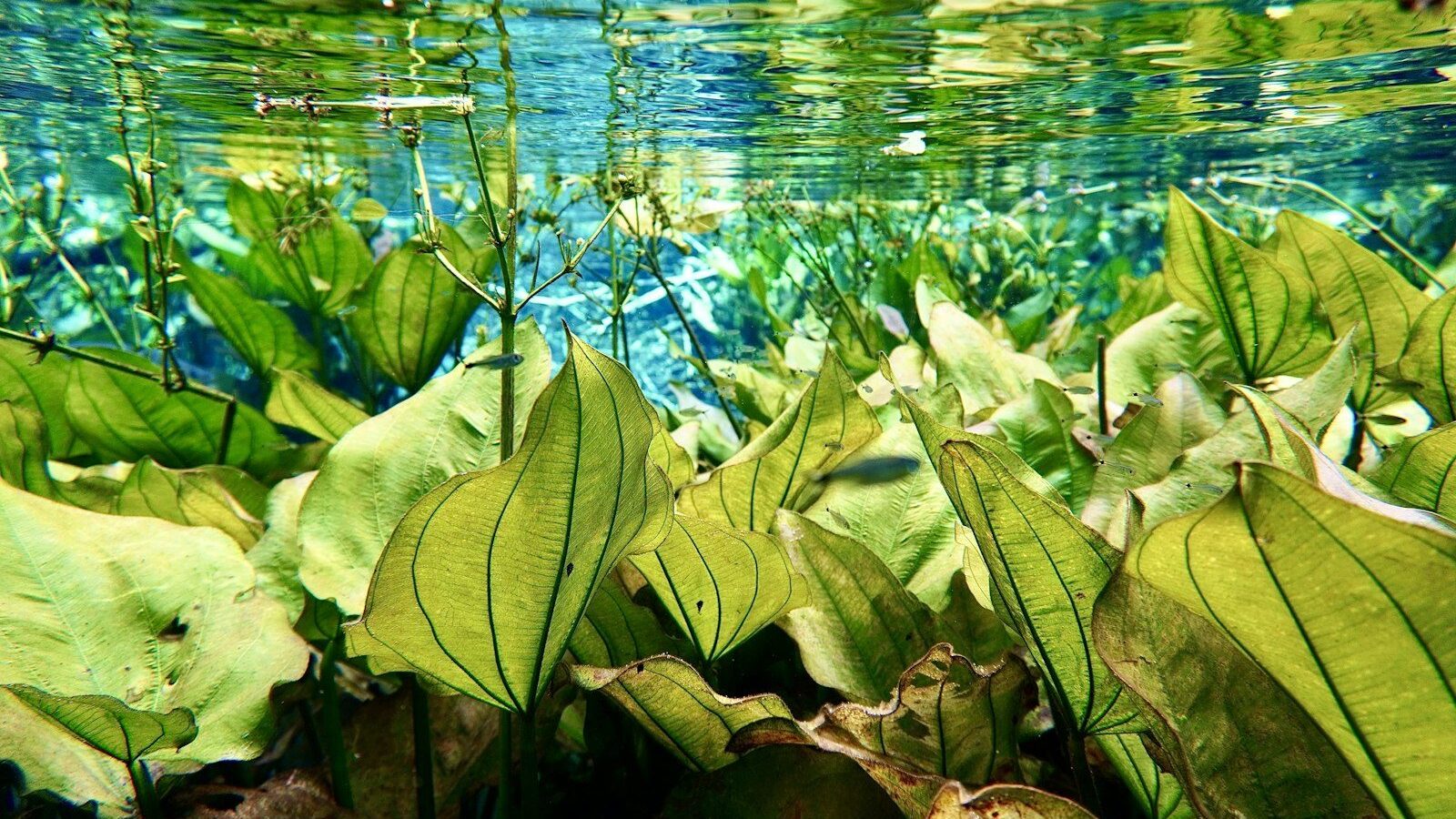
If your pond turns pea-soup green every summer, the fix is rarely a stronger filter — it’s more plants. Oxygenating pond plants are submerged species that live almost entirely underwater, and they do the quiet work that keeps a pond clear and healthy: they pump oxygen into the water, soak up the dissolved nutrients that algae would otherwise feed on, and give fish and beneficial insects shelter to breed in. A balanced pond with the right complement of submerged plants stays clear with little intervention, while a pond without them fights a losing battle against green water and string algae. This guide explains how oxygenators work, the best species to plant, exactly how many you need per square foot, and how to plant and maintain them through the year.
Key Takeaways
- Oxygenators are submerged plants that release oxygen and absorb excess nutrients, starving algae and keeping pond water clear naturally.
- Plant about one bunch per 2 square feet of surface, aiming for submerged plants to cover roughly a third of the pond floor.
- Reliable species include hornwort, elodea (Canadian/Brazilian waterweed), and water starwort; pair them with surface cover like water lilies for shade.
- Weigh bunches down or pot them in aquatic baskets with gravel — most oxygenators root readily or simply float and grow.
- Avoid invasive species banned in your region (some elodeas and parrot’s feather are restricted in parts of the US and EU) and never release pond plants into the wild.
What oxygenating plants do for a pond
Submerged oxygenators earn their name by photosynthesizing underwater — taking in carbon dioxide and releasing oxygen directly into the water column during daylight. That dissolved oxygen is what fish, beneficial bacteria, and aquatic insects depend on, and it’s especially valuable on hot, still summer days when warm water holds less oxygen and fish can gasp at the surface.
Their second, equally important job is nutrient competition. Algae bloom when the water is rich in nitrates and phosphates from fish waste, decaying leaves, and runoff. Oxygenating plants are voracious feeders that pull those same nutrients out of the water — so a pond well stocked with them simply starves algae out. This is the core principle of a balanced, low-maintenance pond: outcompete algae with desirable plants rather than chasing it with chemicals. The submerged foliage also gives fish fry, tadpoles, and dragonfly larvae somewhere to hide and breed, and fish graze on the plants and the tiny organisms living among them.
The best oxygenating pond plants
Hornwort (Ceratophyllum demersum)
The most widely recommended oxygenator, and for good reason. Hornwort grows as free-floating bushy stems with no true roots, tolerates a wide range of conditions and climates, and is one of the few that keeps working in cooler water. It’s a powerful nutrient absorber and provides excellent cover for fish. Simply drop bunches into the pond, or anchor them with a plant weight; it grows fast and you’ll be thinning it. Hornwort is generally non-invasive and accepted across most regions.
Elodea / waterweed (Elodea canadensis, Egeria densa)
Canadian waterweed and the larger Brazilian waterweed (often sold as anacharis) are classic, fast, efficient oxygenators that root in baskets or drift freely. They’re excellent for kick-starting a new pond’s balance. The catch: both are listed as invasive in some areas and are banned or restricted in parts of the US, UK, and EU. Always check your local list before buying, and never let trimmings escape into natural waterways.
Water starwort (Callitriche)
A native-friendly oxygenator across much of the temperate world, water starwort forms soft underwater carpets and small floating rosettes. It works in cooler conditions and even continues some activity through mild winters, helping maintain oxygen when other plants slow down.
Other useful submerged species
- Curled pondweed (Potamogeton crispus) — a hardy native oxygenator that tolerates some shade.
- Willow moss (Fontinalis antipyretica) — slow-growing, attaches to stones, good for shadier ponds.
- Hair grass (Eleocharis acicularis) — forms a fine grassy lawn on the pond floor.
- Water violet (Hottonia palustris) — a pretty native that oxygenates and flowers above the surface.
One to flag with caution: parrot’s feather (Myriophyllum aquaticum) is sold as an oxygenator but is highly invasive and banned in many places — avoid it unless you’ve confirmed it’s legal locally.
How many oxygenators do you need?
This is the most common question, and getting it right is the difference between a clear pond and a green one. The general rule is to plant about one bunch (5–10 stems) per 2 square feet of pond surface area, with the goal that submerged plants eventually cover roughly one-third of the pond’s floor. For a new pond, err on the generous side — it’s easier to thin excess growth than to fight an algae bloom while waiting for sparse plantings to fill in.
As a worked example, a small 8×6-foot pond has about 48 square feet of surface, so you’d start with roughly 20–25 bunches. Combine the submerged oxygenators with surface cover — water lilies or floating plants — aiming to shade about 50–60% of the surface in summer. Shade keeps the water cool and blocks the sunlight algae needs, working alongside the oxygenators’ nutrient stripping. The two strategies together are what deliver consistently clear water.
How to plant oxygenators
Oxygenators usually arrive as weighted or unweighted bunches of cuttings. Planting is refreshingly simple:
- Floating types (hornwort): just drop bunches into the water, or clip a plant weight to the base to keep them submerged where you want them.
- Rooting types (elodea, starwort): push the bunch into an aquatic planting basket filled with heavy aquatic soil or plain gravel, top with a layer of gravel to stop fish disturbing it, and lower the basket onto the pond floor or a planting shelf.
- Spread them out across the pond rather than clustering, so oxygen and nutrient uptake happen evenly throughout the water.
- Quarantine and rinse new plants in a bucket first to remove hitchhiking snails, duckweed, or algae before they go in the pond.
Spring is the ideal planting time, as warming water and lengthening days drive rapid establishment. Plants added in late summer have less time to root and bulk up before winter.
Year-round care and maintenance
Oxygenators are low-maintenance but not no-maintenance. The main job is thinning — vigorous species like hornwort and elodea can fill a pond and need cutting back through the growing season. Remove excess growth with a net or by hand, but leave it on the bankside for a day so any creatures can crawl back into the water before you compost it. Don’t strip the pond bare; you want to keep that one-third coverage.
In autumn, cut back dying foliage and net fallen leaves off the surface — decaying leaves dump nutrients straight into the water and feed next year’s algae. In winter, hardy oxygenators like hornwort and starwort overwinter at the bottom and regrow in spring; in very cold regions hornwort may die back to dormant buds that sink and resprout. Avoid letting the whole surface freeze solid over fish — keep a small hole open for gas exchange. Watch out, too, for a single quirk: a sudden die-off of a large mass of oxygenators (after a heatwave or herbicide drift) can crash oxygen levels as it decays, so remove dying plant matter promptly.
Building a balanced, clear pond
Oxygenating plants are one leg of a three-legged stool. For lasting clarity, combine them with surface shade from lilies or floaters, a modest fish load (overstocked fish overload the nutrients), and good housekeeping — removing leaves and debris before they rot. Get that balance right and the pond largely runs itself, no green water and no chemical treatments. To go deeper on pond building and water quality, see our guides to building a wildlife pond and the broader water gardens and ponds collection, or build a bog garden at the edge to expand your planting.
Frequently Asked Questions
How many oxygenating plants do I need for my pond?
Plant about one bunch of 5–10 stems per 2 square feet of pond surface, aiming for submerged plants to cover roughly a third of the pond floor. For a new pond, start on the generous side — it’s far easier to thin excess growth later than to battle an algae bloom while sparse plantings slowly fill in.
What is the best oxygenating pond plant?
Hornwort is the most widely recommended because it grows in a broad range of conditions, absorbs nutrients vigorously, provides excellent fish cover, and is generally non-invasive. Elodea (waterweed) is also highly effective but is restricted in some regions, so check your local invasive-species list first. Water starwort is a good native-friendly option.
Will oxygenating plants get rid of green water?
They are a major part of the solution. Oxygenators starve algae by absorbing the nitrates and phosphates it feeds on. For reliable clarity, combine them with surface shade from water lilies or floating plants covering about half the surface, a modest fish load, and regular removal of leaves and debris. Together these usually clear green water without chemicals.
How do I plant oxygenators?
Floating types like hornwort just get dropped in or anchored with a plant weight. Rooting types like elodea go into an aquatic basket filled with heavy aquatic soil or gravel, topped with gravel to deter fish, then lowered onto the pond floor or a shelf. Spread them around the pond, and rinse new plants in a bucket first to remove hitchhiking snails and algae.
Do oxygenating plants survive winter?
Hardy species like hornwort and water starwort overwinter at the bottom of the pond and regrow in spring; in very cold regions hornwort dies back to dormant buds that sink and resprout. Cut back dying foliage in autumn and keep a hole open in any ice over winter so gases can escape and fish stay healthy.