

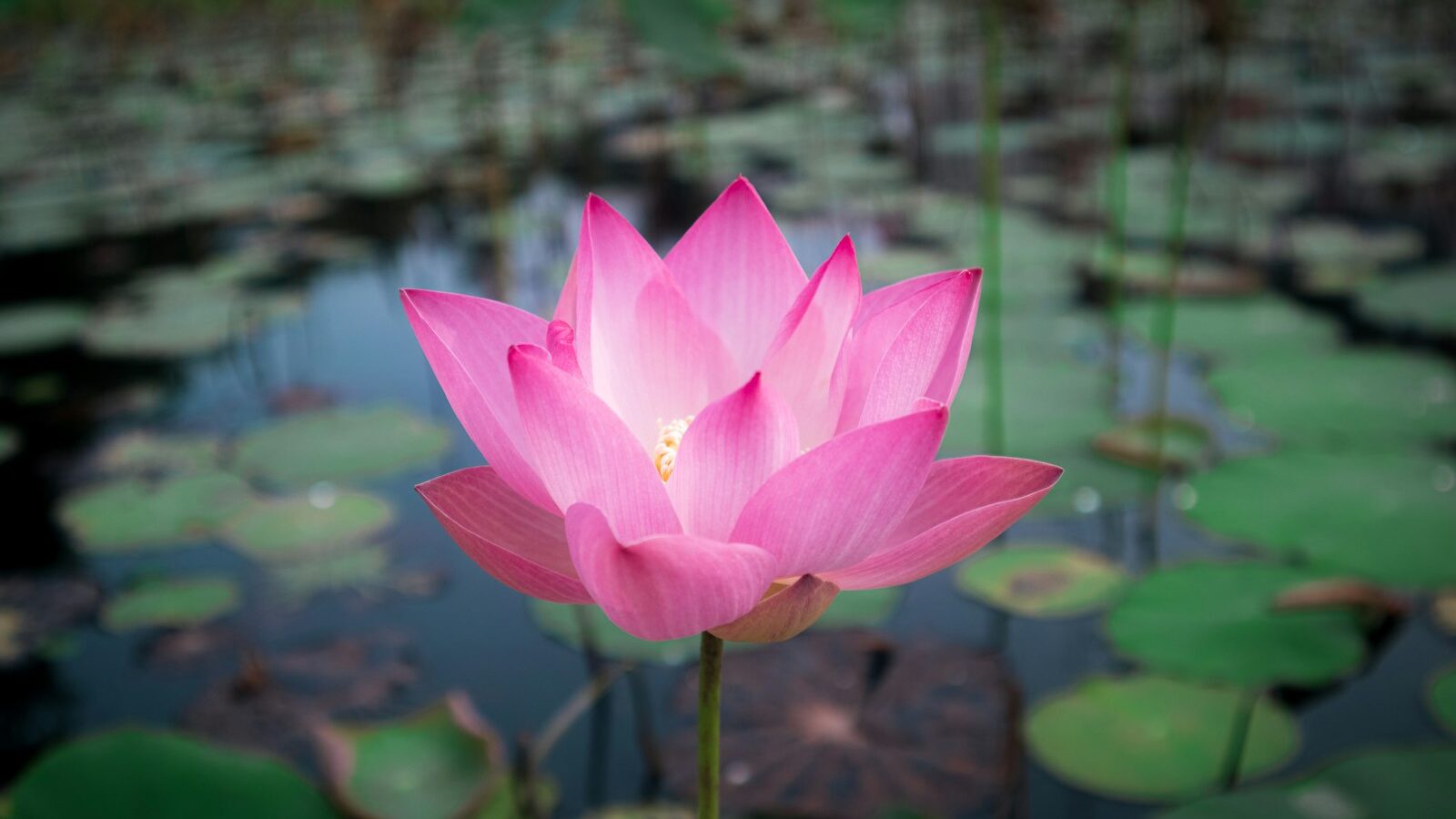
A backyard pond turns an ordinary yard into something alive. Dragonflies stitch across the surface, frogs move in uninvited, and on a warm morning a lotus unfurls a bloom the size of your hand. The good news is that building a water garden is far more approachable than most people expect, and you do not need heavy machinery or a contractor to do it well.
Some links in this article are affiliate links. As an Amazon Associate we earn from qualifying purchases, at no extra cost to you.
This guide walks you through the whole process: choosing the right spot, sizing and digging, picking a liner, sorting out pumps and filtration, and then the fun part, stocking your pond with lotus, water lilies, and fish. Whether you want a tiny container water garden on a patio or a 12-foot koi pond, the same principles apply.
Key takeaways
- Site your pond in a level spot with 5-6 hours of sun for flowering plants, but away from heavy leaf-dropping trees.
- For most backyard ponds, a 45-mil EPDM flexible liner plus underlayment is the most forgiving, long-lasting choice.
- Size your pump to circulate the full pond volume at least once per hour, and oversize filtration rather than undersize it.
- Plants do the heavy lifting for water clarity: combine lotus or lilies for surface cover with submerged oxygenators.
- Stock fish slowly, wait several weeks for the pond to cycle, and plan ahead for winter in cold climates.
Planning and siting your pond
Before you lift a shovel, spend time on placement. The location you choose will shape how much maintenance the pond needs and how well your plants and fish thrive.
Aim for a spot that gets at least 5 to 6 hours of direct sun per day. Lotus and water lilies are sun-lovers and will sulk or refuse to bloom in deep shade. At the same time, avoid placing the pond directly under large deciduous trees. Falling leaves foul the water, decompose into nutrient-rich sludge, and feed algae, while invasive roots can damage a liner over time.
Pick ground that is reasonably level and naturally well drained. Keep the pond away from where lawn fertilizer or driveway chemicals can drain straight into the water. Site it within reach of an outdoor outlet for the pump, and somewhere you will actually see and enjoy it. A pond viewed from a kitchen window or a patio gets cared for; one hidden behind the shed gets forgotten.
Finally, call before you dig. In the US, dial 811 a few days ahead so utilities can mark buried lines. It is free, and it prevents an expensive afternoon. A pond also pairs beautifully with the rest of your outdoor living spaces, so think about sightlines from seating areas while you plan.
Sizing and depth
A common beginner mistake is building too small. Small volumes of water heat up fast, swing in temperature, and turn green more easily. If you have the space, bigger is genuinely easier to keep stable and clear.
How deep should it be?
- Container or patio water garden: 12-18 inches deep is enough for lotus and dwarf lilies in a half-barrel or glazed pot.
- Plant-focused pond, no fish: around 18-24 inches works well.
- Goldfish pond: aim for a minimum of 24 inches in part of the pond.
- Koi or cold-winter climates: include a section at least 36 inches deep, ideally deeper, so fish can overwinter below the ice line.
Build in shelves at different depths. A shallow marginal shelf about 8-10 inches down holds bog and edge plants, while a deeper zone hosts lilies and gives fish a refuge. Gently sloping or stepped sides also let wildlife climb out and make liner installation easier.
Choosing a liner: preformed vs flexible
The liner is the watertight heart of the build, and you have two main routes.
Preformed (rigid) liners
These are pre-molded plastic or fiberglass shells. They are quick to install and hold their shape, which is reassuring for first-timers. The trade-offs: you are locked into the manufacturer’s shape and depth, the planting shelves are often small, and bigger units get expensive. They suit compact, simple ponds.
Flexible liners
A flexible sheet lets you build any shape and depth you like. For most backyard ponds, a 45-mil EPDM liner is the sweet spot: it is fish-safe, UV-resistant, stays pliable in cold weather, and routinely lasts decades. Always pair it with a protective underlayment to guard against punctures from stones and roots.
To estimate liner size, use this rule: length needed = pond length + (2 x maximum depth) + 2 feet of overlap, and do the same for width. Buy a little extra rather than coming up short at the edge.

All-in-one pond kit
For a first backyard pond, an all-in-one kit bundles the liner, pump and filter so you are not sourcing parts piecemeal.
Pumps and filtration
Moving water keeps a pond healthy. Circulation adds oxygen, prevents stagnation and mosquitoes, and feeds your filter. As a baseline, choose a submersible pump rated to circulate your entire pond volume at least once every hour. If you have fish or a waterfall, size up.
Filtration comes in two complementary forms. Mechanical filtration traps physical debris like leaves and fish waste. Biological filtration provides surface area where beneficial bacteria colonize and convert toxic ammonia into safer compounds. Any pond with fish needs both, and it is always better to over-spec your filter than to run it at its limit.
A pond purely for plants, with no fish, can sometimes run with minimal filtration if it is well planted and not overstocked. The plants themselves act as a living filter. For shopping specifics on pumps and the rest of your kit, our garden tools hub goes deeper.
How to build your pond, step by step
- Mark the outline. Lay a rope or hose to shape the edge, then step back and view it from a few angles before committing.
- Dig in stages. Excavate the marginal shelf first, then the deeper zone. Keep the top edge level all the way around using a board and a spirit level a lopsided rim is the most common DIY mistake.
- Clear and cushion. Remove sharp stones and roots, then add a layer of sand or pond underlayment across the whole hole.
- Lay the liner. Drape the flexible liner loosely into the hole, centered, with overlap on all sides. Avoid stretching it taut.
- Fill slowly. Begin adding water. As the pond fills, the liner settles, and you can ease out wrinkles and tuck pleats around curves.
- Trim and secure the edge. Once full, trim excess liner to roughly a foot of overlap and anchor it with rocks, flagstones, or soil so it is hidden.
- Install equipment. Place the pump, connect filtration and any waterfall, and run it to check flow.
- Let it settle. Wait a few days before adding plants, and a few weeks before fish, so the water can dechlorinate and stabilize.
Adding plants: lotus, lilies and more
Plants are where a pond becomes a water garden. They shade the surface, starve algae of nutrients, oxygenate the water, and give fish cover. Aim to eventually cover roughly half to two-thirds of the surface with foliage.
Lotus
The lotus is the showstopper and our namesake. Plant tubers in a wide, shallow container of heavy loam topped with gravel, and submerge so there are only a few inches of water over the soil at first. Lotus demand full sun and warmth, and most varieties need a long, hot summer to bloom well dwarf varieties are perfect for containers and tubs. In warm zones they can be left in place; in cold zones the tuber must be protected from freezing solid.
Water lilies
Lilies are more forgiving than lotus and give you that classic floating-pad look. Hardy lilies survive winter in the pond as long as their roots sit below the ice line. Tropical lilies bloom prolifically, including night-bloomers, but they are sensitive to cold and are treated as annuals or overwintered indoors in most of the US.
Marginals and oxygenators
- Marginals such as pickerel rush, marsh marigold, and dwarf cattail sit on the shallow shelf with their crowns at or just below the surface. They soften the edge and pull nutrients from the water.
- Submerged oxygenators like hornwort grow underwater and are quiet workhorses for clarity, competing directly with algae for nutrients.
- Floaters add instant shade, though some (like water hyacinth) are invasive in warm regions never release pond plants into the wild.
If you enjoy this kind of container-and-tub planting, much of it overlaps with urban gardening techniques for small spaces and balconies.
Adding fish: the basics
Fish bring movement and personality, and they eat mosquito larvae. The golden rule is patience. A brand-new pond has not yet grown the bacteria needed to process fish waste, so wait several weeks after filling, and add fish gradually rather than all at once.
Goldfish, shubunkins, and comets are hardy, beginner-friendly choices. Koi are stunning but grow large, eat plants enthusiastically, and need a bigger, deeper pond with strong filtration. Whatever you choose, resist overstocking: too many fish overload the system and cloud the water. Always dechlorinate tap water before it touches fish, and acclimate new arrivals slowly to the pond temperature.
Algae and water clarity
Green water is the most common pond complaint, and almost always a symptom of too many nutrients plus too much light. New ponds frequently turn green for a few weeks before they balance out, so do not panic and dose chemicals at the first sign.
- Add surface cover. Lily pads and floaters shade the water and cut algae’s light supply.
- Plant oxygenators. Submerged plants outcompete algae for nutrients.
- Do not overfeed fish. Uneaten food rots and feeds algae feed only what fish finish in a couple of minutes.
- Remove debris. Net out leaves and trim dying foliage before it decomposes.
- Consider a UV clarifier for persistent green water; it clumps free-floating algae so the filter can catch it.
String algae clinging to rocks can simply be twirled out by hand. A little algae is normal and even healthy; the goal is balance, not sterility.
Seasonal and winter care
A pond changes with the seasons, and a little timely attention keeps it healthy year-round.
- Spring: clear out winter debris, restart and clean the pump and filter, divide and repot crowded plants, and begin feeding fish once water warms.
- Summer: top up water lost to evaporation, watch oxygen levels in heat, and enjoy peak lotus and lily blooms.
- Fall: net the pond to keep falling leaves out, cut back dying foliage, and stop feeding fish as the water cools.
- Winter: in cold zones, keep a hole open in the ice with a floating de-icer or aerator so toxic gases can escape never smash the ice, which shocks fish.
In freezing climates, hardy plants overwinter at the pond bottom below the ice, tropicals come indoors, and lotus tubers must be kept from freezing solid. Fish in a deep enough pond can overwinter outdoors; they slow down and should not be fed once cold.
Ongoing maintenance
An established pond is surprisingly low-effort. Most weeks you will just skim debris, check the pump, and top up water. Each season, rinse filter media in pond water (never chlorinated tap water, which kills the beneficial bacteria) and trim back overgrown plants.
Avoid the temptation to fully drain and scrub the pond. A complete clean-out wipes out the biological balance you have built and is rarely necessary. Small, regular touches beat occasional drastic overhauls every time.
Frequently asked questions
How much does it cost to build a backyard pond?
It varies enormously with size and materials. A small container water garden can be done for very little, while a large koi pond with a flexible liner, pump, filter and stonework costs considerably more. The liner, pump and filtration are usually the biggest line items.
Do I need a pump and filter for a backyard pond?
A heavily planted, fish-free pond can sometimes balance itself with no pump. But any pond with fish needs circulation and both mechanical and biological filtration to keep the water oxygenated and the fish healthy.
Can I grow lotus in a small space or container?
Yes. Dwarf lotus varieties thrive in tubs and half-barrels as small as a couple of feet across, provided they get full sun and warmth. A container also makes it easier to protect the tuber over winter.
How do I keep my pond water clear?
Clarity comes from balance, not chemicals: shade the surface with lily pads, plant submerged oxygenators, avoid overfeeding fish, and remove debris. A UV clarifier helps with stubborn green water.
Will a pond attract mosquitoes?
A pond with moving water and fish actually discourages mosquitoes, since fish eat the larvae and circulation prevents the still water they need to breed. Stagnant, fishless water is the real culprit.