

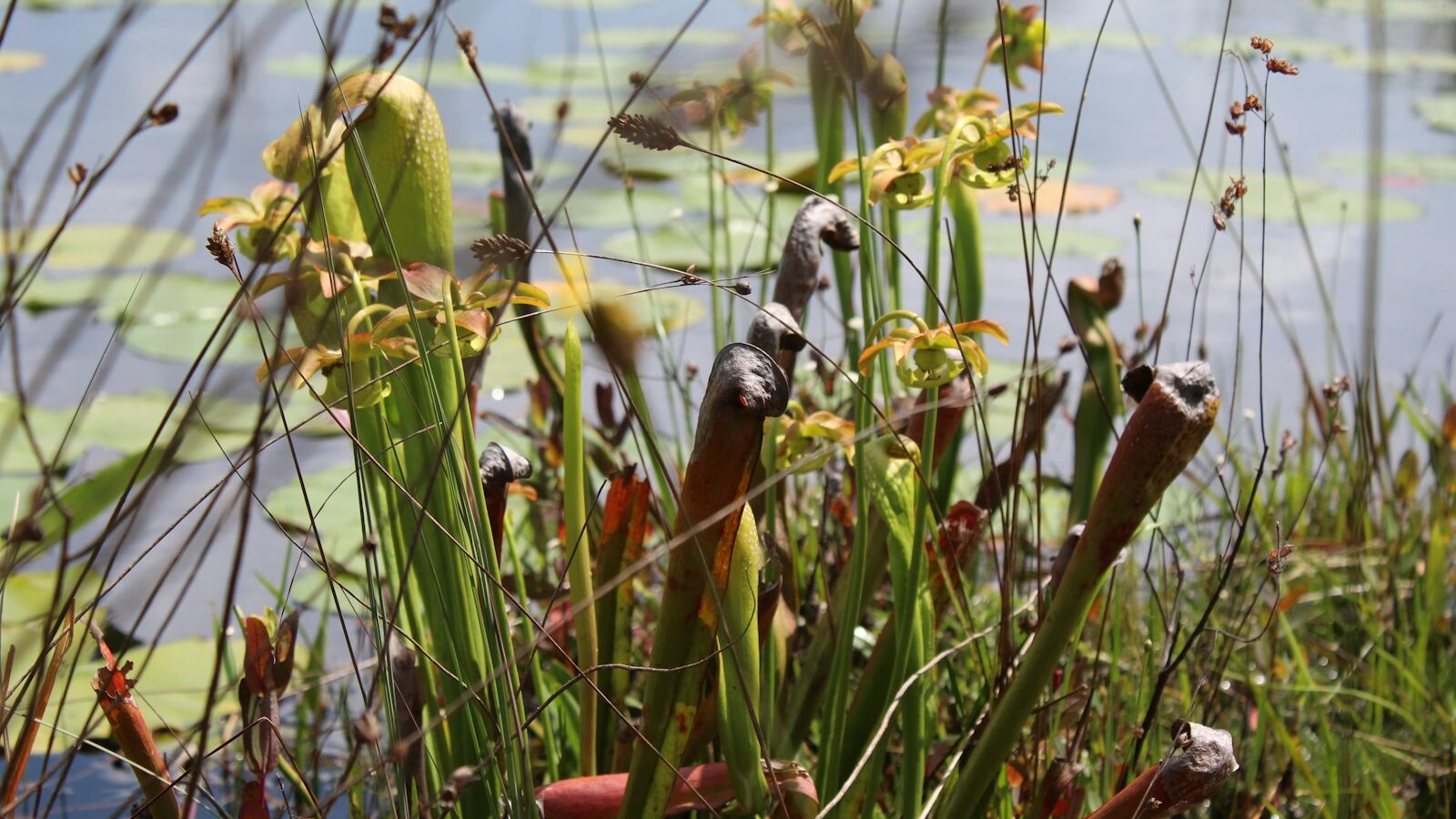
A bog garden is one of the most satisfying features you can add to a yard: it turns a soggy, hard-to-mow corner into a lush home for moisture-loving plants, from showy ornamentals to flesh-eating carnivores. Unlike a pond, a bog has no open water; the soil simply stays permanently moist. This guide walks you through what a bog garden really is, where to put one, how to build a reliable lined basin, and which plants to fill it with.
As an Amazon Associate we earn from qualifying purchases.
Key takeaways
- Bog = constantly moist soil, not open water
- Use a lined basin with a few drainage holes + reservoir
- Low-nutrient mix for carnivorous plants; richer for ornamentals
- Top up in dry spells; use rainwater for carnivores
- Great use for a soggy low spot
What a bog garden actually is
A bog garden mimics a natural wetland margin: ground that is wet to the touch year-round but never holds standing water on the surface. The trick is permanent moisture combined with just enough drainage that roots don’t sit in a stagnant, oxygen-starved puddle. Get this balance right and you can grow plants that would rot in an ordinary border and sulk in a true pond.
It helps to picture three different conditions. A regular garden bed dries out between waterings. A pond holds open water deep enough to submerge plants. A bog sits in between: saturated soil, but with the water table just below or right at the surface. That middle zone is exactly what carnivorous plants and many dramatic ornamentals evolved to love.
In nature, these conditions occur where rainwater collects over impermeable ground and slowly seeps away — think peatlands, fen margins, and the soggy fringes of lakes. Recreating that at home is really just an exercise in trapping water with a liner and letting a reservoir do the rest. Because the moisture comes from below, the surface never crusts over the way a regular bed does, and the plants get an even, constant supply that suits their shallow, oxygen-hungry roots.
Bog vs. pond vs. rain garden
- Bog garden: permanently moist soil, no open water, lined to hold a reservoir.
- Pond: open water; see our pillar guide on how to build a backyard pond.
- Rain garden: a shallow basin that floods after storms then drains within a day or two — see how to make a rain garden.
Where to build a bog garden
The best location does half the work for you. A naturally low, soggy spot that already stays damp is ideal, because it collects runoff and slows evaporation. A bog also makes a beautiful transition along the edge of an existing pond, blurring the line between water and land and giving wildlife a place to hide.
Choosing the spot
- Light: most carnivorous plants and bog ornamentals want full sun (6+ hours). A few, like astilbe and ligularia, tolerate part shade.
- Low ground: a natural dip means less topping up in summer.
- Near a water source: a hose bib or rain barrel nearby makes maintenance painless.
- Beside a pond: position the bog slightly higher so it never floods with nutrient-rich pond water if you plan to grow carnivores.
- Away from large tree roots: they compete for water and drop leaves that enrich the soil.
Free, no-obligation quote · Connect with a local pro
The lined basin method, step by step
The most reliable bog garden is a lined basin. The liner stops the moisture from draining away into surrounding soil, while a few small holes near the bottom prevent the bog from turning into a stagnant pond after heavy rain. A gravel reservoir at the base stores water, and the soil above wicks it upward to keep roots evenly moist.
Steps
- Mark and dig. Outline a natural shape and excavate 16–24 inches (40–60 cm) deep. Deeper holds more water and dries out more slowly.
- Smooth the hole. Remove sharp stones and roots, then add an inch of sand or old carpet as underlay to protect the liner.
- Lay the liner. Drape a flexible pond liner (EPDM or butyl) into the hole, pressing it into the contours with plenty of overlap at the edges.
- Punch a few drainage holes. Pierce the liner about 4–6 inches up from the bottom, every 3 feet or so. This sets the maximum water level so the bog stays moist, not flooded.
- Build the reservoir. Add 3–4 inches of washed gravel or pea shingle across the base to store water.
- Add a wicking layer (optional). A length of perforated pipe laid in the gravel, brought up to the surface, lets you top up the reservoir directly during droughts.
- Fill with soil mix. Add your chosen bog mix (see below), firming gently and leaving the surface slightly domed since it will settle.
- Soak thoroughly. Flood the bog with rainwater until it’s saturated and water reaches the drainage holes. Let it settle for a few days before planting.
- Trim and hide the liner. Cut excess liner, leaving a couple of inches, then tuck it under soil, stones, or low plants.
Getting the soil right
Soil is where most bog gardens succeed or fail, and the recipe depends entirely on what you want to grow. Carnivorous plants come from nutrient-poor wetlands and will burn and die in rich garden soil or fertilizer. Ornamental bog plants, by contrast, are hungry and reward you with richer, more moisture-retentive soil.
Two recipes
- Carnivorous mix (low-nutrient): roughly equal parts sphagnum peat moss (or a sustainable coir-and-bark blend) and horticultural sand or perlite. No compost, no fertilizer, no lime. A ready-made carnivorous plant soil takes the guesswork out.
- Ornamental mix (richer): equal parts good topsoil, garden compost, and a moisture-holding component like leaf mold. This feeds hungry plants such as ligularia and gunnera.
If you want both types, build two separate basins, or partition one with a buried board so the rich soil never leaches into the carnivore zone. Always water carnivores with rainwater, distilled, or reverse-osmosis water — tap water minerals build up and slowly poison them. A small rain barrel positioned near the bog pays for itself quickly and keeps you from reaching for the hose.
One caution on peat: traditional bog recipes lean heavily on sphagnum peat moss, but peat harvesting damages valuable wild carbon sinks. Where you can, choose a sustainably sourced or reclaimed peat product, or experiment with a coir-and-bark blend lightened with sand. Carnivores can be fussier about substitutes than ornamentals, so transition gradually and watch how your plants respond before committing a whole basin.
What to plant in a bog garden
This is the fun part. A bog supports a uniquely dramatic palette of plants you can’t grow anywhere else in the yard. Group them by their soil needs and let the carnivores have their own low-nutrient zone.
Carnivorous plants (low-nutrient zone)
- Sarracenia (pitcher plants): tall, hardy trumpets; many survive frost and make great structural focal points.
- Venus flytrap (Dionaea): the classic snap-trap; needs full sun and a cold winter dormancy.
- Sundews (Drosera): sparkling, dew-tipped tentacles that trap small insects; many are surprisingly cold-hardy.
Ornamental bog plants (richer zone)
- Iris (Iris ensata, I. versicolor): elegant blooms that thrive in constant moisture.
- Astilbe: feathery plumes for part shade and damp soil.
- Ligularia: bold leaves and golden spikes; loves moisture and wilts dramatically if it dries.
- Marsh marigold (Caltha palustris): early, buttercup-yellow flowers for pond edges.
- Cardinal flower (Lobelia cardinalis): vivid red spikes that hummingbirds adore.
- Gunnera: giant, architectural leaves for large bogs with rich soil and shelter.
For a bog that edges a pond, browse our roundup of the best pond plants to coordinate the planting, and if you’re aiming to attract frogs, dragonflies, and birds, see how to make a wildlife pond.
Free, no-obligation quote · Connect with a local pro
Keeping it wet and ongoing maintenance
A bog garden is low-effort once established, but it cannot be allowed to dry out. The reservoir buffers short dry spells, but in hot weather you’ll need to top it up. Mulching the surface with live sphagnum or fine bark slows evaporation and looks natural.
Routine care
- Top up regularly: pour water down the wicking pipe or onto the surface in dry spells; aim to keep the surface visibly moist.
- Use the right water: rainwater for carnivores always; tap water is fine for ornamentals.
- Never fertilize the carnivore zone: they feed themselves on insects.
- Weed promptly: grasses and seedlings colonize fast in moist soil.
- Cut back in late winter: remove dead foliage before new growth, but leave hardy carnivores their winter dormancy.
- Refresh the surface: top-dress with fresh low-nutrient mix every few years as the medium breaks down.
Frequently asked questions
Is a bog garden the same as standing water?
No. A bog has permanently moist soil but no open water on the surface. The lined basin and a few drainage holes keep the water table just below ground level so roots stay wet without drowning.
Can I build a bog garden without a pond?
Absolutely. A standalone lined basin in a sunny, low spot works perfectly. A pond is a nice neighbor but not required — many people build a bog simply to use up a soggy corner of the yard.
Why do my carnivorous plants keep dying?
The usual culprits are tap water, fertilizer, or rich soil. Carnivores need low-nutrient peat-and-sand mix and rainwater or distilled water only. Give them full sun and let cold-hardy species go dormant in winter.
How often do I need to water it?
It depends on weather and how deep your reservoir is. In cool, rainy periods you may not water at all; in summer heat, check every few days and top up whenever the surface starts to look dry.
Will a bog garden attract mosquitoes?
Far less than open water, because there’s no standing surface water for larvae. A healthy bog with carnivorous plants can actually reduce flying insects nearby.
Featured project by Gensou Aquascaping
Want a water or bog feature built?
Compare free, no-obligation quotes from vetted local pond & landscaping pros near you.