

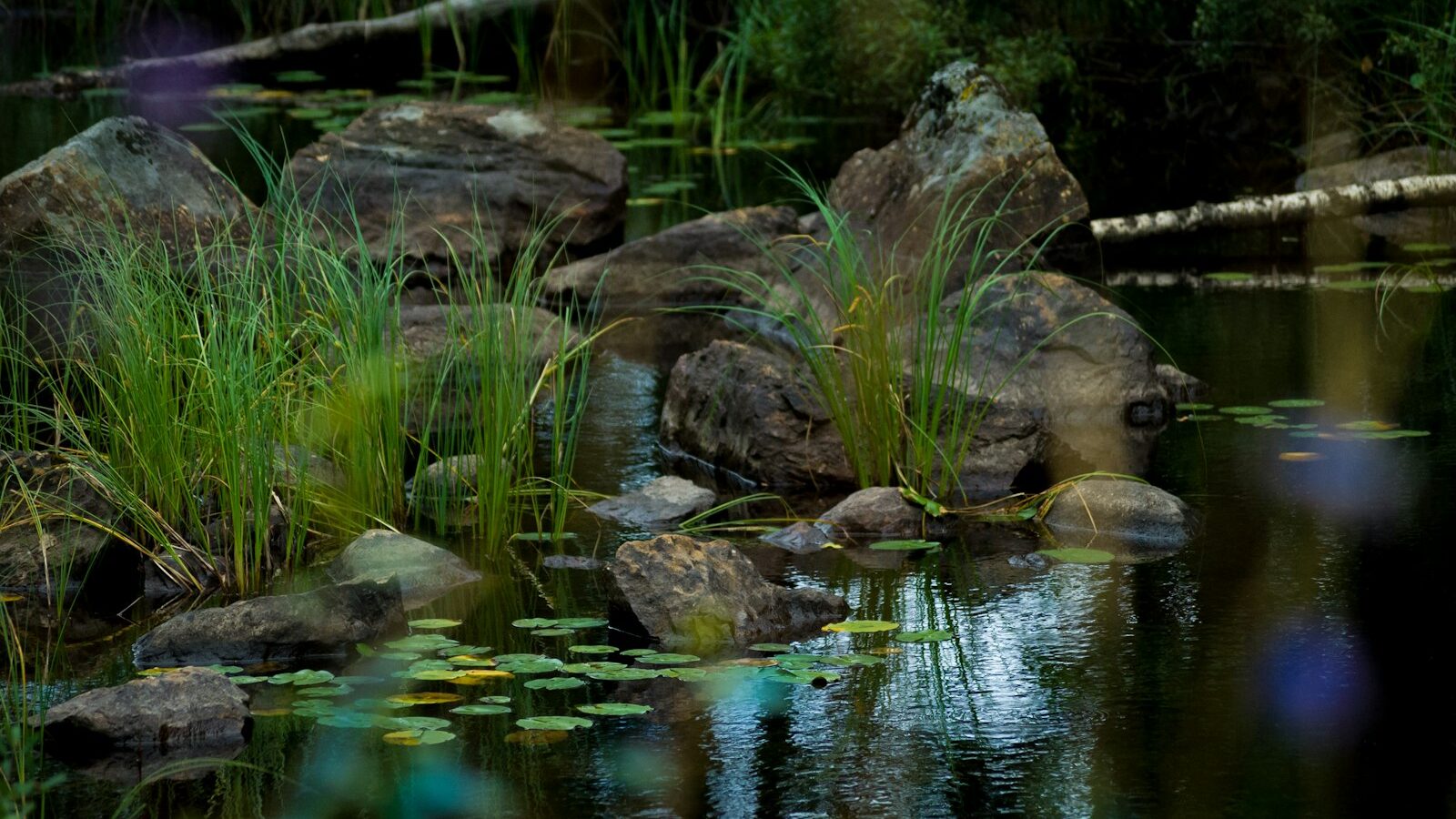
The edge is where a pond stops looking like a hole in the ground and starts looking like a garden feature. Good edging hides the liner, protects it from sun damage, and ties the water into the rest of your yard so it feels like it has always been there. This guide walks through 20 pond edging ideas grouped by style, plus the practical tricks that make any of them work.
Key takeaways
- Edging hides & protects the liner from UV
- A pebble beach edge helps wildlife in & out
- Rock, flagstone, timber & planting all work
- Tuck liner under the edging so it can’t show or wick water
- Mix materials & marginal plants for a natural look
Why edging matters more than you think
Edging is not just decoration. A bare liner left exposed to sunlight breaks down years faster than one that is shaded and covered, because ultraviolet light makes both EPDM rubber and PVC brittle over time. The edge also does three quiet jobs at once: it conceals that black rim, it holds the top of the liner firmly in place, and it gives you a stable surface to stand on when you reach in to net leaves or thin plants. Get the edge right and you protect your investment while making the whole pond look finished.
There is a safety angle too. A firm, slightly raised or clearly defined edge tells people and pets where the water begins, and a gently sloped section gives anything that falls in a way back out. If you are still at the planning stage, read our full guide on how to build a backyard pond first, then come back here to choose how to finish the rim. For inspiration on overall looks, our backyard pond ideas gallery pairs well with the styles below.
Natural rock & boulders
Nothing reads as “natural pond” faster than rock. The trick is to vary the size and avoid the dreaded ring of identical stones marching around the perimeter like a necklace.
1. Mixed boulders and cobbles
Set a few large anchor boulders first, then fill between and behind them with smaller cobbles and gravel. The size contrast is what looks convincing. Bed each boulder so it sits half-buried rather than perched on top, the way rock actually emerges from soil in nature.
2. Single statement boulder
One big, characterful rock at a corner or beside a waterfall can do more than a dozen medium stones. Use it as a focal point and let planting soften the rest of the edge.
3. Rockery slope
On a bank or where one side of the pond is higher, build the rock up into a small rockery that flows down to the water. Tuck alpine and creeping plants into the gaps so stone and greenery knit together.
Flagstone & coping stones
Flat stone gives a cleaner, more deliberate edge than tumbled boulders while still feeling organic. It is the go-to for ponds that double as a sitting spot.
4. Overhanging flagstone lip
Let flat slabs cantilever about an inch or two out over the water. The overhang throws a shadow line that hides the liner completely and gives the pond a crisp, built-in edge. Mortar or bed slabs on a firm base so no one tips a stone by stepping near the lip.
5. Irregular crazy-paving edge
Random-shaped flagstones fitted together like a jigsaw read as relaxed and cottage-like. Leave narrow joints you can plant with creeping thyme or moss for a softened look.
6. Coping stones on a formal pool
For a geometric pond, a run of uniform sawn coping stones gives a tailored, architectural finish. Match the stone to your patio or paving so the pond looks like part of the same scheme.
Pebble beach edge (best for wildlife)
If you want frogs, birds, and beneficial insects to use your pond, build at least one shallow shore. A pebble beach is the single most wildlife-friendly edge you can make, because it lets creatures wade in and climb out safely.
7. Graded pebble shore
Run the liner up a gentle slope and layer it with pea gravel grading into larger pebbles toward the top. The shallow, sun-warmed water becomes a magnet for wildlife and a drinking and bathing spot for birds.
8. Cobble ramp exit
Even on a steeper pond, you can build one small cobble ramp from the shallow shelf up over the edge. Think of it as a built-in escape route so hedgehogs and amphibians are never trapped.
9. Beach plus marginal planting
Combine the pebble beach with low marginal plants at the back so the open shore has cover nearby. Wildlife feels safer crossing open gravel when there is foliage to dart into. Our best pond plants guide covers the easiest marginals to start with.
Free, no-obligation quote · Connect with a local pro
Timber & sleeper edges
Wood brings warmth and works especially well with raised or semi-raised ponds and with decking schemes. Choose naturally durable or properly treated timber rated for ground and water contact.
10. Railway sleeper surround
Chunky sleepers laid flat or stacked make a solid, rustic edge you can also sit on. They suit a square or rectangular pond and give a generous border that hides the liner with ease.
11. Deck overhang
Cantilever a section of decking out over the water on one side. The overhang conceals the liner and gives you a platform right at the water’s edge, perfect for a chair or a small dock feel.
12. Log roll or post edging
Vertical mini-logs or a flexible log roll create a soft, woodland-style boundary. It is forgiving on curved ponds where straight timber will not bend.
Brick, paver & formal edges
For courtyards, modern gardens, and formal pools, masonry gives clean lines and a polished result that suits geometric shapes.
13. Brick soldier course
A single tidy row of bricks set on edge frames a small formal pond neatly. Match reclaimed brick to an older home or crisp engineering brick to a contemporary one.
14. Paver patio flush edge
Run your patio pavers right up to the pond and let the last course overhang slightly. The water reads as a pool set into the paving, ideal for a minimalist, architectural look.
15. Rendered or rilled edge
A low rendered wall capped with a smooth coping gives a sleek, modern frame. Add a spill point or rill to link it to a second pool or fountain for movement and sound.
Planting & marginal pockets
Plants are the cheapest, fastest way to soften any edge and the best way to hide a liner that wicks above the waterline. Build planting into the edge from the start and the pond settles in within a season.
16. Marginal planting shelf
A shelf about 6 to 9 inches below the surface holds pots of marginals like iris, marsh marigold, and pickerel rush right at the edge. Their foliage spills over the rim and breaks up any hard line.
17. Bog garden border
Extend the liner sideways into a shallow, soil-filled bog area beside the pond. This permanently damp zone hides the liner edge and supports moisture-lovers like astilbe, hostas, and ferns that thrive nowhere else.
18. Spilling groundcover
Plant creeping jenny, ajuga, or low sedum at the edge so they cascade toward the water. Within weeks they curtain the liner and blur the boundary between pond and border.
Raised wall & low-cost edges
You do not need a big budget to finish a pond well, and a raised wall can add seating, safety, and a striking profile.
19. Raised wall with capping
A low block or stone wall around all or part of the pond raises the water to a comfortable height, doubles as a bench, and keeps small children and pets at a safe distance. Cap it with a wide coping so the liner tucks underneath and disappears.
20. Budget gravel-and-turf edge
The cheapest tidy finish is a band of gravel where the liner folds over the edge, then turf or border planting brought right up to it. Reclaimed stone, free landscape rock, or leftover pavers all work here. The result still hides the liner for a fraction of the cost of cut coping.
Free, no-obligation quote · Connect with a local pro
How-to tips that make any edge work
The style you choose matters less than how you finish the liner underneath it. Always run the liner up and over the edge of the excavation, then fold it back and pin it so the top sits a little above water level. Bring your edging stone, timber, or paving over that folded edge so it traps and hides the liner. Trim off any excess only after the pond is full and settled, because cutting too soon often leaves you short.
Two details prevent the most common failure. First, never let bare liner finish below the waterline on a slope where it can show through clear water; tuck it under stone or plant over it. Second, watch for wicking. If liner or soil bridges from the pond water up to dry ground, capillary action can siphon your pond down over weeks. Keep the liner edge higher than the surrounding soil, or set a stone barrier, so nothing draws water out. For shelves, build a marginal shelf at planting depth and a deeper zone for fish or water lilies before you fit the liner. Choosing the right material in the first place matters too; our pond liner guide explains why a slightly oversized, UV-stable liner saves trouble at the edge.
Finally, mix it up. The most natural-looking ponds rarely use one material all the way around. Combine a pebble beach on the sunny side, a flagstone sitting area where you stand, and marginal planting on the back where the liner would otherwise show. That variety is exactly what makes a built pond read as if nature put it there.
Frequently asked questions
How do I stop the pond liner from showing at the edge?
Run the liner up and over the edge of the hole, fold it back, and bring your stone, paving, or timber over the fold so it traps the liner out of sight. Let the edging overhang the water by an inch or two to cast a shadow line, and plant marginals or groundcover to cover any liner that wicks above the waterline.
What is the best pond edging for wildlife?
A pebble beach edge is the most wildlife-friendly option. Slope the liner gently and layer gravel grading into larger pebbles so frogs, hedgehogs, and birds can wade in and climb out safely. Even a single cobble ramp on an otherwise steep pond gives creatures an escape route.
Do I need to mortar the edging stones?
Not always. Loose boulders, pebbles, and bedded flagstone work fine on most informal ponds. Mortar or a firm bed is worth it for overhanging slabs, coping on a formal pool, or any stone people will stand or sit on, so nothing tips into the water.
Can I edge a pond on a budget?
Yes. A band of gravel over the folded liner edge with turf or planting brought up to it is the cheapest tidy finish. Reclaimed stone, free landscape rock, and leftover pavers all hide the liner well for a fraction of the cost of cut coping stones.
What is liner wicking and how do I prevent it?
Wicking is when liner or soil bridges from the pond water up to dry ground, drawing water out of the pond by capillary action over days or weeks. Prevent it by keeping the liner edge higher than the surrounding soil, or set a stone barrier at the rim so nothing bridges the gap.
Featured project by Gensou Aquascaping
Want a pond built or finished?
Compare free, no-obligation quotes from vetted local pond pros near you.