

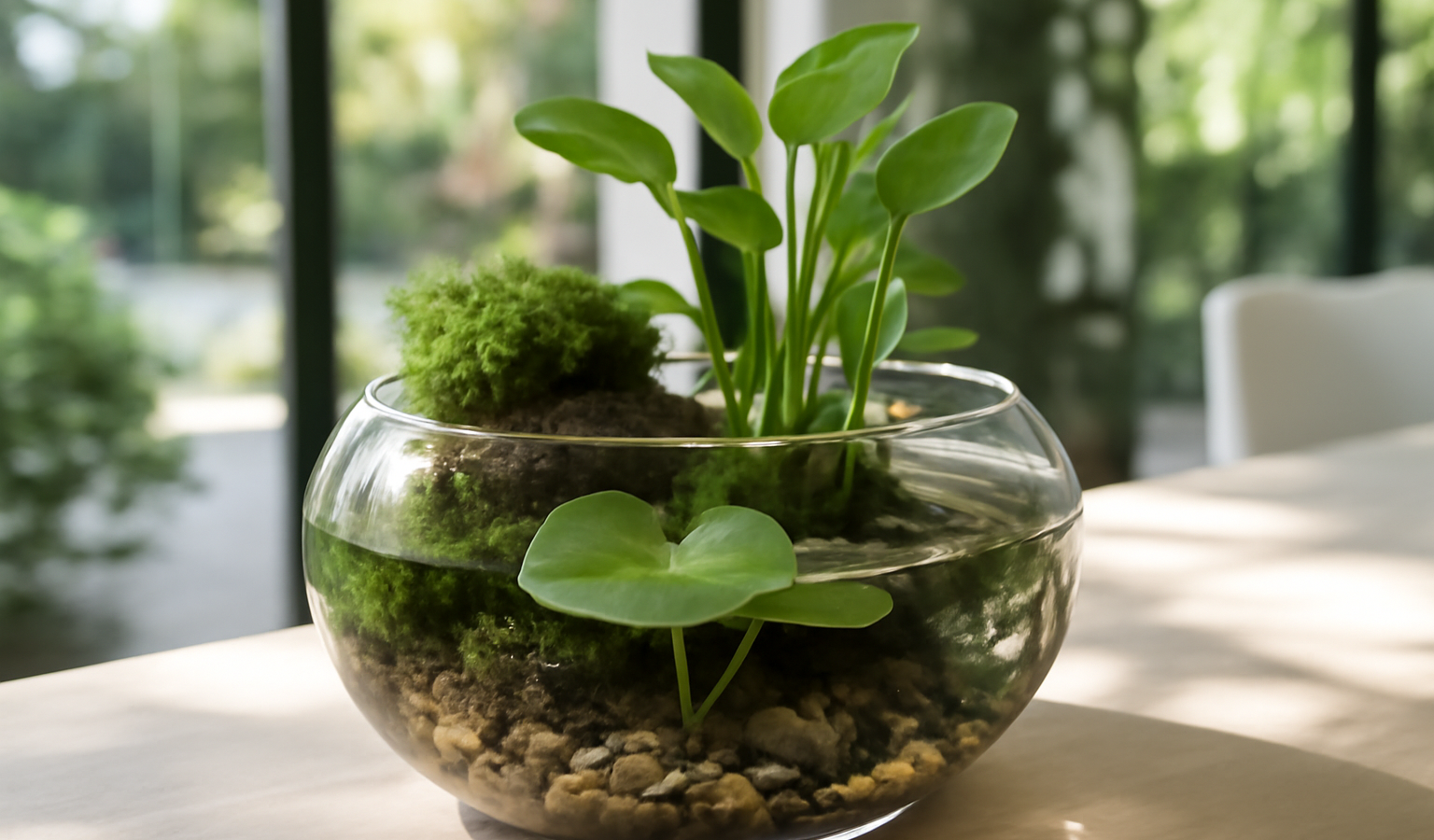
A tabletop water garden is the easiest possible entry into water gardening — no digging, no liner, no pump required. It is simply a watertight container planted with a few aquatic plants, sitting on a patio table, balcony, or porch, where it brings the cooling presence of water and a little splash of lily pads to even the smallest space. The whole thing comes together in an afternoon, and once it is balanced, it nearly looks after itself. The keys to success are choosing a watertight bowl, picking the right mix of plants for a small volume, and managing light and water to keep algae from taking over. This guide walks through every step — from selecting the container to planting it, filling it, and keeping the water clear all season — so you can build a miniature pond that thrives.
Key Takeaways
- Container: any watertight, untreated bowl 8+ inches deep works — glazed ceramic, half-barrel with a liner, or a sealed metal tub. No drainage holes.
- Plant in three layers: combine a marginal (upright), a floating plant, and ideally a submerged oxygenator for a balanced mini-ecosystem.
- Pot plants in baskets: use aquatic soil topped with gravel, never regular potting mix, which clouds the water and feeds algae.
- Light: most water plants want 4–6 hours of sun, but full all-day sun heats a small volume fast and fuels algae — partial sun is often ideal.
- Algae control: shade the surface with floating plants, keep the water topped up, and avoid overfeeding fish to stay clear without chemicals.
Choosing the Container
Almost any watertight vessel can become a tabletop water garden — that is the beauty of it. The two requirements are that it holds water without leaking and that it is large enough to stay stable. A container at least 8 inches deep and a foot or more across gives enough water volume to support plants and resist temperature swings; smaller bowls heat up and cool down too quickly and dry out fast. Good options include glazed ceramic pots (the glaze seals them), galvanized or sealed metal tubs, large glass or resin bowls, and half whiskey barrels fitted with a flexible pond liner.
The critical detail is that the container must have no drainage holes — if a decorative pot has a hole, plug it with pond sealant or a cork and silicone, or drop a flexible liner inside. Avoid containers that leach chemicals into the water: unsealed terracotta wicks water away and can leach minerals, untreated metal can rust and release harmful ions, and old barrels may carry residues. If you are unsure, line the inside with a food-safe pond liner, which guarantees a clean, watertight surface. Set the finished container in its final spot before filling, because once it holds water it becomes far too heavy to move.
Choosing Plants: The Three-Layer Approach
A balanced tabletop water garden uses a mix of plant types that each do a different job, mimicking the layers of a full pond in miniature. The classic combination is a “thriller, filler, spiller” of the water world:
- An upright marginal (the centerpiece): a tall, structural plant for height and presence — dwarf cattail, corkscrew rush, dwarf papyrus, pickerel weed, or water mint. These sit with their roots submerged and foliage above the water.
- A floating or surface plant (shade and filtration): water lettuce, frogbit, dwarf water lily, or floating fairy moss. Their leaves shade the surface, which is your main weapon against algae, and their roots absorb nutrients.
- A submerged oxygenator (the cleaner): hornwort or anacharis dropped into the water. These grow underwater, release oxygen, and consume the nutrients algae would otherwise use, keeping the water clear and healthy.
For a container this small, two or three plants total is usually the sweet spot — one upright, one floater, and a strand of oxygenator. Resist the urge to overplant; crowding chokes the water of oxygen and looks messy as it grows in. Choose dwarf and compact varieties bred for small spaces, and avoid vigorous spreaders unless you keep them firmly contained in a basket.
How to Build It (Step by Step)
With your container and plants ready, assembly is quick and satisfying:
- Position the container first. Set the empty bowl in its final location — a spot getting the right amount of sun (see below) — because it will be too heavy to move once filled.
- Pot the plants in baskets. Plant each marginal and lily in a mesh aquatic basket using heavy aquatic soil or loam, not regular potting mix. Top each basket with a layer of pea gravel to hold the soil down and stop it clouding the water.
- Set the planting heights. Place the baskets in the container, propping them on bricks, upturned pots, or stones so each plant’s crown sits at its correct depth — marginals near the surface, a dwarf lily deeper so only its pads float.
- Add floaters and oxygenators. Drop the submerged oxygenator strands into the water (weight them lightly if needed) and float the surface plants on top.
- Fill with water. Pour in water gently, aiming the stream onto a stone or your hand to avoid washing soil out of the baskets. Fill to within an inch or two of the rim.
- Let it settle. If using tap water, let the filled container sit for 24–48 hours before adding any fish, so chlorine dissipates (or use a dechlorinator). The water may cloud at first and will clear as it balances.
That is the entire build. For a deeper look at baskets, aquatic soil, and plant selection across larger setups, see our water gardens and ponds guides.
Light and Placement
Light is a balancing act with a small water volume. Most aquatic plants, especially water lilies, want four to six hours of sun a day to grow and flower well. But a small tabletop container is not a big pond — full, all-day direct sun heats the limited water quickly, accelerates evaporation, and turbocharges algae growth, which can turn the bowl green within days. The practical sweet spot for most tabletop gardens is a position with morning sun and afternoon shade, or bright dappled light: enough to keep the plants happy without cooking the water.
If you only have a blazing full-sun spot, lean on plants that tolerate it and make sure floating plants cover a good portion of the surface to shade and cool the water. If your only space is shady, choose shade-tolerant marginals like rushes and skip the lily, which won’t flower without sun. Because the small volume warms and cools fast, keep the container out of the path of reflected heat from walls and pavers, and top up the water regularly in hot weather to keep levels and temperature stable.
Keeping the Water Clear and Healthy
The most common complaint with any new water garden is green water from an algae bloom, which happens when sunlight and excess nutrients combine in unbalanced water. The cure is balance, not chemicals. Aim to have floating plants and lily pads shade roughly half to two-thirds of the surface — shade is the single most effective algae control, because algae needs light. Add a submerged oxygenator like hornwort to out-compete algae for nutrients. New gardens often go through a cloudy or green phase for the first couple of weeks and then clear on their own as the plants establish and the system balances, so be patient before reaching for treatments.
Other clear-water habits: don’t overfeed any fish (uneaten food rots and feeds algae), use aquatic soil rather than fertilizer-rich potting mix, and top the container up with rainwater or dechlorinated water as it evaporates rather than letting it concentrate. Scoop out fallen leaves and debris so they don’t decay in the water. A small bunch of barley straw or a few floating plants will keep most tabletop gardens clear all season without a pump or filter — though you can add a tiny solar fountain pump if you want gentle water movement, which also discourages mosquito larvae.
Fish, Mosquitoes, and Winter Care
You can keep a few small fish in a larger tabletop garden, and they earn their keep by eating mosquito larvae — but a small volume limits you to one or two tiny fish at most, and many tabletop gardens are best kept fish-free. If your container holds standing water in mosquito season and you have no fish, drop in a mosquito-dunk (a Bti tablet, harmless to plants, pets, and wildlife) or add a small fountain, since mosquitoes won’t lay eggs in moving water. Never let a fishless, still container sit untreated through summer or it becomes a mosquito nursery.
For winter, your approach depends on climate. In mild regions, hardy marginals and oxygenators can stay in the container outdoors. Where the water would freeze solid, a tabletop garden’s small volume cannot protect plants or fish — move tender plants and any fish indoors to an aquarium or tub, and either bring the container inside or empty it so it doesn’t crack from freezing. Hardy plants can be sunk into a larger pond or stored dormant in a cool, frost-free spot. Come spring, refresh the water, divide any overgrown plants, and reset the garden. With a yearly cleanup and seasonal topping-up, a tabletop water garden returns year after year as one of the easiest and most charming features you can add to a small outdoor space. If you catch the bug, scaling up to a patio container pond or a small in-ground pond uses these same principles — our pond-building guides walk through the next step.
Frequently Asked Questions
Does a tabletop water garden need a pump or filter?
No. A balanced container with floating plants and a submerged oxygenator stays clear on its own — the plants do the filtering. You can add a small solar fountain pump for gentle movement and to deter mosquitoes, but it isn’t required for the plants to thrive.
What plants work best in a small water garden?
Use three layers: an upright marginal like dwarf cattail, corkscrew rush, or dwarf papyrus; a floating or surface plant like water lettuce, frogbit, or a dwarf water lily; and a submerged oxygenator like hornwort or anacharis. Two or three plants total suits most containers.
How do I keep the water from turning green?
Shade the surface — cover half to two-thirds with floating plants and lily pads, since algae needs light. Add an oxygenator to out-compete algae for nutrients, use aquatic soil instead of fertile potting mix, don’t overfeed fish, and top up with rainwater. New gardens often clear on their own within two weeks.
Will a tabletop water garden breed mosquitoes?
It can if it’s fishless and the water sits still. Prevent it with a small fountain (mosquitoes avoid moving water), a couple of tiny fish that eat larvae, or a Bti mosquito-dunk tablet, which is safe for plants, pets, and wildlife. Never leave still standing water untreated in mosquito season.
Can I leave my tabletop water garden out in winter?
In mild climates, hardy plants can stay out. Where the water freezes solid, the small volume can’t protect plants or fish — bring tender plants and fish indoors, and empty or move the container so it doesn’t crack. Hardy plants can be sunk in a larger pond or stored dormant somewhere cool and frost-free.