

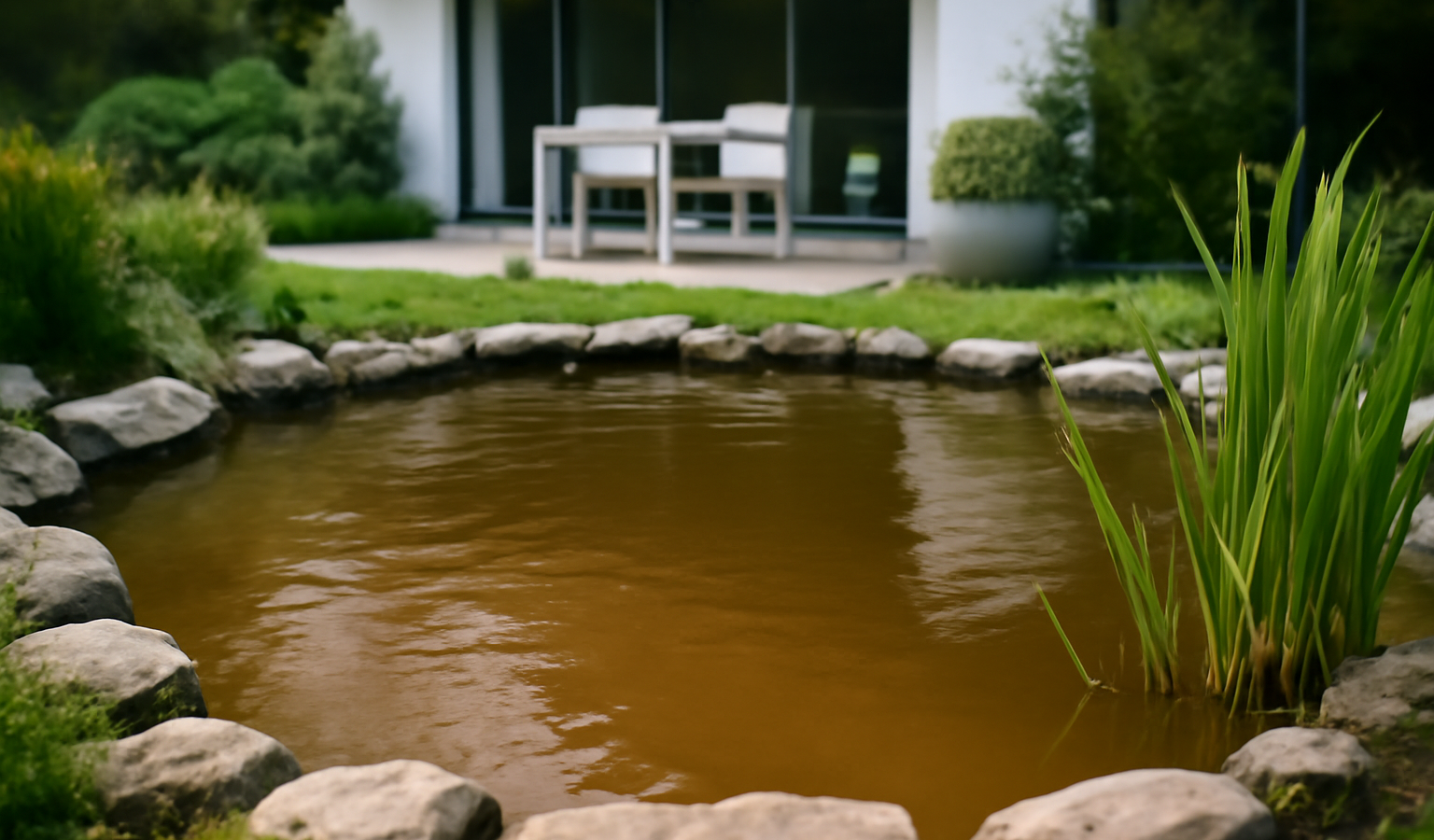
Brown pond water is a different problem from green pond water, and the fix depends entirely on which brown you’re dealing with. There are really three flavors: a clear tea- or amber-colored stain from tannins leaching out of leaves and wood; a cloudy, muddy brown from suspended soil and silt stirred up off the bottom; and a churned-up murk caused by fish—especially koi and goldfish—rooting around in the substrate. None of these are the green-water algae bloom most people expect, so reaching for algae treatments won’t help. This guide shows you how to tell the three apart, then how to clear each one and keep the water from going brown again. The first step is always the same: figure out whether your brown is a stain (you can see through it) or a cloud (you can’t), because that single observation points straight at the cause.
Key Takeaways
- Brown is not green. Brown water comes from tannins, soil/silt, or fish disturbance—not an algae bloom—so algae treatments won’t fix it.
- Tannins make clear, tea-colored water from decaying leaves, bark, and driftwood. Activated carbon plus removing the debris clears it.
- Suspended soil and silt make cloudy, muddy water you can’t see through, often after rain, runoff, or disturbing the bottom muck.
- Fish rooting in the substrate (common with koi and goldfish) keeps stirring sediment back into the water column.
- A combination of mechanical filtration, removing organic debris, a partial water change, and sometimes a flocculant clears most brown water; preventing new debris and runoff keeps it clear.
First, Diagnose: Stain or Cloud?
Scoop a glass of pond water and hold it up to the light. If it’s clear but tinted—like weak tea, amber, or whisky—and you can see straight through it, you have a tannin stain. If it’s cloudy and opaque, so that suspended particles block your view, you have soil, silt, or sediment in suspension. This one test splits your problem in two and tells you which section below to act on. A muddy cloud that reappears whenever the fish are active points to fish disturbance specifically.
Cause 1: Tannins from Leaves, Bark, and Wood
Tannins are natural plant compounds that leach into water as leaves, bark, driftwood, and other organic material break down—the same chemistry that browns a cup of tea. They stain the water amber to deep brown but leave it clear. Tannins are generally harmless to fish (they even mildly soften and acidify water), so this is mostly a cosmetic problem, but it signals a load of decaying organic matter in the pond.
How to diagnose it
The water is see-through but colored like tea. You likely have leaves piling up in the pond (autumn is peak season), new driftwood or untreated wood in or around the water, bark mulch washing in, or a thick layer of rotting leaf litter and “muck” on the bottom. If you recently added wood or had a lot of leaf fall, tannins are almost certainly the cause.
How to fix it
Remove the source first—net out floating leaves, vacuum or rake the decaying debris off the bottom, and pull any untreated wood that’s leaching heavily (or accept that new driftwood will leach for weeks). Then strip the color from the water with activated carbon, placed in a mesh bag in the filter or the water flow; it adsorbs the dissolved tannins and clears the tint over a few days to a week, after which you replace the spent carbon. Pair that with a partial water change of 20–25% to dilute the staining compounds, and use a skimmer or leaf net during heavy leaf-fall to stop new material from accumulating.
Cause 2: Suspended Soil, Silt, and Sediment
When the water is cloudy and muddy rather than clear, you have fine soil and silt particles held in suspension. These don’t settle on their own because they’re so fine, and they can keep the pond looking dirty for weeks. The usual triggers are runoff and rain washing soil in from the surrounding landscape, new pond construction or planting that introduced unwashed soil, or someone disturbing the bottom muck.
How to diagnose it
The water is opaque and muddy-brown; you can’t see your hand a few inches down. It often turns up after a heavy rain or after you’ve added plants, moved rocks, or stirred the bottom. Check whether rain is sheeting off a garden bed, lawn, or slope directly into the pond—that runoff is your silt source. If the cloudiness coincides with weather or recent work rather than leaf litter, soil suspension is the cause.
How to fix it
Give your mechanical filtration time to pull the particles out—make sure the filter and pump are sized for the pond and the pads are clean, and consider adding fine filter media to catch smaller particles. To speed things up, use a pond-safe flocculant (water clarifier), which clumps the fine particles together so they grow heavy enough to settle out or get trapped in the filter; clear out the settled sludge afterward. A partial water change helps dilute the load. Most importantly, divert the runoff: regrade or berm the edge, add a gravel border or plantings to filter incoming water, and keep loose soil and mulch back from the waterline so the next rain doesn’t refill the pond with mud.
Cause 3: Fish Stirring Up the Bottom
Koi and goldfish are foragers—they root and dig through the substrate looking for food, and in doing so they constantly kick fine sediment back up into the water. A pond with a lot of fish, a bare-soil or fine-gravel bottom, and active feeding can stay perpetually murky for this reason alone, even with good filtration, because the fish re-suspend particles as fast as the filter removes them.
How to diagnose it
The cloudiness is worst where the fish are most active and tends to spike at feeding time or when the fish are agitated. If you have koi or a heavy goldfish population, a soft or silty bottom, and the murk returns no matter how much you filter, the fish are the engine keeping it stirred up. Overstocking and overfeeding both make it worse, since extra waste and uneaten food add to the sediment they churn.
How to fix it
You can’t stop fish from being fish, but you can reduce what they have to stir. Cover bare soil with larger river rock or cobble so fine sediment is locked beneath stones the fish can’t dig through. Don’t overstock—a rule of thumb is keeping well under one inch of fish per ten gallons for koi—and don’t overfeed; uneaten food rots into more muck. Beef up mechanical filtration and add a bottom drain or pond vacuum routine to physically remove settled solids before they get re-suspended. Together these steps cut the available sediment so the water can finally clear and stay that way.
How to Prevent Brown Pond Water
Keeping the water clear long-term is about controlling what gets into it and giving your filtration a fighting chance:
- Keep organic debris out. Run a skimmer, net leaves promptly in fall (a pond net over the surface helps), and remove dead foliage so tannins and muck don’t build up.
- Manage runoff. Berm or grade the pond edge, add a planted or gravel margin, and keep soil and mulch back so rain doesn’t wash sediment in.
- Right-size and clean your filter. Match the pump and filter to your pond volume, clean the mechanical media regularly, and add fine media if particles slip through.
- Stock and feed conservatively. Avoid overstocking koi and goldfish, feed only what fish eat in a few minutes, and cover bare substrate with rock.
- Vacuum the bottom periodically to remove accumulated sludge before it can stain or cloud the water.
- Keep plants healthy. Marginal and submerged plants take up nutrients and help stabilize sediment and the pond edge.
If your water is actually green rather than brown, that’s an algae bloom with its own fixes—see our guide on how to clear green pond water fast. For seasonal pond care that prevents debris buildup in the first place, our walkthrough on overwintering pond plants covers fall cleanup, and you’ll find more pump, filter, and water-quality help on the Water Gardens & Ponds hub.
Frequently Asked Questions
Is brown pond water harmful to fish?
It depends on the cause. Tannin-stained water (clear but tea-colored) is generally harmless and even mildly beneficial to fish. Cloudy, muddy water from suspended soil isn’t directly toxic but can irritate gills if it persists and usually signals poor filtration or runoff. Either way, fish are happiest in clear, well-filtered water.
How do I get rid of tannins in my pond?
Remove the source first—net out leaves, vacuum decaying debris off the bottom, and pull untreated wood that’s leaching heavily. Then run activated carbon in your filter to adsorb the dissolved tannins, which clears the tea color over several days, and do a 20–25% partial water change to dilute the staining compounds.
Why is my pond muddy after it rains?
Rain washes soil and silt off the surrounding landscape into the pond, and those fine particles stay suspended, making the water cloudy brown. Fix it by improving mechanical filtration, optionally using a pond-safe flocculant to settle the particles, and—most importantly—diverting runoff with berms, grading, or a planted gravel border around the edge.
Can koi and goldfish make pond water brown?
Yes. Koi and goldfish forage by rooting through the substrate, which constantly kicks fine sediment back into the water and keeps it murky. Cover bare soil with larger rock so they can’t dig into it, avoid overstocking and overfeeding, and improve filtration to remove the solids they stir up.
Will a water clarifier fix brown pond water?
A flocculant-type clarifier helps with cloudy water from suspended soil and silt by clumping fine particles together so they settle out or get caught in the filter—then you remove the sludge. It won’t remove tannin staining, though; for tea-colored water use activated carbon and a water change instead.