

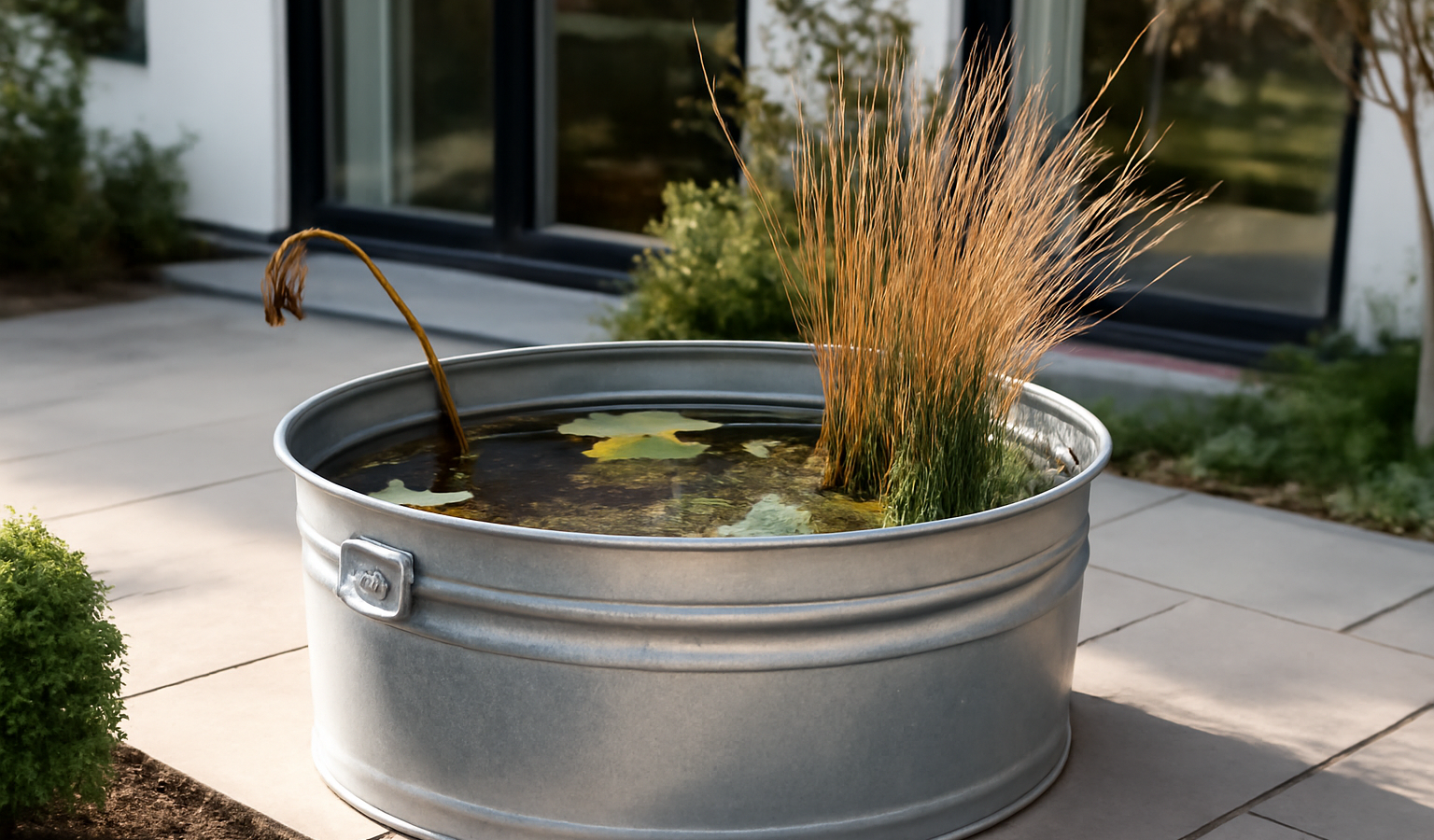
A container pond is wonderful in summer and dangerous in winter — not because the cold is worse than in an in-ground pond, but because the volume is so small. A half-barrel or stock tank holds a fraction of the water of a real pond, so it loses heat fast, swings temperature wildly, and can freeze solid right to the bottom in a way a 2 ft-deep dug pond never will. That single fact — small volume freezes hard — drives every decision you’ll make. The good news is that overwintering a container pond is straightforward once you accept that most of the time the smartest move is to not leave it outside freezing at all. Below is exactly how to decide, and how to protect fish and plants either way.
Part of our Ponds & Water Gardens guide →
In this guide
Key Takeaways
- The defining problem is small volume: containers freeze far deeper and faster than in-ground ponds and can freeze solid below about 100 gallons in a hard winter.
- Your three choices are bring it indoors, keep it open with a de-icer plus aerator, or shut it down and rehome the livestock — pick based on container size and your winter lows.
- A de-icer keeps a hole open for gas exchange; it does not warm the water. A heater that actually warms a small container is expensive and usually impractical outdoors.
- Goldfish can tolerate cold if water stays liquid and oxygenated, but tropical plants and fish must come indoors.
- Hardy aquatic plants overwinter by being cut back and dropped to the deepest, non-freezing point — which a small container often can’t provide.
- Never let ice seal the whole surface with fish underneath; trapped gases and oxygen loss are what kill them.
Why Container Ponds Are Different
An in-ground pond benefits from the earth around it. Soil is a huge thermal mass that buffers temperature swings and keeps the water below the frost line from freezing. A container sitting on a patio has none of that. Its walls are exposed to air on every side — including the bottom if it’s up on feet or a stand — so cold attacks it from all directions. The smaller the container, the faster it equalizes with the air temperature.
As a rough rule, a container under about 100 gallons in a region that sees sustained temperatures in the teens (Fahrenheit) or lower is at real risk of freezing solid. Solid ice kills fish outright and can crack the container itself as the ice expands. Even where it doesn’t freeze through, the rapid temperature swings stress fish far more than the gradual changes in a large body of water. This is why “just leave it out like the big pond” advice gets container ponds in trouble.
So the first question is not “how do I heat it” — it’s “should this container be outside through winter at all?” For most patio half-barrels and small tubs in zones 6 and colder, the honest answer is no.
Your Three Options
Option 1: Bring it indoors
For small containers — half-barrels, ceramic bowls, anything you can drain to a movable weight — bringing the whole thing into a garage, basement, sunroom, or shed is the safest and simplest answer. It doesn’t need to be warm, just reliably above freezing. An unheated attached garage that stays in the 40s is ideal: cold enough that fish stay dormant and barely feed, warm enough that nothing freezes.
You usually can’t carry a full container, so drain part of the water into buckets, move the container, and refill from those same buckets to preserve the established water and bacteria. Keep a small air stone running for oxygen, skip feeding once the water drops below about 50°F, and put it somewhere it gets a little ambient light. This is the route I recommend for anyone with a container under roughly 50–100 gallons and a hard winter.
Option 2: Keep it open outdoors with a de-icer and aerator
This only works for larger containers — think 100-plus-gallon stock tanks — and in climates where the water won’t freeze solid even with help. The combination you need is a floating pond de-icer (a thermostatically controlled heater that switches on only near freezing) plus an aerator. Critically, a de-icer does not warm the water; it simply keeps a small hole open in the ice so toxic gases from decomposition can escape and oxygen can enter. That open hole is what keeps fish alive under the ice.
The aerator should be set with the air stone raised partway up — not on the bottom. You want to oxygenate without churning the warmer water from the bottom up to the freezing surface, which would chill the whole container. Position the de-icer and air stone near each other so they reinforce the open hole. Even with both running, this approach fails if the volume is too small; the equipment can’t out-pace heat loss in a half-barrel during a cold snap.
Trying to actually warm a container with an aquarium-style submersible heater is generally a losing battle outdoors — the heat loss across exposed walls is enormous, the running cost is high, and a single equipment failure on a frigid night is fatal. De-icing to keep a gas-exchange hole open is realistic; outdoor water heating is not.
Option 3: Shut it down and rehome the livestock
If the container is too big to move indoors but too small to keep open safely, the cleanest answer is to overwinter the fish and plants indoors and let the empty container sit dry or lightly covered. Move goldfish to an indoor tank or tub, bring tender plants in, and either drain the container or leave a few inches of water with the equipment removed so freezing can’t crack it. Come spring you re-establish it. This avoids the worst-of-both-worlds situation where a mid-size tub is left out, partially freezes, and loses its fish.
Overwintering the Fish
Whether fish can stay outside comes down to species and whether the water stays liquid. Goldfish and small comet/shubunkin types are cold-tolerant and go dormant near freezing — they can survive in a container only if the water never freezes solid and a hole stays open for gas exchange. Koi are not realistic for most containers at all; they need depth and volume a tub can’t give, and should be in a proper pond or moved indoors. Any tropical fish must come inside without exception.
As water cools, stop feeding. Below about 50°F a fish’s metabolism slows and it can’t digest food, which then rots in the gut — feeding cold fish does more harm than good. Let them settle into dormancy. If you bring fish indoors, acclimate them slowly to avoid temperature shock: float them in bags or matched-temperature buckets and adjust gradually rather than dumping cold pond water into a warm indoor tank. The single rule that saves fish is this: never let ice seal the entire surface with fish trapped underneath. A sealed surface stops oxygen entering and lets toxic decomposition gases build up — that combination, not the cold itself, is what kills overwintering fish.
Overwintering the Plants
Aquatic plants split cleanly into hardy and tender, and they need opposite treatment.
Hardy plants
Hardy water lilies, hardy marginals like pickerel rush and hardy iris, and submerged oxygenators survive winter by going dormant below the ice — if their crowns sit below the freeze line. In an in-ground pond you cut the foliage back and drop the pot to the deepest point. In a shallow container, that depth usually doesn’t exist, so the crown freezes and dies. Your options are to move the whole container somewhere it won’t freeze solid, sink the plant pots into the ground or a larger pond, or store dormant hardy lilies cool and damp (around 40°F) in a garage in a bag of wet media. Cut all foliage back first so it doesn’t rot in the water.
Tender and tropical plants
Tropical water lilies, water hyacinth, water lettuce, and similar are killed by the first frost. Treat the floaters as annuals and compost them, or bring select tropicals indoors into a bright tub or aquarium as houseplants for the winter. Don’t leave tropicals in the container expecting them to return — they won’t.
Managing Small-Volume Freeze Risk
If you’re committed to keeping a container outside, stack every advantage you can against the freeze:
- Choose the biggest container you can. More water means more thermal mass and slower freezing. A 150-gallon stock tank is far more survivable than a 30-gallon tub.
- Move it against the house. A south-facing wall radiates heat and blocks wind. A spot under an eave or against the foundation buys you several degrees.
- Insulate the walls. Wrap the outside with foam board, bubble insulation, or even stacked straw bales. The bottom matters too — get it off cold pavers onto an insulating base.
- Group containers together. Several containers clustered shade and shelter each other and slow heat loss.
- Lower the water slightly and remove fragile features so expanding ice has room and won’t crack ceramic or split seams.
- Keep a de-icer and aerator running and check them after every hard freeze and power blip — equipment failure on the coldest night is the classic way fish are lost.
If you find yourself needing all six of these measures just to scrape by, that’s your sign the container is too small for your climate and Option 1 or 3 is the wiser call. There’s no prize for keeping a half-barrel open through a polar vortex.
Spring Startup
When nights stay reliably above freezing, reverse the process gradually. Move the container back outside or refill it, reintroduce fish slowly with proper acclimation, and bring hardy plants back up to their growing depth as they show new growth. Resume feeding only once the water is consistently above 50°F and the fish are actively swimming and interested. Clean out any debris that accumulated, restart pumps and filters, and let the biological filter rebuild before adding any new livestock.
One of the biggest fall jobs that makes spring startup painless is keeping leaves out of the water in the first place — our guide on how to net a pond for fall leaves covers the netting and timing for both ponds and larger containers. And if you’re weighing equipment, plants, and seasonal care across your whole water feature, the water gardens and ponds hub ties it together. For balcony and patio growers running container ponds alongside pots, our urban gardening section has more on small-space seasonal care.
Frequently Asked Questions
Can a container pond stay outside all winter?
Only if it’s large enough that the water won’t freeze solid and you keep a de-icer and aerator running. As a rough guide, containers under about 100 gallons in regions with sustained temperatures in the teens or lower should come indoors or be shut down. Small volume is the core problem — containers lose heat from every exposed wall and freeze far deeper than an in-ground pond.
Do I need a heater or just a de-icer?
For most container ponds, a de-icer is the right tool, not a heater. A de-icer doesn’t warm the water — it keeps a small hole open in the ice so oxygen enters and toxic gases escape, which is what actually keeps fish alive. Truly warming a container outdoors with a submersible heater is expensive and usually impractical because heat escapes through the walls too fast.
What do I do with my goldfish over winter?
Goldfish tolerate cold and go dormant if the water stays liquid and oxygenated, so they can stay in a large enough container with a de-icer and aerator, or be moved to an indoor tank or tub. Stop feeding once the water drops below about 50°F — cold fish can’t digest food. Never let ice seal the whole surface with fish underneath, and acclimate them slowly when moving between temperatures.
Will my water lilies survive winter in a container?
Hardy water lilies survive only if their crown stays below the freeze line, which a shallow container usually can’t provide. Cut the foliage back and either move the container somewhere it won’t freeze solid or store the dormant tuber cool and damp (around 40°F) in a garage. Tropical lilies and floaters like water hyacinth are killed by frost — treat them as annuals or overwinter select ones indoors.
How small is too small to overwinter outdoors?
There’s no exact cutoff, but containers under roughly 100 gallons in a hard winter are high risk because they can freeze solid, kill fish, and even crack. If you need to insulate the walls, wrap the base, group containers, and run a de-icer just to get by, that’s a strong sign the container should come indoors or be shut down for the season instead.