

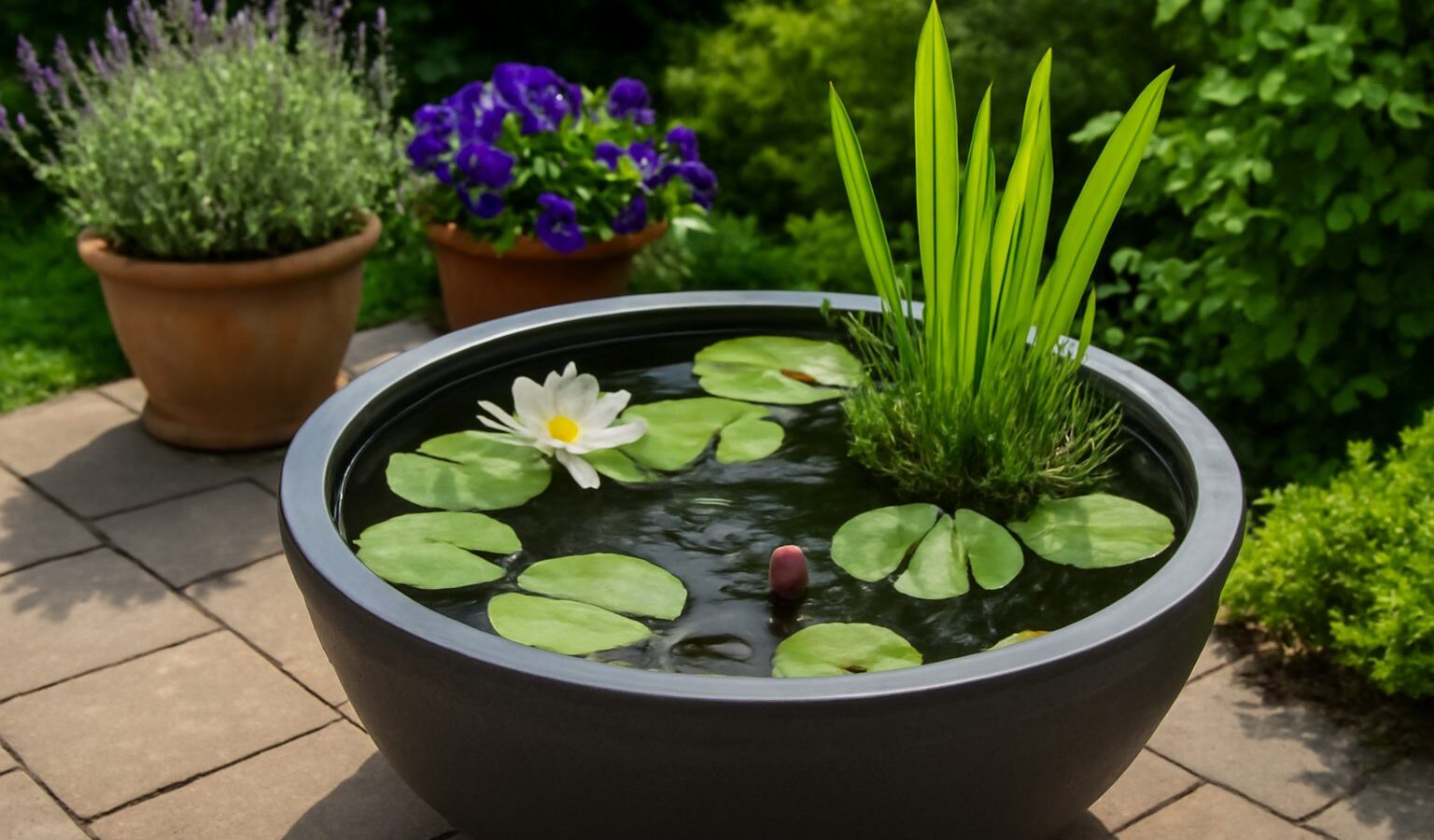
You do not need a backyard, a digger, or a pond liner to keep water lilies and a few fish. A container pond — a watertight pot or tub planted with aquatics and set on a patio, balcony, or deck — gives you the reflection, the plants, and the gentle sound of water in a footprint smaller than a doormat. It is the single best entry point into water gardening: cheap, fast, reversible, and forgiving. This guide covers the best containers to use, how to seal and set one up step by step, which plants and fish actually thrive in a small volume of water, whether you need a pump or filter, and how to keep the water clear through summer and protect the whole thing over winter.
Key Takeaways
- Any watertight vessel of 15+ gallons works — half whiskey barrels, glazed ceramic pots, galvanized stock tanks, or plastic tubs.
- Bigger is more stable: more water resists temperature swings and dilutes waste, so go as large as the space allows.
- Aim for the classic plant trio — one upright “thriller” (marginal), one floating leaf (dwarf water lily), and a submerged oxygenator.
- A small pond gets 4–6 hours of sun; a dwarf water lily needs the full six to bloom.
- Skip fish or stock very lightly (a few small fish max); fountain spitters and filters are optional but help keep small volumes clear.
Choosing Your Container
Almost anything that holds water and won’t leach toxins can become a pond. The practical floor is about 15 gallons; below that, the water heats and cools too fast and you cannot grow much. Twenty-five to forty gallons is the sweet spot for a patio pond with a lily and a fish or two. Here are the common choices and their trade-offs:
- Half whiskey/wine barrel: the classic. Charming and well-sized (~25–40 gal), but wood barrels dry out and leak, so most people drop a rigid barrel-liner insert inside, or seal the wood. Old barrels may carry residue — rinse well.
- Glazed ceramic pot: beautiful and heavy enough not to blow over. Must be glazed inside and the drainage hole plugged (a rubber stopper plus aquarium-safe silicone, or a bathtub-style bung). Unglazed terracotta is porous and will weep.
- Galvanized stock tank: a trendy, durable, generous option (often 40–100 gal). Galvanized zinc can leach into soft, acidic water and harm fish; line it or season it, and it is safest used planted-only or very lightly stocked.
- Plastic/resin tub or planter: cheapest and lightest, ideal for balconies where weight matters. Choose food-grade or pond-rated plastic and a dark color so it reads as water, not as a bucket.
Whatever you pick, remember that water weighs about 8.3 pounds per gallon — a 30-gallon pond is roughly 250 pounds of water alone, plus the container. On a balcony, confirm the structure can take it and site it near a load-bearing wall.
Step-by-Step: Setting Up a Container Pond
1. Seal and Site It
Plug any drainage holes with a rubber stopper and aquarium-safe (100% non-mildew) silicone, and let it cure fully before filling. If you are using a porous container, drop in a rigid liner or paint the inside with a pond-safe sealant. Choose a level, sturdy spot that gets 4–6 hours of sun — morning sun with afternoon shade is ideal in hot climates to keep the water cooler and algae down. Set it where you want it before filling, because once full you will not be moving it.
2. Add Plant Shelves
Marginal plants want their crowns just below the surface, not at the bottom of a deep tub. Create shelves by stacking clean bricks, upturned pots, or food-safe plastic crates inside the container to raise plant baskets to the right height. Plan the levels before you fill so you can see what you are doing.
3. Fill and Dechlorinate
Fill with tap water, then treat it. If you will keep fish, add a dechlorinator to neutralize chlorine and chloramine. If it is plants-only, you can either dechlorinate or simply let the filled pond stand uncovered for 3–5 days so chlorine off-gasses before you add livestock. Filling first and planting into the water is easier than the reverse.
4. Add Plants, Then (Optionally) Fish
Lower your potted plants onto their shelves. Let everything settle and the water clear for at least a week — two is better — before adding any fish, so the system can begin to establish a biological balance. Adding fish to brand-new water is the fastest way to lose them.
The Planting Plan: Thriller, Floater, Oxygenator
A satisfying container pond follows a simple three-part recipe, scaled down from full-pond planting:
- An upright marginal (the “thriller”): something vertical for structure — dwarf cattail, corkscrew rush, pickerel rush, dwarf papyrus, or a small iris. Set its basket so the crown sits 1–3 inches under the surface.
- A floating-leaf centerpiece: a dwarf or pygmy water lily (look for varieties bred for tubs, like the pygmy types) gives you flat pads and flowers. Its shade also cools the water and starves surface algae. See our guide on how to plant water lilies in a pond for potting and depth. Floating plants like water lettuce or frogbit add cover quickly but can be invasive — check they are legal in your state.
- A submerged oxygenator: hornwort or anacharis sits underwater, releases oxygen, and competes with algae for nutrients. Drop a bunch in weighted or potted; it does a lot of quiet work keeping water clear.
Aim to cover roughly half to two-thirds of the surface with leaves once everything fills in. That shade is your best natural algae control. Use the same heavy aquatic soil and gravel-topped baskets you would in a big pond — never light potting mix, which clouds the water.
Should You Add Fish?
You can run a beautiful container pond with no fish at all — just plants and maybe a small fountain. If you want livestock, stock very lightly. A 30–40 gallon tub can support a few small fish: white cloud mountain minnows, a couple of small goldfish (which will outgrow it eventually), or a single fancy goldfish. Mosquito fish (Gambusia) earn their keep by eating larvae, but they are invasive in many regions, so use native minnows or a few small goldfish instead where Gambusia are restricted. Avoid koi entirely — they need hundreds of gallons and will trash a tub. In hot weather, a small air stone or a trickle fountain keeps oxygen up, which matters far more in a small, warm volume of water.
Pumps, Filters, and Keeping It Clear
A still, well-planted container pond can stay balanced with no equipment — plants and beneficial bacteria handle the waste, and surface shade controls algae. Equipment becomes worthwhile when you add fish or want moving water. A small solar or low-watt fountain pump adds sound and surface movement (oxygen) and is plenty for a tub; a tiny sponge or box filter adds biological filtration if you stock fish. Whatever you run, the key to clarity is the nitrogen cycle: beneficial bacteria converting fish waste into nutrients the plants then use. Seeding that bacterial population early prevents the green-water bloom new ponds get — our guide on adding beneficial bacteria to a pond walks through dosing, and it applies to a 30-gallon tub just as it does to a 3,000-gallon pond, scaled down.
Top up evaporation with dechlorinated water as needed in summer — small ponds can lose an inch or more a day in heat. Skim fallen leaves, thin oxygenators when they take over, and remove yellowing foliage. Resist the urge to do a full water change to fix green water; that resets the bacteria. Patience, shade, and oxygenators win.
Overwintering a Container Pond
A small volume of water freezes solid in cold climates, which kills fish and can crack ceramic or barrel containers. In zones with hard freezes you have three options: move the whole container into an unheated garage or shed for winter; drain it and bring tender plants and fish indoors; or, for a tough container in a milder zone, keep a floating de-icer or a running pump to hold an open hole in the ice for gas exchange. Hardy marginals and hardy dwarf lilies can overwinter dormant if the crown stays below the ice; tropicals and most fish cannot survive a frozen tub. Plan your winter strategy before you commit to fish.
Quick Container Pond Ideas to Try
- The patio lily bowl: a wide glazed bowl, one pygmy water lily, a ring of dwarf rush, no fish — pure reflection and bloom.
- The balcony minnow tub: a 25-gallon resin planter with hornwort, frogbit, and six white cloud minnows; a small solar fountain for movement.
- The whiskey-barrel bog: half barrel packed with pickerel rush, dwarf cattail, and marsh marigold for a wildlife-friendly mini wetland that draws dragonflies.
- The stock-tank centerpiece: a large galvanized tank, lined, with a tall papyrus thriller, lily, and oxygenators — a striking modern look. Browse the Water Gardens & Ponds hub for plant pairings.
Frequently Asked Questions
How big does a container pond need to be?
About 15 gallons minimum, but 25–40 gallons is far more stable and lets you grow a dwarf lily and keep a few small fish. The more water, the slower it heats, cools, and fouls.
Do I need a pump or filter for a container pond?
Not for a still, plants-only pond — plants and bacteria keep it balanced. Add a small fountain pump for movement and oxygen, and a sponge or box filter if you keep fish.
Will a container pond breed mosquitoes?
Only if the water sits stagnant with no fish or movement. A few small fish, a fountain, or a mosquito donut (Bti) prevents larvae. Moving, stocked water rarely has a problem.
Can I keep koi in a container pond?
No. Koi need hundreds of gallons and will quickly outgrow and foul a tub. Stick to a few small goldfish or native minnows, or keep it fish-free.
How do I stop the water turning green?
Shade the surface with floating leaves, add submerged oxygenators like hornwort, seed beneficial bacteria, and don’t overfeed fish. Avoid full water changes, which reset the balance and prolong the bloom.
A container pond proves you do not need scale to enjoy water gardening. Pick a tub of at least 15 gallons, seal it, set it in half a day of sun, plant the thriller-floater-oxygenator trio, let it settle a couple of weeks, and you’ll have a living, blooming, dragonfly-visited little ecosystem on your patio — one you can take apart or scale up whenever you like.