

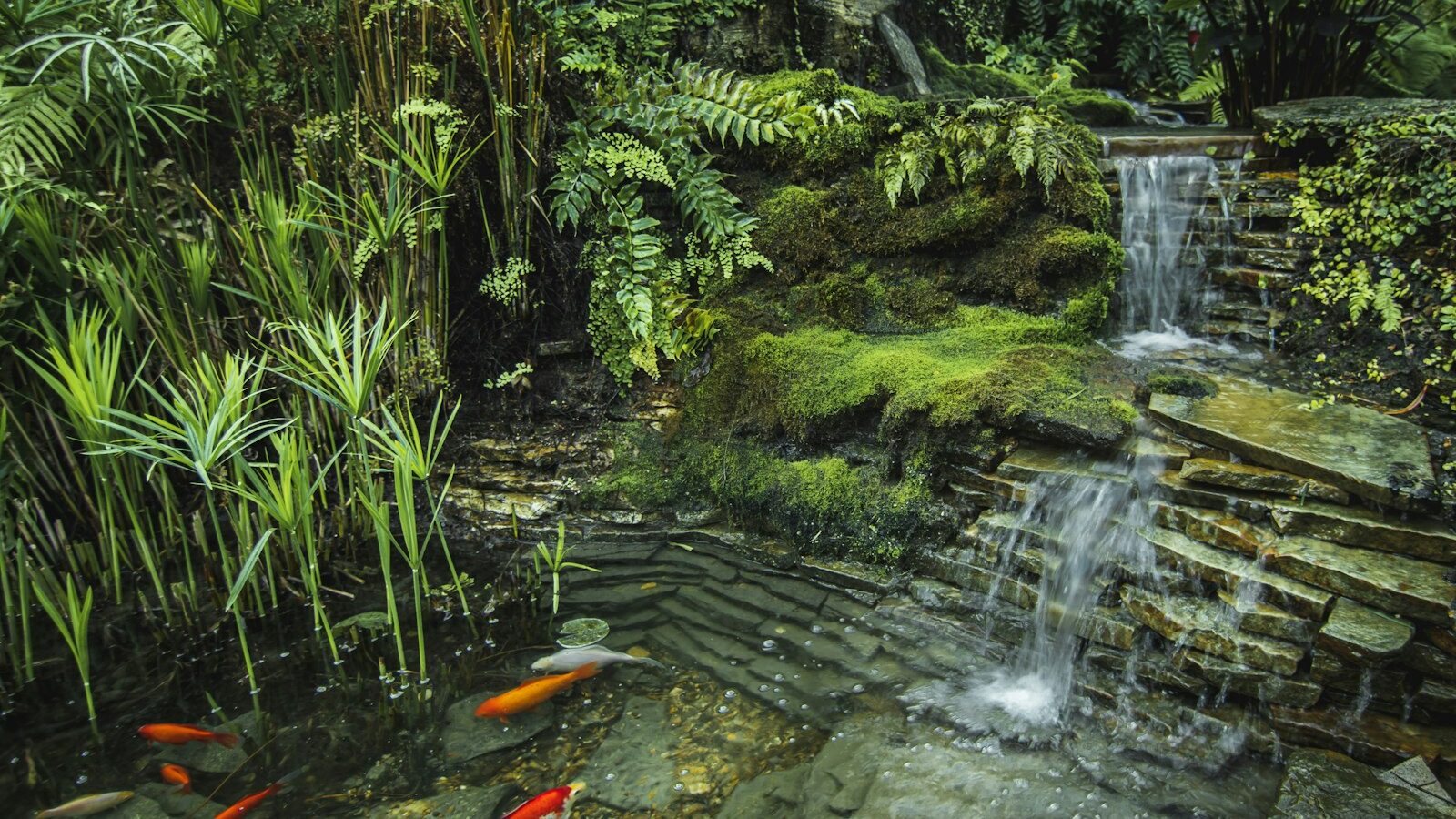
Adding fish is the moment a backyard pond truly comes alive, but it is also where many beginners go wrong. Stock too fast or too heavily and you can crash your water quality and lose fish within days. This guide walks you through the simple stocking rule, the best beginner-friendly fish, and how to add and acclimate them so they thrive for years.
Key takeaways
- Stock lightly — ~1 in of fish per 10 gal (less for koi)
- Cycle the pond before adding fish
- Acclimate slowly (float & mix water)
- Add fish gradually so the filter keeps up
- Goldfish are the easiest starter fish
As an Amazon Associate we earn from qualifying purchases.
The pond stocking rule (how many fish?)
The single most common beginner mistake is overstocking. A new pond looks empty with just a few small fish, so it is tempting to fill it up. But fish grow, and every fish produces waste that your filter and beneficial bacteria have to process. The more fish you add, the harder it is to keep ammonia and nitrite at safe (zero) levels.
A safe, beginner-friendly starting point is roughly 1 inch of fish per 10 gallons of water (about 1 cm of fish per 4 liters). This is conservative on purpose — it gives your biofilter breathing room and keeps oxygen demand reasonable. Measure fish length and add it up: ten 2-inch goldfish equals about 20 inches of fish, which suits a pond of roughly 200 gallons.
Koi need a lot more room
Koi are the exception. They grow large — often 18 to 24 inches or more — and produce a heavy waste load. Plan for far less density: many keepers use a guideline closer to one koi per 250 to 500 gallons, and a true koi pond is usually at least 1,000 gallons with 3 feet of depth or more. If you only have a small preformed pond, choose goldfish instead of koi.
- Always plan for adult size, not the size at the store.
- Round down, not up — understocking is almost never a problem.
- Hot climates hold less oxygen, so stock more lightly in warm regions.
Not sure how big your pond actually is? Our how to build a backyard pond guide covers measuring and calculating gallons before you ever buy fish.
Best fish for a beginner pond
You want fish that are hardy, tolerate temperature swings, and forgive small water-quality mistakes. These are the classics across the US and most temperate climates.
- Common goldfish — the easiest, toughest, and cheapest starter fish. Hardy in cold winters and warm summers.
- Comet goldfish — slim, fast, long-tailed goldfish that handle outdoor ponds beautifully and are very inexpensive.
- Shubunkins — calico-patterned goldfish with blue, orange, and black mottling; just as hardy as comets but more colorful.
- Koi — stunning and long-lived, but big, hungry, and best for large, deep ponds (see koi fish care).
- Golden orfe — active, schooling surface fish that need a large, well-oxygenated pond; keep three or more.
- Mosquitofish (Gambusia) — tiny, tough, and great for eating mosquito larvae in warm climates. Check local rules, as they are restricted in some areas.
For a first pond, mix common goldfish, comets, and shubunkins. They get along, stay manageable in size, and survive a wide range of conditions while you learn.
Free, no-obligation quote · Connect with a local pro
Cycle the pond before adding fish
“Cycling” means establishing the colonies of beneficial bacteria that convert toxic fish waste into harmless compounds. Skipping this step is the leading cause of new-pond fish deaths, often called “new pond syndrome.”
The nitrogen cycle works in stages: fish waste releases ammonia (toxic), bacteria convert it to nitrite (still toxic), and a second group of bacteria convert nitrite to nitrate (relatively harmless, removed by plants and water changes). Until both bacteria colonies are established, ammonia and nitrite can spike to deadly levels.
How to cycle a new pond
- Fill the pond and run the pump and filter continuously for at least 2 to 4 weeks before adding any fish.
- Add a bottled beneficial-bacteria starter to jump-start the colonies.
- Test the water with a pond water test kit and wait until ammonia and nitrite both read zero.
- Treat tap water with a pond dechlorinator to neutralize chlorine and chloramine, which kill both fish and your bacteria.
Live plants speed up cycling and add oxygen. Good aeration also helps your bacteria thrive — see how to aerate a pond.
Acclimating and adding new fish
Fish are extremely sensitive to sudden changes in temperature and water chemistry. Dumping store fish straight into your pond can shock or kill them even when your water is perfect. Acclimate every new fish slowly.
Step-by-step acclimation
- Float the sealed bag on the pond surface for 15 to 20 minutes so the water temperatures equalize. Keep it out of direct sun.
- Open the bag and add a half cup of pond water into it. Repeat every 5 minutes for 20 to 30 minutes so the fish adjusts to your pH and hardness.
- Net the fish out and release it gently into the pond. Do not pour the store water in — it may carry parasites or disease.
- Dim and quiet: add fish in the evening or on an overcast day to reduce stress.
Add fish gradually
Even after cycling, add only a few fish at a time — a handful, then wait two to three weeks before adding more. Each new fish increases the waste load, and your bacteria colony needs time to grow to match it. Test ammonia and nitrite after each batch; if either rises above zero, stop adding fish and do a partial water change until levels settle.
Quarantine new fish
New fish from a store can carry parasites, bacterial infections, or viruses that wipe out a healthy pond. The safest practice is a quarantine period before introduction, especially for valuable koi.
- Keep new arrivals in a separate tank or tub for 2 to 4 weeks and watch for illness.
- Run a filter and heater (if needed) on the quarantine container, and acclimate fish into it the same careful way.
- Watch for warning signs: clamped fins, flashing (rubbing on surfaces), white spots, ulcers, or gasping at the surface.
- Only move fish to the main pond once they have eaten well and shown no symptoms.
If quarantine is not practical for inexpensive goldfish, at least inspect each fish closely and never reuse store water. For high-value stock, quarantine is well worth the effort.
Feeding, predators, and ongoing care
Feeding without fouling the water
Pond fish are opportunistic and will beg constantly, but overfeeding is a top cause of poor water quality. Feed a quality pond fish food only what they can finish in 2 to 3 minutes, once or twice a day in warm weather. Skim out any leftovers.
- Match food to temperature: feed less as water cools, and stop entirely below about 50°F (10°C), when fish digestion slows.
- Use a sinking or wheatgerm food in spring and fall; higher-protein food in summer.
- Established ponds need less feeding because fish graze on algae and insect larvae.
Protecting fish from predators
Herons, raccoons, cats, and kingfishers all hunt pond fish. Give fish places to hide and escape:
- Build at least one area 2 feet deep or more so fish can dive out of a heron’s reach.
- Add caves, pipes, or overhanging plants and lily pads for cover.
- Use pond netting, a motion-activated sprinkler, or a decoy where predators are persistent.
Healthy water is the foundation of healthy fish. Stay on top of water changes, filter cleaning, and seasonal tasks with our pond maintenance guide.
Free, no-obligation quote · Connect with a local pro
Frequently asked questions
How long after building a pond can I add fish?
Wait at least 2 to 4 weeks while the pond cycles and beneficial bacteria establish. Confirm with a test kit that ammonia and nitrite both read zero, and always dechlorinate the water first. Adding fish too early is the main cause of new-pond fish deaths.
How many fish can I put in my pond?
A safe beginner guideline is about 1 inch of adult fish length per 10 gallons of water. Koi need far more — roughly one fish per 250 to 500 gallons. Always plan for the size fish will reach as adults, not their size at the store.
Can I just dump new fish straight into the pond?
No. Float the sealed bag for 15 to 20 minutes to match temperature, then gradually mix in small amounts of pond water over 20 to 30 minutes. Net the fish out and release it, leaving the store water behind to avoid introducing disease.
Do pond fish need to be fed every day?
In warm weather, feed once or twice daily only what they finish in 2 to 3 minutes. Feed less as the water cools and stop below about 50°F (10°C). Established ponds need less feeding because fish also graze on algae and insects.
Can goldfish and koi live together?
Yes, they are compatible and often share ponds. Just remember koi grow much larger and produce more waste, so size and stock the pond for the koi. In a small pond, stick with goldfish, comets, and shubunkins instead.
Featured project by Gensou Aquascaping
Want a pro to build or service your pond?
Compare free, no-obligation quotes from vetted local pond pros near you.