

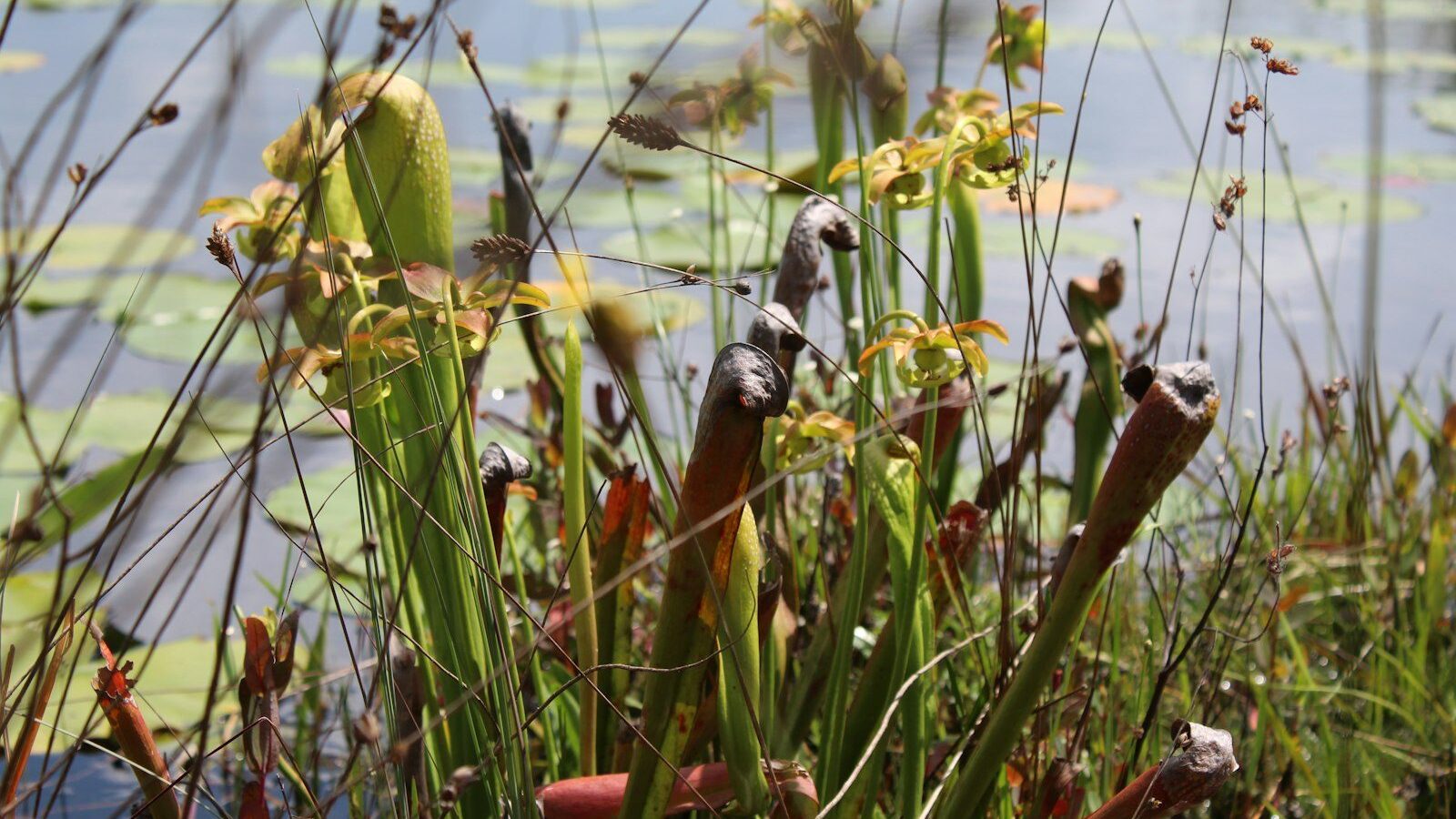
A bog garden is a deliberately waterlogged bed — permanently moist soil with no standing open water — that lets you grow a whole palette of plants impossible in ordinary borders: marsh marigolds, irises, pitcher plants, and lush ornamental grasses. It’s the natural companion to a pond, ideal for that soggy low corner of the yard where nothing else thrives, and a self-contained way to grow carnivorous plants without a greenhouse. Best of all, it’s one of the simplest water features to build: you’re essentially making a giant moisture reservoir by lining a shallow pit, punching a few drainage holes, and backfilling with the right soil. This guide walks through siting, the liner and drainage that keep the water level just right, the soil mix, and the best plants for both ornamental and carnivorous bogs.
Key Takeaways
- A bog garden is a lined pit, 12–24 inches deep, backfilled with moisture-retentive soil and kept permanently damp — wet soil, not open water.
- Punch a row of small drainage holes about two-thirds up the liner so excess rain drains away but the lower soil stays saturated — this sets your water level.
- Use a peat-free, low-nutrient mix for carnivorous bogs (sphagnum peat substitute plus horticultural sand); a richer mix with compost suits ornamental bog plants.
- Site it in full to partial sun near a downspout or pond overflow so it stays topped up; in dry spells you’ll need to add water with a hose.
- Match plants to the bog: marsh marigold, Japanese iris, astilbe and sedges for ornamental beds; sarracenia, venus flytraps and sundews for a peat carnivorous bog.
What is a bog garden?
A bog garden recreates the conditions of a natural marsh or fen: soil that stays consistently saturated but not flooded. Unlike a pond, there’s no open water — the surface is planted soil, kept wet from below by a liner that traps moisture. Unlike a rain garden, which is designed to dry out between storms, a bog garden is meant to stay damp year-round. This permanent moisture is what lets it host plants that sulk or die in normal beds: bog and marginal species that have evolved for wet feet, and carnivorous plants that grow in nutrient-poor, waterlogged peat.
You can build one as a standalone feature, as a planted “shelf” alongside an existing pond (often fed by the pond’s overflow), or as a practical fix for a chronically wet, boggy spot in the yard. The construction is the same in every case — only the water source and plant choices differ.
Choosing a site
Pick a spot that gets full sun to part shade — at least six hours of sun if you plan to grow carnivorous plants, which demand bright light, though many ornamental bog plants tolerate dappled shade. A naturally low-lying area is ideal because it collects runoff, but any reasonably level patch works. Siting the bog near a roof downspout, the splash zone of a gutter, or a pond’s overflow gives it a free top-up after every rain, which dramatically cuts the watering you’ll do by hand. Avoid building directly under deciduous trees, whose falling leaves add nutrients and clog a carnivorous bog, and steer clear of any spot where lawn fertilizer or driveway runoff would wash in.
Materials you’ll need
- Pond liner — flexible EPDM or PVC, or a heavy-duty builder’s plastic for a budget bog. Size it to the pit plus a generous overlap.
- A spade and a wheelbarrow for the soil you remove.
- Soil/medium — see the mix recommendations below, chosen for ornamental versus carnivorous use.
- Sharp horticultural sand or grit and, for carnivorous bogs, a peat substitute or sphagnum.
- A length of perforated pipe (optional) running into the bog to make topping up easy in dry weather.
- A fork or screwdriver to punch drainage holes in the liner.
Step-by-step construction
1. Dig the pit
Mark out your shape — a natural, irregular outline looks best — and dig down 12 to 24 inches. Deeper holds more water and stays moist longer through dry spells; 18 inches is a good all-purpose depth. Keep the sides gently sloping rather than vertical, and remove sharp stones and roots from the base that could puncture the liner.
2. Lay the liner
Drape the liner into the pit, pressing it into the contours, with the edges overlapping the rim by several inches. A thin layer of sand or old carpet under the liner cushions it against punctures. The liner is what turns a draining hole into a moisture reservoir — without it, water would simply percolate away in most soils.
3. Set the water level with drainage holes
This is the step that makes or breaks a bog garden. Punch a row of small holes through the liner around the perimeter at about two-thirds of the depth — roughly 8–12 inches up from the base in an 18-inch pit. These holes are the overflow: rain fills the bog, and once the water rises to the holes, the excess drains away, while everything below stays permanently saturated. No holes at all and the bog turns into a stagnant pond after heavy rain; holes too low and it dries out. Space them every foot or so.
4. Add a drainage and water-supply layer
Spread a few inches of horticultural grit or gravel across the base to aid even moisture movement. Now is the time to lay an optional perforated pipe across the gravel with one end sticking up above the surface — in dry weather you simply run a hose into this pipe to recharge the reservoir from below, which is far more effective than wetting the surface.
5. Backfill with the right soil
Fill the pit with your chosen medium, firming it lightly as you go. Trim the liner edges, leaving a small lip that you can hide under soil or edging stones. Finally, soak the whole bed thoroughly until water reaches the overflow holes — and let it settle for a few days before planting.
Soil mix: ornamental vs carnivorous
The medium depends entirely on what you want to grow, because the two plant groups have opposite nutrient needs.
- Ornamental bog: a moisture-retentive but fertile mix — roughly equal parts good topsoil, garden compost, and well-rotted organic matter, with some grit for structure. Marsh and marginal plants are hungry feeders and thrive in rich, wet soil.
- Carnivorous bog: the opposite — a deliberately low-nutrient, acidic mix of about 50/50 sphagnum peat (or a peat-free coir-and-bark substitute) and washed horticultural sand. Never add compost or fertilizer; the nitrogen will burn and kill pitcher plants and flytraps, which get their nutrients from trapped insects instead. Use only rainwater or distilled water on a carnivorous bog, as tap-water minerals build up and harm them.
Best plants for a bog garden
Ornamental bog plants
- Marsh marigold (Caltha palustris) — bright yellow spring flowers, loves saturated soil.
- Japanese and Siberian iris (Iris ensata, I. sibirica) — elegant vertical blooms in early summer.
- Astilbe — feathery plumes for the partly shaded end of the bog.
- Ligularia and Rodgersia — bold foliage and tall flower spikes for drama.
- Sedges, rushes and ornamental grasses (Carex, Juncus) — texture and movement.
- Cardinal flower (Lobelia cardinalis) — scarlet spikes that draw hummingbirds.
Carnivorous bog plants
- Pitcher plants (Sarracenia) — the backbone of a temperate carnivorous bog; hardy and striking.
- Venus flytrap (Dionaea muscipula) — the famous snapping traps; needs full sun and a winter dormancy.
- Sundews (Drosera) — dewy, sticky traps in low rosettes.
- Butterworts (Pinguicula) — flat sticky leaves and pretty flowers for the bog edge.
Ongoing care
The main task is keeping the bog wet. After rain, the overflow holes manage the level for you; in dry spells, top up through the supply pipe (or the surface if you skipped it) before the soil dries below the surface. Watch for the soil pulling away from the edges — a sign it’s getting too dry. Pull weeds promptly, especially in a carnivorous bog where vigorous grasses will quickly outcompete slow-growing pitcher plants. Most temperate bog and carnivorous plants need a cold winter dormancy, so leave them outdoors and simply cut back dead foliage in late winter. A bog garden pairs naturally with a pond — see our guides on choosing oxygenating pond plants and the wider water gardens and ponds collection for the full picture.
Frequently Asked Questions
What’s the difference between a bog garden and a pond?
A pond has open standing water; a bog garden has saturated soil with no exposed water surface — the whole area is planted. A bog is also permanently wet, unlike a rain garden that dries between storms. The construction is similar (a liner traps moisture), but a bog has drainage holes set partway up so excess water escapes while the lower soil stays soaked.
How deep should a bog garden be?
Dig 12 to 24 inches deep, with 18 inches a good all-purpose depth. Deeper holds more water and rides out dry spells better. Punch the overflow drainage holes in the liner about two-thirds of the way up so the bottom third or so of soil stays permanently saturated.
What soil do I use for a carnivorous plant bog?
Use a deliberately low-nutrient, acidic mix of roughly 50/50 sphagnum peat (or a peat-free coir-and-bark substitute) and washed horticultural sand. Never add compost or fertilizer — the nutrients will kill carnivorous plants, which feed on insects instead. Water only with rainwater or distilled water to avoid mineral buildup.
Do I need to line a bog garden?
In most soils, yes. The liner turns a draining pit into a moisture reservoir that holds water around the roots. Use flexible pond liner (EPDM or PVC) or heavy builder’s plastic, cushioned underneath with sand to prevent punctures, and punch the overflow holes partway up rather than leaving it fully sealed.
Can I build a bog garden next to my pond?
Yes — it’s a classic pairing. You can build the bog as a planted shelf at the pond edge and let the pond’s overflow keep it topped up, which means almost no hand watering. Just keep fertile bog soil and pond water separate enough that nutrients don’t cloud the pond, and choose plants suited to permanently wet soil.