

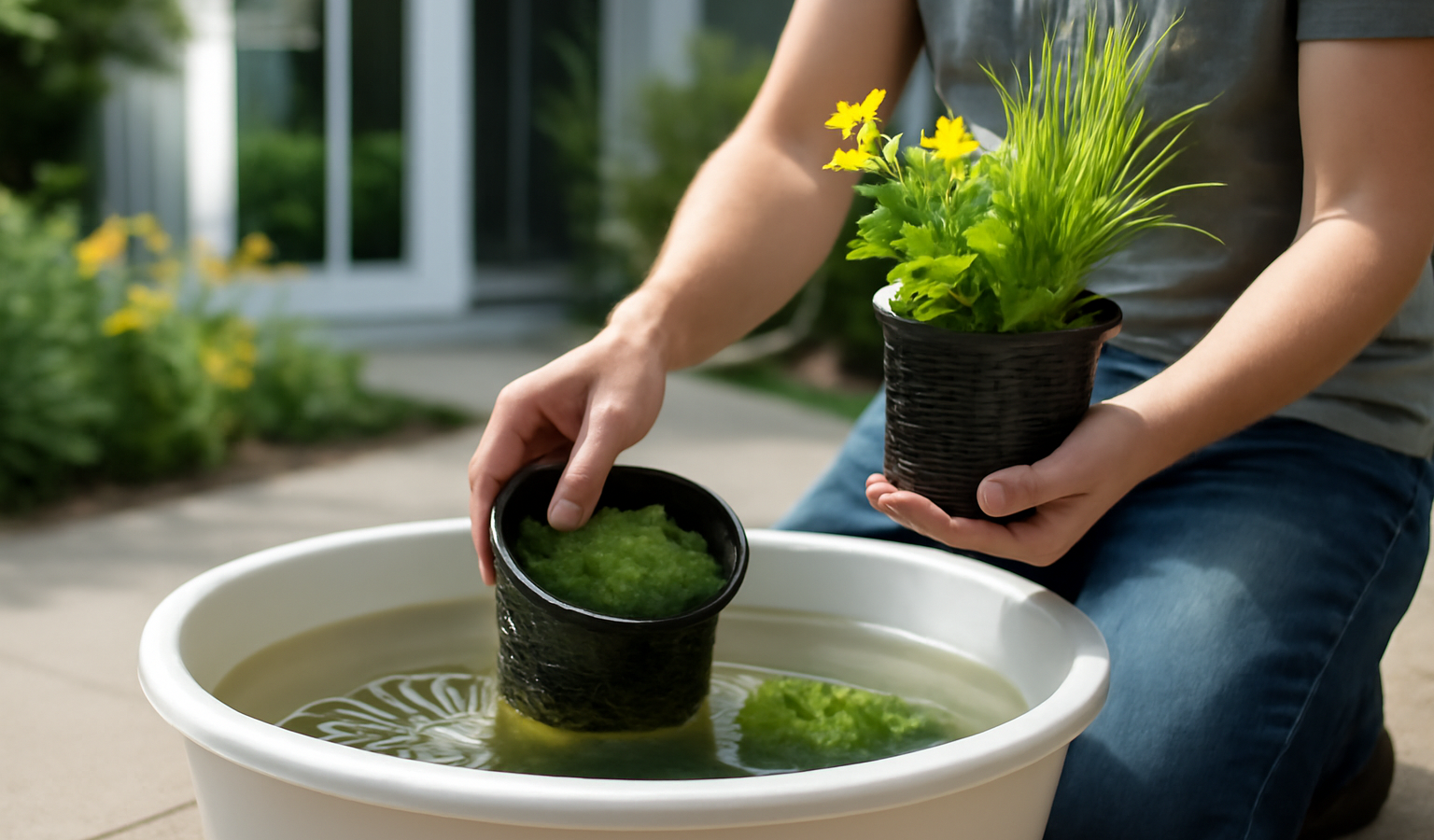
New pond plants almost never arrive ready to drop straight into your water garden. They show up grown soft in a greenhouse, packed wet in a bag, or bare-rooted and stressed from shipping — and the pond they are headed into has a different temperature, a different light intensity, and very likely a payload of unwanted snail eggs riding along on the leaves. Skip the acclimation step and you get the classic disappointments: a water lily that melts to mush in a week, a marginal that yellows and stalls, or a sudden bloom of snails and duckweed that you imported yourself. Acclimating pond plants properly is mostly patience plus three habits — harden them off gradually, plant them into the right basket at the right depth shelf, and quarantine them long enough to catch hitchhikers before they reach the main pond.
Key Takeaways
- Harden off over 7–10 days: let new plants adjust to your pond’s light and temperature gradually before deep planting.
- Plant by depth shelf: marginals 2–6″, deep marginals 6–12″, lilies 12–24″, submerged oxygenators near the surface to root. Match the plant to the shelf.
- Use aquatic baskets and heavy loam, never potting mix: top-dress with gravel so soil and fish can’t stir up a mud cloud.
- Quarantine 1–2 weeks in a separate tub: a salt or potassium-permanganate dip kills snail eggs and hitchhiking pests before they reach the pond.
- Mind the temperature gap: a difference greater than ~10°F shocks tropicals — float the pot to equalize before planting.
Inspect and Triage the Moment Plants Arrive
Open the box immediately. Plants shipped wet can rot in the bag within a day, so the first job is to get them into water and into light. Unwrap each plant, rinse the roots and foliage under a hose, and look hard at what you have: yellowing or rotted leaves get trimmed off, broken stems get snipped, and any leaf that is slimy rather than firm comes off entirely. This first rinse also knocks off the bulk of any clinging snails, eggs, and algae before they ever see your pond.
Sort by type, because each group acclimates differently. Marginals (irises, pickerel rush, marsh marigold) are the toughest. Floating plants (water hyacinth, water lettuce, frogbit) are sensitive to cold and to chloramine. Water lilies and lotus need warmth and the longest, gentlest transition. Submerged oxygenators (hornwort, anacharis) can usually go almost straight in but resent a big temperature swing. Keep everything shaded and wet while you set up your staging area.
Hardening Off: Closing the Light and Temperature Gap
Greenhouse and mail-order plants are grown in soft, humid, filtered conditions. Drop them straight under full open-sky sun and the leaves scorch; drop a warm tropical into cool pond water and it stalls or rots. Hardening off is the gradual bridge between the two, and for pond plants it has two dimensions: light and temperature.
Hardening to light
Stage new plants in a shaded tub or a shallow holding container for the first few days, then move them into progressively brighter spots over 7 to 10 days. Start in full shade, move to dappled or morning-only sun around day three, and only give full midday sun by the end of the week. Floating plants especially will bleach and develop crispy edges if you rush this — they need a week to thicken their cuticle to your light levels.
Hardening to temperature
Temperature shock is the silent killer of tropical lilies and floaters. Before any plant goes into the pond, float its pot or bag in the pond water for 30–60 minutes so the root zone equalizes, exactly as you would acclimate a new fish. As a rule, keep the gap between the plant’s current water and the pond under about 10°F; a wider gap calls for a longer float, swapping a cup of pond water into the holding container every 15 minutes to ease the change. Do not even attempt tropical water lilies, lotus, or floating plants until your pond is holding above 70°F day and night — they sulk or rot in cold water no matter how carefully you harden them. Hardy lilies and most marginals tolerate water in the low 60s.
Planting Baskets: Soil, Containers, and Top-Dressing
Most pond plants do best contained rather than planted loose in the pond bottom — baskets let you control vigor, lift plants for dividing or winter storage, and set each one at its correct depth. Use proper aquatic planting baskets: wide, squat mesh pots that let water and roots exchange freely. A broad, shallow basket beats a tall narrow one for stability and for the spreading rhizomes of lilies and irises.
Fill with heavy clay loam or dedicated aquatic planting media — never bagged potting mix. Standard potting soil is full of peat, perlite, bark, and slow-release fertilizer; in a pond it floats out, clouds the water, and dumps nutrients that feed an algae bloom. If you only have garden soil, use a dense, mineral-heavy topsoil with no added compost. Set the plant at the right level: lily and lotus rhizomes go in at an angle with the growing tip just proud of the soil surface, marginals go in upright with the crown at soil level, and bare-root marginals get their roots spread and firmed.
Always finish with a 1-inch layer of pea gravel or coarse sand over the soil. This top-dressing locks the soil in so it does not billow up when you lower the basket, and it stops fish — koi and goldfish especially — from rooting into the soil and uprooting the plant or muddying the pond. Tuck a tablet or two of aquatic plant fertilizer deep into the soil of heavy feeders like lilies before you gravel them, pushing the tab down near the roots so nutrients don’t leach into open water.
Depth Shelves: Putting Each Plant at the Right Level
A well-built pond has depth shelves — stepped ledges at different depths — and matching each plant to the right shelf is the difference between thriving and drowning. Measure depth from the top of the gravel in the basket to the water surface, not from the pond floor.
- Bog / very shallow marginals (0–2″): marsh marigold, dwarf cattail, and most “moisture-loving” edge plants want their crown right at or barely under the surface.
- Shallow marginals (2–6″): pickerel rush, water iris, arrowhead, sweet flag — the workhorses of the pond edge.
- Deep marginals (6–12″): hardy thalia, some rushes, taller reeds that want their feet deeper.
- Water lilies (12–24″): hardy lilies generally like 12–18″ over the crown once established; tropicals and larger varieties take 18–24″. Lotus prefer the shallower end, around 6–18″.
- Submerged oxygenators: anacharis, hornwort, and similar root or simply sit near the surface where light is strongest, then trail down — keep their baskets in the upper foot of water at first so they get the light to establish.
For lilies, use a trick that saves a lot of melted leaves: start the basket shallow and lower it in stages. Place a newly planted lily so only 6 inches of water cover the crown, let the leaves reach the surface, then step it down onto deeper supports (or a stack of bricks you remove one at a time) over a couple of weeks until it sits at its final depth. This keeps the young pads in the light instead of stranding them deep in the dark where they rot before they can grow up to meet the sun.
Quarantine: Snails, Pests, and Hitchhikers
Nearly every batch of pond plants carries stowaways — pond-snail eggs in gelatinous blobs on the undersides of leaves, aphids, leeches, planaria, fragments of duckweed and filamentous algae, and occasionally fish parasites. A two-week quarantine in a separate tub away from the main pond is the single best habit for keeping a clean water garden, and it is cheap insurance against a snail or duckweed explosion you cannot easily reverse.
The cleaning dip
Before plants go into quarantine, give them a dip to kill eggs and pests. Two reliable options:
- Salt dip: mix about 1 cup of pond/aquarium salt (non-iodized) per gallon of water and submerge the foliage and roots for 15–20 minutes. Salt desiccates snails, eggs, and many soft-bodied pests. Rinse well afterward — salt-sensitive plants like anacharis prefer a shorter, weaker dip.
- Potassium permanganate dip: a light pink solution (roughly a few crystals per gallon, just enough to turn the water pink) for 10–15 minutes is excellent for killing eggs and parasites. Rinse thoroughly; it is potent, so keep it off skin and out of the main pond.
A simpler hand method works for snail eggs too: turn each leaf over and physically wipe off any clear or amber jelly blobs — those are egg masses, and removing them is the surest way to keep pond snails from multiplying out of control.
Running the quarantine
Hold the dipped, potted plants in a tub, half-barrel, or even a clean storage bin of dechlorinated water for one to two weeks, in the same shaded-to-bright light progression you are using to harden them off. Watch for snails that hatch from eggs you missed, for new aphid colonies on emergent stems, and for any rot. This window doubles neatly with hardening off — the same two weeks accomplishes both — so quarantine costs you no extra time, just an extra container. Only after the plants are clean, hardened, and showing fresh growth do they earn a spot in the main pond, lowered onto their proper depth shelf.
After Planting: The First Few Weeks
Once plants are in the pond, expect some transplant sulk — older leaves may yellow and die back while the plant pushes new growth adapted to your conditions. Trim the dying foliage so it does not foul the water. Hold off on heavy feeding for the first couple of weeks while roots re-establish, then resume fertilizer tabs for the hungry lilies and lotus. Keep an eye on coverage: a healthy planted pond aims for 40–60% of the surface shaded by lilies and floaters, which starves algae of light — but get there gradually, thinning fast spreaders like water hyacinth before they blanket the surface and choke oxygen at night.
If you are still building out the water feature, our guide on how to add a waterfall to an existing pond pairs well with new plantings, since the extra aeration helps everything establish. For pump, filter, and water-quality basics, browse the Water Gardens & Ponds hub, and gardeners working in tight spaces will find related container ideas in our urban gardening guides.
Frequently Asked Questions
How long does it take to acclimate new pond plants?
Plan on about 7–10 days to harden plants to your light and temperature, which conveniently overlaps with a 1–2 week quarantine for pests. Tropical lilies and floaters need the full window plus pond water above 70°F before they go in.
Can I put new pond plants straight into the pond?
Tough marginals and oxygenators often survive it, but you risk importing snails, eggs, duckweed, and algae, and tender lilies or floaters may melt from light or temperature shock. A short hardening-off and quarantine prevents nearly all of those problems.
What soil should I use in pond planting baskets?
Heavy clay loam or dedicated aquatic media, topped with an inch of pea gravel. Never use bagged potting mix — its peat, perlite, and fertilizer float out, cloud the water, and feed algae.
How do I get rid of snails on new pond plants?
Rinse the foliage, wipe clear or amber jelly egg masses off the leaf undersides, then dip in salt water (about 1 cup non-iodized salt per gallon for 15–20 minutes) or a light potassium-permanganate solution, rinse, and quarantine for two weeks to catch any that hatch.
How deep should I plant water lilies?
Hardy lilies generally want 12–18 inches of water over the crown once established, tropicals up to 24 inches, and lotus shallower at roughly 6–18 inches. Start the basket shallow so the first pads reach the light, then lower it in stages to its final depth.