

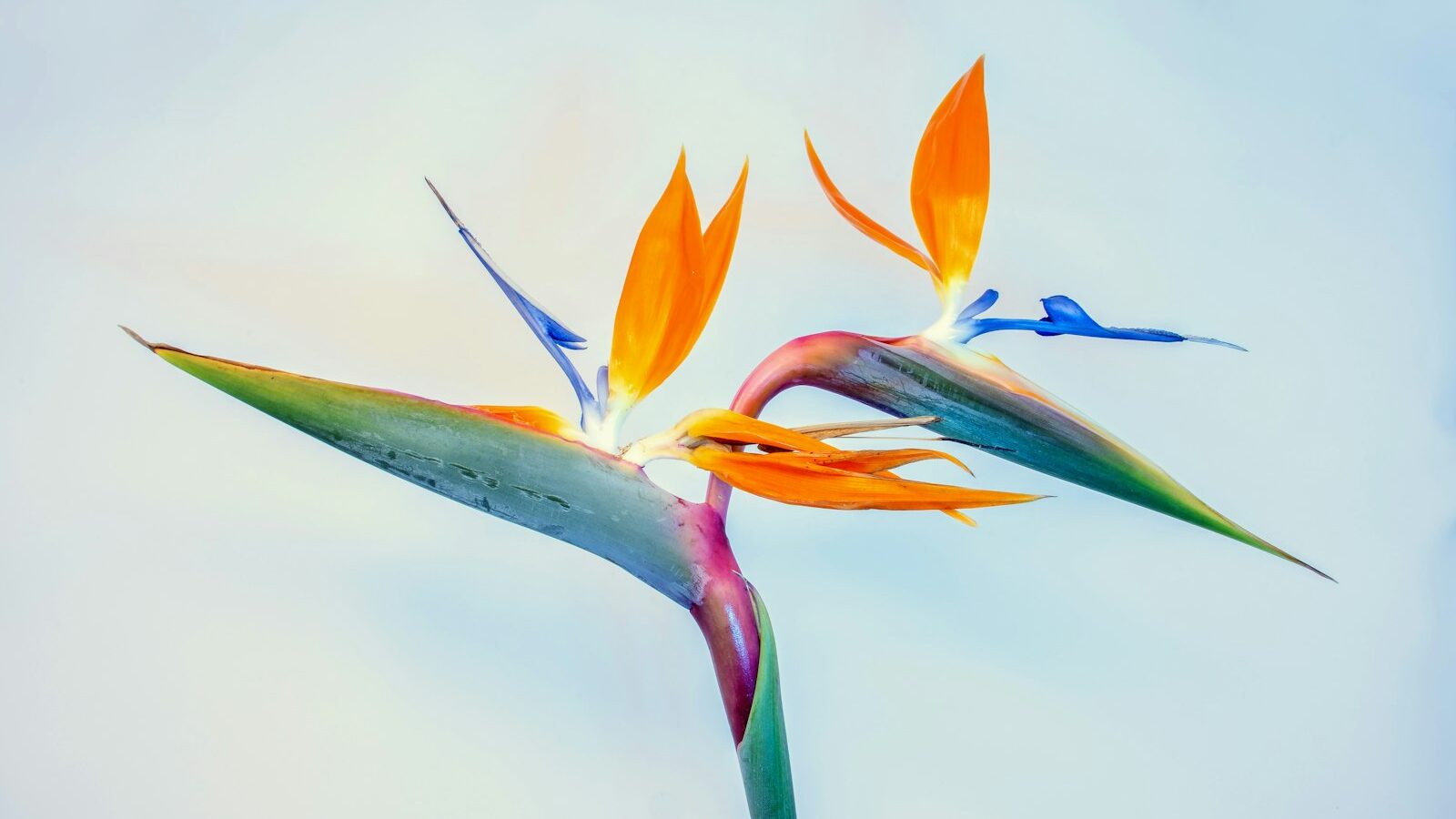
Few houseplants make a statement like the bird of paradise. With its huge, glossy, paddle-shaped leaves and (outdoors) those unmistakable orange-and-blue flowers that look like a tropical bird in flight, Strelitzia brings instant drama to bright living rooms, sunrooms, and frost-free gardens. The good news is that it is far more forgiving than its exotic looks suggest. Give it plenty of light, water it correctly, and it will reward you with steady, architectural growth for years.
Bird of paradise quick care
- Light: bright, some direct sun
- Water: when top 2 in dry
- Humidity: moderate-high
- USDA zones: 9-11 outdoors; pot elsewhere
- Needs maturity + light to bloom
As an Amazon Associate we earn from qualifying purchases.
Strelitzia reginae vs. nicolai: know your plant
Two species dominate the houseplant and landscape trade, and telling them apart matters because they grow to very different sizes. Buying the wrong one for your space is the single most common mistake new owners make.
Strelitzia reginae (orange bird of paradise)
- The classic flowering species, reaching about 4-6 ft indoors and 5-6 ft outdoors.
- Produces the iconic orange sepals and blue “tongue” petals on mature plants.
- More compact and the better choice for blooms, patios, and smaller rooms.
Strelitzia nicolai (giant white bird of paradise)
- A massive, tree-like plant that can reach 6-8 ft indoors and over 20 ft outdoors.
- Larger, banana-like leaves on tall trunks; flowers are white and blue but rarely appear indoors.
- Grown almost entirely for foliage and that bold, jungle-canopy look.
A quick way to tell them apart at the nursery: reginae leaves are smaller, more upright, and a slightly grayish blue-green, while nicolai leaves are larger, broader, and grow on visible woody trunks as the plant ages. There is also a third, rarer species, Strelitzia juncea, prized for its slender, almost reedlike leafless stalks, but you are unlikely to meet it as a common houseplant.
If you want flowers, choose reginae. If you want a dramatic indoor “tree,” nicolai delivers. You can find both as a bird of paradise plant online, though buying locally lets you check the species and inspect the leaves first. Whichever you choose, give it room to grow; these plants can easily double in size within a couple of seasons in good light.
Light, water, and humidity
Bird of paradise is a sun lover at heart. Getting the light right is the difference between a tight, upright, healthy plant and a stretched, floppy one.
Light
- Indoors: the brightest spot you have. A south- or west-facing window with several hours of direct sun is ideal.
- It tolerates moderate light but grows slowly and will never flower without strong light.
- Outdoors: full sun to part shade; in very hot climates, light afternoon shade prevents scorch.
- Rotate the pot a quarter turn weekly so it grows evenly toward the light.
Watering
- Water thoroughly when the top 2 inches of soil feel dry, then let excess drain away.
- In bright light and summer growth, this may be weekly; in winter, far less often.
- Never let the pot sit in standing water; soggy roots are the fastest way to kill it.
- Slight wilting between waterings is normal, but persistently dry soil causes brown, curling leaves.
Humidity and temperature
- Prefers moderate to high humidity (50%+); mist or group with other plants in dry indoor air.
- Happiest between 65-80°F (18-27°C). Protect from cold drafts and AC vents.
- Below about 50°F (10°C) growth stalls; frost will damage or kill the plant.
Soil, feeding, and repotting
Soil and pots
- Use a rich, well-draining mix: quality potting soil with added perlite, bark, or coarse sand.
- Always use a pot with drainage holes. Heavy plants do best in a sturdy, wide large planter that won’t tip.
Feeding
- Feed every 2-4 weeks during spring and summer with a balanced fertilizer.
- Stop feeding in fall and winter when growth slows.
- Mature plants benefit from a slightly higher-phosphorus feed to encourage flowering.
Repotting
- Repot every 2-3 years in spring, or when roots circle the pot or push out the drainage holes.
- Interestingly, slightly root-bound reginae tends to flower more readily, so don’t rush to oversize the pot.
- Step up just one pot size at a time to avoid waterlogged soil around the roots.
Why won’t it flower indoors?
This is the most common disappointment with bird of paradise, and the answer comes down to two factors: maturity and light. A plant typically needs to be 3-5 years old (and often 4-5 ft tall) before it is capable of blooming at all. Younger plants simply put their energy into leaves.
- Light is the biggest lever. Indoor plants rarely get the intense sun that triggers flowering. The brighter the spot, the better your odds.
- Don’t overpot. A slightly snug root system encourages reginae to bloom.
- Feed for blooms. A phosphorus-rich fertilizer in spring helps set buds.
- Be patient. Even healthy indoor specimens may take several years, and nicolai almost never flowers inside.
If flowers are your priority, move the plant outdoors for the warm season (after frost danger passes) or grow it in a sunroom. The extra light often makes all the difference. When a bloom finally does appear, it emerges from a beak-like sheath called a spathe, with the colorful sepals and petals unfurling in sequence over several days. A single flower can last a week or more, and a mature, well-lit plant may produce a succession of blooms through the warmer months.
Leaf splitting and growing outdoors by zone
Split leaves are completely normal
New owners often panic when the big leaves develop tears along their edges. Relax: this is natural and even beneficial. Splitting lets wind pass through the broad leaves in their native habitat, reducing the risk of the whole leaf tearing off. It is not a sign of disease or poor care. If you want fewer splits, keep the plant away from fans, heavy drafts, and high-traffic areas where leaves get brushed.
Growing outdoors by USDA zone
- Zones 10-11: Plant outdoors year-round in full sun; it will form large clumps and flower freely.
- Zone 9: Generally hardy, but protect from occasional frost with mulch or a cover during cold snaps.
- Zones 8 and below: Grow in a container you can move indoors before the first frost.
Like most tropical plants, bird of paradise thrives in warm, humid conditions and resents cold. Gardeners in cooler regions get the best results treating it as a “patio plant” that summers outside and winters in a bright room.
Common problems and pests
Curling leaves and brown edges
- Curling leaves: usually underwatering or low humidity. Check the soil and increase moisture in the air.
- Brown leaf edges: often caused by dry air, salt buildup from tap water or fertilizer, or inconsistent watering. Flush the soil occasionally and consider filtered water.
- Yellowing lower leaves: commonly overwatering or simply old leaves dying back naturally.
Pests
- Watch for spider mites (fine webbing, stippled leaves), mealybugs (white cottony spots), and scale.
- Wipe the large leaves regularly; dust buildup invites mites and reduces photosynthesis.
- Treat infestations with insecticidal soap or neem oil, repeating weekly until clear.
Most problems trace back to watering and light rather than disease, so before reaching for treatments, check those basics first. A plant that suddenly looks unhappy after a move has often been shocked by a change in light levels or a cold draft, and it will usually recover once conditions stabilize. Avoid the temptation to overwater a struggling plant; more bird of paradise die from soggy roots than from neglect.
The broad leaves love a wipe-down, much like a monstera care routine. For a full library of growing tips across species, see our plant & flower care guide.
Is bird of paradise toxic to pets?
Yes. Strelitzia is considered toxic to dogs, cats, and horses. The flowers and seeds are the most problematic parts and can cause drooling, vomiting, diarrhea, and lethargy if eaten. Keep the plant out of reach of curious pets and small children, and contact your vet or a pet poison hotline if ingestion is suspected. The good news is that most pets are deterred by the tough, fibrous leaves, but it is best not to take chances.
Frequently asked questions
How often should I water a bird of paradise?
Water when the top 2 inches of soil feel dry, soaking thoroughly and letting excess drain. In bright light and warm weather this is often weekly; in winter it can be every two to three weeks. Avoid letting the pot sit in water.
Why is my bird of paradise not flowering?
The two main reasons are immaturity and insufficient light. Plants usually need to be 3-5 years old and receive strong, direct sun to bloom. Indoor plants rarely get enough light, so moving it outdoors for summer or to a very bright window improves your chances.
Are split leaves a problem?
No. Leaf splitting is completely normal and natural for bird of paradise. The splits let wind pass through the large leaves. Keeping the plant away from fans and high-traffic areas reduces splitting if you prefer intact foliage.
Can I grow bird of paradise outdoors?
Yes, in USDA zones 9-11 it can live outdoors year-round, with frost protection in zone 9. In colder zones, grow it in a container and bring it inside before the first frost.
Is bird of paradise safe for cats and dogs?
No. It is toxic to cats, dogs, and horses, with the flowers and seeds being the most harmful. Ingestion can cause drooling, vomiting, and lethargy, so keep it away from pets and call your vet if they eat any.