

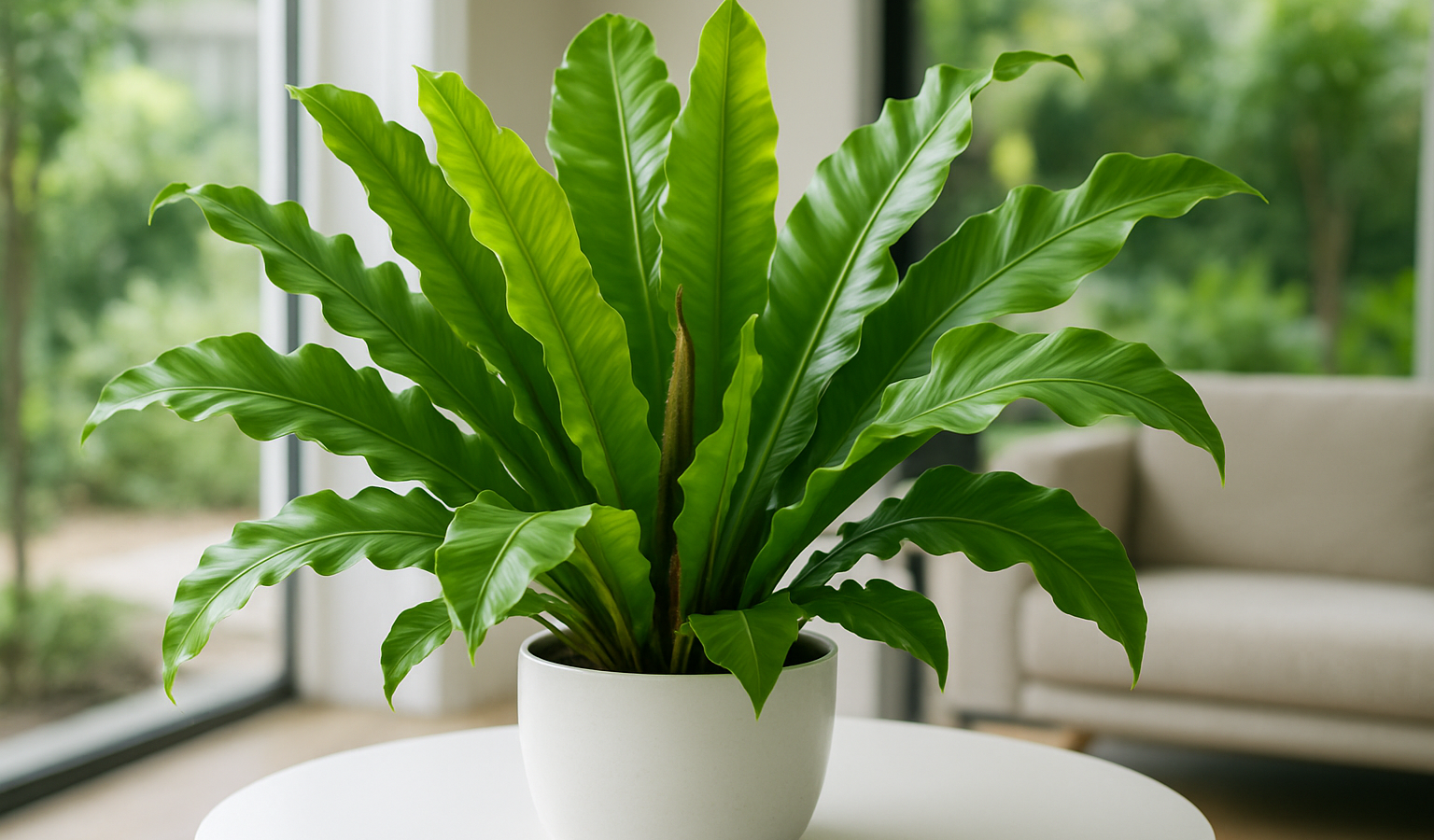
Bird’s nest fern (Asplenium nidus) is one of the most forgiving and handsome ferns you can grow as a houseplant, a refreshing change from the lacy, delicate types that crisp at the first dry spell. Instead of feathery fronds, it produces broad, glossy, strap-like leaves that unfurl from a central rosette, the new fronds emerging from a fuzzy crown in the middle that genuinely resembles a bird’s nest, hence the name. Like the staghorn, it is an epiphyte that in nature grows perched on trees, but in the home it is grown conventionally in a pot, where it forms a lush, architectural specimen that tolerates the lower light of indoor rooms better than most ferns. The one quirk to learn is how to water it, around the rosette, never into the center. This guide covers growing bird’s nest fern indoors, the light, watering, and humidity it wants, soil and potting, and how to keep that glossy rosette pristine.
Key Takeaways
- Bird’s nest fern is an easygoing epiphytic houseplant with glossy, strap-like fronds in a rosette.
- Water around the rosette, into the soil, never into the central nest, which rots if water collects there.
- Give it medium to bright indirect light; it tolerates lower light than most ferns but never direct sun.
- Keep the soil evenly moist in a loose, well-draining mix, and provide warmth and humidity.
- It is a tropical indoor plant in most of the US, not frost-hardy; grown outdoors only in frost-free climates.
About Bird’s Nest Fern
Bird’s nest fern is a tropical epiphyte native to the rainforests of Southeast Asia, Australia, and the Pacific, where it grows nestled in the forks and trunks of trees rather than in the ground. In cultivation it is grown as a houseplant and forms a striking rosette of upright to arching, undivided fronds, bright apple-green and glossy when young, that can reach 1 to 2 feet long indoors and far larger in the wild. The fronds spiral out from a central crown, and new ones uncurl from the fuzzy middle that gives the plant its name. Some named forms, like ‘Crispy Wave’, have rippled or wavy-edged leaves for extra texture. Being tropical, it is not frost-hardy and lives indoors across most of the country, where its bold, solid foliage contrasts beautifully with finer-textured houseplants in the indoor displays featured throughout the Plants & Flowers hub.
Light and Temperature
Bird’s nest fern prefers medium to bright indirect light but is notably tolerant of lower light, which is a big part of why it succeeds indoors where fussier ferns fail. An east or north window, or a position a few feet back from a brighter window, suits it well. What it will not take is direct sun, which scorches and yellows the fronds and bleaches their color, so keep it out of hot, unfiltered light. In a too-dark corner it survives but grows slowly and the fronds may stretch and weaken; bright indirect light gives the fullest, glossiest rosette.
As a tropical plant it likes warmth and steady conditions, ordinary comfortable room temperatures suit it, and it dislikes cold drafts, sudden temperature swings, and chilly windowsills in winter. Keep it away from heating and cooling vents, which dry the air around it and can brown the frond tips. Avoid temperatures below about 50°F. It is not frost-hardy and can only live outdoors year-round in frost-free, humid climates; elsewhere it can summer outside in deep shade but must come back in before cold weather.
Watering Around the Center
Watering technique is the one thing that trips people up with this fern. Keep the potting mix consistently and evenly moist but never waterlogged; water when the top of the soil starts to feel slightly dry, applying water to the soil around the base of the rosette. The crucial rule is to never pour water directly into the central nest, the fuzzy crown from which new fronds emerge. Water that pools and sits in that center invites rot, which can disfigure or kill the plant, so always water around the rosette and into the soil, not down into the middle.
Aim for steady moisture without extremes. Letting the soil dry out completely browns and crisps the frond edges, while leaving the plant sitting in soggy, waterlogged soil rots the roots; the middle ground of evenly damp soil is what keeps it lush. Use room-temperature water, and if your tap water is heavily treated, the sensitive new fronds may appreciate filtered or rested water. Empty any drainage saucer so the pot never stands in water. Get this watering rhythm right, into the soil, never the center, never bone-dry, never soggy, and bird’s nest fern is remarkably trouble-free.
Soil, Potting, and Humidity
As an epiphyte, bird’s nest fern wants a loose, airy, well-draining medium rather than dense, heavy soil. A peat- or coir-based houseplant mix lightened with orchid bark, perlite, or coarse material gives the open, fast-draining root environment it likes while still holding moisture, and the pot must have drainage holes. It is a slow grower and does not need frequent repotting; move it up a pot size only when it is clearly crowded, every couple of years or so, in spring, handling the brittle crown and fronds gently. Avoid burying the central rosette when you repot, keep the crown at or just above the soil line so water does not collect in it.
Being a rainforest plant, it loves humidity and does best in a moist atmosphere; a bright bathroom or kitchen is an excellent spot, or raise humidity with a pebble tray, a nearby humidifier, or by grouping it with other plants. Dry indoor air, especially with winter heating, tends to brown the frond edges, the most common cosmetic complaint. Feed lightly during spring and summer with a balanced liquid houseplant fertilizer diluted to half strength, roughly monthly; the fronds are sensitive, so apply feed to the soil rather than the foliage and do not overdo it. Pause feeding in fall and winter.
Care and Troubleshooting
Bird’s nest fern is low-maintenance once its watering and light are sorted. Wipe dust off the broad, glossy fronds occasionally with a damp cloth to keep them clean and able to photosynthesize, and remove any individual fronds that turn fully brown by snipping them off at the base. Do not attempt to divide it the way you would a clumping fern; it grows from a single central crown and is propagated commercially from spores, so simply grow your plant on as a single handsome rosette. New fronds unfurl from the center and are delicate at first, so handle the crown carefully and never let debris or standing water sit in it.
Most problems are cultural. Brown, crispy frond edges point to dry air or a missed watering, raise humidity and keep the soil evenly moist. Yellowing or pale, scorched fronds usually mean too much direct sun, so move it to gentler indirect light. A rotting, blackened center comes from water sitting in the crown or from overwatering, the very thing the around-the-center watering rule prevents. Indoors it can occasionally attract scale or mealybugs, which you can wipe off or treat gently. With medium indirect light, careful watering, warmth, and humidity, bird’s nest fern is one of the easiest and most striking ferns for the home, and it pairs naturally with the mounted, antler-fronded staghorn fern for a collection of dramatic epiphytic ferns.
Frequently Asked Questions
How do you water a bird’s nest fern?
Water into the soil around the base of the rosette, keeping the mix evenly moist but never soggy, and water when the top of the soil starts to feel slightly dry. The crucial rule is to never pour water into the central nest, the fuzzy crown where new fronds emerge, because water that collects there causes rot that can kill the plant.
Why are my bird’s nest fern’s leaf edges turning brown?
Usually dry air or a lapse in watering. As a humidity-loving rainforest plant, it browns at the frond edges when indoor air is too dry, especially with winter heating, or when the soil dries out. Raise humidity with a pebble tray, humidifier, or a bright bathroom, keep the soil evenly moist, and keep it away from heating and cooling vents.
How much light does a bird’s nest fern need?
Medium to bright indirect light is ideal, though it tolerates lower light better than most ferns, which is why it does well indoors. An east or north window or a spot back from a brighter window suits it. Keep it out of direct sun, which scorches, yellows, and bleaches the fronds. Too little light leaves it slow-growing and weak.
Can a bird’s nest fern be divided?
No. Unlike clumping garden ferns, the bird’s nest fern grows from a single central crown and cannot be split into divisions; trying to divide it will damage the plant. It is propagated commercially from spores. Simply grow your plant on as one handsome rosette, removing any fully browned fronds at the base as needed.
Is bird’s nest fern an indoor plant?
In most of the US, yes. It is a tropical epiphyte that is not frost-hardy and suffers below about 50°F, so it is grown as a houseplant and can only live outdoors year-round in frost-free, humid climates. Elsewhere it can summer outside in deep shade but must come back indoors before cold weather arrives.