

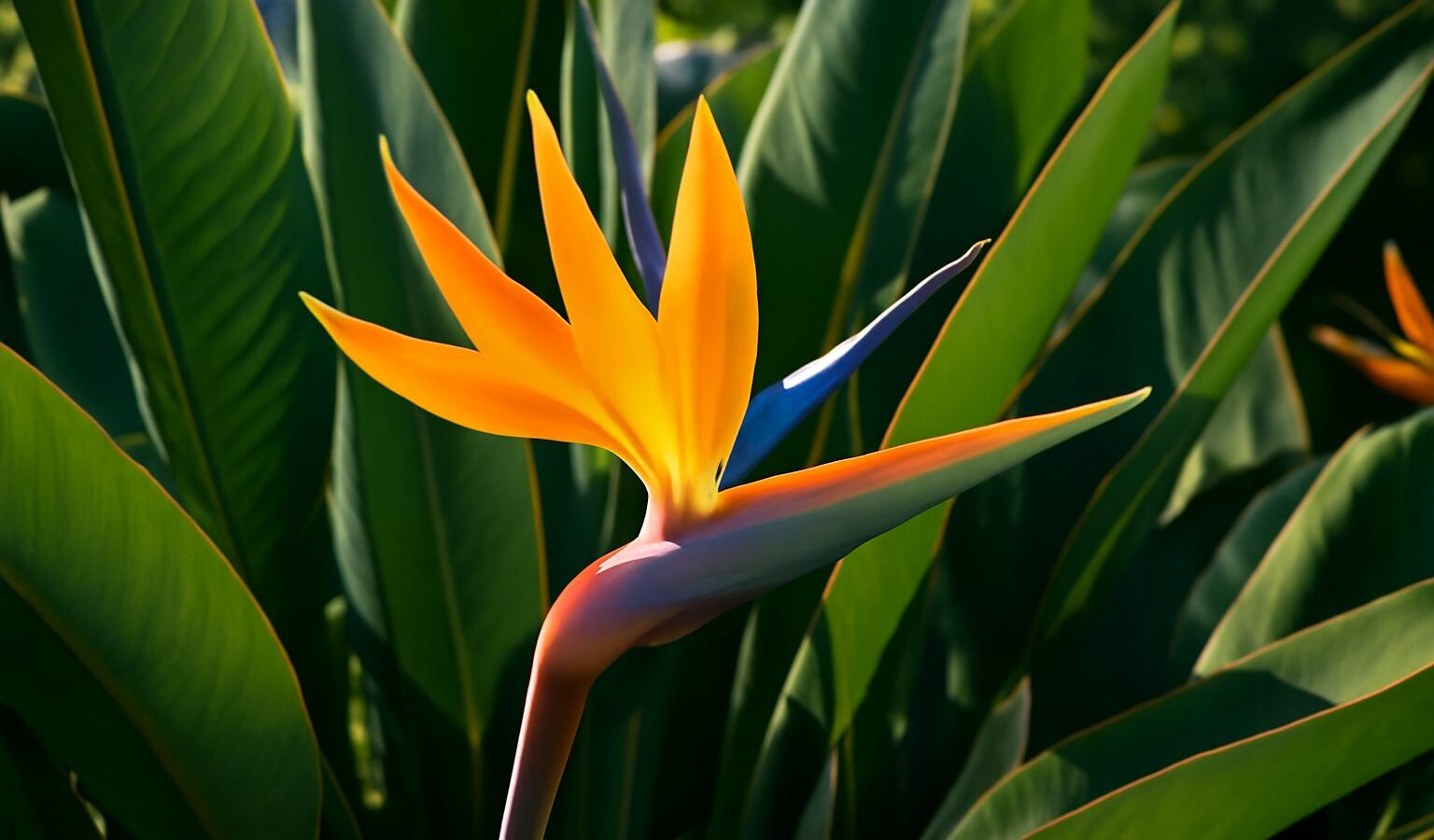
Few houseplants make a statement quite like the bird of paradise. With its large, glossy paddle-shaped leaves arching out of a sturdy clump, Strelitzia brings an unmistakably tropical, architectural presence to a room. This South African native is a close relative of the banana, and it shares that family’s appetite for warmth, light, and rich soil. Two species dominate the houseplant trade: Strelitzia reginae, the compact orange-and-blue “crane flower” prized for its spiky, vivid blooms, and Strelitzia nicolai, the giant white bird of paradise grown mostly for its enormous foliage, which can climb to five or six feet indoors and far taller outside. Getting bird of paradise care right is less about fussy routines and more about supplying enough of the things it craves most—above all, light. Give it that, and you have one of the most rewarding statement plants you can own. Stint on it, and you get a healthy-but-sulky green giant that simply refuses to flower.
Key Takeaways
- Bird of paradise needs the brightest light of nearly any common houseplant—several hours of direct sun daily to have any hope of blooming.
- Keep the soil evenly moist in spring and summer, letting the top two inches dry between waterings, and cut back sharply in winter.
- It is a heavy feeder; use a balanced fertilizer roughly every two weeks during the growing season.
- Plants need to be mature (four to five-plus years), well-lit, and slightly root-bound before they will flower—and indoor blooming is genuinely difficult.
- Strelitzia is toxic to cats and dogs; the seeds and fruit are the most dangerous parts and cause vomiting, drowsiness, and GI upset.
Light: The Single Most Important Factor
If you remember only one thing about bird of paradise care, make it this: this plant wants more light than almost anything else on your windowsill. In its native habitat it grows in open, sun-drenched grasslands and forest edges, and it carries that hunger for brightness indoors. To thrive—and especially to bloom—a bird of paradise needs several hours of direct sunlight every day. A south- or west-facing window where the leaves catch unfiltered sun for four to six hours is close to ideal. An east window with strong morning sun can keep a plant healthy, but it rarely supplies enough intensity to trigger flowering.
The plant will tolerate medium or even moderately low light without dying, but it pays for the deficit in slow growth, smaller leaves, and a stubborn refusal to flower. Plants kept too dim often stretch toward the window and develop weak, leggy stems. Rotate the pot a quarter-turn every week or two so all sides receive equal exposure and the plant grows evenly rather than leaning. During the darker months, many indoor growers supplement with a strong full-spectrum grow light to maintain leaf production. If you have a sheltered patio or balcony, summering your bird of paradise outdoors in bright light—gradually acclimating it to avoid leaf scorch—can dramatically improve its vigor and its chances of blooming.
Watering: Moist but Never Soggy
During the active growing season of spring and summer, a bird of paradise likes its soil kept evenly moist. The goal is consistent moisture without waterlogging—let the top two inches of soil dry out before you water again, then water thoroughly until it runs from the drainage holes. Because the plant is large and fast-growing in summer heat, it can drink surprisingly fast, so check it every few days rather than relying on a fixed calendar. A pot with no drainage is a death sentence; standing water at the roots is the fastest route to rot.
In autumn and winter, growth slows dramatically and the plant’s water needs drop with it. Reduce watering significantly during this period, allowing the soil to dry more deeply between drinks. Overwatering in winter, when the roots are barely active, is one of the most common ways people unintentionally kill this plant. Bird of paradise is also sensitive to mineral buildup; if your tap water is hard or heavily chlorinated, the crispy brown leaf edges that result can be eased by using filtered or rainwater, and by flushing the pot thoroughly every month or two to leach out accumulated salts.
Soil and Potting
Bird of paradise wants a rich but well-draining soil. A good mix combines a quality loamy potting soil with amendments like perlite, bark, or coarse sand to keep it airy and free-draining. The plant is a vigorous feeder with thick, fleshy roots, so it appreciates fertility, but those same roots will rot in dense, water-retentive media. Aim for a substrate that holds moisture yet drains freely within seconds of watering.
Here is a quirk that catches many growers out: bird of paradise actually blooms better when it is somewhat root-bound. A plant rattling around in an oversized pot pours its energy into growing roots rather than producing flowers. For that reason, resist the urge to up-pot too eagerly. Repot only every two or three years, or when roots are visibly crowding the container and pushing it out of shape, and move up just one pot size at a time. Spring is the best season for repotting, giving the plant a full growing season to settle in. Use a heavy pot, too—a mature specimen is top-heavy and tips easily in a light plastic container.
Humidity and Temperature
As a tropical and subtropical plant, bird of paradise prefers warm, humid conditions. It is happiest in temperatures between roughly 65 and 85 degrees Fahrenheit (18 to 29 Celsius), which conveniently overlaps with normal indoor comfort. What it cannot abide is cold. Keep it away from drafty doors and cold windowpanes in winter, and never expose it to temperatures below about 50 to 55 degrees Fahrenheit—chilling damages the foliage and can stall the plant for months.
Humidity matters too. The plant does best at around 60 percent humidity or higher, well above the dry air of most heated or air-conditioned homes. Low humidity is a leading cause of the brown, crispy leaf edges that plague indoor specimens. To raise local humidity, group it with other plants, set the pot on a tray of pebbles and water, or run a humidifier nearby during dry seasons. Misting offers only fleeting relief and can encourage fungal spotting if leaves stay wet, so it is not the most reliable fix.
Feeding: A Hungry Plant
Bird of paradise is a genuinely heavy feeder, and skimping on nutrition is another reason plants fail to flower. During the growing season—spring through late summer—feed it with a balanced liquid fertilizer roughly every two weeks, or use a slow-release granular feed according to label rates. Some growers switch to a feed slightly higher in potassium and phosphorus as a mature plant approaches blooming age to encourage flower formation. Stop or greatly reduce feeding in autumn and winter when growth is dormant, since unused fertilizer salts simply accumulate in the soil and scorch the roots and leaf tips.
How to Get a Bird of Paradise to Bloom Indoors
This is the holy grail for most owners, and it is worth being honest: coaxing those iconic crane-like flowers from an indoor plant is hard, and many never manage it. The first hurdle is maturity. A bird of paradise typically must be at least four to five years old before it is physiologically capable of flowering—younger plants will not bloom no matter how perfect their conditions. Patience is non-negotiable.
Beyond age, the recipe comes down to three things working together. First and most critically, light: the plant needs as much bright, direct sun as you can give it, which is why outdoor-summered or conservatory specimens bloom far more readily than those in average living rooms. Second, keep it slightly root-bound, since a snug pot signals the plant to reproduce rather than expand. Third, feed and water it generously through the growing season so it has the energy reserves to flower. Strelitzia reginae is the more achievable bloomer indoors; the giant Strelitzia nicolai rarely flowers in a home setting and is best appreciated for its dramatic foliage. If yours is mature, well-fed, blazingly bright, and still won’t flower, the answer is almost always: it needs even more light.
Why the Leaves Split—and Why That’s Normal
New owners are often alarmed to see their bird of paradise leaves develop long tears or splits along the edges, fanning back toward the central vein. Relax—this is completely natural and not a sign of damage or disease. The splitting, known as fenestration, is an evolutionary adaptation. In the wind-swept open habitats where these plants evolved, intact paddle leaves would catch gusts like sails and tear the whole plant or snap stems. By splitting along predictable lines, the leaf lets wind pass through harmlessly while still capturing sunlight. Indoors, mature leaves split as a matter of course, and there is nothing you need to do about it. It is a feature, not a flaw.
Propagation
The most reliable way to propagate bird of paradise is by division of the rhizome, splitting an established clump into sections. The best time is spring, ideally when you are already repotting. Remove the plant from its pot, gently tease apart the root mass, and use a clean, sharp knife to cut the rhizome into divisions—each one needs at least one healthy fan of leaves and a good share of roots. Pot each division into its own well-draining container and keep it warm and somewhat sheltered while it recovers; expect a period of sulking before new growth resumes.
Propagation from seed is possible but demands serious patience. Seeds can take a month or more to germinate, often need scarification and consistent warmth, and the resulting plants may take many years to reach blooming size. For most home growers, division is by far the faster and more dependable route to new plants.
Common Problems and Pests
The most frequent complaint is brown, crispy leaf edges. This usually traces back to low humidity, inconsistent or insufficient watering, or a buildup of mineral salts from hard water and over-fertilizing. Address it by raising humidity, watering more consistently, flushing the soil periodically, and switching to filtered water if your tap is hard. Leaves that curl inward are typically the plant’s response to underwatering or low humidity, signaling it is trying to conserve moisture.
On the pest front, spider mites are the usual suspects, especially in the dry indoor air the plant dislikes—watch for fine webbing and stippled, dusty-looking leaves. Scale insects can also appear as small brown bumps along stems and leaf undersides. Treat both by wiping the foliage, increasing humidity, and applying insecticidal soap or horticultural oil as needed. Yellowing lower leaves combined with mushy stems or a sour smell point to root rot from overwatering, which calls for repotting into fresh, dry mix and trimming away any dead roots. And of course, the most common “problem” of all—no flowers—comes down to a plant that is too young, in too little light, in too large a pot, or underfed. For more help diagnosing leafy houseplant troubles, browse our wider Plants & Flowers guides.
Is Bird of Paradise Toxic to Pets?
Yes—this is important. The Strelitzia bird of paradise is toxic to both cats and dogs. While the leaves and stems can cause mild irritation, the flower seeds and the fruit are the most dangerous parts, containing toxins that can trigger vomiting, drowsiness, and general gastrointestinal distress if a curious pet chews on them. The good news is that indoor plants rarely flower or set seed, which limits the highest-risk material, but it is still wise to keep the plant out of reach of pets prone to nibbling.
One crucial point of confusion to clear up: the name “bird of paradise” is also used for an unrelated shrub, Caesalpinia (sometimes called poinciana or pride of Barbados). That plant is significantly more toxic than Strelitzia and is a different species entirely. Don’t conflate the two—the leafy houseplant discussed here is Strelitzia, which is toxic but far less so than the Caesalpinia shrub. If you suspect your pet has eaten any part of either plant, contact your veterinarian or a pet poison hotline. If you grow these outdoors, our outdoor living section covers placing them safely in the garden.
Frequently Asked Questions
How often should I water a bird of paradise?
In spring and summer, water when the top two inches of soil have dried out—often every few days for a large, actively growing plant—until water runs from the drainage holes. In autumn and winter, cut back significantly and let the soil dry more deeply, as overwatering during dormancy is a leading cause of root rot.
Why won’t my bird of paradise flower?
The most common reasons are that the plant is too young (it needs to be four to five-plus years old), it isn’t getting nearly enough light, it is in too large a pot, or it is underfed. Indoor blooming is genuinely difficult; the biggest lever is almost always more direct sunlight.
Why are the leaves on my bird of paradise splitting?
Leaf splitting, called fenestration, is completely normal and not a problem. It is a natural adaptation that lets wind pass through the large leaves without tearing the whole plant. Mature leaves split as a matter of course, and you don’t need to do anything about it.
Is bird of paradise toxic to cats and dogs?
Yes. Strelitzia bird of paradise is toxic to cats and dogs, with the seeds and fruit being the most dangerous parts—they can cause vomiting, drowsiness, and GI upset. Keep it away from pets that chew plants, and don’t confuse it with the more toxic Caesalpinia “bird of paradise” shrub.
Why does my bird of paradise have brown, crispy leaf edges?
Crispy brown edges usually stem from low humidity, inconsistent watering, or mineral salt buildup from hard water and over-fertilizing. Raise humidity toward 60 percent, water more consistently, flush the soil periodically, and consider using filtered or rainwater to fix the problem.
Bird of paradise rewards a generous hand: drench it in light, feed it well, keep it warm and humid, and give it time to mature. Do that, and even if the flowers never come, you’ll be left with one of the most striking, sculptural foliage plants you can grow indoors—a living slice of the South African sun in your living room.