

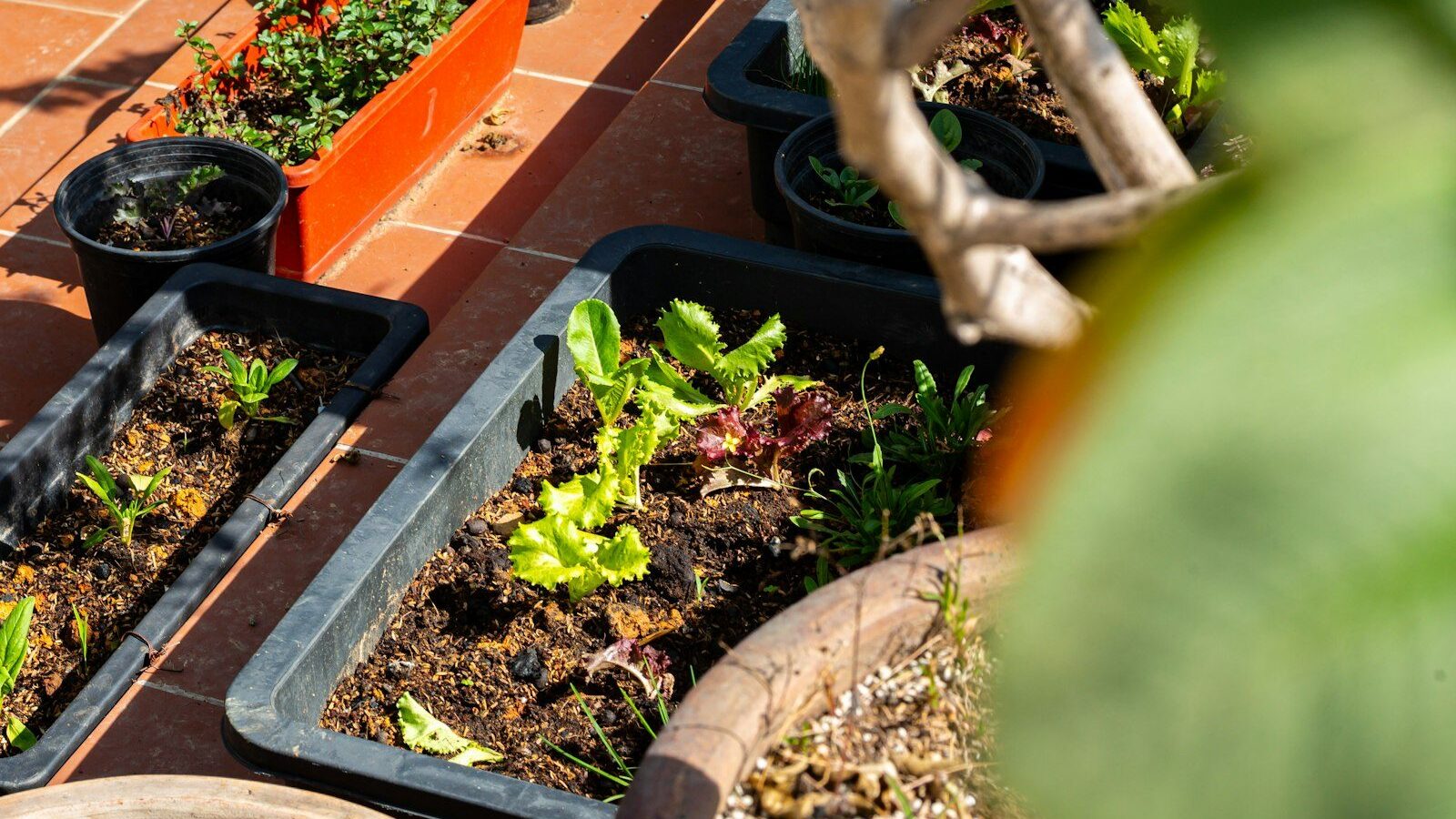
Lettuce is the perfect container crop: it has shallow roots, grows fast, tolerates a small pot, and gives you weeks of harvest from a single sowing. The whole game is keeping it cool, evenly moist, and picked young, because lettuce’s only real enemies are heat and drought, which turn it bitter and send it to seed. Set up a wide, shallow container with the right soil and watering routine and you can cut fresh leaves from the same pots from early spring well into fall.
Key Takeaways
- Use a wide, shallow pot at least 6–8 inches deep with good drainage.
- Space loose-leaf lettuce 4–6 inches apart; head lettuce needs 8–10 inches.
- Lettuce thrives in cool weather (45–70°F) and bolts in summer heat.
- Keep soil consistently moist; lettuce wilts and turns bitter if it dries out.
- Harvest outer leaves cut-and-come-again for a continuous supply.
- Sow a fresh pot every 2–3 weeks for nonstop salads.
Choosing a Container
Because lettuce roots stay in the top few inches of soil, you do not need a deep pot; you need a wide one. A container 6–8 inches deep and as broad as you can fit is ideal, since surface area determines how many plants you can grow. A standard 12-inch window box, a half-barrel, a wide bowl planter, or a fabric grow bed all work well. Wider, shallower vessels also stay cooler than tall narrow pots, which suits a cool-season crop.
Drainage is essential; lettuce hates soggy roots as much as dry ones, so make sure the container has holes. Light-colored pots reflect heat and keep roots cooler than dark plastic that bakes in the sun, a small detail that buys you extra weeks before the plants bolt.
Material affects how often you water. Unglazed terracotta breathes and cools the roots but dries out fast, which suits cooler spring and fall sowings but can be a liability in a summer heat wave. Glazed ceramic, plastic, and fabric grow beds hold moisture more evenly, helping you keep the steady dampness lettuce craves. A wide, low fabric grow bag or a recycled storage tote with holes drilled in the base makes an excellent inexpensive lettuce planter, and its broad footprint lets you grow a dozen plants in a single vessel. Whatever you use, a container 16 to 24 inches across gives you a worthwhile harvest rather than a token handful of leaves.
Soil and Filling the Pot
Use a quality potting mix enriched with compost; a blend of about 70% potting mix and 30% compost or worm castings gives lettuce the steady nitrogen and moisture-holding capacity it loves. Lettuce is a leafy crop, so it rewards rich, fertile soil. Add a small amount of perlite if your mix feels dense, but keep it on the moisture-retentive side rather than fast-draining, the opposite of what you would do for peppers or Mediterranean herbs.
Fill to within an inch of the rim and water lightly before sowing. A neutral to slightly acidic pH of 6.0–7.0 is fine, which most bagged mixes already provide. See our broader guide on growing vegetables in containers for more on building mixes.
Because lettuce grows so fast, the mix you start with carries it most of the way to harvest, so it pays to make it rich. Blending in a slow-release organic fertilizer or a generous helping of worm castings at filling time gives the plants a steady nitrogen supply for that quick leafy growth. If you are reusing last season’s mix, refresh it first: pull out old roots, mix in a third fresh compost, and add fertilizer, since spent mix is both compacted and depleted. A surface layer of compost also helps hold moisture in the critical top few inches where lettuce roots live.
Sowing and Spacing
Lettuce seed is tiny and needs light to germinate, so sow it shallowly, just 1/8 to 1/4 inch deep, and press it gently into the surface rather than burying it. You can scatter-sow loose-leaf types and thin later, or place seeds deliberately. Seeds sprout in 7–10 days in cool soil; germination actually stalls above about 80°F, so start in spring or use a shaded spot in summer.
How far apart to space lettuce
Thin or transplant loose-leaf and baby-leaf lettuce to 4–6 inches apart; these tolerate crowding and give you cut-and-come-again leaves. Butterhead and romaine want 6–8 inches, and full crisphead (iceberg) types need 8–10 inches to form a proper heart. If you only want baby greens, sow thickly and harvest with scissors before the plants crowd. The biggest beginner mistake is leaving plants too close, which produces small, weak heads and invites disease in still air.
Light and Temperature
Lettuce is a cool-season crop that grows best between 45 and 70°F. It wants about 4–6 hours of sun in spring and fall, but in summer full sun is its undoing: heat triggers bolting, where the plant shoots up a flower stalk and the leaves turn bitter and tough. In warm months, move pots into afternoon shade, tuck them behind taller plants, or use 30–40% shade cloth. The portability of containers is a huge advantage here, since you can chase the cool.
Choose heat-tolerant, slow-bolt varieties such as ‘Jericho’ romaine, ‘Black Seeded Simpson’, oakleaf types, and ‘Buttercrunch’ to stretch the season. Loose-leaf lettuces in general bolt later than tight heads.
Matching varieties to the season
Lettuce comes in four broad types, and choosing the right one for the time of year makes a real difference. Loose-leaf varieties (‘Black Seeded Simpson’, ‘Salad Bowl’, oakleaf, ‘Lollo Rossa’) are the fastest, most forgiving, and slowest to bolt, making them the backbone of any container salad garden. Butterhead types like ‘Buttercrunch’ form tender, loose heads and tolerate moderate warmth. Romaine such as ‘Jericho’ was bred for heat and stands up to summer better than most. Crisphead (iceberg) is the slowest and most heat-sensitive, so save it for cool spring and fall sowings. In hot midsummer, lean entirely on loose-leaf and slow-bolt romaine; in spring and fall, you can grow anything. A few cold-tolerant varieties even keep cropping under a cloche into early winter.
Watering and Feeding
Consistent moisture is the secret to sweet, crisp lettuce. The shallow roots dry out quickly in a pot, and any drought stress makes the leaves bitter and hastens bolting. Check daily and water whenever the surface starts to dry, keeping the soil evenly moist but never waterlogged. In warm weather a wide pot may need watering once or twice a day. Water at the base in the morning so leaves dry off, reducing the chance of rot and mildew.
Feed every two to three weeks with a diluted, nitrogen-leaning liquid fertilizer (such as fish emulsion or a 10-5-5) to fuel fast leafy growth, since frequent watering steadily washes nutrients from the pot. A thin mulch of straw helps hold moisture and keeps soil temperatures down.
Harvesting and Succession
Loose-leaf lettuce is best harvested cut-and-come-again: snip or pinch the outer leaves once they reach 3–4 inches, leaving the central growing point intact, and the plant keeps producing for weeks. Harvest in the cool of the morning when leaves are crisp and full of water. For head lettuce, cut the whole plant at the base once it firms up. Pull and replace any plant that begins to bolt, since the leaves only get more bitter from there.
For a steady supply rather than one big glut, sow a small fresh batch every two to three weeks; this succession sowing is easy with containers and means you always have tender young leaves coming on. Pair lettuce with quick container crops from our list of best vegetables for container gardening, and explore the Urban Gardening hub for more compact-growing ideas.
Pests and Common Problems
Lettuce’s tender leaves attract a predictable cast of pests, but containers raised off the ground sidestep many of them. Slugs and snails are the worst offenders, shredding seedlings overnight; raising pots on legs, ringing the rim with copper tape, or scattering organic slug pellets keeps them at bay. Aphids cluster on new growth and the undersides of leaves, where a strong spray of water or a few applications of insecticidal soap usually clears them. Look for and rinse off any hidden among the inner leaves before eating.
Among the non-pest problems, bolting is by far the most common and traces back to heat and stress, so the cure is shade, steady water, and slow-bolt varieties. Bitter leaves come from the same causes. Tip burn (brown, crispy leaf edges) signals erratic moisture, often a pot that dried out and was then flooded; keep watering even. Rot at the base, especially on butterhead and romaine, comes from overhead watering and crowding, so water at the soil and give plants enough space for air to move. Yellowing lower leaves usually just mean the plant is hungry and due for a feed.
Frequently Asked Questions
How deep does a pot need to be for lettuce?
Just 6–8 inches deep, since lettuce roots are shallow. Width matters more than depth, so choose the widest container you can fit to grow more plants.
Why is my container lettuce bitter?
Bitterness comes from heat and drought stress, which also cause bolting. Keep the soil evenly moist, move pots to afternoon shade in summer, and grow slow-bolt varieties.
How often should I water lettuce in pots?
Keep the soil consistently moist, checking daily. In warm weather a wide shallow pot may need watering once or twice a day; never let the surface dry out fully.
Can lettuce grow in partial shade?
Yes. Lettuce only needs 4–6 hours of sun and actually prefers afternoon shade in warm weather, which slows bolting and keeps leaves tender.
How do I get a continuous lettuce harvest?
Use cut-and-come-again harvesting of outer leaves, and sow a fresh small batch every 2–3 weeks so new plants are always maturing as older ones finish.
How long does lettuce take to grow in containers?
Baby leaves are ready to cut in about 3–4 weeks from sowing, while full loose-leaf plants and heads take 6–10 weeks depending on variety and weather. Cooler conditions slow growth but produce sweeter leaves.
What is eating holes in my container lettuce?
Most often slugs and snails, which feed at night. Raise the pot off the ground, ring the rim with copper tape, and remove any hiding under the container. Aphids cause smaller damage and wash off with a strong spray of water.