

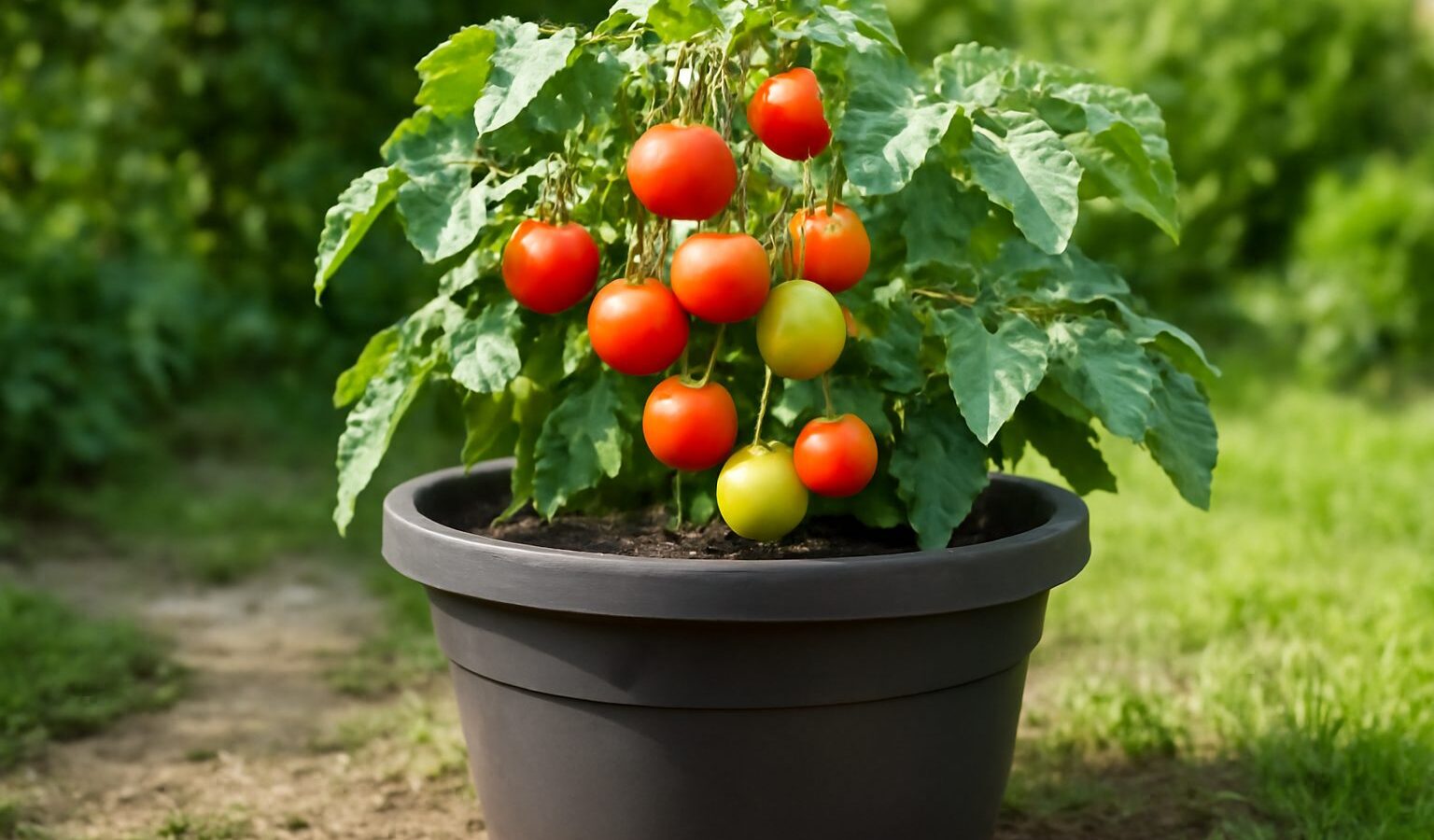
You can grow a full crop of tomatoes in a pot on a patio, balcony, or driveway as long as you get three things right: a big enough container, consistent water, and steady feeding. Tomatoes are heavy feeders with deep roots, so the most common container failures—stunted plants, blossom end rot, split fruit—almost always trace back to a pot that is too small or watering that swings between bone dry and soaking. Get the setup dialed in and a single 10-gallon pot can hand you 10 to 15 pounds of fruit through the season.
Key Takeaways
- Use a minimum 5-gallon pot for determinate or dwarf varieties and 10–20 gallons for indeterminate ones; bigger is always better for moisture stability.
- Fill with a peat- or coir-based potting mix, never garden soil—soil compacts and drowns roots in containers.
- Water deeply once or twice a day in summer heat; inconsistent watering causes blossom end rot and splitting.
- Feed with a balanced fertilizer until flowering, then switch to a higher-potassium tomato feed every 7–14 days.
- Choose determinate or patio varieties for compact growth; stake or cage every plant at transplant time.
Choosing the Right Container
Pot size is the single biggest variable in container tomato success. Roots need room, and the volume of mix is also your water and nutrient reservoir—a small pot dries out by midday and starves the plant. For a full-size indeterminate variety like ‘Big Beef’ or ‘Sungold’, use a 15- to 20-gallon container (roughly 18–24 inches across). For determinate or bush types like ‘Roma’, ‘Celebrity’, or ‘Bush Early Girl’, a 10-gallon pot works well. Dwarf and patio varieties such as ‘Tumbling Tom’ or ‘Patio Princess’ will fruit in a 5-gallon bucket, though they appreciate more.
Material matters too. Fabric grow bags air-prune roots and prevent the circling that plagues plastic pots, and they breathe so roots rarely cook—a real benefit on a hot deck. Plastic and glazed ceramic hold moisture longer, which cuts your watering chores but raises the risk of waterlogging if drainage is poor. Terracotta wicks moisture away fast and dries out quickly, so avoid it in hot climates. Whatever you choose, it must have drainage holes. If yours doesn’t, drill three to five half-inch holes in the base. Skip the gravel “drainage layer” at the bottom—it actually raises the water table in the root zone. Just use mix straight down.
The Right Potting Mix
Never fill a container with garden soil or topsoil. In a pot, native soil compacts into a dense, airless brick that suffocates roots and holds water in all the wrong places. Use a quality bagged potting mix—peat- or coconut-coir-based, with perlite or pumice for aeration. These are formulated to stay light and drain freely while still holding moisture between waterings.
Tomatoes are hungry, so amend the mix before planting. Blend in about one-third finished compost by volume for slow-release nutrition and water retention, plus a couple of tablespoons of a balanced granular fertilizer (a 10-10-10 or a dedicated tomato food) worked into the top several inches. Many growers also add a tablespoon of dolomitic lime or a calcium source per large pot—calcium availability is the key to preventing blossom end rot later. If you’re reusing mix from last year, refresh it with new compost and fertilizer and never replant tomatoes in the same untreated mix that grew a diseased plant.
Best Varieties for Containers
Knowing the difference between determinate and indeterminate types is essential for pots. Determinate tomatoes grow to a fixed size (usually 3–4 feet), set most of their fruit in a concentrated window, and stay compact—ideal for containers and short stakes. Indeterminate tomatoes are vines that grow and fruit until frost, often topping 6 feet, and demand a large pot and tall, sturdy support.
- Patio/dwarf: ‘Tumbling Tom’, ‘Patio Princess’, ‘Tiny Tim’, ‘Bush Goliath’—bred for pots and hanging baskets.
- Determinate slicers/paste: ‘Celebrity’, ‘Roma’, ‘Bush Early Girl’, ‘Mountain Merit’.
- Indeterminate cherry: ‘Sungold’, ‘Sweet 100’, ‘Black Cherry’—prolific and forgiving in big pots.
- Indeterminate slicers: ‘Big Beef’, ‘Better Boy’, ‘Cherokee Purple’—need 15–20 gallons and a 6-foot cage.
Look for disease-resistance codes on the label (V, F, N, T) if you’ve battled wilts before. For small-space growers, our broader urban gardening guides cover squeezing the most from balconies and patios.
Planting Step by Step
- Time it right. Transplant outdoors only after nighttime temperatures stay above 50°F and all frost danger has passed. Tomatoes sulk in cold soil.
- Harden off. If your seedlings came from indoors, expose them to outdoor conditions gradually over 7–10 days before planting to avoid transplant shock and sunscald.
- Fill the pot. Add amended mix to within a couple inches of the rim, then water it lightly so it settles.
- Plant deep. Bury two-thirds of the stem—strip the lower leaves and plant the seedling deep, or lay it sideways in a trench. Tomatoes grow roots all along buried stems, building a far bigger root system.
- Add support now. Insert a cage, stake, or trellis at planting. Driving a stake in later spears the roots.
- Water in. Soak thoroughly until water runs from the drainage holes, then top off any settled mix.
- Mulch. A 1–2 inch layer of straw, bark, or shredded leaves on the surface slashes evaporation and keeps moisture even.
Watering Container Tomatoes
Water is where most container tomatoes live or die. Pots dry far faster than ground beds, and tomatoes hate to swing between drought and flood. In mild weather you may water every other day; in midsummer heat, a full-size plant in a 15-gallon pot often needs a thorough soak once or twice every day. Always water until it drains from the bottom—shallow sips wet only the top and leave deep roots thirsty.
Check by pushing a finger two inches into the mix: if it’s dry there, water. Aim at the soil, not the leaves, to reduce fungal disease, and water in the morning so foliage dries by night. Consistency is everything—wild swings in soil moisture are the direct cause of blossom end rot (sunken black patches on the fruit bottom) and fruit cracking. If keeping up is a struggle on hot days, a simple drip line on a timer or a self-watering container pays for itself. The same wicking principle behind those pots is explained in our guide to building a wicking bed.
Feeding for Big Harvests
Frequent watering flushes nutrients out of the pot fast, so container tomatoes need more regular feeding than in-ground plants. Start with a balanced fertilizer (such as 10-10-10 or a 5-5-5 organic) every couple of weeks while the plant is putting on leaves and stems. Once flowers appear, switch to a fertilizer lower in nitrogen and higher in potassium—a dedicated tomato or “bloom” formula—to push fruit instead of foliage. Too much nitrogen gives you a jungle of leaves and few tomatoes.
A practical schedule: feed a liquid tomato fertilizer at half strength weekly, or full strength every two weeks, following the label rates for container plants. Watch the leaves—pale, yellowing lower foliage signals hunger, while dark green leaves with curling tips can mean overfeeding. Combine steady feeding with the calcium you mixed in at planting and you’ll dodge most nutrient problems.
Support, Pruning & Pollination
Even compact varieties get top-heavy with fruit. Cage determinate types with a sturdy wire cage; stake or trellis indeterminate vines and tie the main stem to the support every 8–12 inches as it climbs with soft ties or strips of cloth. For indeterminate plants, pinch out the small suckers that form in the crotch between the main stem and each leaf branch—removing them channels energy into fruit and improves airflow. Do not prune determinate types; pinching their suckers just reduces your harvest.
Tomatoes are self-pollinating, but flowers need vibration to release pollen. Outdoors, wind and bees handle it. On a sheltered balcony, give the plant a gentle daily shake or tap the flower trusses to help fruit set, especially during calm, humid spells.
Common Problems & Fixes
- Blossom end rot: Sunken brown/black spot on the fruit base. Caused by uneven watering blocking calcium uptake—keep moisture steady and mulch. It’s not a disease and isn’t curable on affected fruit; future fruit recovers.
- Cracking/splitting: From a sudden flush of water after dry spells. Water consistently and pick ripe fruit promptly.
- Flowers drop, no fruit: Usually heat stress (nights above 75°F or days above 90°F) or too much nitrogen. Provide afternoon shade in extreme heat and ease off nitrogen.
- Yellow lower leaves: Often nitrogen hunger early or natural aging late; could be early blight if spotted with target rings—remove affected leaves and improve airflow.
- Aphids/whiteflies/hornworms: Blast aphids with water or use insecticidal soap; hand-pick hornworms. Inspect undersides of leaves weekly.
Harvesting
Pick tomatoes when they’re fully colored and give slightly to gentle pressure—they ripen best on the vine but will finish on the counter if you need to beat a storm or pests. Twist or snip them off at the stem. Regular harvesting signals the plant to keep producing. At season’s end, when frost threatens, pick all the mature green tomatoes and ripen them indoors in a paper bag with an apple to speed things along. For more edibles you can grow in tight quarters, see our take on regrowing vegetables from kitchen scraps.
Frequently Asked Questions
What size pot do I need for one tomato plant?
For a determinate or patio variety, a 5- to 10-gallon pot is enough. For a full-size indeterminate vine, use 15–20 gallons. When in doubt, go bigger—larger pots hold more water and nutrients and dry out far more slowly.
How often should I water tomatoes in containers?
Check daily. In mild weather, every other day may be enough; in peak summer heat a mature plant can need watering once or twice a day. Always soak until water drains from the bottom, and keep moisture consistent to prevent blossom end rot and cracking.
Can I use garden soil in pots?
No. Garden soil compacts in containers, drains poorly, and suffocates roots. Use a light, fast-draining potting mix amended with compost. Save the garden soil for in-ground beds.
Why do my container tomatoes have black bottoms?
That’s blossom end rot, caused by inconsistent watering that blocks calcium from reaching the fruit—not a disease. Water on a steady schedule, mulch the surface, and add a calcium source to the mix. Affected fruit won’t recover, but new fruit will be fine.
Do I need to fertilize tomatoes in pots?
Yes, more than in the ground. Frequent watering washes nutrients out fast. Feed a balanced fertilizer while the plant grows leaves, then switch to a higher-potassium tomato food every 1–2 weeks once flowering starts.