

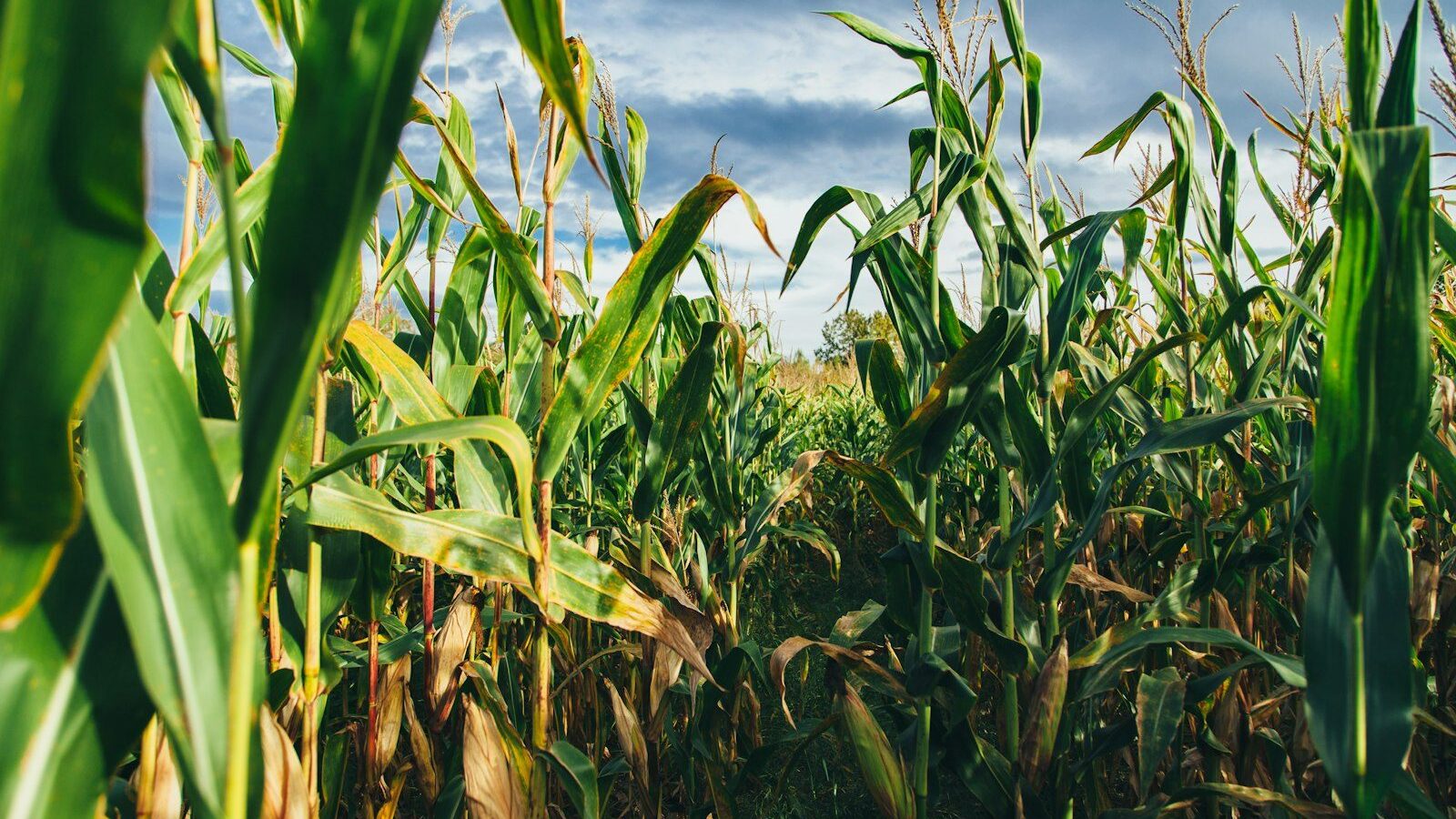
Sweet corn is one of the most satisfying crops in the home garden, but it’s also one of the easiest to get wrong. The number one reason backyard corn comes out with gappy, half-filled ears is poor pollination — and that comes down to how you arrange the plants. Corn is wind-pollinated, so you must plant it in a square block rather than a long single row. Get the planting pattern, spacing, and feeding right, and a 10-by-10-foot block can produce well over a hundred ears. This guide covers soil prep, block planting, spacing, watering, the pests that target corn, and exactly how to tell when an ear is ready to pick.
In this guide
Key Takeaways
- Plant corn in a block of at least 4 rows (never a single row) so wind-blown pollen reaches every silk.
- Sow seeds 1–2 inches deep, 8–12 inches apart, in rows 30–36 inches apart, after soil reaches 60°F.
- Corn is a heavy feeder — give it rich soil, side-dress with nitrogen, and provide about 1 inch of water weekly, especially during tasseling and ear fill.
- Keep different corn types separated to prevent cross-pollination ruining sweetness.
- Harvest when silks are brown and a punctured kernel squirts milky juice — usually about 20 days after silks appear.
Choosing a corn type
Sweet corn comes in several genetic types that affect sweetness and storage. Standard (su) types like ‘Golden Bantam’ have classic old-fashioned corn flavor but convert sugar to starch within hours of picking. Sugar-enhanced (se) types such as ‘Bodacious’ are sweeter and hold quality a bit longer. Supersweet (sh2) types like ‘Honey Select’ are the sweetest and store the longest, but their seed is more finicky to germinate and needs warmer soil. For most home gardeners, an se variety hits the best balance of flavor, tenderness, and forgiving germination.
Critically, keep different types from cross-pollinating. If supersweet corn is pollinated by standard or popcorn varieties growing nearby, the kernels turn starchy and tough. Either grow a single type, separate types by at least 250 feet, or stagger plantings so they tassel two or more weeks apart.
Soil preparation
Corn is a heavy feeder and demands fertile, well-drained soil in full sun — at least 6 to 8 hours daily. Before planting, work 2–3 inches of compost or well-rotted manure into the bed. Corn does best at a soil pH between 6.0 and 6.8. Because it pulls a lot of nitrogen from the soil, mixing in a balanced granular fertilizer or a nitrogen source such as blood meal at planting gives the crop a strong start. Choose a sunny, sheltered-but-not-walled spot; corn needs sun, but it also needs the wind to move pollen, so don’t tuck it against a solid fence.
When to plant
Corn is frost-tender and germinates poorly in cold soil. Wait until all danger of frost has passed and soil temperature reaches at least 60°F (65°F for supersweet types). For most of the US this means mid-to-late May; the South can plant in April. Direct-sow rather than transplant — corn dislikes root disturbance. For a continuous harvest, make successive sowings every 2 to 3 weeks until about 90 days before your first fall frost, or plant varieties with staggered maturity dates.
Block planting and spacing — the key to full ears
This is the most important section. Corn produces pollen from the tassels at the top of the plant and catches it on the silks emerging from each developing ear. Every silk strand connects to one kernel, and each must receive a grain of pollen for that kernel to fill. Because the pollen is carried by wind and gravity, a single long row leaves most silks unpollinated — the breeze simply blows the pollen away from the row. The fix is to plant in a block.
Plant at least four short rows side by side to form a square or rectangular block rather than one or two long rows. A block of 4 rows by 4 rows pollinates far better than a single row four times as long, even though the plant count is identical. Sow seeds 1 to 2 inches deep and 8 to 12 inches apart within the row, with rows spaced 30 to 36 inches apart. Thin to the final spacing once seedlings reach a few inches tall, keeping the strongest plants. If you only have room for a narrow strip, plant in short blocks and hand-pollinate by shaking the tassels over the silks on a still morning.
Watering
Corn needs consistent moisture — roughly 1 inch of water per week, more in hot, dry, or sandy conditions. Two periods are make-or-break: when the plants tassel and silk, and when the ears are filling. Drought stress during these stages causes poorly filled ears and small kernels even when pollination went fine. Water deeply at the base; soaker hoses or drip lines are ideal because wetting the tassels can wash away pollen. A mulch of straw helps hold soil moisture and suppress weeds. Avoid hoeing deeply near established plants — corn has shallow surface roots that are easily damaged.
Feeding and hilling
Side-dress corn with nitrogen twice during the season: once when plants are about knee-high (8–10 inches) and again when the tassels begin to form. Sprinkle a nitrogen fertilizer such as blood meal or a high-nitrogen granular product along the rows a few inches from the stalks and water it in. Yellowing lower leaves are a classic sign the crop wants more nitrogen.
Tall corn is prone to “lodging” — toppling in wind, especially after rain softens the soil. Hilling soil up around the base of the stalks as they grow encourages prop roots and helps anchor the plants. In exposed sites you can also expect corn to send out brace roots near the soil line; leave them, as they’re part of the plant’s natural support system.
Pests and problems
The most notorious corn pest is the corn earworm, a caterpillar that enters through the silk and feeds at the tip of the ear. A reliable organic defense is to apply a few drops of mineral or vegetable oil (some gardeners mix in Bt) to the silk channel a few days after silks emerge. European corn borer tunnels into stalks and ears; rotating crops and cleaning up old stalks in fall reduces overwintering populations. Cutworms sever young seedlings at the soil line — collars around transplants and clean cultivation help.
Raccoons are often the biggest threat to a backyard patch, stripping ears the night before you planned to pick. A two-wire electric fence, or harvesting promptly at peak ripeness, is the practical answer. Birds and squirrels also raid ripening ears. Among diseases, watch for corn smut (grey-black galls on ears — remove and destroy before they burst) and various leaf blights, which are best managed with resistant varieties and crop rotation.
How to tell when corn is ready to harvest
Corn is usually ready about 18 to 24 days after the silks first appear, which works out to roughly three weeks. Watch for three signs. First, the silks at the top of the ear turn brown and dry. Second, the ear feels plump and rounded right to the tip when you squeeze it through the husk. Third — the definitive test — peel back a little of the husk and puncture a kernel with your thumbnail: if it squirts a milky white liquid, it’s perfectly ripe. Clear, watery juice means it’s underripe; thick, pasty juice means it’s past its prime and turning starchy.
To pick, grip the ear and twist downward sharply so it snaps off the stalk. Sweetness starts converting to starch the moment you harvest, especially in standard types, so cook or chill ears as fast as possible — ideally the same hour. Most corn plants produce one or two good ears each; the upper ear matures first. Once you’ve harvested, pull the spent stalks and add them to the compost pile, and rotate corn to a different bed next year to reduce pest and disease buildup.
Looking for more vegetable-growing guides? See our walkthroughs on growing watermelon and growing bok choy, or browse the full Plants & Flowers section for more.
Frequently Asked Questions
Why are my corn ears only partly filled with kernels?
Gappy ears are almost always a pollination problem. Plant corn in a block of at least four rows rather than a single row, and make sure plants aren’t drought-stressed during tasseling and silking. Each unfilled kernel is a silk that never received pollen.
How many ears does one corn plant produce?
Most sweet corn varieties produce one or two harvestable ears per stalk, with the upper ear ripening first. To get a worthwhile harvest, plan on growing a block of many plants rather than just a few.
Can I grow different types of corn together?
Not if you want to preserve sweetness. Cross-pollination between supersweet, sugar-enhanced, standard, and popcorn types produces starchy, tough kernels. Grow one type, separate types by at least 250 feet, or stagger plantings so they tassel two or more weeks apart.
How much space does corn need?
Sow seeds 8–12 inches apart in rows 30–36 inches apart, and plant a block of at least four rows. A 10-by-10-foot block is a practical minimum for good pollination and can yield well over a hundred ears.
How do I know exactly when to pick sweet corn?
Wait until the silks turn brown and the ears feel plump to the tip. Then peel back a bit of husk and pierce a kernel: milky white juice means it’s ripe, clear juice means it needs more time, and thick paste means it’s overripe.