

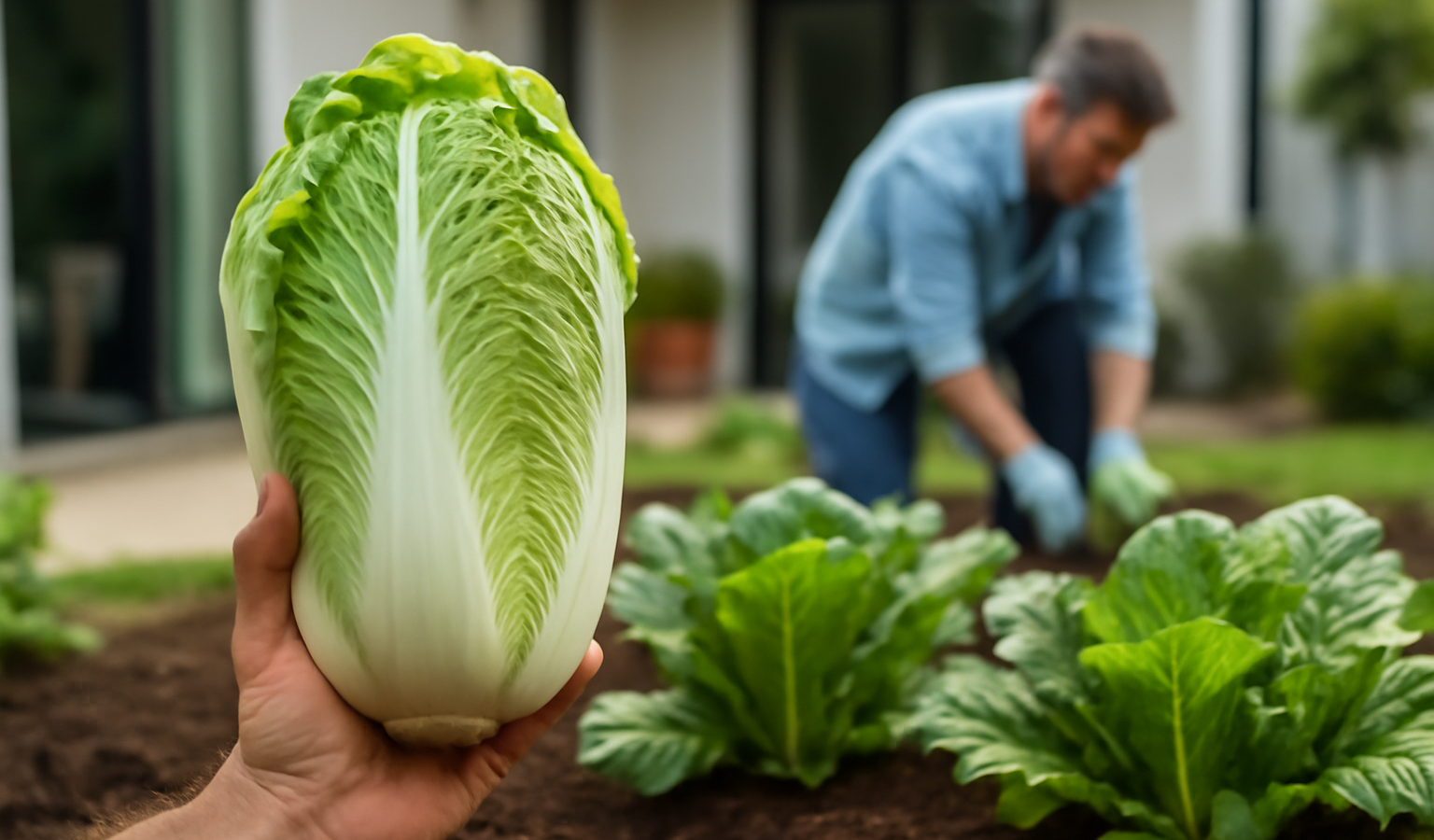
Napa cabbage — the pale, crinkly, barrel-shaped Chinese cabbage at the heart of kimchi, stir-fries, and slaws — is one of the most rewarding cool-season vegetables you can grow, but it has a reputation for being temperamental. The truth is simpler: napa cabbage will form dense, sweet, tightly-wrapped heads reliably as long as you nail the timing and keep it growing fast. Stress it with heat, drought, or transplant shock and it bolts to seed or stays loose and leafy. This guide walks through exactly when to plant for spring and fall crops, correct spacing, how to keep it from bolting, days to maturity, and the right way to cut and store the heads.
In this guide
Key Takeaways
- Season: A cool-weather crop. Fall is the easiest, most reliable season; spring works if you start early and beat the heat.
- Days to maturity: Roughly 50–85 days from transplant depending on variety; barrel types take longer than mini types.
- Spacing: 12–18 inches apart in rows 18–30 inches apart — give heads room to fatten.
- Keep it fast: Steady moisture and rich soil are everything. Any check in growth (heat, drought, cold snap, transplant shock) triggers bolting.
- Harvest: Cut when heads feel firm and dense, before hard freezes or before spring heat sends them to seed.
Understanding Napa Cabbage’s Quirks
Napa cabbage (Brassica rapa subsp. pekinensis) is biologically programmed to grow leaves in cool weather, then flower when days lengthen and warm up. That single fact drives every decision you make. Plant it so the heading phase happens during cool, shortening or stable days — that means fall in most of the country, or a tightly-timed early spring window. Plant it into summer heat or let it sit through a warm dry spell and it will “bolt,” sending up a flower stalk instead of forming a head, and the leaves turn bitter.
It is also a fast, hungry crop with a shallow root system. It wants to grow without interruption from seed to harvest, so the whole game is keeping it fed and watered so it never pauses. Get that right and napa is genuinely easy.
When to Plant
Fall crop (recommended)
Fall is the foolproof season because the crop matures into cooling, shortening days, which suppresses bolting and sweetens the leaves. Count back the variety’s days to maturity (plus a couple of weeks of buffer) from your average first fall frost, and sow or transplant accordingly. In most temperate regions that means starting seeds indoors in mid-to-late summer (July–August) and transplanting out in late summer to early fall. Napa tolerates light frost — a touch of cold actually improves flavor — so a maturity date near or slightly after first frost is fine.
Spring crop
Spring is trickier because the crop races the oncoming summer heat. Start seeds indoors 4–6 weeks before your last spring frost and transplant once hardened off, as early as the soil can be worked. Choose bolt-resistant varieties and get them in early so heads form before temperatures climb above the mid-70s°F. Avoid the temptation to plant late “to be safe from frost” — late spring plantings almost always bolt.
Starting Seeds and Transplanting
You can direct-sow napa cabbage or start it indoors. Because the seedlings resent root disturbance, many gardeners direct-sow in place, especially for fall crops, sowing two or three seeds per spot a quarter to half inch deep and thinning to the strongest seedling. If you start indoors, use cell trays or soil blocks to keep root disturbance minimal, grow under bright light, and transplant young — at the 3–4 true-leaf stage — before they get rootbound. Harden seedlings off over a week before they go out, since transplant shock is a leading cause of bolting.
Prepare the bed with plenty of compost and a balanced organic fertilizer worked in. Napa is a heavy feeder and wants rich, moisture-retentive soil with a near-neutral pH (6.0–7.5). The same fertile, well-prepped beds that suit other brassicas and leafy greens are ideal here.
Spacing
Give heads room to develop. Space full-size barrel varieties 12–18 inches apart in rows 18–30 inches apart; compact or “mini” napa types can go a little tighter, around 10–12 inches. Crowding leads to small, loose heads and encourages disease by limiting airflow. If you’re growing intensively in raised beds, a roughly 12-inch grid spacing for standard types is a good compromise. Don’t be tempted to skip thinning of direct-sown plants — competition stunts heading.
Watering and Feeding for Fast Growth
This is the part that separates tight, sweet heads from loose, bitter ones. Napa cabbage needs consistent, even moisture — about 1 to 1.5 inches of water per week, more in warm weather. The shallow roots dry out quickly, so don’t let the bed swing between soggy and bone-dry. Drip irrigation or a soaker hose keeps water at the soil line and off the leaves, reducing disease. A 2–3 inch mulch of straw or shredded leaves conserves moisture, keeps roots cool, and smooths out the fluctuations that trigger bolting.
Feed to keep growth charging along. After transplants establish, side-dress with a nitrogen-rich fertilizer (or fish emulsion / compost tea) every two to three weeks until the heads begin to close up. Lush, uninterrupted leaf growth is exactly what you want here. Slow, hard growth from underfeeding produces small heads.
Pests and Problems
Napa is a magnet for the usual brassica pests: flea beetles (pinhole-riddled leaves on young plants), cabbage worms and loopers (the green caterpillars), aphids tucked into the folds, and slugs in damp weather. The single best defense is floating row cover laid over hoops from the day you plant — it physically excludes most pests and also buffers temperature swings. For caterpillars that slip through, Bt (Bacillus thuringiensis) is a safe, effective spray. Check the inner folds before harvest, since aphids love to hide there. Good spacing and airflow prevent most fungal leaf and soft-rot problems.
Days to Maturity and Harvesting
Most napa varieties mature in 50–85 days from transplant. Compact and “mini” types can be ready in about 50–60 days, while large barrel-shaped heads take closer to 70–85. Start checking once the listed maturity approaches: the head is ready when it feels firm and dense when squeezed, like a tight football, rather than soft and open. A loose, springy head needs more time — or, if the weather is turning, may simply not tighten further.
To harvest, cut the head off at the base with a sharp knife, just above the soil line, and peel away any tough or damaged outer leaves. In fall, you can leave heads in the ground through light frosts (which sweeten them) but harvest before a hard freeze, which damages the tissue. In spring, harvest at the first sign of the center elongating or a flower stalk forming — bolting plants turn bitter fast, so don’t wait. Whole heads keep three to four weeks in the crisper drawer wrapped loosely; the flavor mellows and stays crisp far longer than regular cabbage. For more cool-season vegetable guides, browse the Plants & Flowers hub, and if you’re tight on space, our urban gardening guides cover growing greens in containers and raised beds.
Frequently Asked Questions
Why is my napa cabbage bolting instead of forming a head?
Bolting is triggered by stress: heat above the mid-70s°F, a cold snap on young plants, drought, or transplant shock. The fix is timing and consistency — plant so heading happens in cool weather (fall is easiest), keep moisture steady, choose bolt-resistant varieties, and avoid disturbing the roots when transplanting.
How far apart should I space napa cabbage?
Space full-size barrel types 12–18 inches apart in rows 18–30 inches apart. Compact mini varieties can go 10–12 inches apart. Crowding produces small, loose heads and invites disease, so don’t skimp on room or skip thinning direct-sown plants.
How long does napa cabbage take to grow?
Roughly 50 to 85 days from transplant. Mini and compact varieties mature fastest (about 50–60 days), while large barrel-shaped heads take 70–85 days. The head is ready when it feels firm and dense rather than soft and springy.
Can napa cabbage tolerate frost?
Yes — light frost actually sweetens the leaves, which is why fall crops taste best. The plants take several light frosts in stride, but harvest before a hard freeze, which damages the tissue and reduces storage life.
Why are my napa cabbage heads loose and leafy?
Loose heads usually mean the plant grew too slowly or under stress — insufficient nitrogen, inconsistent water, too little sun, or warm weather rushing it. Napa needs to grow fast and uninterrupted to wrap a tight head, so rich soil, steady moisture, and regular feeding are the cure.