

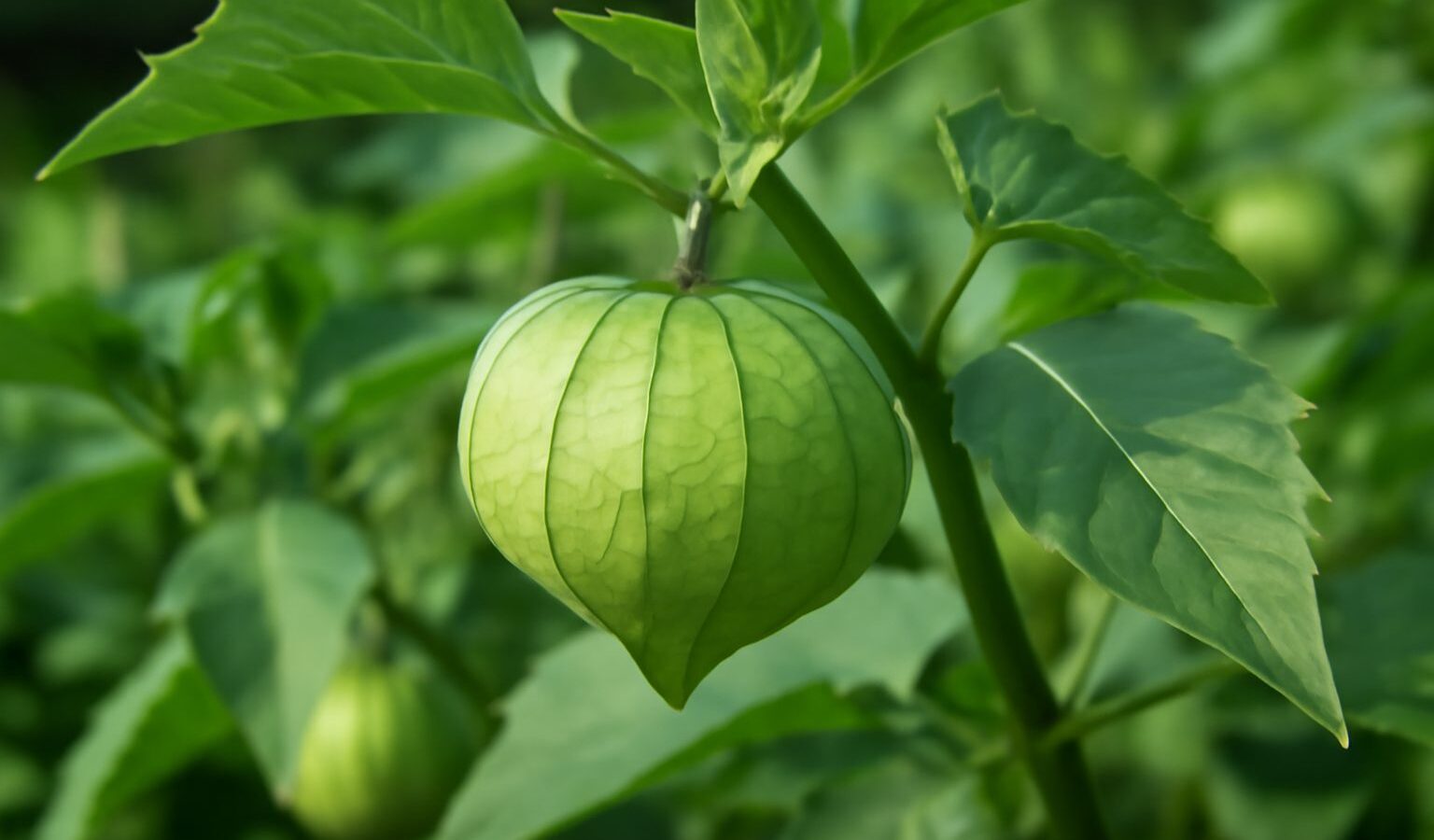
Tomatillos are the tart, husk-wrapped backbone of salsa verde, and they are one of the easiest warm-season crops you can grow once you know two things: they need a long, hot season, and they will not set fruit unless you plant at least two of them. Botanically a relative of the tomato (and even closer to the ground cherry), Physalis ixocarpa is sprawling, vigorous, and far less fussy about disease than tomatoes. Give it sun, room to roam, and a partner for pollination, and a single pair of plants will bury you in fruit from midsummer through the first frost.
In this guide
Key Takeaways
- Plant two or more. Tomatillos are largely self-incompatible — a lone plant sets almost no fruit. Always grow at least a pair.
- Warm season, full sun. Transplant only after soil hits 60°F and nights stay above 50°F. They need 75–100 frost-free days.
- Space 3–4 feet apart. Plants sprawl 3–4 feet wide and equally tall; crowding invites disease and cuts yield.
- Stake or cage early. The branches are brittle and fruit-heavy; support them at transplant like you would an indeterminate tomato.
- Harvest when the husk fills and splits. Ripe fruit fills its papery husk and the husk begins to split; the fruit underneath is firm and green (or purple for purple types).
When and Where to Plant Tomatillos
Tomatillos are strictly warm-season annuals in nearly every US climate. They tolerate heat that makes tomatoes sulk, but they have zero frost tolerance — a single light freeze ends the plant. Treat them on the same calendar as peppers and eggplant rather than rushing them out with your earliest tomatoes.
Start seed indoors 6–8 weeks before your last expected frost. In USDA zones 5–6 that usually means sowing in early to mid April for a late-May transplant; in zones 7–8, sow in March; in zones 9–10 you can direct sow or transplant earlier and even get a second flush. Germination is fast and reliable at 75–85°F, usually within 5–8 days. Move seedlings up to 4-inch pots once they have their first true leaves so they do not get rootbound and leggy on the windowsill.
Pick the sunniest spot you have — a full 8 hours of direct sun produces the heaviest set. Tomatillos are not picky about soil and actually fruit better in lean-to-average ground than in rich, heavily fertilized beds, which push leafy growth at the expense of fruit. Aim for well-drained soil with a pH of 6.0–7.0. If you have grown tomatoes, peppers, or potatoes in the bed the past two seasons, rotate to fresh ground to reduce soilborne disease pressure.
Hardening Off and Transplanting
Do not rush transplanting. Cold soil stalls tomatillos for weeks and exposes them to fungal problems. Wait until daytime temps are reliably in the 70s, nights stay above 50°F, and soil temperature at 4 inches deep reads 60°F or warmer. A cheap soil thermometer pays for itself here.
Harden off seedlings over 7–10 days, starting with a couple of hours of dappled outdoor shade and building up to full sun and overnight stays. Like tomatoes, tomatillos can be planted deep — bury the stem up to the first set of leaves and it will root along the buried portion, creating a stronger plant. Set transplants 18 inches deep in a generous hole, water in well, and install your support cage at the same time so you do not damage roots later.
Spacing and Support
How far apart to plant
This is where most first-timers go wrong. Tomatillos look small in the cell pack and end up as 3–4 foot wide, top-heavy bushes. Space plants 3 to 4 feet apart in all directions. In rows, keep 4 feet between rows for airflow and harvest access. Crowding is the number-one cause of disappointing yields and powdery mildew on tomatillos — give them the room and they reward you.
Staking and caging
The branches are brittle and snap under a full load of fruit, and sprawling plants drop fruit onto wet soil where it rots. Use a sturdy tomato cage (the heavy welded-wire kind, not the flimsy cone), a stake-and-string Florida weave, or a low fence. Install support at transplant. As the plant grows, tuck wayward branches inside the cage every week or two. You will spend ten minutes total per plant across the season and double your usable harvest.
Why You Need More Than One Plant
Tomatillos are self-incompatible, meaning a flower cannot reliably be fertilized by its own pollen. A single isolated plant will flower beautifully and set almost nothing, leaving gardeners baffled by empty husks or no fruit at all. The fix is simple: grow at least two plants, ideally three or four, close enough that bees and other pollinators move freely between them. Spacing them 3–4 feet apart keeps them productive without isolating them.
If your area is short on pollinators, plant flowering companions nearby to draw bees in, and avoid spraying anything during bloom. Hot, dry, windy spells can also reduce set; consistent moisture and a little afternoon humidity help the flowers hold and pollinate. The same pollinator-friendly thinking applies across the garden — our guide to growing milkweed for monarchs covers building the kind of habitat that keeps these crops buzzing.
Watering, Feeding and Ongoing Care
Tomatillos want even moisture but tolerate drought better than tomatoes once established. Provide about 1 to 1.5 inches of water per week, more during peak heat, and water at the base rather than overhead to keep foliage dry. A 2–3 inch mulch of straw or shredded leaves conserves moisture, suppresses weeds, and keeps low-hanging fruit off bare soil.
Go easy on nitrogen. Work a modest amount of compost or a balanced organic fertilizer into the planting hole, then side-dress once at first fruit set with something low in nitrogen and higher in phosphorus and potassium. Overfeeding produces a jungle of leaves and few fruit. If you see lush growth but no set, ease off the fertilizer and check that you have more than one plant for cross-pollination.
Pinch nothing — unlike tomatoes, tomatillos do not need suckering. The main maintenance is keeping branches supported and removing any fruit that has fallen and split open on the ground before it rots and draws pests.
Common Pests and Problems
Tomatillos are notably tougher than tomatoes, but watch for these issues:
- Three-lined potato beetle and Colorado potato beetle: hand-pick adults and crush egg clusters on leaf undersides.
- Cutworms: protect young transplants with a collar of cardboard or a cut paper cup pushed an inch into the soil.
- Powdery mildew: almost always a crowding and airflow problem — space correctly and water at the base.
- Empty husks: the classic pollination failure. Confirm you have multiple plants and that pollinators are active.
- Blossom drop in extreme heat: usually self-corrects once a stretch of 95°F-plus days breaks.
How to Harvest Tomatillos
This is the question that trips up new growers. A tomatillo flower is followed by an empty papery husk (a lantern, or calyx), and the fruit grows to fill it from the inside. The fruit is ready when it has completely filled the husk and the husk begins to split open. At that stage the fruit underneath is firm, glossy, and full-sized. For green types it stays green; for purple varieties it blushes purple with longer exposure to sun.
Most cooks prefer tomatillos picked while still firm and tart-green, which is when the husk has just split — this is the classic salsa-verde stage. If you leave fruit on the plant, it continues to ripen, turns yellow, softens, and turns noticeably sweeter, which some people enjoy fresh but which is less ideal for cooking. Pick every few days once production starts; a single healthy pair of plants can produce several pounds across the season.
To harvest, simply twist or snip the fruit free where the husk meets the stem. Leave the husk on for storage — it protects the fruit. Unhusked tomatillos keep two to three weeks in a paper bag in the fridge, and longer if you remove any that soften. You can also freeze them whole (husked and rinsed) or roast and freeze them as a salsa base.
One bonus: tomatillos self-sow readily. Any fruit that drops and rots will likely sprout volunteers next spring, so once you grow them you may have them for years. If you enjoy this kind of productive warm-season grower, browse the rest of our Plants & Flowers guides for more edibles and easy-care crops, and pair tomatillos with companions like the aromatic perennials in our catmint growing guide to keep pollinators in the patch.
Frequently Asked Questions
Why does my tomatillo plant flower but produce no fruit?
The most common cause is having only one plant. Tomatillos are self-incompatible and need pollen from a second, separate plant to set fruit. Grow at least two plants close together and make sure pollinators are active. Extreme heat above 95°F can also cause temporary blossom drop.
How do I know when a tomatillo is ripe?
The fruit fills its papery husk and the husk begins to split open. At that point the fruit is firm, full-sized, and at its tart-green best for salsa. If left on the plant it continues to ripen, turns yellow, softens, and becomes sweeter.
How far apart should I space tomatillo plants?
Space plants 3 to 4 feet apart in every direction, with about 4 feet between rows. They grow into wide, sprawling bushes, and crowding reduces airflow, encourages powdery mildew, and cuts your yield.
Do tomatillos need to be staked?
Yes. The branches are brittle and become very heavy with fruit, and unsupported plants sprawl into wet soil where fruit rots. Install a sturdy cage or stake-and-string support at transplant time and tuck branches in as the plant grows.
Can I grow tomatillos in containers?
Yes, but use a large container — at least 5 gallons per plant, ideally larger — and remember you still need two plants for pollination, so grow two pots side by side. Water more frequently than in-ground plants, and provide a cage since potted plants are still large and top-heavy.