

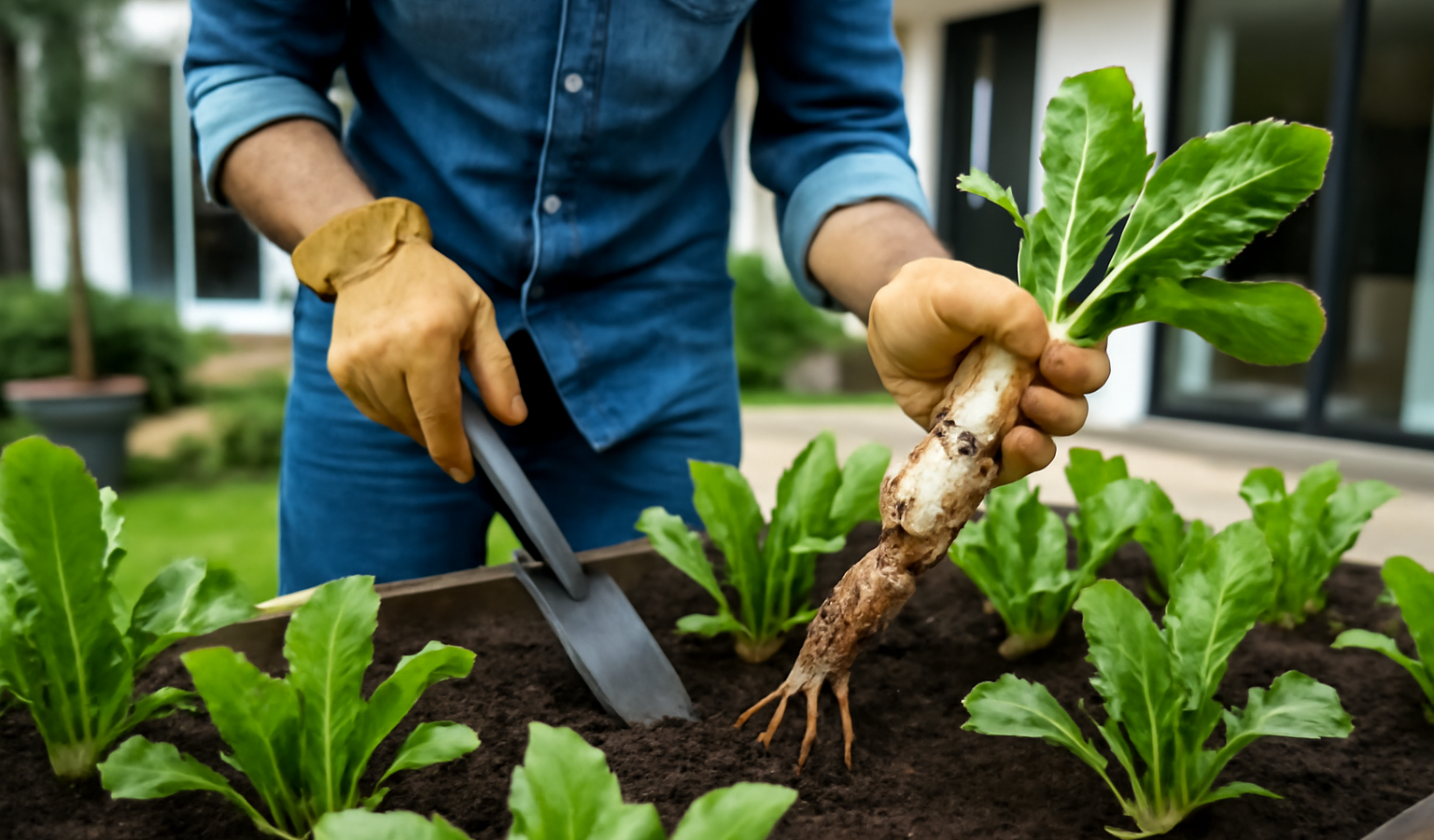
Horseradish is the easiest perennial in the vegetable garden to grow and one of the hardest to get rid of — and those two facts are really the same fact. Plant a single root cutting in spring and by fall you’ll be digging fat, pungent roots to grate into sauce that clears your sinuses. Leave even a sliver of root behind and it will come back forever, spreading wider every year. That aggressiveness is exactly why horseradish needs to be sited deliberately, ideally contained, and harvested with the understanding that you are managing a vigorous plant, not coddling a delicate one. This guide covers how to plant root cuttings, spacing, days to maturity, the all-important fall harvest, and — critically — how to keep horseradish from taking over your garden.
Key Takeaways
- Planting: Grown from root cuttings (“sets”) planted in early spring; hardy and perennial in USDA zones 3–9.
- Spacing: 18–30 inches apart — give it room or, better, confine it to a dedicated bed or large container.
- Days to maturity: About 140–160 days; harvest in late fall after frost, when flavor peaks.
- ⚠️ Invasiveness: Spreads aggressively from any root fragment left in the soil. Plant it where it can be contained, and dig thoroughly each fall.
- Harvest: Lift roots in fall; cold weather sharpens the heat. Replant a few side roots to keep the patch going indefinitely.
⚠️ Read This First: Horseradish Is Invasive
Before you plant a single root, understand what you’re getting into. Horseradish (Armoracia rusticana) regrows from the tiniest piece of root left in the ground. Every time you harvest, the side roots you miss become next year’s plants, and over a few seasons a tidy clump becomes a sprawling colony that’s extremely difficult to eradicate. This isn’t a reason not to grow it — it’s a reason to grow it on purpose, in a contained spot.
The best approaches: dedicate an isolated bed where spread doesn’t matter, grow it in a large bottomless bucket or 15+ gallon container sunk in the ground to block lateral roots, or plant it in a deep pot above ground. Avoid putting it in a mixed perennial border or near where you’ll plant other crops — once it’s loose among other plants, you’ll be fighting it for years. Treat horseradish with the same wariness you’d give running mint or any other spreader.
How to Plant Horseradish Root Cuttings
Horseradish is almost always grown from root cuttings (sets) rather than seed, since it rarely sets viable seed and cuttings are fast and reliable. A set is a pencil-thick side root about 6–12 inches long, often sold with a slanted bottom cut and a straight top cut so you know which end is up. You can buy crowns or sets, or beg a piece from a gardening neighbor — one plant supplies plenty.
Plant in early spring, as soon as the soil can be worked. Loosen the bed deeply — horseradish wants loose, well-drained, fertile soil to grow long, straight roots, and compacted or rocky ground produces forked, stunted ones. Set each cutting at a 45-degree angle with the wide (top) end about 2–3 inches below the surface and the narrow end deeper, then cover. Full sun to part shade is fine; full sun gives the biggest roots. Water in well.
Spacing and Soil
Space cuttings 18–30 inches apart. Because the plants get large and leafy (the coarse leaves can reach 2 feet) and the roots spread, generous spacing keeps them productive and easier to manage. In a contained bed or sunk bucket, two or three plants are plenty for a household.
Horseradish isn’t fussy about fertility but rewards rich, deep, loose soil with bigger, smoother roots. Work in compost before planting and aim for a slightly acidic to neutral pH (6.0–7.5). Avoid fresh manure or heavy nitrogen, which encourages forking and excessive leaf at the expense of root. Deep cultivation matters more than feeding — the looser the soil, the longer and cleaner the harvestable roots.
Care Through the Season
Horseradish is famously low-maintenance. Keep it watered during dry spells — about an inch a week — for plump, mild-textured roots; drought-stressed roots can turn woody and overly fibrous. A mulch helps hold moisture and suppress weeds. Beyond that, it largely takes care of itself.
Some growers practice “lifting and rubbing” mid-season for show-quality roots: in early summer they carefully expose the upper part of the main root, rub off the small side roots, and re-cover it, which forces energy into one large, smooth main root rather than a tangle of branching ones. It’s optional and fiddly — for everyday kitchen use you can skip it and simply dig what grows. If the plant tries to flower, cut the stalks off to keep energy going into the roots. Pests and disease rarely trouble horseradish; its own pungency keeps most threats away.
One occasional nuisance is the same family of leaf-chewing insects that attack other brassicas — horseradish is a member of the cabbage family, so flea beetles and cabbage worms may nibble the coarse leaves. The damage is almost always cosmetic and doesn’t affect the roots you’re after, so spraying is rarely worth the effort. Far more important than any pest is simply staying on top of the plant’s spread, which is the only real maintenance horseradish demands. Each season, resist the urge to let an unharvested clump sit “for next year” in open ground — that’s exactly how a contained patch becomes a runaway one.
If you want horseradish in containers, choose the deepest pot you can manage — at least 15–20 inches deep — so the long taproot has room to develop a usable root rather than a stubby, forked one. Container plants dry out faster, so water more attentively and feed lightly through the season. The big advantage of growing in a pot is total control: at harvest you simply tip out the whole container, take every root, and replant a fresh cutting in new soil, leaving nothing behind to spread.
Days to Maturity and Harvesting
Horseradish needs a full season — roughly 140–160 days, basically spring planting to late fall — to build worthwhile roots. The traditional rule is to harvest after the first few hard frosts have killed the tops, because cold weather concentrates the oils that give horseradish its bite. Roots dug in October or November are noticeably hotter and better-flavored than those pulled in summer.
To harvest, loosen the soil all around the plant with a garden fork, going wide and deep, then lift the whole root mass. Dig thoroughly — this is your one chance each year to reduce spread, so chase down the side roots rather than just yanking the crown. Cut off the main root for the kitchen, then save a few pencil-sized side roots to replant immediately for next year’s crop (or store them in damp sand over winter and plant in spring). In mild zones you can leave roots in the ground and dig as needed through winter; in cold zones, lift before the ground freezes solid or mulch heavily.
Store harvested roots in the fridge in a perforated bag for several weeks, or in damp sand in a cold cellar for months. The pungency only develops once the root is cut and grated and the cells release the enzyme — and it’s volatile, so grate in a well-ventilated spot, add vinegar to lock in the heat at your preferred intensity (sooner for milder, later for fiery), and you’ve got fresh prepared horseradish far better than anything jarred. For more grow-your-own crops, see the Plants & Flowers hub; gardeners working in tight spaces should read our urban gardening container guides, since a deep pot is the safest way to grow horseradish without it escaping.
Frequently Asked Questions
Is horseradish really that invasive?
Yes. It regrows from any root fragment left in the soil, so a single plant can spread into a hard-to-remove colony over a few years. It isn’t a reason to avoid growing it, but you should plant it in a dedicated bed, a sunk bottomless bucket, or a deep container, and dig thoroughly every fall to keep it in check.
When should I harvest horseradish?
Late fall, after the first few hard frosts have killed the tops — typically October or November. Cold weather sharpens the root’s heat and flavor dramatically, so frost-touched roots are far better than summer-dug ones. In mild climates you can leave roots in the ground and dig through winter as needed.
How do you plant horseradish?
From root cuttings (sets) planted in early spring. Set each pencil-thick cutting at a 45-degree angle with the wide top end 2–3 inches deep, spaced 18–30 inches apart in loose, deep, fertile soil. It’s perennial in zones 3–9 and very easy to establish.
How long does horseradish take to mature?
About 140–160 days — essentially a full growing season from spring planting to late-fall harvest. The roots need that whole period to size up, and the flavor peaks only after cold weather arrives, so patience until the first hard frosts pays off.
Why doesn’t my fresh horseradish taste hot?
The heat is created only when the cut root cells are crushed and release an enzyme, and it’s highly volatile. Grate it fresh in a ventilated area, then add vinegar to set the heat — add vinegar immediately for a milder sauce, or wait a few minutes for maximum fire. Whole, uncut roots have almost no pungency.