

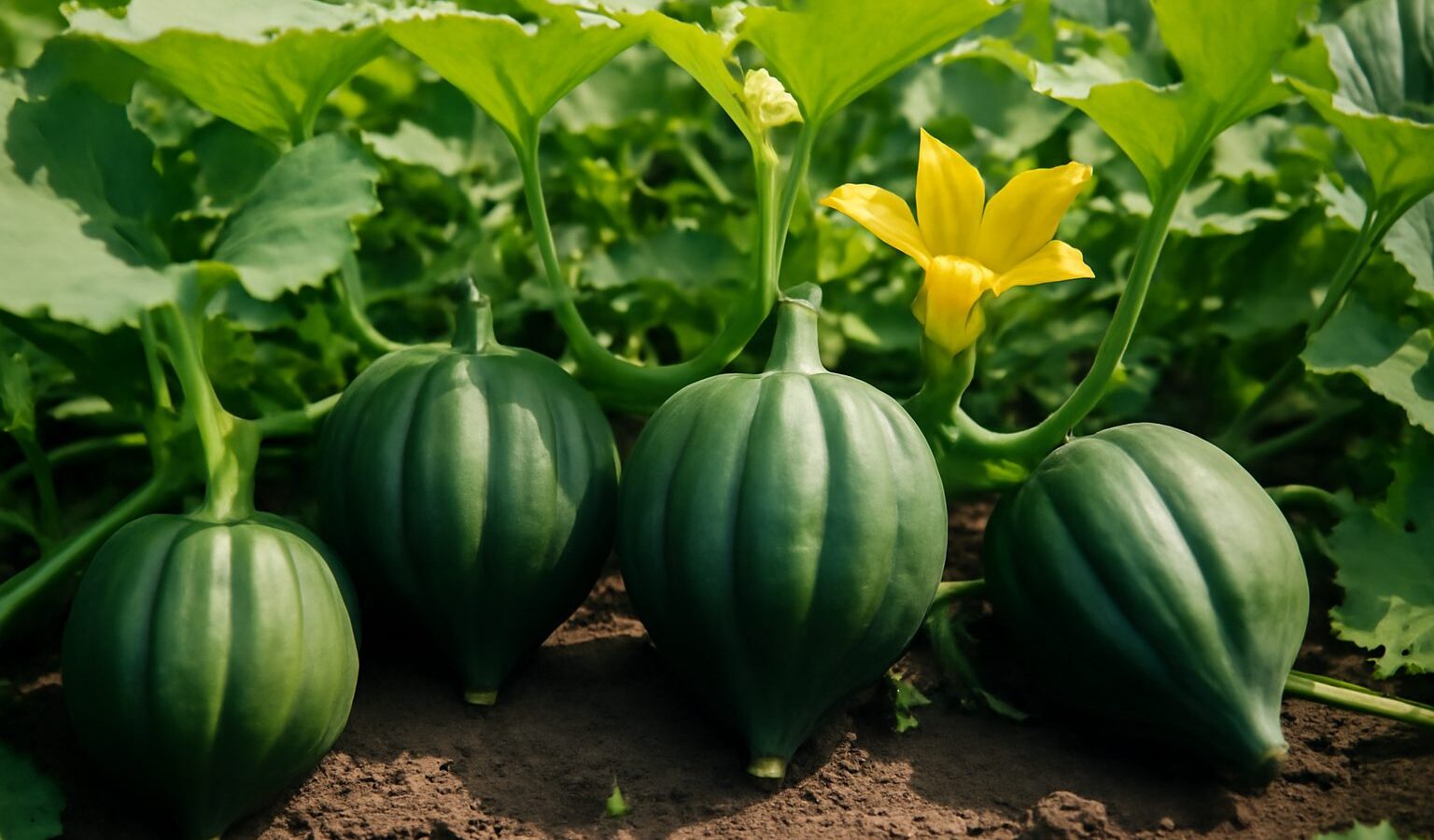
Acorn squash is one of the easiest and most reliable winter squashes for a home garden, producing sweet, nutty, single-serving fruit on vigorous vines that practically grow themselves once the soil warms. Unlike summer squash, which you pick young and tender, acorn squash is a winter squash—you let the fruit fully mature on the vine, harden its rind, and store it for weeks or months. The classic dark-green, ribbed fruit roasts beautifully, and modern varieties come in golden and white-skinned forms too. Acorn squash needs warm soil, full sun, plenty of room to ramble, and steady moisture, but beyond that it is remarkably forgiving. This guide covers exactly when to plant, how far apart to space the plants, how many days to maturity to expect, and the steps to harvest and cure the fruit so it keeps well into winter.
Part of our Vegetable Gardening & Raised Beds guide →
In this guide
Key Takeaways
- When to plant: Sow seed directly after the last frost once soil reaches at least 60°F (ideally 70°F)—acorn squash hates cold ground.
- Spacing: Thin to one plant per spot, with plants 18–24 inches apart in rows 4–6 feet apart, or 2–3 plants per hill with hills 4–6 feet apart.
- Days to maturity: Most varieties mature in about 80–100 days from sowing.
- Sun & water: Needs full sun and 1–2 inches of water per week; water at the base to keep foliage dry.
- Harvest: Pick when the rind is hard, dull, and deep green and the stem corks; cure 10–14 days in a warm spot before storing.
Choosing a Variety
The standard is ‘Table Queen’, the heirloom dark-green acorn most people picture, dependable and productive. ‘Honey Bear’ is an award-winning compact hybrid that produces small, sweet fruit on bush-type plants—ideal for smaller gardens and containers. ‘Table Ace’ offers semi-bush vines and dark, low-stringy flesh, while ‘Cream of the Crop’ and ‘Carnival’ bring white and multicolored skins to the table. If garden space is tight, choose a bush or semi-bush variety; if you have room to let vines run, the standard vining types tend to yield more fruit per plant.
When and Where to Plant
Acorn squash is a warm-season crop with zero frost tolerance. Sow seed directly in the garden after all danger of frost has passed and the soil has warmed to at least 60°F—70°F is better. Cold, wet soil rots seed and stunts seedlings, so there is no advantage to rushing; squash sown into warm June soil often catches up to and passes squash planted too early. In short-season climates you can start seeds indoors in peat or paper pots 2 to 3 weeks before your last frost and transplant carefully, since squash resent root disturbance.
Pick a spot in full sun—at least six to eight hours—with rich, well-drained soil. Squash are heavy feeders, so work several inches of compost or well-rotted manure into the bed before planting. A slightly acidic to neutral pH (6.0–6.8) suits them best. Because the vines sprawl widely, plan for that space up front or train them onto a sturdy trellis to save ground (small acorn fruit are light enough to trellis with slings for support).
How to Plant and Space Acorn Squash
You can plant in rows or in traditional hills. For hills, mound the soil slightly to warm it and improve drainage, then sow 4 to 5 seeds an inch deep per hill, spacing hills 4 to 6 feet apart in every direction. Once seedlings have a couple of true leaves, thin to the strongest 2 to 3 plants per hill. For rows, sow seeds an inch deep and thin seedlings to stand 18 to 24 inches apart, with rows 4 to 6 feet apart to give the vines room to run.
Proper spacing matters more than gardeners expect: crowded squash compete for light and nutrients, produce smaller fruit, and—critically—stay damp and develop powdery mildew far more readily. Give the plants room and you will be rewarded with healthier vines and better fruit. Mulch around the plants once they are up to conserve moisture, suppress weeds, and keep developing fruit off bare soil.
Watering, Feeding, and Care
Acorn squash needs 1 to 2 inches of water per week, more during hot, dry spells, delivered as deep, infrequent soakings rather than light sprinkles. Consistent moisture is especially important while fruit is sizing up. Water at the base of the plant with a soaker hose or drip line and keep the foliage dry whenever possible—wet leaves are an open invitation to powdery mildew and other fungal diseases. A 2- to 3-inch mulch layer holds moisture and keeps the soil temperature even.
As heavy feeders, squash benefit from a midseason boost. If you amended the bed well at planting, a side-dressing of balanced fertilizer or compost when the vines start to run and again when they begin flowering keeps them productive. Avoid drenching them in nitrogen, though—too much pushes lush leaves at the expense of fruit. For more on building fertile, well-drained beds, see the soil guidance in our Plants & Flowers section, and gardeners short on ground can adapt these methods using our Urban Gardening container techniques.
Pollination and Common Pests
Squash produce separate male and female flowers and rely on bees for pollination. Male flowers appear first and in greater numbers; female flowers have a tiny squash behind the bloom. If fruit forms then shrivels and rots at the tip, the cause is usually poor pollination—encourage pollinators by avoiding insecticides during bloom, or hand-pollinate by transferring pollen from a male flower to a female with a small brush in the morning.
The main pests are squash bugs, squash vine borers, and cucumber beetles. Inspect the undersides of leaves and the base of stems for the bronze egg clusters of squash bugs and crush them. Vine borers tunnel into stems and cause sudden wilting—covering young plants with row cover until they flower is the best prevention, then removing it so bees can reach the blooms. Powdery mildew, a white coating on the leaves, is nearly universal late in the season; choose resistant varieties, space plants well, and water at the base to slow it down.
Days to Maturity, Harvest, and Curing
Most acorn squash mature in about 80 to 100 days from sowing. Unlike summer squash, you let the fruit ripen fully on the vine. Look for these signs of readiness: the skin turns a deep, dull green (the glossy sheen fades), the rind is hard enough that your thumbnail cannot easily pierce it, and the stem and the patch where the fruit rests on the ground turn from yellow toward orange. The portion touching the soil often develops a characteristic orange “ground spot.” Always harvest before the first hard frost.
How to Cut and Cure
Cut—do not pull—each fruit from the vine with a sharp knife or pruners, leaving 1 to 2 inches of stem attached. The stem is the fruit’s seal; squash harvested without a stem rot quickly in storage. Handle the fruit gently, as bruises and cuts invite decay. Then cure the squash to harden the rind and heal small nicks: set the fruit in a single layer in a warm, well-ventilated spot (around 80°F) for 10 to 14 days. One caveat unique to acorn squash: it does not require as long a cure as butternut, and very long warm curing can actually reduce its eating quality, so a shorter cure of about a week to ten days is ideal.
After curing, store acorn squash in a cool, dry, well-ventilated place around 50 to 55°F—a basement, cool closet, or unheated room. Stored well, acorn squash keeps for roughly one to two months, somewhat less than thicker-skinned winter squashes. Check periodically and use any fruit showing soft spots first. For a steady winter supply, harvest, cure, and eat them in the order they ripened.
Frequently Asked Questions
How do I know when acorn squash is ripe?
Look for a deep, dull green rind (the glossy shine fades when it is ready), a hard skin your thumbnail can’t easily pierce, a corky brown stem, and an orange “ground spot” where the fruit rested on the soil. Most varieties are ready about 80–100 days after sowing. Always harvest before the first hard frost.
How far apart should I space acorn squash plants?
In rows, thin plants to 18–24 inches apart with rows 4–6 feet apart. In hills, sow 4–5 seeds per hill and thin to the best 2–3 plants, with hills 4–6 feet apart in all directions. Crowding leads to smaller fruit and much worse powdery mildew, so give the sprawling vines room.
Do I need to cure acorn squash before storing it?
A short cure helps. Set harvested fruit in a warm, airy spot (around 80°F) for about 7–14 days to harden the rind and heal small nicks. Unlike butternut, acorn squash should not be cured for too long—excessive warm curing can reduce its flavor—so keep the cure on the shorter side, then store at 50–55°F.
Why are my squash flowers falling off without making fruit?
This is normal for the first flowers, which are all male—they bloom, release pollen, and drop. Fruit comes only from female flowers (which have a tiny squash behind the bloom) once bees pollinate them. If female flowers form a small fruit that then shrivels, pollination failed; encourage bees or hand-pollinate with a brush in the morning.
How long does acorn squash keep in storage?
Properly cured acorn squash stored in a cool, dry, well-ventilated spot around 50–55°F keeps for roughly one to two months. That is shorter than thicker-rinded squashes like butternut, so eat acorn squash earlier in winter and check periodically for soft spots, using any that are starting to give first.