

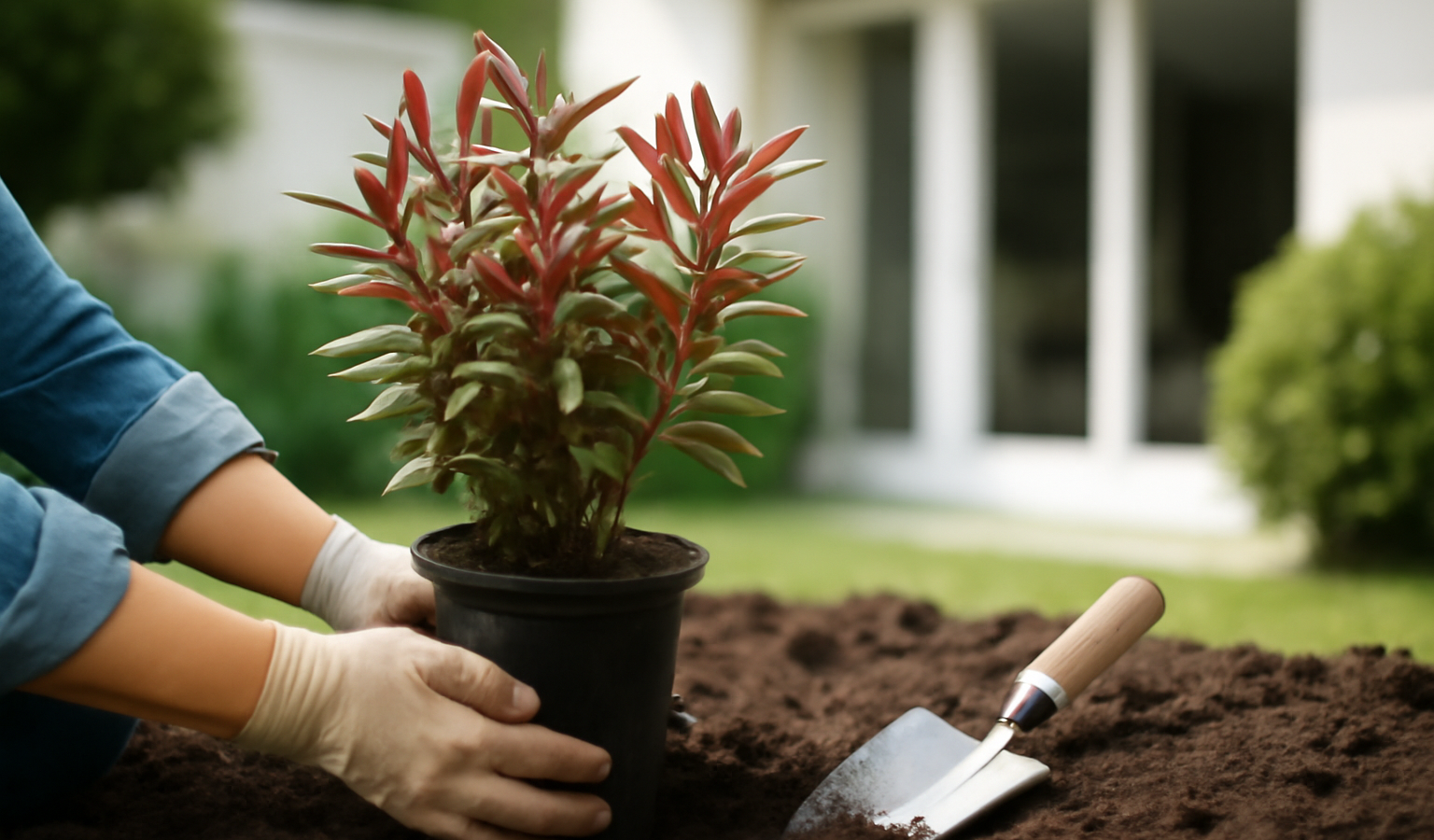
Leucothoe (pronounced loo-KOH-thoh-ee) is a graceful, arching evergreen shrub that solves one of the trickiest problems in landscaping: what to plant in dry to moist shade under trees where almost nothing looks good. Its lustrous, willow-shaped leaves cascade in fountain-like sprays, flushing bronze-red on new growth in spring and turning deep burgundy in winter cold. In spring, rows of small white, urn-shaped flowers dangle along the undersides of the stems like lily-of-the-valley. A member of the heath family alongside rhododendrons and azaleas, leucothoe shares their love of acidic, organic, evenly moist soil and their dislike of hot, dry, alkaline conditions. This guide covers the main species, hardiness zones, the acidic soil it demands, planting, watering, pruning for that signature arching form, and the leaf-spot problem that trips up most growers.
In this guide
Key Takeaways
- Most leucothoe is hardy in USDA zones 5 to 8, with compact cultivars like ‘Rainbow’ and ‘Scarletta’ best for small gardens.
- It needs acidic soil (pH 4.5 to 6.0), rich in organic matter and consistently moist but well-drained.
- Plant in partial to full shade; harsh afternoon sun scorches and bleaches the foliage.
- Evergreen arching stems give four-season interest, with bronze new growth and burgundy winter color.
- Water regularly the first two years and mulch deeply — leucothoe has shallow roots that dry out fast.
- Prune by cutting whole old stems to the ground after flowering, never by shearing the tips.
- Leaf spot is the most common problem; improve air flow and avoid wetting the foliage to prevent it.
Types of Leucothoe to Grow
Several species are sold under the leucothoe name, and choosing the right one matters because their sizes vary widely. Coast leucothoe or drooping leucothoe (Leucothoe fontanesiana) is the classic species, reaching 3 to 6 feet tall and wide with long, gracefully arching stems — best for larger shade borders and naturalized woodland edges. Its popular variegated cultivar ‘Rainbow’ splashes the leaves with cream, pink, and copper.
For smaller spaces, look to compact selections. ‘Scarletta’ (also sold as ‘Zeblid’) stays around 2 feet tall with brilliant scarlet new growth aging to glossy green then burgundy in winter. ‘Curly Red’ and ‘Little Flames’ are dwarf forms under 2 feet with twisted, fiery foliage. The native fetterbush (Eubotrys racemosa, formerly Leucothoe racemosa) is a taller, deciduous relative for naturalistic plantings. Match the mature size to your space, because leucothoe resents the hard shearing people use to keep oversized shrubs in check.
Hardiness Zones and Where It Grows
Most ornamental leucothoe is hardy in USDA zones 5 through 8, though some compact cultivars push reliably into zone 4 with winter protection, and others tolerate zone 9 in cool coastal areas. It is native to the moist, acidic woodlands and stream banks of the Appalachian mountains and the southeastern United States, which explains its ideal conditions: dappled shade, cool roots, humusy soil, and steady moisture. It performs poorly in the hot, humid, low-elevation Deep South and in the arid, alkaline-soil West.
In zones 5 and 6, the evergreen foliage can suffer winter burn from cold, drying winds and bright winter sun, browning at the edges. Siting it on the north or east side of a building, where it is sheltered from the worst winter exposure, keeps the leaves looking their best. In the southern end of its range, the priority shifts to protecting it from summer heat and afternoon sun.
Soil Requirements
Soil is the make-or-break factor with leucothoe. Like its rhododendron and azalea cousins, it requires acidic soil with a pH between 4.5 and 6.0. In neutral or alkaline soil, the leaves yellow between the veins (iron chlorosis) and the plant slowly declines. If you garden on limestone or have hard, alkaline tap water, test your soil first and amend with elemental sulfur or an acidifying fertilizer to bring the pH down before planting.
Beyond acidity, leucothoe wants soil that is rich in organic matter, consistently moist, and yet well-drained — the cool, spongy, leaf-litter conditions of a forest floor. Work generous amounts of compost, leaf mold, or peat into the planting area. It will not tolerate heavy, soggy clay that stays waterlogged, nor dry, sandy soil that bakes out, so the goal is moisture retention with drainage. The same acid-loving, humus-rich regimen suits other woodland plants featured in the Plants & Flowers hub.
Light: The Shade Specialist
Leucothoe is one of the best broadleaf evergreens for shade. It thrives in partial shade to full shade, ideally with bright, dappled light filtering through high tree canopy. A spot that gets gentle morning sun and shade through the hot afternoon is perfect. Too much direct sun, especially scorching afternoon sun, bleaches the foliage to a sickly yellow-green and burns the leaf margins; too little light, in deep dense shade, thins the plant and reduces flowering. Aim for the bright-shade sweet spot.
How to Plant Leucothoe
Plant in spring or early fall when temperatures are mild and rainfall is dependable, giving the shallow roots time to establish before summer heat or winter cold. Space plants according to the cultivar’s mature width — roughly 3 to 4 feet apart for full-size fontanesiana, or 2 feet apart for compact types used as a low groundcover or border.
- Dig a hole twice as wide as the root ball and equally deep.
- Mix the excavated soil roughly half-and-half with compost or peat to enrich and acidify it.
- Loosen the roots, set the plant so the crown sits at or just above grade, and backfill.
- Water deeply to settle the soil around the shallow root system.
- Apply 2 to 3 inches of acidic mulch such as pine bark, pine straw, or shredded oak leaves, keeping it off the stems.
The deep mulch layer is not optional — it keeps the shallow roots cool and moist, exactly the conditions leucothoe craves.
Watering and Feeding
Leucothoe has a shallow, fibrous root system that dries out quickly, so consistent moisture is critical, especially in the first two years. Water deeply once or twice a week during the growing season, providing about an inch each time, and increase frequency during hot, dry spells. The plant will tell you when it is thirsty — the leaves wilt and droop, recovering once watered. Never let it dry out completely, but also avoid standing water, which rots the roots.
Feed lightly in early spring with a fertilizer formulated for acid-loving plants (the same type sold for azaleas, camellias, and rhododendrons). Follow the label rate and do not overfeed, which can burn the shallow roots and force soft growth prone to leaf spot. A second light feeding after flowering is optional. If the foliage yellows between the veins despite feeding, the cause is usually high soil pH rather than a nutrient shortage — correct the pH instead. The same moisture-and-mulch discipline applies broadly to shade plantings in the Outdoor Living hub.
Pruning for the Arching Form
The number-one pruning mistake is shearing leucothoe like a boxwood hedge. Cutting back the tips destroys the natural arching grace and produces an ugly, stubby plant with bare interiors. Instead, prune by removing whole stems at the base. Right after flowering in late spring, cut the oldest, longest, or most awkward stems all the way to the ground. This encourages fresh, well-clothed new shoots from the crown and maintains the fountain-like silhouette.
An overgrown or tired plant can be rejuvenated by cutting the entire shrub back to about 6 inches in early spring; it resprouts reliably from the base, though it will skip a season of bloom. Beyond renewal cuts, leucothoe needs little routine pruning. Remove any dead, damaged, or leaf-spotted stems whenever you see them, and thin congested growth to improve air circulation.
Pests, Diseases and Winter Care
The most common ailment is leaf spot, a fungal disease that produces brown or reddish blotches on the foliage, often worse on stressed, crowded, or overhead-watered plants. Prevent it by spacing plants for good air flow, watering at the base rather than wetting the leaves, and removing fallen infected foliage. Thinning out crowded stems also helps. Severe cases may warrant a fungicide labeled for ornamental leaf spot, but cultural fixes usually suffice.
Leucothoe is otherwise quite resistant to pests and is generally left alone by deer, which dislike its leathery, mildly toxic foliage (it is poisonous if eaten, so keep it away from grazing livestock). In colder zones, the evergreen leaves can scorch over winter from sun and wind; an anti-desiccant spray or a temporary burlap screen on exposed plants helps. Come spring, the burned tips can be pruned out as fresh growth emerges, and the plant quickly recovers its lush, layered look.
Frequently Asked Questions
Why are my leucothoe leaves turning brown?
The two usual causes are leaf-spot disease (brown or reddish blotches, worse in crowded or overhead-watered plants) and winter burn from cold wind and sun. Improve air flow, water at the base, and shelter the plant from harsh winter exposure to prevent both.
How big does leucothoe get?
It depends on the type. Full-size coast leucothoe (L. fontanesiana) reaches 3 to 6 feet tall and wide, while compact cultivars like ‘Scarletta’ and ‘Curly Red’ stay under 2 feet. Choose the size that fits your space rather than shearing a large one down.
Can leucothoe grow in full sun?
Not well. It is a shade specialist that needs partial to full shade with cool roots. Full sun, especially hot afternoon sun, bleaches and scorches the foliage. Bright dappled shade gives the best color and density.
Is leucothoe an evergreen?
Most ornamental species are broadleaf evergreens that hold their foliage year-round, often turning bronze or burgundy in winter. A few relatives, like fetterbush, are deciduous. The evergreen types provide valuable four-season structure in shade gardens.
How do I prune leucothoe without ruining its shape?
Never shear the tips. Instead, cut the oldest and longest stems all the way to the ground right after flowering. This renews the plant from the base and preserves its natural arching, fountain-like form.