

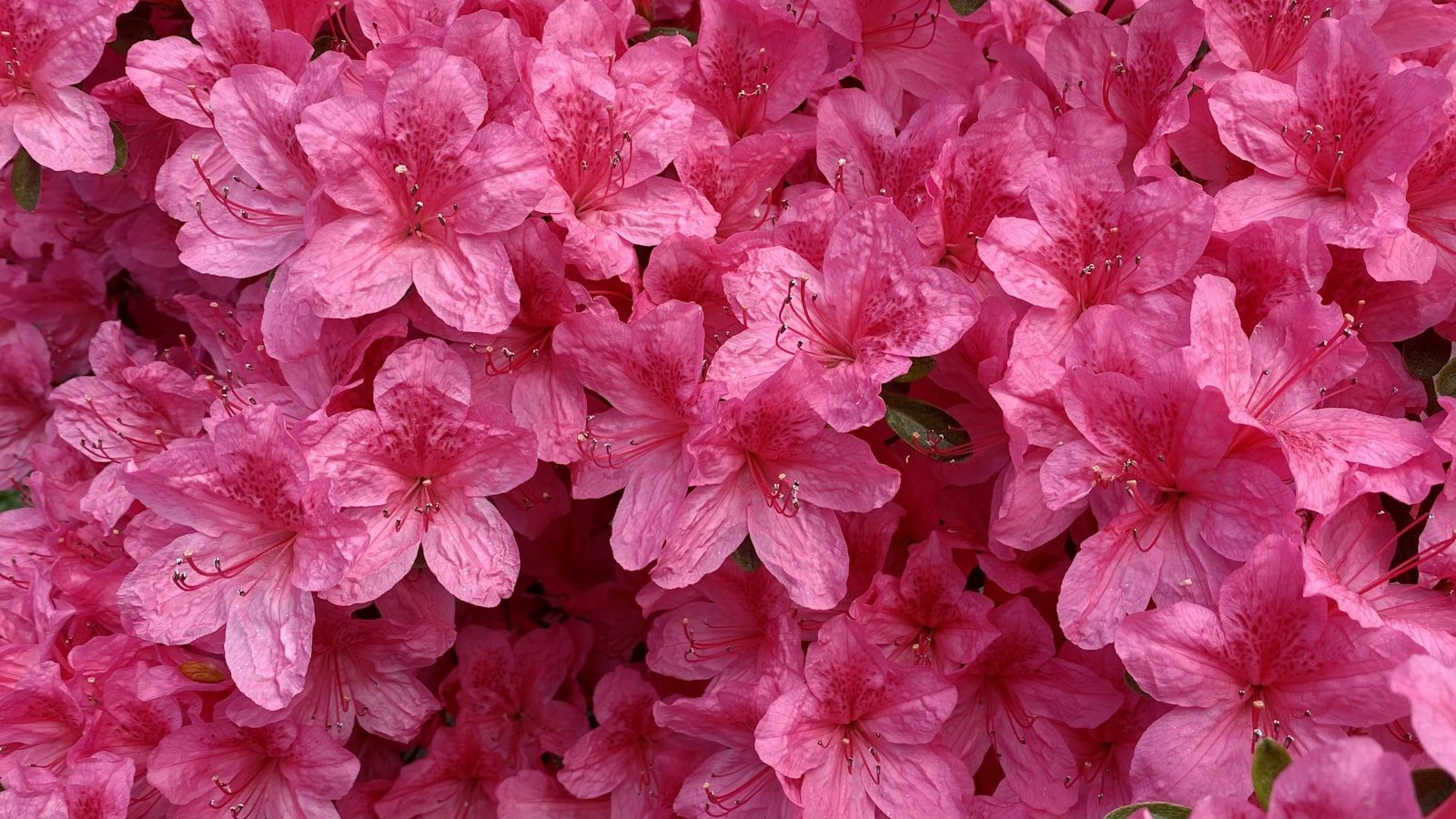
Azaleas reward you with one of the most spectacular flower displays in the spring garden — a solid wall of pink, white, red, coral, or lavender that can stop traffic — and once they are sited correctly they are remarkably low maintenance. Almost every azalea failure traces back to two mistakes: planting them too deep and planting them in the wrong soil. Get the acidity, drainage, and planting depth right, give them part shade, and an azalea will bloom faithfully for decades. This guide covers everything from choosing evergreen versus deciduous types to the precise window for pruning so you never accidentally cut off next year’s flowers.
Key Takeaways
- Azaleas need acidic soil (pH 4.5–6.0), excellent drainage, and dappled or part shade — not deep shade and not blazing afternoon sun.
- Plant in spring or fall, setting the top of the root ball at or slightly above grade; planting too deep is the number-one killer.
- Evergreen azaleas suit zones 6–9; deciduous (native) azaleas handle colder zones 4–7.
- Prune immediately after blooming — azaleas set next year’s buds in summer, so late pruning removes the flowers.
- Mulch 2–3 inches with pine bark or pine straw, water at the base, and feed lightly with an acid-formulated fertilizer after bloom.
Evergreen vs. Deciduous Azaleas
Azaleas are technically rhododendrons, and they split into two broad camps. Evergreen azaleas — the Kurume, Satsuki, Encore, and Southern Indica groups — keep their leaves year-round and are the familiar foundation shrubs of mild-winter and Southern gardens, generally hardy in zones 6–9. The reblooming Encore series flowers in spring and again in late summer and fall. Deciduous azaleas, including many North American natives like the flame azalea and pinxterbloom, drop their leaves in winter, often offer fragrant flowers and fiery fall foliage color, and tolerate colder climates down to zones 4–5.
Match the type to your climate first. If you garden in zone 5 or colder, deciduous natives or extra-hardy hybrids like the Northern Lights series (bred at the University of Minnesota for zone 3–4 hardiness) are your reliable choices. In warmer zones, the evergreen groups give you the dense, year-round structure most people picture. Within each group, mature size varies enormously — from 2-foot dwarfs to 8-foot giants — so always check the cultivar’s mature dimensions before you buy and space.
The Right Site: Light and Soil
The ideal azalea site offers filtered sunlight or morning sun with afternoon shade — the classic spot is under high-canopy deciduous trees like oaks or pines, which give dappled light and acidic leaf litter. Too much shade produces sparse blooms and leggy growth; too much hot afternoon sun scorches the leaves and stresses the shallow roots. Morning sun with protection from the harsh late-day sun is the sweet spot in nearly every region.
Soil is where azaleas are demanding. They need acidic soil in the pH 4.5–6.0 range; above 6.0 they cannot take up iron properly and the leaves yellow between the veins (a condition called chlorosis). Test your soil before planting. If your pH is too high, amend with elemental sulfur, and lean on acidic organic matter — composted pine bark, pine straw, and peat — to gradually lower and maintain acidity. Just as critical is drainage: azalea roots are fine, shallow, and fibrous, and they rot quickly in soggy soil. If you have heavy clay, plant in a raised berm of amended soil rather than fighting the native ground.
How and When to Plant
Plant azaleas in early spring or early fall, when temperatures are mild and roots can establish without heat stress. Fall planting in mild climates gives roots a head start before spring growth.
- Dig a hole as deep as the root ball and two to three times as wide. Azaleas are shallow-rooted, so width matters far more than depth.
- Remove the plant from its pot and inspect the roots. Azaleas are notorious for becoming root-bound; if the root ball is a dense mat, slice it vertically in several places and gently tease the outer roots loose so they grow outward instead of strangling the plant.
- Set the plant so the top of the root ball sits at grade or, in heavy or wet soil, an inch or two above it. Burying the crown is the most common cause of slow decline and death — when in doubt, plant high.
- Backfill with native soil amended with composted pine bark or other acidic organic matter. Firm gently and water in well.
- Mulch with 2–3 inches of pine bark, pine straw, or shredded leaves, keeping the mulch a couple of inches away from the stems. Mulch is essential because it keeps the shallow roots cool and moist and slowly maintains acidity.
Space plants according to mature width — typically 2–6 feet apart depending on cultivar. For a continuous mass or low hedge, set them slightly closer so they grow together; for specimen plants, give each its full spread for airflow.
Watering
Because azalea roots are shallow, they dry out fast and cannot reach deep moisture. Provide about 1 inch of water per week, more in heat, keeping the soil consistently moist but never waterlogged. Deep, infrequent soakings at the base are better than frequent light sprinkling, and a soaker hose or drip line keeps the foliage dry, which discourages leaf and petal diseases. Newly planted azaleas need close attention through their first two summers and a deep soaking before the ground freezes in fall, since dry roots going into winter lead to brown, desiccated foliage by spring. A good mulch layer is your best ally for retaining that moisture.
Fertilizing
Azaleas are light feeders, and over-fertilizing does more harm than good — it pushes weak growth and can burn the fine roots. If your soil is reasonably good, an annual mulch of composted pine bark may be all they need. If growth is weak or leaves are pale, apply a fertilizer formulated for acid-loving plants (azalea/rhododendron/camellia food) once, just after flowering, following the label rate. That single spring feeding fuels the new growth and the buds that will become next spring’s flowers. Do not fertilize after midsummer, as late nitrogen forces tender growth that winter will kill. If leaves yellow between green veins, it is usually iron chlorosis from soil that is not acidic enough — correct the pH with sulfur and apply chelated iron for a faster fix.
Pruning at the Right Time
Here is the rule that saves a thousand wasted bloom seasons: azaleas set their flower buds for next year during early-to-midsummer, so the only safe time to prune is right after the current year’s flowers fade, before the new buds form. Prune within a few weeks of bloom, and you remove only spent flowers and shape the plant without sacrificing next year’s show. Prune in late summer, fall, or winter, and you are cutting off the buds, which is why so many gardeners complain their “healthy” azaleas refuse to bloom.
For routine maintenance, simply tip-prune to shape and remove any dead, damaged, or crossing branches. Avoid shearing evergreen azaleas into hard geometric balls; selective hand-pruning preserves their natural mounded form and lets light into the interior. Overgrown, woody azaleas can be rejuvenated by cutting them back hard — by up to a third or even close to the ground for tough Southern types — but do this in late winter or very early spring, accepting that you will lose a season’s bloom in exchange for a denser, refreshed plant. Reblooming types like the Encore series can be pruned lightly after the spring flush without losing the later flushes.
Common Problems, Pests and Diseases
Lace bugs are the most damaging pest, especially on azaleas planted in too much sun. They feed on the undersides of leaves, leaving a stippled, silvery-white speckling on top and dark varnish-like spots beneath. Control them by improving siting (more shade), spraying the undersides of leaves with insecticidal soap or horticultural oil, and treating in late spring as the first generation appears. Azalea caterpillars can defoliate a branch quickly but are easily handpicked. Spider mites cause fine stippling in hot, dry conditions.
On the disease side, petal blight turns flowers into brown mush in wet springs — rake up and discard fallen petals to break the cycle. Root rot and the related dieback are the deadly ones, and they are almost always a drainage or planting-depth problem rather than something you can spray away. Powdery mildew may appear on deciduous azaleas in late summer but is mostly cosmetic. Leaf gall, a curious fungal swelling of leaves and flowers in spring, is harmless and controlled by simply picking off the galls. For broader bed and drainage strategy, our guide on how to improve clay soil is worth a read, and you can explore companion shade plants throughout the Plants & Flowers section. Azaleas also pair beautifully in acidic beds with other woodland shrubs — just keep them away from alkaline-loving neighbors like our boxwood plantings, which prefer nearly the opposite soil pH.
Frequently Asked Questions
Why won’t my azalea bloom?
The most common reasons are pruning at the wrong time (azaleas set buds in summer, so fall or winter pruning removes them), too much shade, or too much nitrogen fertilizer. Prune only right after flowering, give them dappled light, and feed sparingly.
What soil pH do azaleas need?
Acidic soil between pH 4.5 and 6.0. Above 6.0 they develop iron chlorosis — yellow leaves with green veins. Lower the pH with elemental sulfur and maintain it with pine bark or pine straw mulch.
Can azaleas grow in full sun?
Most prefer part shade or morning sun with afternoon shade. Full, hot afternoon sun scorches the leaves and invites lace bug infestations. A few Southern Indica types tolerate more sun, but dappled light produces the healthiest plants and best blooms.
How do I fix yellow azalea leaves?
If the leaf is yellow with green veins, it is iron chlorosis from insufficient soil acidity — apply sulfur and chelated iron. If older leaves yellow and drop uniformly, suspect overwatering or poor drainage. Always rule out planting depth, since buried crowns cause slow yellowing decline.
How often should I water azaleas?
Provide about 1 inch of water per week, more in heat, keeping the shallow roots consistently moist but never soggy. Water deeply at the base rather than lightly overhead, and never let newly planted azaleas dry out during their first two summers.