

Goji berries (Lycium barbarum), the bright orange-red “superfruit” sold dried at a premium, are surprisingly easy to grow at home. The plant is a tough, sprawling, almost weed-like deciduous shrub that thrives in USDA zones 5 through 9, tolerates poor and even slightly alkaline soils, and is self-fertile, so a single bush will fruit. The catch is patience and pruning: gojis take two to three years to start producing well, and an unpruned plant becomes a thorny, arching thicket that flops everywhere. Give it full sun, well-drained ground, and an annual haircut, and you will harvest fresh goji berries for months. Here is how.
Key Takeaways
- Hardy in USDA zones 5-9; full sun is essential for heavy fruiting.
- Self-fertile, so one plant fruits, but it needs two to three years to come into production.
- Tolerates a wide pH (6.5-8.0) and lean soils, but demands good drainage.
- Space plants 3-5 feet apart; mature shrubs reach 6-10 feet with long arching canes.
- Prune hard and stake or trellis to keep the sprawling, thorny growth productive and pickable.
- Berries ripen over a long season from midsummer into fall; they self-sow and sucker readily.
Climate and Site
Goji berries are remarkably adaptable, hardy from zone 5 through zone 9 and tolerating both cold winters and hot, dry summers, which reflects their origins in the harsh climates of northern China and the Himalayas. They are drought-tolerant once established and handle wind, heat, and salt better than most fruiting shrubs. For real fruit production, though, full sun is non-negotiable; give the plant at least six to eight hours of direct sunlight. In too much shade, gojis grow leafy and rampant but flower and fruit poorly.
One word of caution: goji is vigorous to the point of being invasive in some settings. It suckers from the roots and self-sows from dropped fruit, so plant it where you can manage its spread, or grow it in a large container to keep it contained. Avoid putting it right at the edge of a wild area where it could naturalize.
Choosing a Variety
Two species are sold as goji: Lycium barbarum and the closely related Lycium chinense. Most named garden cultivars are forms of L. barbarum, which is the type prized for sweeter, larger fruit and the famous dried berries from the Ningxia region of China. Named selections such as Crimson Star, Phoenix Tears, and the various Ningxia strains have been chosen for heavier yields, sweeter flavor, and earlier fruiting than seed-grown plants, which can be disappointingly tart and slow. If you can, buy a named, vegetatively propagated cultivar rather than a cheap seedling, because seed-raised gojis are genetically variable and many take longer to bear or never fruit heavily. L. chinense tends to be more sprawling and its berries more acidic, so it is the less common choice for eating.
If your priority is dried fruit for tea and cooking, lean toward the Ningxia-type barbarum selections. If you mainly want an ornamental, drought-proof hedge that also happens to fruit, almost any vigorous cultivar will do, since the plant’s toughness is consistent across the species.
Soil and pH
This is one of goji’s easiest traits: it is not fussy about fertility and actually prefers a neutral to slightly alkaline soil, in the range of pH 6.5 to 8.0, which is the opposite of acid-loving blueberries. It will grow in lean, sandy, or rocky ground that would starve other fruit. The one firm requirement is drainage. Goji roots rot in soggy, waterlogged soil, so heavy clay needs amending with compost and grit, or build a raised bed or mound. If your soil is very acidic, a light dusting of garden lime nudges the pH up toward the goji’s preference.
Planting Goji Berries
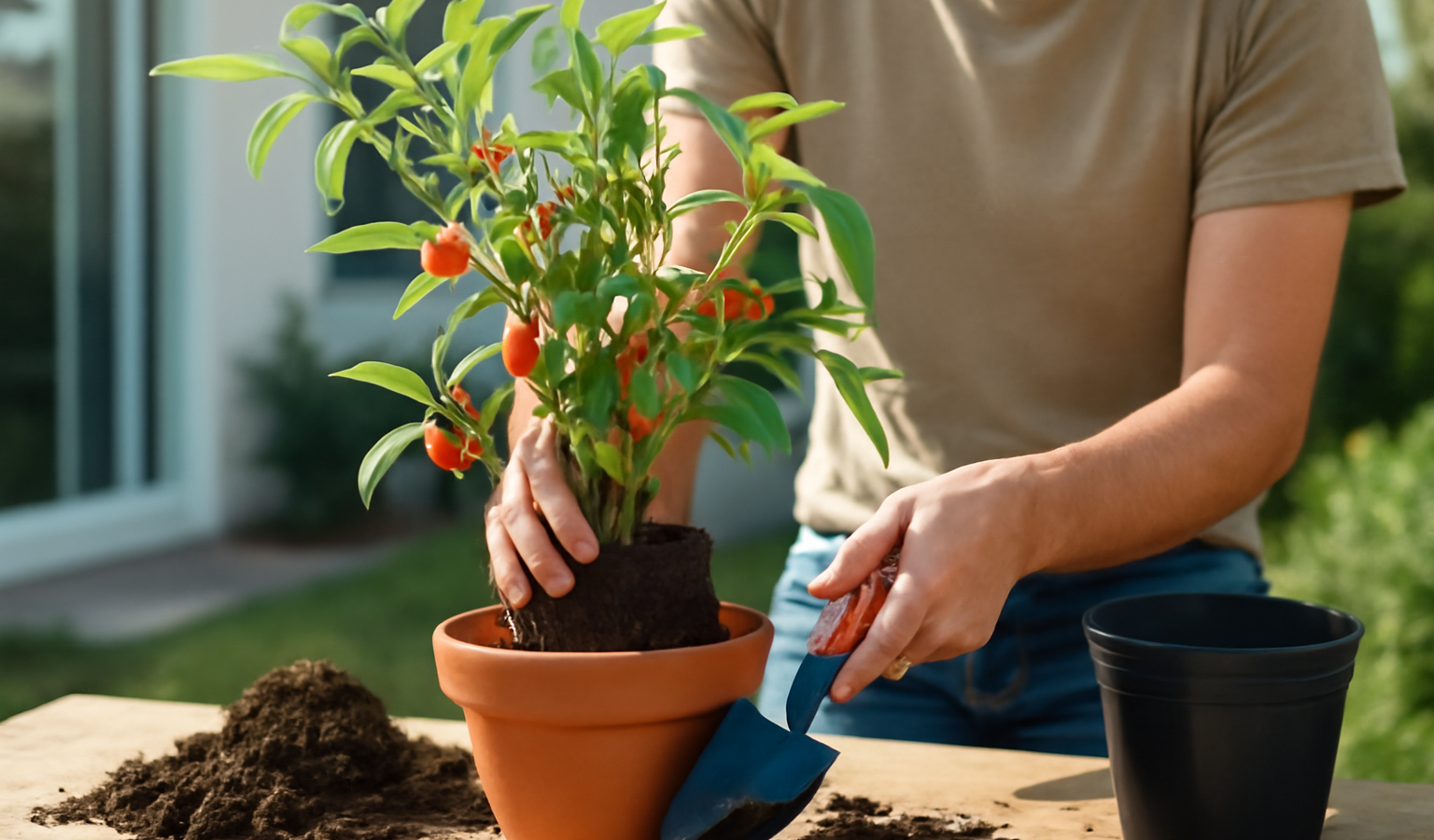
Plant bare-root or potted gojis in spring after the last hard frost, or in fall in mild-winter zones 8 and 9. Space plants 3 to 5 feet apart; while a single bush is self-fertile and fruits fine alone, the long canes need elbow room. Dig a hole as deep as the root ball and twice as wide, set the plant at the same depth it grew before, backfill, and water thoroughly. Because gojis grow into a 6-to-10-foot sprawl of arching, lightly thorned canes, set a stake or simple trellis at planting time so you can tie the canes up as they grow. Mulch with a couple of inches of organic matter to suppress weeds and conserve moisture, keeping it off the stem.
Pollination
Goji berries are self-fertile and self-pollinating, so a single plant will set a full crop without a partner. The small purple, trumpet-shaped flowers are pollinated by bees and other insects, and the plant produces flowers continuously through the season, which is why fruit ripens over such a long window. To support good fruit set, encourage pollinators by avoiding insecticide sprays during bloom and keeping other flowers nearby. If you are weighing whether to plant one bush or several, our overview of self vs cross-pollinating fruit explains why some plants, like goji, are happy on their own.
Watering and Feeding
Water young plants regularly through their first one to two seasons to establish a deep root system, providing about an inch of water per week. Once established, gojis are notably drought-tolerant and need watering only during extended dry spells; in fact overwatering is more dangerous than underwatering because of their dislike of wet roots. Feeding requirements are modest. A light application of balanced fertilizer or a top-dressing of compost in early spring is sufficient. Avoid heavy nitrogen, which drives excess leafy cane growth and delays or reduces fruiting.
Pruning and Training
Pruning is the difference between a productive goji and a messy thicket. Left alone, the plant becomes a tangle of long, whippy, arching canes that flop to the ground, root where they touch, and bury their own fruit. The goal is an open, manageable framework.
The First Few Years
In the first year or two, focus on building structure. Select one strong central stem as a trunk, tie it to your stake, and pinch back side shoots to encourage branching at the height you want, often around 2 feet, so the fruiting canes cascade down from there like a fountain. This creates a tidy, weeping form that is far easier to pick.
Annual Pruning
Each late winter, prune to maintain that framework: shorten overlong canes, remove crossing, weak, dead, or ground-touching growth, and thin the interior to keep air and light moving. Fruit forms on the current season’s growth, so this annual cutting back actually stimulates the new wood that bears the crop. Pull up unwanted root suckers whenever they appear to keep the plant in bounds.
Harvesting Goji Berries
Mature plants begin fruiting in their second or third year and then crop heavily. Berries ripen over a long season, typically from midsummer through the first frosts of fall, so you will pick repeatedly rather than all at once. A ripe goji is deep orange-red, glossy, and slightly soft. The fruit bruises and stains easily and the canes are mildly thorny, so the traditional method is to spread a sheet beneath the plant and gently shake the canes, letting ripe berries drop. Handle freshly picked berries gently. They are tart-sweet eaten fresh, and most growers dry the surplus in a dehydrator or low oven for the familiar chewy dried goji. Avoid eating the leaves and unripe green berries, which contain alkaloids.
Pests and Problems
Gojis are tough and largely pest-resistant, but a few issues crop up. Aphids and spider mites can colonize new growth, especially on stressed plants; a strong jet of water or insecticidal soap usually handles them. Goji is in the nightshade family, so it shares some pests with tomatoes, including occasional potato beetles and powdery mildew in humid, crowded conditions, which good pruning and airflow prevent. Birds will sample ripening fruit, so netting helps during peak harvest. Root rot from poor drainage is the most serious threat, and it is entirely preventable by planting in well-drained soil and not overwatering.
Propagation
Once you have a productive plant, multiplying it is easy and free, which is handy if you want a hedge or replacements. The most reliable method is softwood or semi-hardwood cuttings taken in late spring through summer: snip a 4-to-6-inch length of healthy, non-flowering stem, strip the lower leaves, dip the base in rooting hormone, and insert it into a moist, gritty cutting mix. Kept humid and out of harsh sun, most cuttings root within a few weeks. Because goji suckers so freely, you can also simply lift and transplant rooted suckers from around an established plant in spring, the quickest route of all. Layering works too: peg a low arching cane to the ground, and it will often root where it touches, exactly as it does when left unpruned in the garden. Seed-raising is possible but slow and unpredictable, so cuttings or suckers from a known good cultivar are far preferable.
Using the Harvest
Fresh goji berries are pleasantly tart-sweet and can be eaten straight from the cane, scattered over yogurt or salads, or simmered into sauces. Most of the world knows them dried, however, and drying concentrates their flavor and makes the surplus keep for months. Spread the berries in a single layer in a dehydrator at a low setting, or in an oven on its lowest temperature with the door cracked, until they are leathery but still slightly pliable. Stored in an airtight jar away from light, dried gojis last the better part of a year. The leaves are traditionally brewed as a mild tea in China, though, like the green unripe berries, they should not be eaten in quantity raw because of their alkaloid content.
Frequently Asked Questions
How long until goji berries produce fruit?
Expect the first small crop in the second year and reliable, heavy production by the third year. The plants then fruit dependably for many years over a long late-summer-to-fall season.
Do goji berries need a pollinator plant?
No. Goji berries are self-fertile and self-pollinating, so a single bush will set a full crop. Healthy pollinator activity simply improves the consistency of fruit set.
Can I grow goji berries in a container?
Yes, and a large pot of at least 5 gallons is a smart way to control their tendency to sucker and spread. Stake the plant, water more often than in-ground, and prune to keep it compact.
What soil pH do goji berries like?
Goji prefers neutral to slightly alkaline soil, roughly pH 6.5 to 8.0, the opposite of acid-loving berries like blueberries. The key requirement is good drainage rather than high fertility.
Why is my goji plant not fruiting?
The usual causes are too much shade, too much nitrogen fertilizer driving leafy growth, or simply a plant that is still under two years old. Move it to full sun, ease off feeding, and give it time.
Are goji berries invasive?
They can be in some regions. Goji suckers from the roots and self-sows from dropped fruit, forming thickets if neglected. Pull suckers as they appear, clean up fallen berries, and consider container growing if you want to be sure of containing it.
How do I propagate goji berries?
The easiest ways are softwood cuttings taken in late spring or summer and rooted in a gritty mix, or simply digging up and transplanting the rooted suckers an established plant throws around its base. Both reproduce a known cultivar far more reliably than seed.
Goji berries reward minimal effort with years of nutritious fruit, as long as you give them sun, sharp drainage, and a yearly prune to tame their wild growth. For more easy-care fruiting shrubs and growing guides, browse the Plants and Flowers section.