

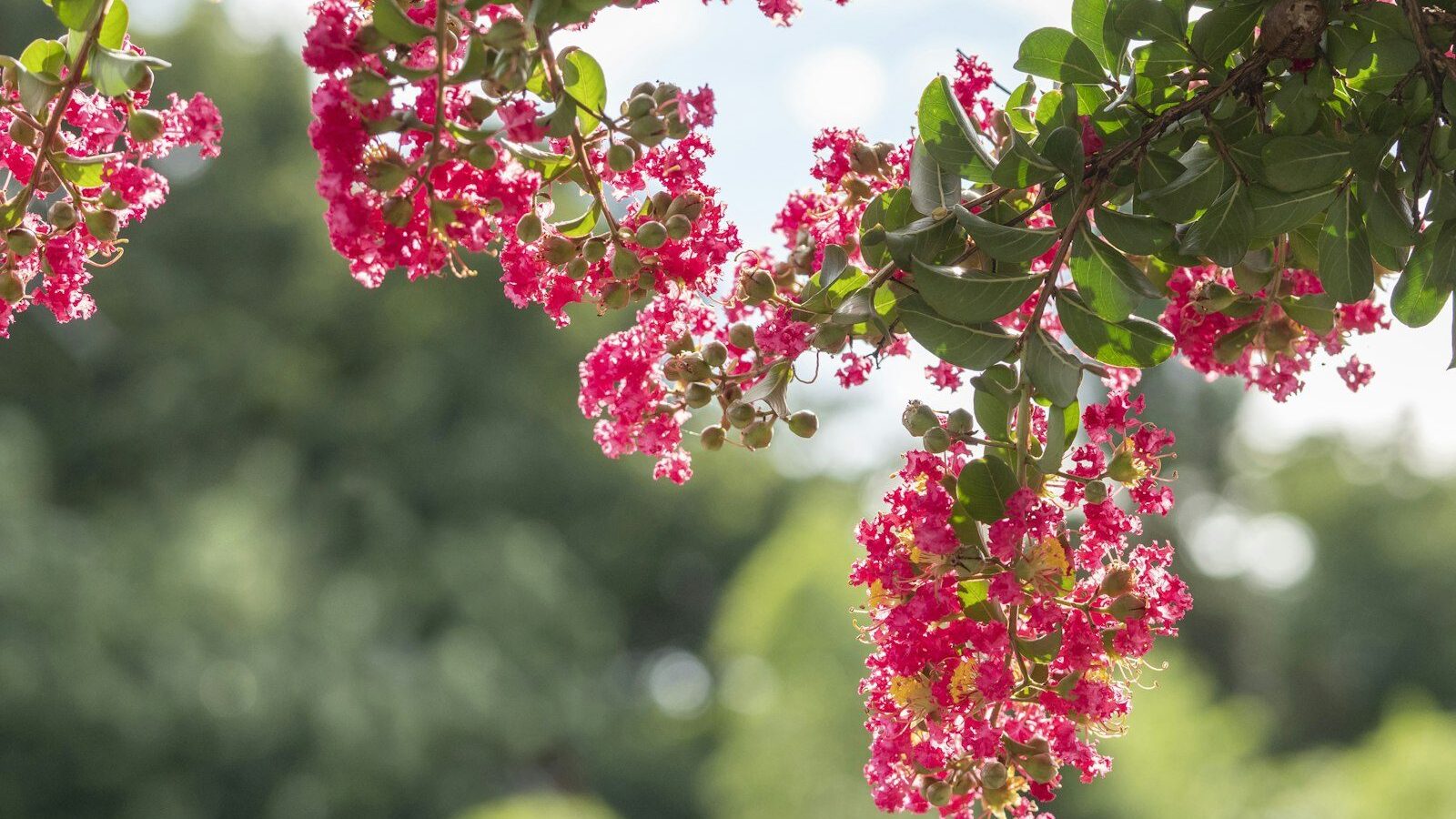
Crepe myrtle (also spelled crape myrtle) is the workhorse of the warm-climate summer landscape — a small tree or large shrub that blooms for an astonishing 90 to 120 days, shrugs off heat and drought once established, sheds beautifully mottled bark in winter, and lights up in fall with orange and red foliage. It is hard to find a plant that gives more color for less effort. The one thing crepe myrtle owners get wrong, year after year, is pruning: the topping-off butchery known as “crepe murder” ruins the natural form and produces weak, weeping growth. This guide shows you how to plant the right cultivar in the right place and prune it the right way so it looks like the graceful tree it is meant to be.
Key Takeaways
- Crepe myrtle is hardy in USDA zones 7–9 (some cultivars to zone 6) and needs full sun — at least 6 hours — to bloom heavily.
- Choose the cultivar by mature size: dwarfs stay 3–5 feet, semi-dwarfs 5–12 feet, and standard trees reach 15–30 feet. Right-sizing is the cure for over-pruning.
- Plant in spring or fall in well-drained soil; space according to mature width and away from structures.
- Prune in late winter to remove only crossing, rubbing, and crowded growth and to lift the canopy — never “top” the trunks.
- It blooms on new wood, so light late-winter pruning and deadheading spent blooms encourage more flowers all summer.
Choosing the Right Cultivar (Right Plant, Right Place)
The most important decision — and the one that prevents the dreaded annual hack job — is choosing a cultivar whose mature size fits the space. Crepe myrtles range from 3-foot dwarfs to 30-foot trees, and there is a size for every spot, so there is no reason to plant a 25-foot tree under a window and then chop it every winter. Dwarf types like ‘Pocomoke’ and the Razzle Dazzle series stay 3–5 feet and suit foundation beds and containers. Semi-dwarfs such as ‘Acoma’ (white) and ‘Tonto’ (red) settle at 5–12 feet. Standard tree forms like ‘Natchez’ (white, cinnamon bark), ‘Muskogee’ (lavender), and ‘Tuscarora’ (coral-pink) reach 15–30 feet for a true specimen or street tree.
Beyond size, look for disease resistance and cold hardiness. The U.S. National Arboretum’s series of Native American–named hybrids (Natchez, Muskogee, Tuscarora, Tonto, Acoma, and others) were bred for resistance to powdery mildew, which plagued older varieties. For the cold edge of the range, the Black Diamond series and certain cultivars push reliability toward zone 6 — though in marginal climates the plant may die back in a hard winter and regrow from the roots as a large shrub. Bark color, fall foliage, and bloom shade vary widely, so pick for the whole-year show, not just the flower.
Where and When to Plant
Crepe myrtle is a sun worshipper. Plant it where it gets a minimum of six hours of direct sun, and ideally full sun all day. In too much shade it blooms poorly, grows leggy, and becomes far more susceptible to powdery mildew. It is not fussy about soil type and tolerates clay, sand, and loam, but it does need decent drainage — it will not thrive in a spot that stays waterlogged. A slightly acidic to neutral pH (around 5.5–7.0) is fine. The plant is genuinely heat- and drought-tolerant once established, which makes it a backbone of low-water Southern landscapes.
The best time to plant is spring after the last frost or in fall, giving roots time to establish before the stress of summer heat or winter cold. To plant, dig a hole as deep as the root ball and two to three times as wide, loosen any circling roots, set the plant at the same depth it grew in the container, backfill with native soil, water deeply, and mulch with 2–3 inches kept a few inches off the trunk. Site it well away from your house and walkways based on its mature width — a 25-foot ‘Natchez’ planted 4 feet from the wall is the recipe that leads to a lifetime of bad pruning.
Spacing
Space crepe myrtles at roughly their mature width so the canopies just touch or stay slightly apart. For a row or allée of standard trees, 8–12 feet on center is typical; for a screen you want a bit denser, around 6–8 feet. Dwarf types need only 3–4 feet. Adequate spacing keeps air moving through the canopy, which sharply reduces powdery mildew and the sooty mold that follows aphid infestations.
Watering and Feeding
Water newly planted crepe myrtles deeply once or twice a week through the first growing season — about 1 inch per week — to establish a strong root system. After the first year or two they are markedly drought tolerant and usually rely on rainfall, needing supplemental water only during extended drought. Avoid overwatering established plants; consistently soggy soil causes more problems than dry spells.
Crepe myrtles bloom on new growth, so a little nitrogen in spring fuels the flush of stems that carry the flowers. Apply a balanced or slightly nitrogen-leaning fertilizer once in early spring as growth begins, following label rates, and stop feeding by midsummer so you do not push tender growth into fall. Over-fertilizing produces lush leaves and fewer flowers, so go light. A spring top-dressing of compost is a fine organic alternative.
Pruning: How to Avoid “Crepe Murder”
“Crepe murder” is the widespread practice of topping crepe myrtles — cutting all the main trunks back to ugly knuckled stubs every winter. It does not make the plant bloom more; it destroys the elegant vase shape, produces a brushy explosion of thin, weak shoots that flop under the weight of the flowers, creates knobby wound galls, and invites decay. The right approach is restraint. If you chose a properly sized cultivar, you barely need to prune at all.
Prune in late winter or very early spring while the plant is dormant — this is the ideal window because the structure is visible and the plant blooms on the new growth that follows. Do only these things: remove dead, damaged, or crossing and rubbing branches; thin out crowded interior growth to open the canopy; remove suckers from the base and the small twiggy growth along the lower trunks to reveal that beautiful mottled bark; and gradually limb up a tree form by removing the lowest side branches over a few years. Never cut into branches thicker than a pencil or so at the tips, and never lop the main trunks. The goal is a naturally graceful multi-trunked tree, not a hat rack.
For more flowers during the season, deadhead the spent flower clusters in summer. Snipping off the faded seed heads can prompt a second, lighter flush of blooms on many cultivars, extending the show into early fall. This light summer trimming is optional and very different from hard structural pruning.
Pests, Diseases and Troubleshooting
Powdery mildew, a white coating on leaves and buds, is the classic disease, worst in shade and humidity; choose resistant hybrids, site in full sun, and space for airflow to avoid it. Cercospora leaf spot causes dark spots and premature yellow-orange leaf drop in late summer — rake and dispose of fallen leaves and improve air circulation. Aphids feed on new growth and excrete honeydew, which fosters black sooty mold on the leaves below; a strong water spray or insecticidal soap handles light infestations, and natural predators usually keep them in check.
The newer worry across the Southeast is crepe myrtle bark scale, a white, felty insect that encrusts the trunks and also produces honeydew and sooty mold. Scrub light infestations off the bark with a soft brush and soapy water, encourage beneficial insects, and treat heavy cases with a dormant horticultural oil or a systemic insecticide applied per local guidance — though be mindful of pollinator timing since crepe myrtle is a strong nectar source. If your crepe myrtle is not blooming, the cause is almost always too much shade or excess nitrogen; if it dies back in winter, it may be planted in a too-cold zone and will often regrow from the base. For companion planting in summer beds, browse our Plants & Flowers guides, and if you are designing a low-water, sun-baked landscape, our drought-tolerant landscaping ideas pair perfectly with crepe myrtle. For spring-flowering shrub partners, see our guide on growing lilacs.
Frequently Asked Questions
When should I prune crepe myrtle?
In late winter or very early spring while the plant is dormant. It blooms on new growth, so dormant pruning is followed by the flush of flowering stems. Remove only dead, crossing, and crowded branches and lift the canopy — never top the trunks.
What is “crepe murder”?
It is the harmful practice of cutting the main trunks back to stubs every winter. It ruins the tree’s natural vase shape, causes weak floppy regrowth and knobby galls, and does not increase blooms. Choose a right-sized cultivar and prune lightly instead.
Why won’t my crepe myrtle bloom?
The most common reasons are too much shade — it needs at least six hours of full sun — or too much nitrogen fertilizer, which produces leaves at the expense of flowers. Improper hard pruning and a too-cold location can also reduce blooming.
How big does crepe myrtle get?
It depends entirely on the cultivar: dwarfs stay 3–5 feet, semi-dwarfs reach 5–12 feet, and standard tree forms grow 15–30 feet. Choosing the right size for your space is the single best way to avoid ever needing to over-prune.
How often should I water crepe myrtle?
Water newly planted ones deeply once or twice a week (about 1 inch total) through the first growing season. After establishment they are very drought tolerant and usually need extra water only during prolonged dry spells.