

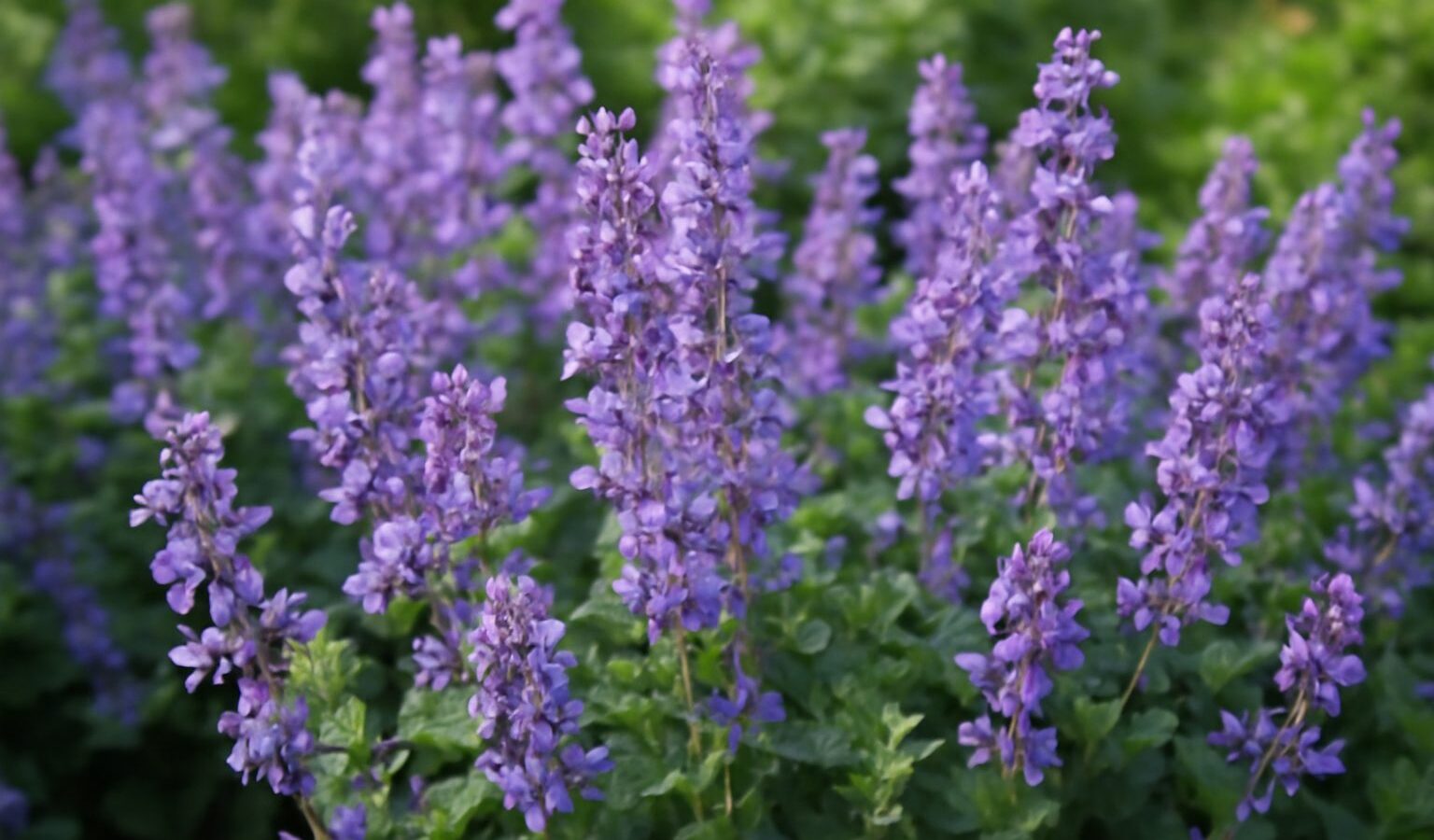
Catmint (Nepeta) is the plant to reach for when you want a long-blooming, drought-tough perennial that bees adore and deer ignore. Plant it in full sun and lean soil, give it room to sprawl, and shear it once or twice a season, and a single clump will throw soft mounds of gray-green foliage topped with lavender-blue flower spikes from late spring well into fall. It thrives in USDA zones 3 through 8, asks for almost no fertilizer, and shrugs off the heat and dry spells that flatten fussier perennials. This guide covers everything from choosing the right cultivar to spacing, watering, the famous “Chelsea chop,” dividing, and the handful of problems you might run into.
Key Takeaways
- Hardiness: USDA zones 3–8; full sun (6+ hours) for the densest, most floriferous mounds.
- Soil: Average to lean, sharply drained, neutral to slightly alkaline. Rich, wet soil makes it flop.
- Spacing: 18–24 inches for most cultivars; 30+ inches for big sprawlers like ‘Six Hills Giant’.
- Water: Weekly the first season to establish, then drought-tolerant — water only in extended dry spells.
- Pruning: Shear back by half after the first flush to trigger a second bloom; cut to the ground in late fall or early spring.
- Wildlife: A magnet for bees, hoverflies and hummingbirds; deer- and rabbit-resistant thanks to its aromatic foliage.
Catmint vs. Catnip: Know What You’re Planting
The names trip people up constantly. Nepeta cataria is true catnip — the weedy, white-flowered species that drives cats wild and reseeds aggressively. Ornamental catmint, the plant most gardeners want, is usually Nepeta × faassenii or one of its named cultivars. It has tidier mounds, showier blue-violet flowers, and a far weaker effect on cats. If you want a clean garden plant rather than a cat toy, buy a named ornamental cultivar, not generic “catnip” seed. Most ornamental hybrids are also sterile or nearly so, which is exactly why they bloom for months and never become a reseeding nuisance.
Best Cultivars for the Garden
- ‘Walker’s Low’: The Perennial Plant Association’s 2007 Plant of the Year. Despite the name it reaches 24–30 inches tall; lavender-blue, extremely long blooming.
- ‘Cat’s Pajamas’: A compact, well-behaved selection at 14–18 inches with flowers all the way down the stems, not just at the tips. Great for the front of a border.
- ‘Junior Walker’: A more compact, sterile version of ‘Walker’s Low’ at about 16 inches — no reseeding.
- ‘Six Hills Giant’: A 3-foot-tall, 3-foot-wide monster for the back of the border or a big drift along a path.
- ‘Purrsian Blue’: Tidy 14–18 inch mounds with periwinkle-blue flowers and red-purple calyxes; holds its shape well.
Where to Plant: Sun, Soil and Site
Catmint wants the brightest, hottest, driest spot you can give it. A minimum of six hours of direct sun is non-negotiable for tight, upright mounds; in too much shade the stems stretch, flowering thins out, and the whole plant flops open in the middle like a split seam. The one place catmint reliably fails is wet feet. It evolved in dry, rocky Mediterranean and Central Asian habitats, so soggy clay in winter will rot the crown faster than any pest. If your soil holds water, plant on a slope, in a raised bed, or amend the planting area generously with coarse grit, pea gravel or expanded shale to open up drainage.
Resist the urge to “improve” the soil with compost and fertilizer. Catmint grown lean stays compact and self-supporting; catmint grown rich grows lush, floppy, and far less floriferous. Aim for an average garden soil with a neutral to slightly alkaline pH (6.5–7.5). It tolerates poor, sandy and rocky ground beautifully, which makes it a natural for hell strips, gravel gardens, dry slopes and the sun-baked edges of patios and driveways.
How and When to Plant
Set out nursery transplants in spring after the last frost, or in early fall at least six weeks before your first frost so the roots establish before winter. Dig a hole as deep as the root ball and twice as wide. Loosen any circling roots, set the plant so the crown sits at or very slightly above the surrounding soil grade — never buried — and backfill with the native soil. Firm it in and water thoroughly to settle the roots.
Spacing depends on the cultivar’s mature width. Compact selections like ‘Cat’s Pajamas’ and ‘Purrsian Blue’ do well at 18 inches on center; ‘Walker’s Low’ and ‘Junior Walker’ want 24 inches; and ‘Six Hills Giant’ needs 30–36 inches so air can move through the planting. Good spacing isn’t just about looks — crowded catmint stays damp at the base and is far more likely to develop powdery mildew. Plant in drifts of three, five or seven for the river-of-blue effect that makes catmint such a workhorse edging plant. If you’re filling a long border, it pairs effortlessly with roses, salvia, yarrow and ornamental grasses; for more sun-loving partners, see our broader notes in the Plants & Flowers guides.
Watering and Feeding
During the first growing season, water deeply once a week whenever rain is short, aiming to wet the root zone 6–8 inches down rather than sprinkling the surface daily. Once established — usually by the second season — catmint is genuinely drought-tolerant and often needs no supplemental water at all except in prolonged heat waves. Overwatering is a far more common killer than underwatering. Water at the base in the morning so foliage dries quickly; overhead watering in the evening invites mildew.
Feeding is almost entirely unnecessary. A thin topdressing of compost in early spring is plenty. Skip high-nitrogen lawn fertilizers entirely — they produce floppy, leafy growth at the expense of flowers and turn a tidy mound into a sprawling mess. A light gravel or grit mulch keeps the crown dry and reflects heat without trapping moisture; avoid thick organic mulch piled against the stems.
Pruning: The Chelsea Chop and the Mid-Season Shear
Pruning is the single biggest factor in how good catmint looks. There are three cuts worth knowing.
The Chelsea chop (optional, late spring): Named for the timing of the Chelsea Flower Show in late May, this is cutting the whole clump back by about a third before it blooms. It delays flowering slightly but produces a shorter, sturdier, denser mound that’s much less likely to flop. Use it on tall cultivars or on any plant in a richer spot.
The mid-season shear (essential): When the first big flush of bloom fades and the plant starts to look tired and splay open — usually early to midsummer — shear the entire plant back by half with hedge shears. This single cut removes the spent flowers, tightens the mound back up, and triggers a strong second flush of bloom that carries the plant into fall. Don’t be timid; catmint rebounds fast.
The fall or spring cleanup: After hard frost you can cut the whole plant to within 2–3 inches of the ground, or leave the stems standing through winter for structure and to shelter overwintering beneficial insects, then cut back in early spring before new growth pushes. Either works; leaving stems up is slightly better for wildlife.
Dividing and Propagating
Catmint clumps slowly expand and may thin out or die in the center after three or four years. Divide in early spring as new growth emerges, or in early fall. Dig the whole clump, slice it into sections with a sharp spade or knife so each piece has both roots and several shoots, discard any dead central woody bits, and replant the vigorous outer divisions at the same depth. Division both rejuvenates an old plant and gives you free plants for the rest of the garden.
You can also take 3–4 inch softwood cuttings in late spring, strip the lower leaves, and root them in a gritty mix kept lightly moist; most root within a few weeks. Avoid trying to grow named hybrids from seed — many are sterile, and those that do set seed won’t come true to the parent.
Pests, Diseases and Wildlife Value
Catmint is refreshingly trouble-free. Its aromatic, slightly fuzzy foliage is unpalatable to deer and rabbits, making it one of the most reliable deer-resistant perennials you can plant — a useful trait you can lean on throughout a vulnerable border, much as we recommend for tough plantings in our Outdoor Living articles. The main disease is powdery mildew, which shows up as a white dusting on leaves in humid, crowded, or poorly drained conditions. The mid-season shear usually clears it up by removing affected growth and improving airflow; prevention through good spacing and morning base-watering is better than any spray.
On the wildlife side, catmint is a powerhouse. Its long bloom season makes it one of the best nectar sources in the garden for honeybees, native bumblebees, hoverflies, and small butterflies, and hummingbirds work the flowers too. Because it blooms so early and so long, it bridges the gap between spring bulbs and summer perennials when other nectar can be scarce. Plant it alongside coneflowers, bee balm and milkweed for a season-long pollinator buffet — the same approach we cover in our companion guide to growing milkweed for monarchs.
Frequently Asked Questions
Why is my catmint flopping open in the middle?
Flopping is almost always caused by too little sun, too much water, or overly rich soil — sometimes all three. Move it to full sun, stop fertilizing, ease back on watering, and do a Chelsea chop in late spring to build a sturdier mound. A hard mid-season shear after the first bloom will also tighten a sprawling plant right back up.
Will catmint attract cats to my garden?
Ornamental catmint (Nepeta × faassenii and its cultivars) has a much milder effect on cats than true catnip (N. cataria). Some cats ignore it entirely; a few will roll in it. If you want to avoid cats, choose ornamental cultivars rather than seed-grown catnip.
Does catmint come back every year?
Yes. It’s a hardy herbaceous perennial in zones 3–8. The top dies back in winter and fresh growth pushes from the crown each spring. Divide it every three to four years to keep clumps vigorous and prevent the center from dying out.
How do I get catmint to bloom again after the first flush?
Shear the entire plant back by half as soon as the first flush of flowers fades. This deadheading-by-hedge-shears removes spent blooms and forces a strong second flush that lasts into fall. You can repeat a lighter shear later in summer if needed.
Can I grow catmint in a container?
Yes, especially the compact cultivars like ‘Cat’s Pajamas’ or ‘Purrsian Blue’. Use a gritty, free-draining potting mix, a pot with drainage holes, and a sunny spot. Containers dry faster, so water when the top inch is dry, but never let the pot sit in a saucer of standing water.