

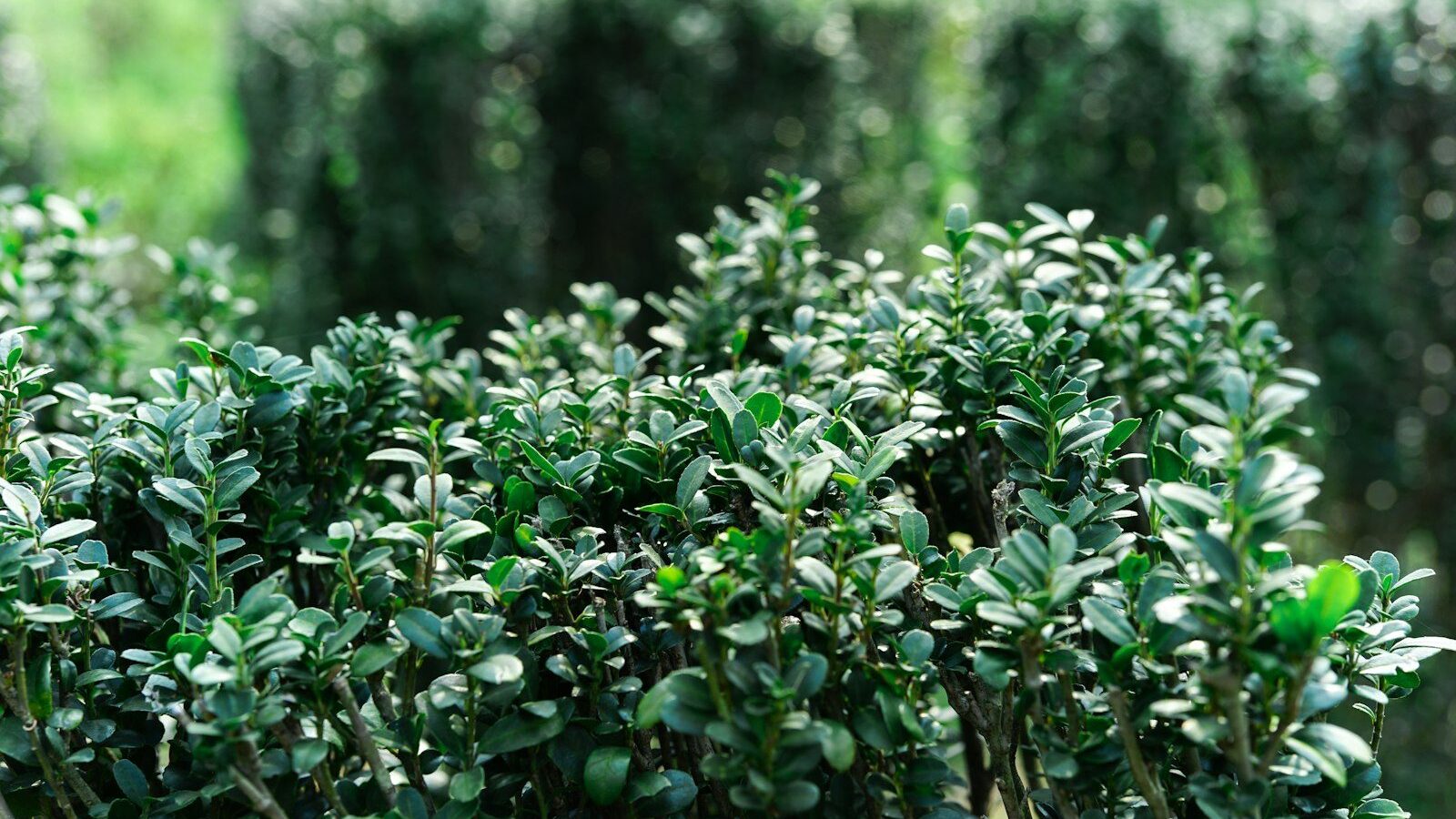
Boxwood is the backbone of formal gardens for good reason: it is evergreen, dense, slow to outgrow its space, and it tolerates shearing into hedges, balls, cones, and parterres better than almost any other shrub. Get the site, soil, and spacing right at planting, water it through its first two summers, and prune at the correct time of year, and a boxwood will hold its shape for decades with very little fuss. The two things that derail most boxwood plantings are poor drainage and a relatively new fungal disease called boxwood blight, and both are largely avoidable with the practices below.
Key Takeaways
- Boxwood is hardy in USDA zones 5–8 (some cultivars to zone 4); it wants part shade to full sun and sharply drained, slightly alkaline soil.
- Plant in spring or early fall, setting the root ball slightly high (crown 1 inch above grade) to keep the roots from sitting wet.
- Space hedge plants 18–24 inches apart on center; specimen shrubs need their mature width.
- Shear once in early summer (June) after the first flush hardens, with an optional light touch-up in late summer; never shear in late fall.
- Mulch 2–3 inches but keep it off the trunk, and avoid overhead watering to reduce the risk of boxwood blight.
Choosing the Right Boxwood for Your Zone
Most garden boxwoods fall into three groups, and matching the type to your climate and use is the most important decision you make. English boxwood (Buxus sempervirens ‘Suffruticosa’) is the slow, cloud-like dwarf famous in old Southern gardens; it is beautiful but the most blight-prone and the fussiest about drainage, hardy roughly in zones 6–8. Common or American boxwood (Buxus sempervirens) is larger and faster, good for tall hedges, and reliable in zones 5–8. Littleleaf and Korean boxwoods (Buxus microphylla and B. sinica var. insularis) are the cold-hardiest, with cultivars such as ‘Winter Gem,’ ‘Green Velvet,’ ‘Green Mountain,’ and ‘Wintergreen’ surviving zone 4 or 5 and resisting winter bronzing better than the English types.
If blight has appeared in your region, prioritize cultivars with documented tolerance — ‘NewGen Independence,’ ‘NewGen Freedom,’ and the older hybrid ‘Green Beauty’ hold up far better than English box. For a low, tidy edging hedge under 2 feet, ‘Green Velvet’ or ‘Wintergreen’ are dependable. For a taller 3–5 foot privacy or backdrop hedge, choose ‘Green Mountain’ (naturally upright and conical) or American boxwood.
Site and Soil Requirements
Boxwood grows in full sun to part shade, but in zones 7–8 it prefers a few hours of afternoon shade, which prevents both summer scorch and winter foliage burn. In the colder end of its range, a spot sheltered from harsh winter wind and sweeping morning sun reduces bronzing and dieback. The non-negotiable requirement is drainage. Boxwood roots are shallow and fibrous and will rot in soil that stays saturated, so avoid low spots and heavy clay that puddles after rain.
Aim for a soil pH between 6.5 and 7.2 — boxwood is one of the few shrubs that genuinely likes near-neutral to slightly alkaline soil, so it pairs poorly with acid-loving azaleas in the same bed unless you amend separately. Do a soil test before planting; if your soil is below 6.5, work in garden lime according to the test recommendation. If your soil is heavy clay, build a raised bed or berm and amend generously with compost and coarse grit to lift the root zone above standing water. Our guide on how to improve clay soil walks through the amendments that work and the ones that do not.
When and How to Plant Boxwood
The best planting windows are early spring, once the ground is workable, and early fall, roughly six weeks before your first hard frost so roots can establish before the ground freezes. Avoid planting in the heat of midsummer; if you must, you will need to water diligently. Container-grown boxwood transplants most easily, while balled-and-burlapped stock is common for larger specimens.
Step-by-Step Planting
- Dig a hole two to three times the width of the root ball but no deeper than the root ball is tall. A wide, shallow hole encourages the shallow root system to spread.
- Loosen the sides of the hole if your soil is compacted so roots can penetrate the surrounding native soil.
- Slide the plant from the pot and tease apart any circling roots; if the root ball is tightly bound, score the sides vertically with a knife in three or four places.
- Set the plant so the top of the root ball sits about 1 inch above the surrounding grade. Planting slightly high is the single best insurance against root rot.
- Backfill with the native soil you removed — do not create a rich, fluffy pocket of pure compost, which can hold water and discourage roots from venturing out. Firm it gently to remove air pockets.
- Water in thoroughly to settle the soil, then apply 2–3 inches of mulch in a ring, keeping it 2–3 inches away from the trunk to prevent rot and discourage rodents.
Spacing for Hedges
Spacing depends on how quickly you want the hedge to close and the mature size of the cultivar. For a low edging hedge of dwarf types like ‘Green Velvet,’ set plants 15–18 inches apart on center. For a standard 2–4 foot hedge, 18–24 inches is the sweet spot — close enough to knit together in a few seasons without crowding. For tall American boxwood hedges, allow 24–36 inches. Specimen plants and topiary balls should be spaced at their full mature width so air can circulate freely, which is also your best defense against fungal disease. A staggered double row will form a denser screen faster than a single line.
Watering and Feeding
For the first two growing seasons, water deeply once or twice a week in the absence of rain — roughly 1 inch of water per week, delivered at the base. Soaker hoses or drip irrigation are ideal because they keep the foliage dry; overhead sprinklers wet the leaves and create the humid conditions boxwood blight loves. Once established, boxwood is moderately drought tolerant but appreciates a deep soaking during prolonged dry spells, especially heading into winter, since well-hydrated plants resist winter desiccation far better.
Boxwood is not a heavy feeder. A light application of a balanced slow-release fertilizer or a top-dressing of compost in early spring is plenty. The classic recommendation is a fertilizer formulated for evergreens with a slight nitrogen lean, applied as new growth begins. Yellowing lower leaves often signal a magnesium deficiency, easily corrected with a dose of Epsom salts. Stop feeding by midsummer; late-season nitrogen pushes tender growth that gets killed by the first frost.
Pruning and Shearing
Boxwood tolerates shearing beautifully, but timing matters. The main shearing should happen in early summer, in June for most regions, after the spring flush of soft new growth has hardened off. Shearing then gives the plant the rest of the season to push a tidy second flush and harden it before winter. You can do a light corrective touch-up in late summer, but stop pruning by late August in cold zones so that new growth has time to mature before frost. Never shear in late fall or winter, when fresh cuts and tender regrowth are vulnerable to cold injury.
There is a craft to keeping a boxwood healthy through repeated shearing. Always shear so the bottom of the hedge is slightly wider than the top — a gently tapered, slightly battered profile — so sunlight reaches the lower branches and they do not thin out and go bare. Every year or two, supplement shearing with thinning: reach inside and remove a handful of crowded interior branches by hand. This opens the dense outer shell, lets light and air into the center, reduces the leaf litter where blight spores collect, and keeps the plant green to the core rather than hollow. For badly overgrown plants, boxwood responds well to hard renewal pruning in early spring — you can cut common and littleleaf types back by a third or more, and they will resprout from old wood.
Pests and Diseases
The headline threat is boxwood blight (Calonectria pseudonaviculata), a fungal disease that causes dark leaf spots, black streaking on stems, rapid defoliation, and can kill plants. It spreads on contaminated tools, clothing, and especially infected nursery stock, and it thrives in warm, humid, wet conditions. Prevention is everything: buy from reputable sources, quarantine new plants for a few weeks before placing them near established ones, water at the base only, space for airflow, clean fallen leaf litter, and disinfect shears between plants if blight is in your area. There is no cure once a plant is heavily infected — remove and bag affected plants, and do not compost the debris.
Boxwood leafminer is the most common insect pest; its larvae tunnel inside leaves, causing blistering and yellow blotches. Tolerable infestations can be ignored, but heavy ones are treated with a systemic insecticide applied as adults emerge in late spring. Boxwood psyllid causes cupped leaves but is largely cosmetic. Spider mites can appear in hot, dry, dusty conditions — a strong jet of water or insecticidal soap controls them. Volutella blight, an older fungal problem, causes branch dieback and is managed by removing affected wood and improving airflow. Many of these problems trace back to a stressed, overcrowded, poorly drained planting, so the cultural practices above do double duty as pest prevention.
Winter Protection
In colder zones, the biggest winter risk is not freezing but desiccation: foliage loses moisture on sunny, windy winter days while the frozen ground prevents the roots from replacing it, leaving leaves bronzed or brown. To prevent it, water deeply in late fall before the ground freezes, maintain a good mulch layer to moderate soil temperature, and consider a burlap windbreak (not wrapped tightly against the foliage) on the south and west sides of exposed plants. An anti-desiccant spray applied in late fall can help in the harshest sites. Knock heavy snow off the branches gently to prevent splaying, but leave a light snow cover in place — it insulates. For more on protecting evergreen shrubs and seasonal yard tasks, see our fall lawn care guide and browse the full Plants & Flowers library.
Frequently Asked Questions
How fast does boxwood grow?
Slowly. Dwarf English boxwood adds only 1–2 inches a year, while faster hybrids like ‘Green Mountain’ or American boxwood put on 3–6 inches annually. Expect 3–5 years for a hedge planted at 18–24 inch spacing to fully knit together.
How often should I prune boxwood?
Once a year is enough for most plantings — a single shearing in early summer after the spring flush hardens, with an optional light touch-up in late summer. Add interior thinning by hand every year or two to keep the center open and healthy.
Why is my boxwood turning orange or bronze?
Bronze or orange winter foliage is usually winter desiccation from cold wind and sun on frozen soil, not disease. It often greens back up in spring. Yellowing in the growing season can signal poor drainage, root rot, or a magnesium deficiency.
Can boxwood grow in shade?
Yes — boxwood handles part shade well and even appreciates afternoon shade in hot climates. In deep, full shade it grows thin and leggy, so aim for at least dappled light or a few hours of direct sun.
How do I prevent boxwood blight?
Buy clean stock and quarantine new plants, choose tolerant cultivars, space for airflow, water only at the base, remove fallen leaf litter, and disinfect tools between plants. There is no cure once a plant is heavily infected, so prevention is the entire strategy.