

Drought-tolerant landscaping isn’t about gravel and a single sad cactus — done well, it’s a lush, colorful, low-maintenance yard that shrugs off water restrictions and slashes your water bill. The principles come from xeriscaping: build healthy soil, group plants by water need, choose species adapted to dry conditions, and mulch heavily to lock moisture in. This guide lays out a practical design approach plus specific drought-tolerant plants by region and the irrigation and material choices that make a water-wise landscape actually work — and look good doing it.
Part of our Landscaping & Hardscaping guide →
In this guide
Key Takeaways
- Xeriscaping rests on seven ideas: good design, soil prep, smart hydrozoning, efficient irrigation, mulch, drought-tolerant plants, and right-sized turf.
- Group plants by water need (“hydrozones”) so you never overwater the tough ones to keep the thirsty ones alive.
- Replace high-water lawn with native grasses, groundcovers, gravel paths and planted beds.
- A 3-inch mulch layer can cut soil moisture loss dramatically and suppress weeds.
- Drip irrigation on a timer delivers water straight to roots and wastes far less than spray heads.
What Drought-Tolerant Landscaping Really Means
“Xeriscape” comes from the Greek xeros (dry) plus landscape — water-conserving design, not “zero-scape” rock and concrete. The goal is a landscape that thrives on natural rainfall plus minimal supplemental water, by working with your climate instead of against it. The classic framework has seven principles: thoughtful planning and design; improving the soil; limiting turf to where it earns its keep; choosing low-water plants; mulching; irrigating efficiently; and maintaining the system. Get those right and you can cut landscape water use by half or more while keeping a yard that’s full of texture and color.
Start With Hydrozoning
The single most useful design move is grouping plants by water need, called hydrozoning. Put thirstier plants together in one zone — ideally near the house, a downspout, or a spot you’ll see and tend often — and the toughest, lowest-water plants in another. This way you never have to overwater an entire bed just to satisfy its neediest member. A typical plan has three zones: a small high-water “oasis” near entries or patios, a moderate-water transition zone, and a large low-water or no-irrigation zone at the edges. Map your yard’s sun, shade, slope and existing drainage first — south- and west-facing slopes dry out fastest and suit the toughest plants.
Build the Soil First
Counterintuitively, drought tolerance starts with soil that holds moisture and lets roots go deep. Work 2–3 inches of compost into planting areas to improve both water retention in sandy soil and drainage in clay. Deep, well-structured soil lets roots grow down where moisture lasts longer, so plants ride out dry spells. If you’re dealing with dense, slow-draining ground, our guide on how to improve clay soil walks through the amendments that matter. One caveat: many true desert and Mediterranean natives actually prefer lean, fast-draining soil, so match your prep to your plant palette.
Drought-Tolerant Plants by Region
The best drought-tolerant plant is one native or adapted to your area. Here are reliable performers grouped by category, with regional notes.
Perennials & Flowers
- Lavender (zones 5–9) — fragrant, evergreen, loves lean dry soil and full sun.
- Russian sage (zones 4–9) — airy silver-blue spires, blooms through heat.
- Yarrow (zones 3–9) — flat flower clusters, native, attracts pollinators.
- Black-eyed Susan and purple coneflower (Echinacea) (zones 3–9) — prairie natives, tough and long-blooming.
- Sedum ‘Autumn Joy’ and other stonecrops (zones 3–9) — succulent leaves store water, late-season color.
- Salvia and penstemon (zones 4–9, species vary) — heat-loving, hummingbird magnets.
- Blanket flower (Gaillardia) (zones 3–10) — red-and-gold daisies all summer.
Shrubs
- Manzanita and ceanothus (California lilac) — Western native shrubs, evergreen, very low water once established.
- Texas sage (Leucophyllum) — silvery foliage, purple blooms after rain, ideal for the Southwest.
- Rosemary — evergreen, edible, thrives in poor dry soil (zones 7–10).
- Juniper — bulletproof evergreen for screening and groundcover across most zones.
- Smokebush and butterfly bush — colorful, deep-rooted, tolerate dry spells.
Grasses & Groundcovers
- Blue fescue, little bluestem, and switchgrass — ornamental grasses with movement and winter interest.
- Buffalo grass and blue grama — native low-water lawn alternatives for the Plains and West.
- Creeping thyme and ice plant (Delosperma) — tough flowering groundcovers for paths and slopes.
Succulents & Accents
- Agave, yucca and red yucca (Hesperaloe) — bold architectural focal points for hot, dry zones.
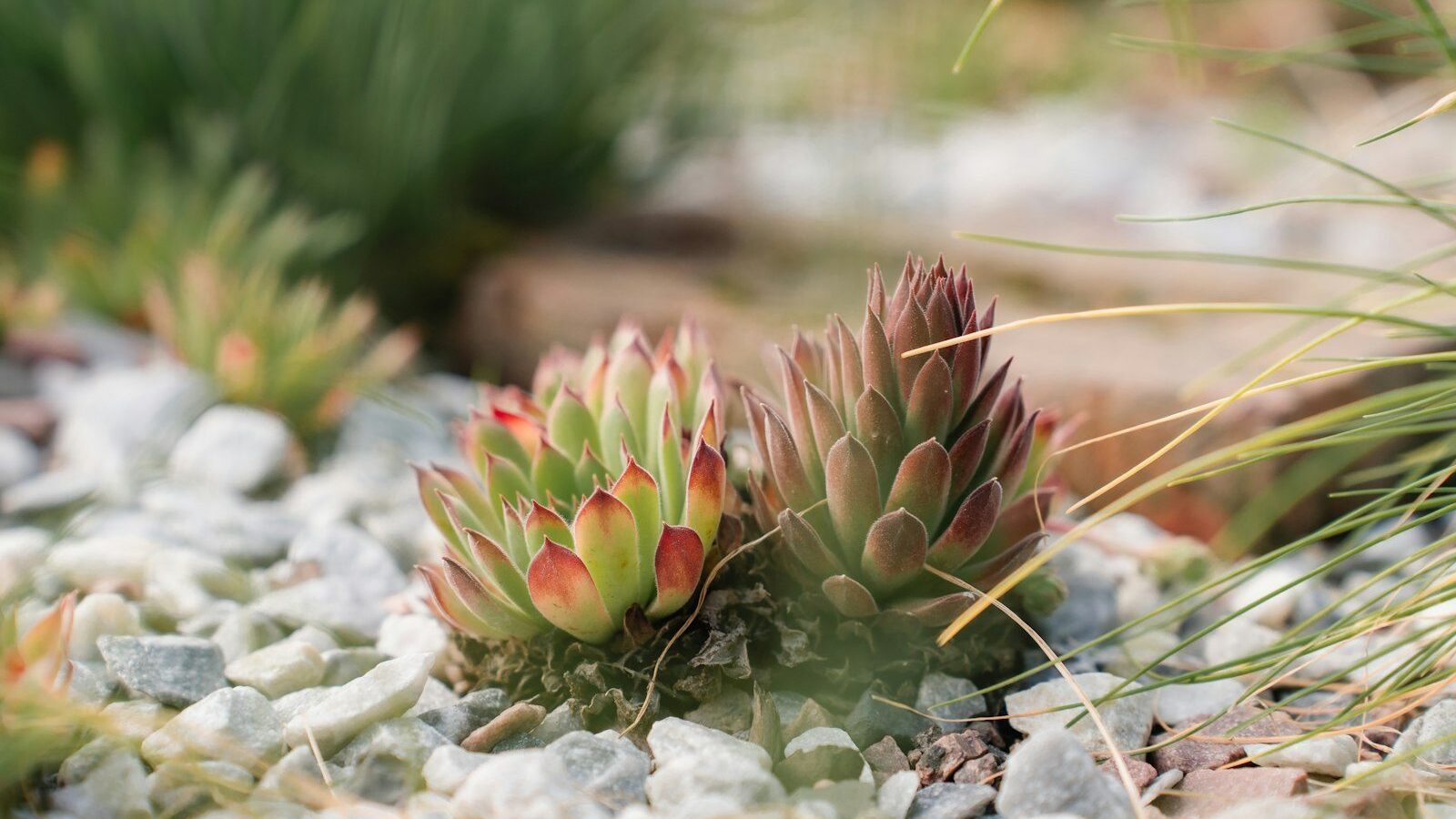
- Hardy sedums and hens-and-chicks (Sempervivum) — cold-hardy succulents for northern xeriscapes.
Always confirm a plant’s USDA hardiness zone and check your state’s invasive-species list before planting (some butterfly bush cultivars, for example, are regulated in certain states).
Rethink the Lawn
Turf is usually the thirstiest part of a yard. You don’t have to eliminate it — keep a modest patch where you actually use it, like a play or pet area — but shrink it and surround it with low-water beds. Where you remove lawn, replace it with planted beds, gravel or decomposed-granite paths, permeable patios, or a native low-water grass like buffalo grass that needs mowing only a few times a year. Defining bed edges with steel or stone edging keeps the design crisp and stops mulch and gravel from migrating.
Mulch Heavily
Mulch is the workhorse of any water-wise landscape — it shades the soil, slows evaporation, moderates soil temperature and suppresses weeds that would otherwise steal water. Apply a 2–3 inch layer of organic mulch (shredded bark, wood chips) around perennials and shrubs, keeping it a few inches off plant stems and trunks. In hot, arid zones, inorganic mulch like gravel or crushed rock works beautifully around succulents and natives and never needs replacing. Not sure how much you’ll need to cover your beds? Our mulch calculator and guide does the math by area and depth.
Irrigate Efficiently
How you water matters as much as how much. Spray heads lose a lot of water to wind and evaporation; drip irrigation and soaker hoses put water right at the root zone with very little waste, and they’re easy to run on a timer. Water deeply but infrequently to train roots downward — a few longer soaks per week beat daily sprinkles. Water in early morning to minimize evaporation. A rain sensor or smart controller that skips cycles after rain saves even more. Capturing roof runoff in rain barrels or directing downspouts into your higher-water oasis zone stretches free water further. Most drought-tolerant plants need regular water only for the first year while they establish; after that, many get by on rainfall alone.
Add Hardscape and Structure
Hardscape uses zero water and adds year-round structure. Gravel courtyards, flagstone patios, dry creek beds, boulders and decomposed-granite paths break up planting areas, handle foot traffic, and give the eye places to rest. A dry creek bed does double duty as a drainage channel during the rare heavy rain. Balance hard surfaces with planting so the yard reads as a garden, not a parking lot — roughly a third hardscape to two-thirds planting is a comfortable ratio for most spaces.
Put these pieces together — smart zones, deep soil, the right plants, generous mulch and drip irrigation — and a drought-tolerant landscape becomes lower-maintenance and lower-cost every year as plants mature and need less from you. For more water-wise and outdoor projects, explore the Outdoor Living hub.
Frequently Asked Questions
What is the difference between xeriscaping and zero-scaping?
Xeriscaping is water-conserving landscaping that uses low-water plants, good soil and efficient irrigation to create a lush, low-water garden. “Zero-scaping” (often a misreading of xeriscape) usually refers to bare rock and gravel with few plants. True xeriscaping is green and full of life — it just uses far less water.
What are the best low-water plants?
Reliable choices include lavender, Russian sage, yarrow, coneflower, sedum, salvia and ornamental grasses, plus shrubs like rosemary, juniper and Texas sage, and succulents like agave and yucca. The best plant is one native or adapted to your specific region and hardiness zone.
How much water does a drought-tolerant garden need?
Most drought-tolerant plants need regular water only during their first growing season while roots establish. After that, many survive on rainfall alone or with occasional deep soaks during extended dry spells. Grouping plants by water need lets you irrigate efficiently.
What kind of mulch is best for a dry climate?
Both work. Organic mulch (shredded bark, wood chips) at 2–3 inches retains moisture and feeds the soil as it breaks down. In hot, arid zones, inorganic gravel or crushed rock pairs well with succulents and natives and never needs replacing. Keep any mulch a few inches off stems and trunks.
Can I have a lawn in a drought-tolerant yard?
Yes — just keep it small and put it where you’ll use it. Shrink turf to a usable patch and replace the rest with planted beds, gravel paths or permeable hardscape. Native low-water grasses like buffalo grass or blue grama are good lawn alternatives that need far less water and mowing.