

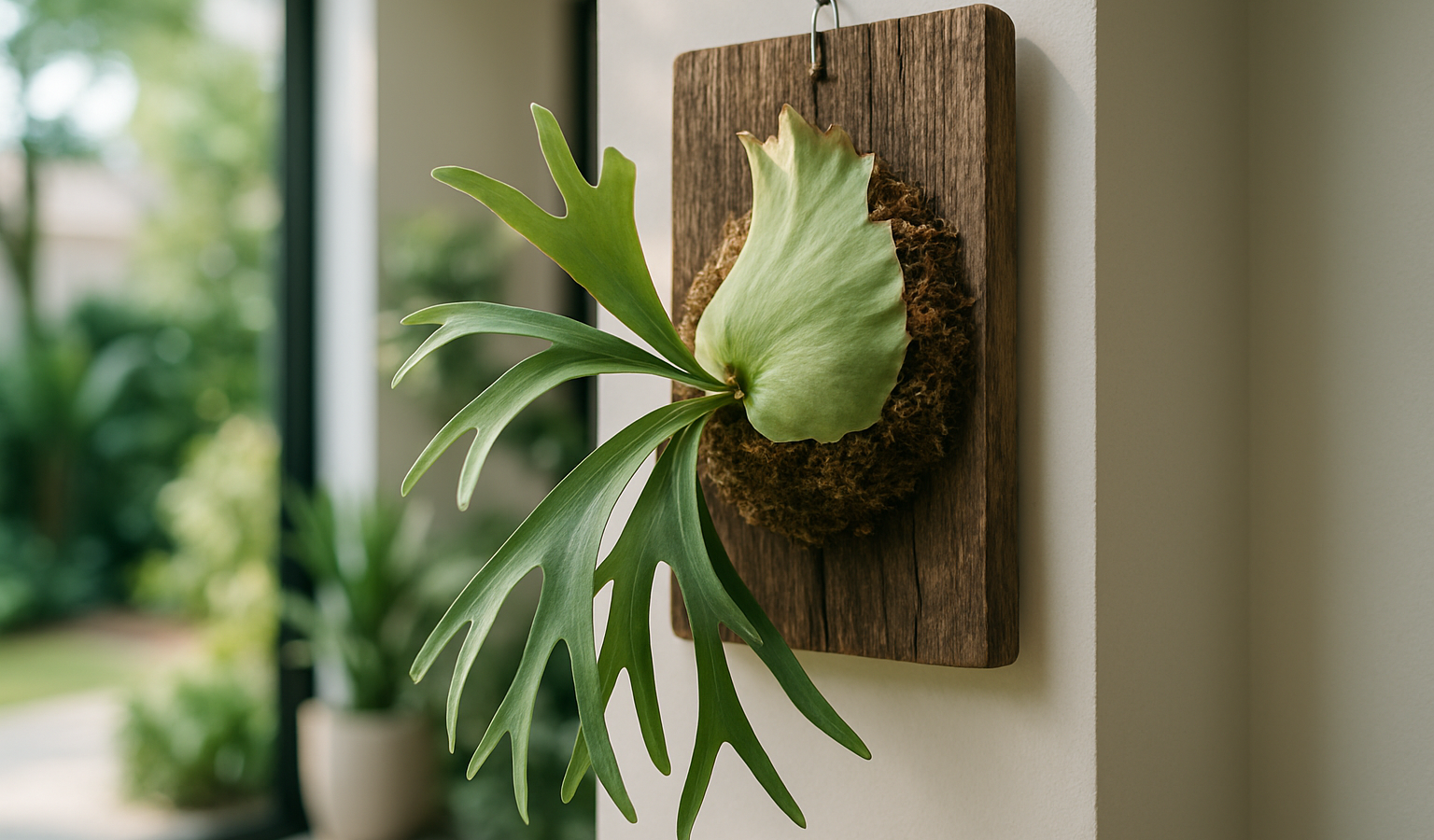
Staghorn fern (Platycerium species) is unlike any other fern you might grow: it is an epiphyte, a plant that in the wild grows not in soil but anchored to tree trunks and branches, and it is usually displayed mounted on a board or in a basket, fixed to a wall like living art. Its common name comes from the dramatic, antler-like fertile fronds that fork and arch outward, while a flat, shield-shaped frond clasps the mount behind them. Because it grows on a tree rather than in the ground, staghorn fern breaks all the usual fern rules, no potting soil, watered by soaking rather than by keeping a pot moist, and that is exactly what makes it such a striking and rewarding plant once you understand its needs. This guide covers mounting a staghorn fern, the two distinct types of fronds and why you must never remove them, the bright indirect light it wants, soak watering, humidity, and feeding.
Key Takeaways
- Staghorn fern is an epiphyte, grown mounted on a board or in a basket, not in potting soil.
- It has two frond types: antler-like fertile fronds and flat shield (basal) fronds, never remove either.
- Water by soaking the mount until saturated, then letting it drain and nearly dry before soaking again.
- Give it bright indirect light and warm, humid conditions; most species are not frost-hardy.
- It is an indoor or patio plant in most of the US, summered outside in shade and brought in before frost.
About Staghorn Fern
Staghorn ferns are tropical and subtropical epiphytes from the genus Platycerium, native to rainforests of Asia, Africa, Australia, and South America, where they perch on trees and gather moisture and nutrients from the air, rain, and debris that collects around their roots. The most common species in cultivation is Platycerium bifurcatum, which is among the easiest and most forgiving. Because they are tropical, most staghorns are not frost-hardy and are grown as houseplants across most of the United States, moved outdoors to a shady spot only for the warm months. This epiphytic, mounted lifestyle sets the staghorn completely apart from hardy garden ferns like ostrich or autumn fern, which grow in soil; the staghorn is closer in care to an air plant or orchid, and like those plants it makes a dramatic specimen in the indoor and patio plantings featured across the Plants & Flowers hub.
The Two Types of Fronds
Understanding a staghorn’s two frond types is the single most important thing for keeping one alive. The showy, antler-like fronds that fork and arch outward are the fertile (or foliar) fronds; they are what give the plant its name and its sculptural look, and they bear the spore patches on their undersides. Behind and beneath them sits a second, very different kind of frond: the flat, rounded shield frond, also called the basal or sterile frond, which clasps the mount and protects the root ball.
It is completely normal, and not a problem, for the shield fronds to turn brown and papery as they age; they are meant to. In nature these brown shields build up in layers, catching water, leaves, and debris to feed the plant, so you must never pull them off, even when they look dead. Removing them exposes the roots and harms the plant. Likewise, do not cut off the antler fronds unless one is fully dead and shriveled. Leave both frond types in place and let the plant manage its own appearance; the layered brown shields are a sign of a healthy, maturing staghorn.
Mounting a Staghorn Fern
Because staghorns are epiphytes, they are not grown in pots of soil but mounted on a backing that mimics a tree. The classic method is a wooden board: lay a pad of sphagnum moss on the board, set the fern’s root ball against it with the shield frond facing the board, and secure the whole root mass with fishing line, soft wire, or pantyhose strips wrapped around the moss and board until it is held firmly. Over time the plant’s roots and shield fronds grip the mount and the ties can be loosened or removed. Alternatively, grow it in a wire hanging basket lined with sphagnum and a loose, fast-draining epiphyte mix of bark, perlite, and moss.
Whatever the mount, the priorities are sharp drainage and air around the roots; staghorns rot if their roots stay soggy. Hang the mounted fern where air circulates, and remember it will get heavier and need a secure fixing as it grows. A young plant in a small pot can also simply be grown on for a season before mounting. Mounting is the part that intimidates people, but it is straightforward, and once done the plant largely cares for itself.
Light, Watering, and Humidity
Staghorn fern wants bright, indirect light, the kind it would get filtered through a rainforest canopy. Indoors, a spot near an east or north window, or back from a brighter window, is ideal; outdoors in summer, hang it in bright shade. Direct, hot sun scorches the fronds, while deep shade leaves the plant weak and slow. The healthy waxy or fuzzy coating on the antler fronds is natural and should not be wiped off, as it helps the plant conserve water.
Watering is done by soaking, not by keeping soil moist. The best method is to take the whole mount down and submerge or thoroughly drench the root ball and moss in water until saturated, let it drain completely, then rehang it. Wait until the mount and moss are nearly dry before soaking again; how often depends on heat and humidity, perhaps weekly in warm, dry conditions and less in cool or humid ones. The classic mistake is overwatering, which rots the roots, so always let it approach dryness between soaks. Because they are tropical, staghorns also appreciate humidity; misting helps, and they thrive in bright, warm, humid spaces like a bathroom. Feed occasionally during the growing season with a diluted balanced fertilizer applied to the soak water or sprayed on the fronds, no more than monthly.
Common Problems and Pups
Most staghorn troubles trace back to water. Blackened, mushy bases or rotting fronds signal overwatering and poor drainage, so water less and ensure air flows around the roots. Wilted, gray-brown, crispy antler fronds signal underwatering or air too dry, so soak more often and raise humidity. Brown shield fronds, as noted, are normal and not a problem; only the antler fronds going limp and brown indicate trouble. Indoors, staghorns can occasionally pick up scale or mealybugs, which you can wipe off or treat gently. Avoid cold, as most species suffer below about 50°F and are killed by frost, so bring outdoor plants in well before the first cold nights.
A happy, mature staghorn produces offsets known as pups around its base, which you can carefully detach with a portion of root and shield frond and mount separately to make new plants, or leave in place to build into an impressive multi-headed colony. With the right bright indirect light, soak watering, and warmth, staghorn fern is a long-lived, low-maintenance living sculpture. For another epiphytic fern that breaks the soil rules, see the rosette-forming bird’s nest fern, an easier indoor companion to the staghorn.
Frequently Asked Questions
How do you water a mounted staghorn fern?
By soaking, not by keeping soil moist. Take the mount down and submerge or thoroughly drench the root ball and moss until saturated, let it drain completely, then rehang it. Wait until the mount and moss are nearly dry before soaking again, often about weekly in warm, dry conditions. Overwatering and soggy roots are the most common way to kill a staghorn.
Why is my staghorn fern’s bottom frond turning brown?
That is the flat shield (basal) frond, and it is completely normal for it to brown and go papery as it ages, that is what it is meant to do. In nature these brown shields layer up to catch water and debris and feed the plant. Never pull them off, even when they look dead. Only browning, limp antler fronds indicate a real problem.
Do staghorn ferns need to be mounted?
They grow best mounted, because they are epiphytes that naturally live on trees rather than in soil. Mount the root ball on a board with sphagnum moss, secured with line or wire, or grow it in a wire basket with a loose, fast-draining epiphyte mix. The key in any method is sharp drainage and air around the roots, which rot if kept soggy.
How much light does a staghorn fern need?
Bright, indirect light, the kind filtered through a rainforest canopy. Indoors, a spot near an east or north window or back from a brighter one is ideal; outdoors in summer, hang it in bright shade. Hot, direct sun scorches the fronds, while deep shade weakens the plant and slows its growth, so aim for bright but filtered light.
Can staghorn ferns grow outdoors?
Only seasonally in most of the US. Most staghorn species are tropical and not frost-hardy, suffering below about 50°F, so they are grown as houseplants and moved outdoors to a shady, humid spot only for the warm months, then brought back inside well before the first cold nights. In frost-free climates they can stay outdoors year-round.