

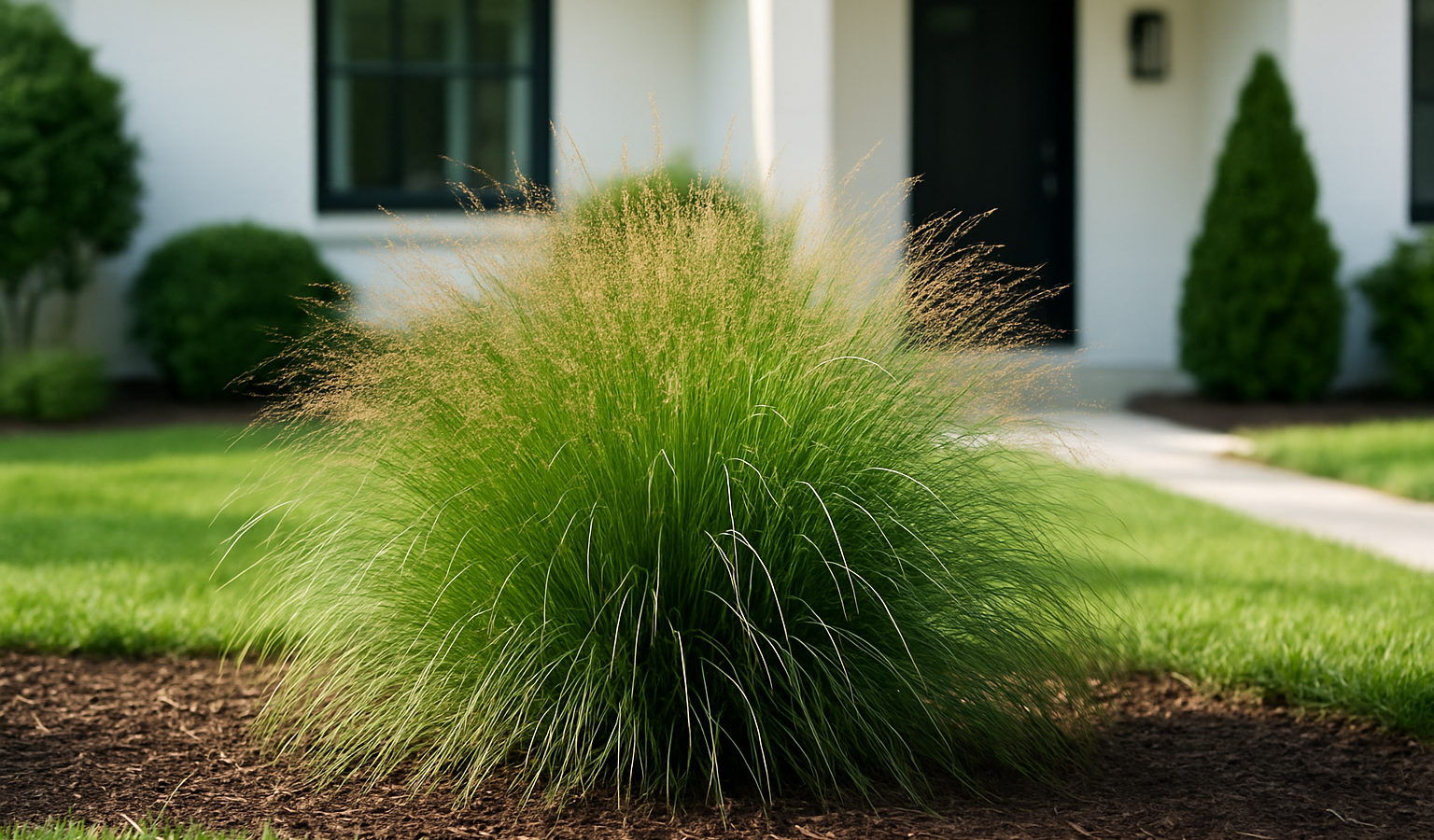
Prairie dropseed (Sporobolus heterolepis) is arguably the most refined of all the native warm-season bunchgrasses, and once established it is about as low-maintenance as a plant gets. Its emerald-green, hair-like blades arch outward into a soft, symmetrical fountain mound, turning gold, orange, and copper in fall before fading to a light tan that stands through winter. Its signature trick comes in late summer, when airy flower panicles release a distinctive fragrance that people variously describe as coriander, cilantro, or warm buttered popcorn. Give it sun and decent drainage, be patient while it wakes up slowly in spring, and it will be a long-lived anchor in the garden for decades.
Key Takeaways
- Light: Full sun is best; tolerates light shade but grows floppier and blooms less.
- Zones: USDA 3 to 9, a tough native warm-season grass.
- Soil and water: Dry to medium, well-drained soil. Drought tolerant once established and fine in lean or clay soils.
- Size: A foliage mound around 18 inches, rising to 2 to 3 feet with flower stalks.
- Fragrance: Late-summer flowers smell of coriander, cilantro, or buttered popcorn, a real selling point.
- Spacing: 24 to 36 inches apart for the fountain effect or massing; cut back to a few inches in late winter.
Where Prairie Dropseed Thrives
This is a true North American prairie native, hardy across USDA zones 3 through 9, which makes it one of the most cold-tolerant ornamental grasses you can plant while still performing in the South. It evolved on open tallgrass prairie, so it wants full sun, at least six hours a day and ideally more. It will tolerate light shade, but in too little sun the elegant fountain habit loosens, the clump flops open, and flowering drops off. Plant it in the brightest spot you have for the best form and the most fragrant blooms.
Soil and Drainage
Prairie dropseed is unfussy about soil as long as it drains. It performs in dry to medium-moisture ground and actually prefers lean soil to rich, since overly fertile or constantly moist conditions encourage floppy growth. It handles clay better than many native grasses, tolerates rocky and gravelly sites, and shrugs off summer drought once its deep roots are established. The one thing it will not abide is soggy, poorly drained ground, where the crown can rot. Do not amend the planting hole with rich compost and do not fertilize; this is a plant that thrives on a little neglect.
Planting and Spacing
Plant prairie dropseed in spring once the soil has warmed, which suits its warm-season nature and gives it a full season to root before winter. Set plants at the same depth they grew in the pot and water in well. Spacing depends on the look you want. For specimens where each plant shows its full fountain form, space 30 to 36 inches apart. For a flowing mass planting or a low informal edge, tighten to 24 inches so the mounds touch and read as a continuous wave of fine texture. Massed along a path or driveway, the effect of dozens of identical fountains is one of the great sights in prairie-style design.
Water regularly through the first growing season to establish the root system, then back off. After the first year, established plants rarely need supplemental water except in extreme drought. This slow-to-establish, slow-growing habit is the trade-off for an exceptionally long-lived, durable plant. Individual clumps can persist and improve for fifteen or twenty years, so it pays to site them where you want them permanently.
Be Patient in Spring
Like other warm-season grasses, prairie dropseed emerges late. It can sit dormant and bare well into mid or late spring while cool-season plants around it are already growing. Do not assume it has died and do not dig it out. Once the soil warms in earnest it puts on its fine green growth quickly. Knowing this in advance saves a lot of needless worry and the occasional accidental excavation of a perfectly healthy plant.
Seasonal Interest and the Famous Fragrance
Prairie dropseed earns its place through a full year of changing interest. In summer it is a tidy, emerald-green fountain of thread-fine blades, finer in texture than almost any other grass. In late summer, slender flower stalks rise a foot or more above the foliage carrying delicate, open panicles, and these are the source of the celebrated scent. On a warm, still evening a planting in bloom perfumes the air with notes of coriander and warm popcorn, an unusual and memorable feature that alone justifies planting it near a patio or walkway. In autumn the whole clump shifts to glowing gold, orange, and copper, then mellows to a soft light tan that holds its form and adds quiet structure all winter, especially when rimmed with frost or snow.
Cut-Back Timing and Maintenance
Maintenance is minimal. The single annual task is to cut the clump back to within a few inches of the ground in late winter or early spring, before new growth begins. Leave the tan winter foliage standing through the cold months for its looks and the cover it gives wildlife, then shear it off in February or March depending on your climate. Hand pruners work for one plant; hedge shears speed up a mass. After cutting back, simply wait for the late spring emergence. There is no need to fertilize, stake, or deadhead, and unlike many grasses, prairie dropseed rarely needs division, it is slow and clump-forming and stays well-behaved for years.
If you do want to propagate it or rejuvenate a very old clump, divide in spring as growth begins. Be aware that divisions establish slowly, so most gardeners simply buy additional plants when they want more. It also does not self-sow aggressively, so it will not become a weedy nuisance.
Using Prairie Dropseed in Containers and Tough Sites
Because it is so drought tolerant and forgiving of lean soil, prairie dropseed handles spots where fussier plants struggle. It is a strong choice for hot, dry hell strips between sidewalk and street, for gravel gardens, and for sunny slopes where its deep roots help hold soil and reduce erosion. It also performs in large containers, provided the pot drains freely and you use a gritty, free-draining mix rather than a rich, moisture-holding potting soil. In a container give it the largest pot you reasonably can so the root system has room, water more often than you would in the ground since pots dry out faster, and move it to a sheltered spot or wrap the container in cold-winter zones, because roots in pots are far more exposed to freezing than roots in open ground.
One detail worth planning around: prairie dropseed looks its best as a repeated element rather than a lone specimen lost in a busy border. Three, five, or a dozen plants set in a drift read as a deliberate ribbon of fine texture, while a single clump can disappear among coarser neighbors. If budget allows, buy in odd-numbered groups and space them to merge over two or three seasons into a flowing sweep.
Wildlife Value and Pests
As a native prairie grass, prairie dropseed pulls real ecological weight. Its seeds feed songbirds and ground-feeding birds into fall and winter, and the dense clumps provide cover and nesting material for wildlife. It serves as a larval host for several native skipper butterflies and supports the broader prairie insect community. On the garden-management side it is refreshingly trouble-free: it is notably deer resistant, rabbits leave it alone, and it has no significant pest or disease problems. The only real failure mode is rot in wet, poorly drained soil, which proper siting prevents entirely.
Varieties and Design Companions
The straight species is excellent and what most gardeners plant, but a few selections exist. ‘Tara’ is the best known, a more compact and upright form bred from northern seed, staying tighter and more vertical than the species, which makes it useful in smaller beds or where you want a neater, more architectural shape.
In the garden, prairie dropseed is the classic matrix and edging grass of prairie and meadow plantings. It mixes beautifully with native perennials like coneflower, black-eyed Susan, and aster, and pairs naturally with other warm-season natives such as little bluestem, with the dropseed’s fine fountains contrasting against the bluestem’s upright color. For a softer, lower companion grass in similar sunny conditions, consider weaving in some sedge at the shadier edges of the bed. Browse the rest of our grass and perennial growing guides on the plants and flowers hub to round out a low-maintenance native planting.
Frequently Asked Questions
What does prairie dropseed smell like?
Its late-summer flowers give off a distinctive fragrance most people describe as coriander or cilantro, with notes of warm buttered popcorn. The scent is strongest on warm, still evenings, which is why it is often planted near patios and paths.
How far apart should I plant prairie dropseed?
Space plants 30 to 36 inches apart to show each clump as an individual fountain, or 24 inches apart for a flowing mass planting or edge where the mounds touch. It is slow-growing, so closer spacing fills in faster.
Why hasn’t my prairie dropseed come up in spring?
It is a warm-season grass that emerges late, often not until mid to late spring after the soil warms. Bare ground in early spring is normal, so be patient and do not dig it out assuming it died.
Is prairie dropseed deer resistant?
Yes, it is reliably deer resistant and rabbits generally ignore it as well. It also has no significant pests or diseases, making it one of the most carefree native grasses available.
Does prairie dropseed need full sun?
It grows best in full sun, at least six hours a day, which gives it the tightest fountain form and the most flowers. It tolerates light shade but tends to flop open and bloom less in lower light.