

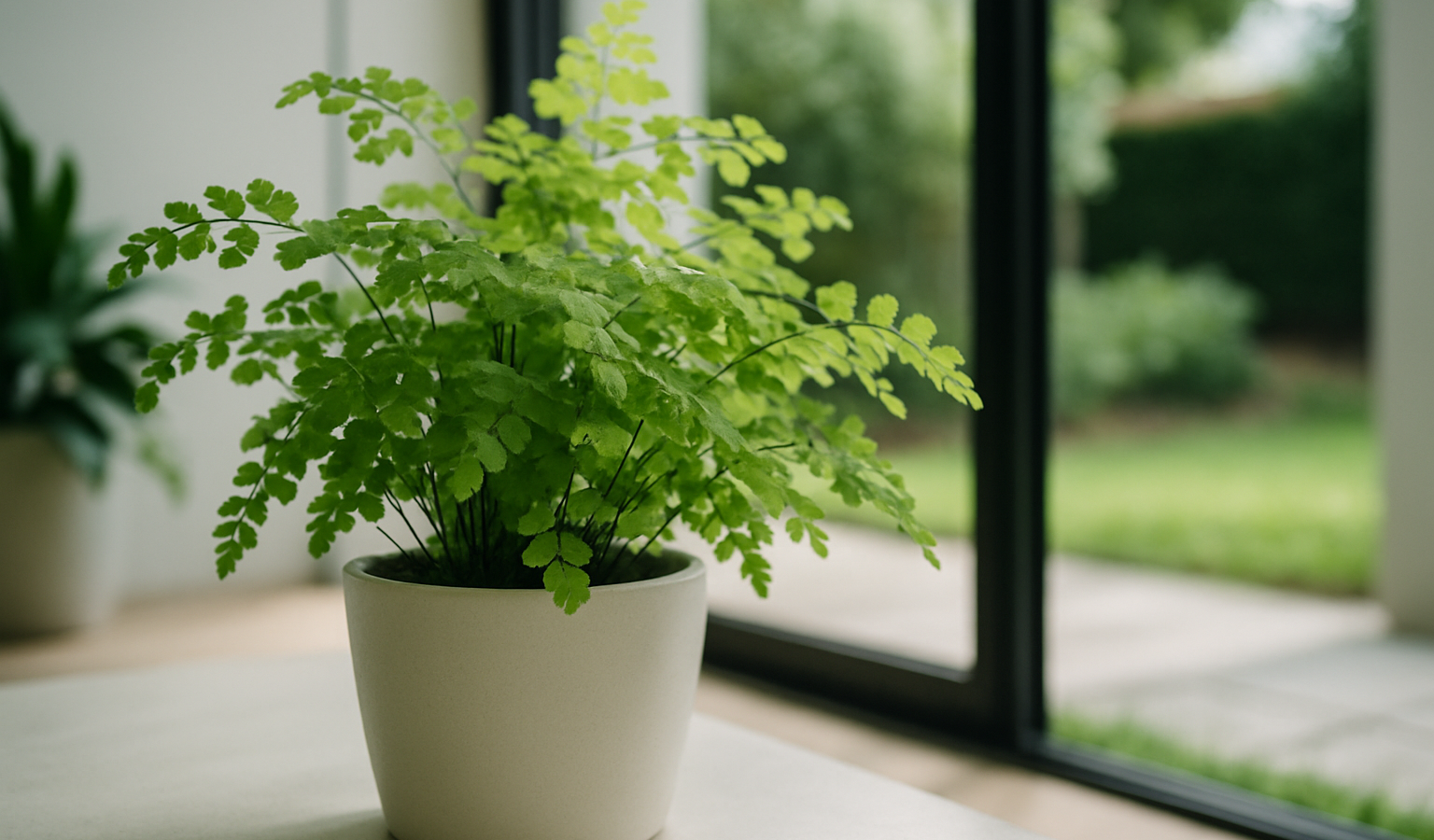
Maidenhair fern (Adiantum species) is the most delicate and graceful of the ferns, instantly recognizable by its fan-shaped, fluttering leaflets held on wiry, glossy black stems so fine they look almost like hair. The whole plant has an airy, lacy quality that no other fern quite matches, which is exactly why gardeners love it and why it has a reputation for being temperamental. The truth is that maidenhair is not difficult so much as demanding about one thing: it must never dry out. Get its humidity and moisture right and it is a long-lived, beautiful plant, equally at home as a houseplant in a bright bathroom, a terrarium specimen, or, with the right hardy species, a star of a sheltered, moist shade garden. This guide covers growing maidenhair fern indoors and outdoors, the humidity and watering it needs, the right light and soil, potting, and how to nurse it back if it crisps up.
Key Takeaways
- Maidenhair fern is a delicate fern with black wiry stems and lacy, fan-shaped leaflets, grown indoors or in shade.
- It demands high humidity and must never dry out; dry air and dry soil are what kill it.
- Give it bright indirect light or dappled shade, never direct sun, which scorches the fine foliage.
- Keep the soil evenly moist at all times in a rich, well-drained, peaty or humus-based mix.
- Hardy species like Adiantum pedatum survive USDA zones 3 to 8 outdoors; many tropical types are houseplants only.
About Maidenhair Fern
Maidenhair is a large genus of ferns found in moist, sheltered spots worldwide, from tropical rainforests to temperate woodlands, often clinging near waterfalls and streambanks where the air stays humid. Garden and houseplant types fall into two broad groups. Tender tropical species such as the popular delta maidenhair (Adiantum raddianum) are grown as houseplants and treasured for their soft, cascading fronds. Hardy species, above all the northern maidenhair (Adiantum pedatum), are true garden perennials hardy to roughly USDA zone 3, with distinctive fronds that fan out in a horizontal, almost circular tier on dark stems. Both share the same essentials: shade or indirect light, constant moisture, and humidity. The lacy texture makes maidenhair a wonderful contrast to bolder shade foliage, much like the pairings featured across the Plants & Flowers hub.
Light and Where to Grow It
Maidenhair fern wants bright but indirect light, never direct sun. Indoors, an east-facing window, a spot a few feet back from a brighter window, or a north window all suit it; direct sun through glass will quickly scorch and brown the fine foliage. A bright bathroom is one of the best places in the house for one, because the humidity from showers keeps the plant happy. Outdoors, hardy maidenhair belongs in dappled or full shade, the kind of sheltered, woodland-edge spot that stays cool and moist and is protected from drying wind, which tatters the delicate fronds. Morning sun in a cool climate is tolerable; hot afternoon sun is not.
Temperature matters too. Tropical maidenhair as a houseplant prefers normal room temperatures and dislikes cold drafts, hot radiators, and air-conditioning vents, all of which dry it out fast. Keep it away from heat sources and forced-air vents. Hardy garden species, by contrast, need a winter chill and do best in cooler regions; in hot-summer climates they struggle, so site them in your shadiest, dampest, most sheltered corner.
Watering and Humidity
This is the make-or-break part. Maidenhair fern must stay evenly moist at all times; if the soil dries out even once, the delicate fronds collapse, crisp up brown, and often die back. Water whenever the surface of the soil begins to feel slightly less than damp, keeping the mix consistently moist but not waterlogged or sitting in standing water. Many growers water from below or keep the pot on a tray of pebbles and water to maintain steady moisture. Never let it go bone dry between waterings the way you might with a more forgiving houseplant.
Humidity is just as critical as soil moisture. Maidenhair craves a humid atmosphere, and average indoor air, especially in winter with the heat on, is far too dry. Raise humidity by grouping it with other plants, standing the pot on a humidity tray of pebbles and water, running a small humidifier nearby, or growing it in a terrarium or enclosed case, which is ideal for the fussiest types. Misting helps a little but is not enough on its own. The browning, shriveled leaflets that give maidenhair its difficult reputation are almost always a sign of low humidity or a missed watering rather than any disease.
Soil, Potting, and Feeding
Grow maidenhair in a rich, light, moisture-retentive mix that still drains freely, so the roots stay damp without becoming waterlogged. A peat-based or coir-based potting mix with added compost or leaf mold works well; outdoors, plant in humus-rich woodland soil improved with plenty of organic matter. Choose a pot with drainage holes, since stagnant water rots the fine roots. Repot a houseplant in spring when it fills its container, moving up one pot size, and take the chance to divide an overgrown clump if you want more plants. Maidenhair resents heavy root disturbance, so be gentle.
Feeding needs are modest. Through spring and summer, feed an indoor maidenhair with a balanced liquid houseplant fertilizer diluted to half strength every few weeks; the fine roots are easily burned by full-strength feed, so go light. Stop feeding in fall and winter when growth slows. Outdoor hardy ferns need little more than a spring topdressing of compost. Overfeeding does far more harm than underfeeding with this plant.
Reviving a Crispy Maidenhair
If your maidenhair dries out and the fronds go brown and brittle, do not give up; the plant is remarkably good at regenerating from the roots. Cut all the dead and crispy fronds right back to the soil, water thoroughly, and place the pot somewhere with high humidity and bright indirect light. With consistent moisture, fresh fiddleheads usually push up from the base within a few weeks, giving you a flush of new, healthy foliage. The key is then to fix whatever caused the problem, almost always dry air or a lapse in watering, so it does not happen again.
Maidenhair has few real pests, though indoors it can occasionally pick up scale, mealybugs, or aphids; treat gently, as the fine foliage is sensitive to insecticidal sprays, and wiping or rinsing often works better. The biggest threats remain cultural: dry soil, dry air, direct sun, and cold drafts. Meet its need for steady moisture and humidity and maidenhair rewards you with months of soft, fluttering elegance. For another fine-textured shade companion outdoors, pair hardy maidenhair with the airy mounds of Japanese forest grass in a sheltered, moist corner.
Frequently Asked Questions
Why does my maidenhair fern keep dying or going brown?
Almost always dry air or dry soil. Maidenhair must never dry out and needs high humidity; average indoor air, especially with heating on, is too dry, and a single missed watering can crisp the fronds. Keep the soil evenly moist, raise humidity with a pebble tray or humidifier, and keep it away from vents, radiators, and direct sun.
Can maidenhair fern grow indoors?
Yes, tropical maidenhair species like delta maidenhair are popular houseplants. Give them bright indirect light, never direct sun, keep the soil constantly moist, and provide high humidity, a bright bathroom is ideal, or use a pebble tray, humidifier, or terrarium. Avoid cold drafts and dry heat, which are the main causes of failure.
Is maidenhair fern hardy outdoors?
Some species are. Northern maidenhair (Adiantum pedatum) is a true garden perennial hardy to roughly USDA zone 3, grown in moist, sheltered shade. Many of the soft, cascading types sold as houseplants are tropical and not frost-hardy. Check the species: hardy garden maidenhairs need a winter chill, while tender ones are indoor plants only.
How often should I water maidenhair fern?
Keep the soil evenly moist at all times, never letting it dry out between waterings. In practice that often means watering every couple of days, more in warm, dry conditions and less in cool ones. Water whenever the surface starts to feel less than damp, and consider watering from below or using a pebble tray to keep moisture steady.
My maidenhair dried out completely, is it dead?
Probably not. Maidenhair regenerates well from the roots. Cut all the dead, crispy fronds back to the soil, water thoroughly, and keep the pot in bright indirect light with high humidity. New fiddleheads usually emerge from the base within a few weeks. Then fix the cause, dry air or a missed watering, so it does not happen again.