

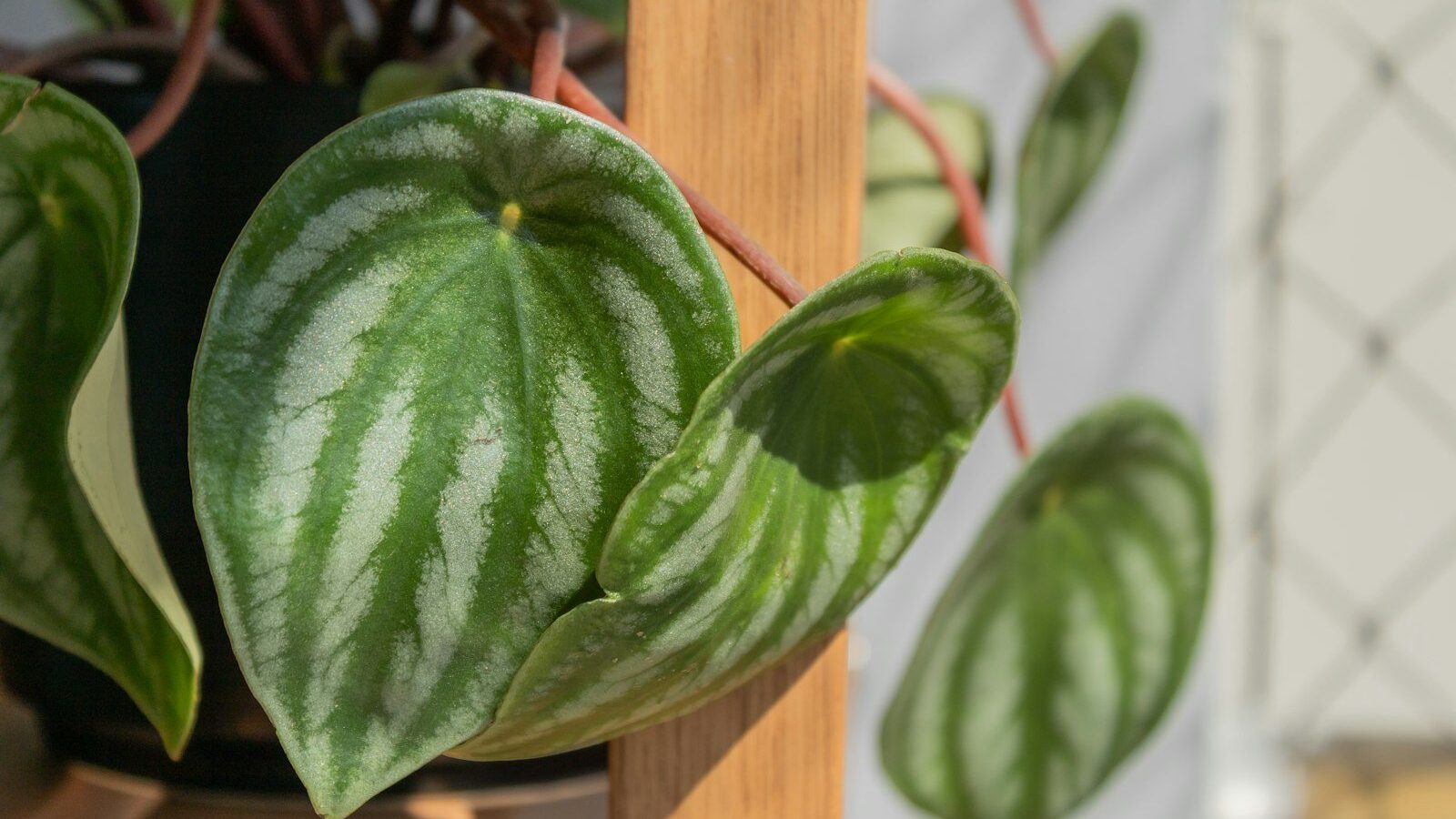
Watermelon peperomia (Peperomia argyreia) earns its name honestly: rounded, fleshy leaves striped silver and dark green like a watermelon rind, each one held up on a bright red petiole. It stays compact, grows slowly, and forgives a fair amount of neglect, which makes it one of the easiest statement plants you can put on a desk or shelf. The trick to keeping it looking its best is understanding that it behaves like a semi-succulent. It stores water in those thick leaves and petioles, so the single biggest mistake people make is watering it on the same schedule as their tropical houseplants. Get the light and water right, and this plant will reward you for years with very little fuss.
Key Takeaways
- Give it medium to bright indirect light; direct sun scorches the leaves and washes out the silver stripes.
- Water only when the top 1-2 inches of soil are dry. It is a semi-succulent and stores water in its leaves and petioles.
- Use a light, airy mix of peat or coir with plenty of perlite, and a pot with drainage holes.
- Keep it at 65-80F and 40-50% humidity or higher; protect it from anything below 50F.
- Propagate easily from whole-leaf or leaf-section cuttings; expect roots in 3-4 weeks and plantlets in 1-2 months.
- It is non-toxic to cats and dogs, so it is a safe choice for pet households.
Light
Watermelon peperomia wants medium to bright indirect light. An east-facing window is close to ideal: a few hours of gentle morning sun followed by bright ambient light for the rest of the day. A spot a few feet back from a south or west window works well too, as long as the harsh midday rays do not land directly on the leaves. What you want to avoid is prolonged direct sun, which scorches the leaf surface, fades the silver striping toward a flat, washed-out green, and can leave crispy brown patches that never recover.
The opposite problem is just as common. In light that is too dim, the plant stretches. Petioles elongate, the rosette opens up and flops, and the leaves space themselves further apart as the plant reaches for any light it can find. If you notice that loose, leggy growth, move it somewhere brighter. This is a forest-floor plant in the wild, growing in dappled light beneath taller vegetation, so think bright shade rather than full exposure. If your room simply does not have enough natural light, a basic LED grow light on a timer for 10-12 hours a day keeps the variegation crisp and the growth tight.
Watering
Water when the top 1-2 inches of soil feel dry, and let this plant dry out a little more than you would a typical tropical. Because watermelon peperomia is a semi-succulent, it banks moisture inside its thick leaves and swollen petioles. That internal reservoir means it handles a missed watering far better than it handles a soggy pot. Overwatering is the number one killer of this species, full stop. When in doubt, wait an extra day or two.
When you do water, water thoroughly. Soak the soil until water runs from the drainage holes, then empty the saucer so the roots are never sitting in standing water. In a bright spot during spring and summer, that might mean watering every 7-10 days; in winter, when growth slows and light is weaker, you may stretch it to every two weeks or longer. Skip the calendar and check the soil with your finger instead. The leaves give you feedback too: firm, plump leaves mean the plant is well hydrated, while slightly soft or drooping leaves and limp petioles usually signal thirst. Watering from below by setting the pot in a tray for 15-20 minutes is a good way to keep water off the crown and reduce the chance of rot. Use room-temperature water and avoid splashing the leaves repeatedly, as trapped moisture in the center of the rosette invites trouble.
Soil and Potting
Drainage is everything here. Watermelon peperomia has a small, shallow root system that resents wet feet, so you want a light, airy mix that holds a little moisture but drains fast. A blend of peat or coconut coir with a generous handful of perlite hits the sweet spot. Roughly two parts coir or peat-based potting soil to one part perlite works well; you can also add a little orchid bark or pumice for extra aeration. A standard houseplant mix on its own tends to stay too dense and wet for this plant, so cut it with perlite even if you start from a bag.
Always choose a pot with drainage holes. Because the root system is compact, this plant prefers to be a touch root-bound and does not need frequent repotting. Move it up only every two to three years, or when roots are clearly circling and pushing out the bottom. When you do repot, go just one size up, around an inch larger in diameter. A pot that is too big holds a large volume of damp soil the small roots cannot use, which keeps the mix wet and invites rot. Terracotta is a smart choice because it wicks moisture and breathes, giving you a margin of safety against overwatering. Feed lightly during the growing season with a balanced liquid fertilizer at half strength about once a month in spring and summer, and stop feeding in fall and winter.
Humidity and Temperature
Average household conditions suit watermelon peperomia well. Aim for 40-50% humidity or a bit higher, which is comfortable for most homes most of the year. It tolerates ordinary indoor air better than fussier tropicals thanks to those moisture-storing leaves, but it appreciates a little extra humidity, especially during dry winters when the heat is running. Grouping it with other plants, setting it on a pebble tray with water below the pot base, or running a small humidifier nearby all help. You generally do not need to mist; misting wets the leaves without doing much for humidity and can encourage spotting if water lingers in the crown.
Keep temperatures between 65 and 80F, which mirrors comfortable room temperature. The plant has no real cold tolerance, so protect it from anything below 50F. Cold drafts from a poorly sealed window, an exterior door that opens to winter air, or the blast from an air-conditioning vent will stress it and can cause leaf drop. Keep it away from those spots, and do not leave it pressed against cold glass in winter. Sudden temperature swings are harder on it than a steady, slightly cool room, so consistency matters more than chasing a perfect number.
Propagation
Propagating watermelon peperomia from leaf cuttings is one of the most satisfying things you can do with a houseplant, and the success rate is high. There are two reliable methods: planting a whole leaf, or cutting a leaf into sections. The best time is spring or early summer when the plant is actively growing. Both methods work in soil or in water, though soil tends to give sturdier results. New roots typically appear in about 3-4 weeks, and tiny plantlets emerge from the cut edges in roughly 1-2 months, so patience is part of the process.
For the whole-leaf method, choose a healthy mature leaf and follow these steps:
- Cut a healthy leaf with about an inch of petiole still attached, using clean, sharp scissors.
- Let the cut end callus over for a few hours to reduce the risk of rot.
- Insert the petiole into moist, airy propagation mix at a slight angle so the base of the leaf nearly touches the soil.
- Place it in bright indirect light and keep the mix lightly moist, never soggy.
- Wait for roots in 3-4 weeks, then watch for one or more baby plants to push up at the base over the following weeks.
The leaf-section method produces multiple plants from a single leaf and works well for fuller results. Follow these steps:
- Take a healthy leaf and cut it crosswise into sections, making sure each piece includes a section of the main veins.
- Let the cut edges callus for a few hours.
- Press the cut edges gently into moist propagation mix so they stand upright, vein-side down.
- Keep them warm, humid, and in bright indirect light; a clear cover or loose bag helps maintain humidity.
- New plantlets form along the cut veins in about 1-2 months, after which you can pot them up individually.
If you enjoy this style of leaf propagation, you will find similar success with other forgiving houseplants. Our guide on how to propagate a spider plant walks through a different but equally beginner-friendly approach.
Pruning and Grooming
Watermelon peperomia needs very little pruning, which is part of its charm. Its slow, compact habit means it rarely outgrows its space or gets unruly. The main grooming task is removing the occasional yellowing, damaged, or spent leaf. Use clean scissors and cut the petiole back near the base of the plant rather than tearing leaves off, which can damage the crown. Removing tired leaves keeps the plant looking tidy and redirects energy into healthy new growth.
If your plant has stretched and gone leggy in low light, you can pinch or trim back the longest petioles to encourage a more compact shape, then move it to brighter light to prevent it happening again. Dust settles on the broad leaves over time and dulls their shine while reducing how efficiently they photosynthesize, so wipe them gently with a soft, damp cloth every few weeks. Mature plants sometimes send up thin, greenish flower spikes; they are unremarkable to look at, and many growers snip them off so the plant puts its energy into foliage instead of bloom. That is purely a matter of preference.
Common Problems and Fixes
Most issues with this plant trace back to watering or light. Here is how to read the symptoms and respond.
Drooping or Limp Petioles
Limp, floppy petioles usually mean one of two opposites: the plant is thirsty, or it is overwatered. Check the soil first. If the top inch or two is bone dry and the leaves feel a little soft, give it a thorough drink and it should perk up within a day. If the soil is wet and the petioles are still limp, you likely have the reverse problem and the roots may be struggling. In that case, stop watering, let the mix dry, and check the roots for rot before doing anything else.
Leaf Curling
Curling leaves point to environmental stress. Too much direct sun, underwatering, or very dry air can all cause leaves to cup or curl inward as the plant tries to conserve moisture. Move it out of harsh light, check that you are watering when the top 1-2 inches dry out, and raise humidity toward the 40-50% range. New leaves that emerge should come in flat once conditions stabilize.
Faded Variegation
If the bold silver-and-green pattern is going flat and dull, light is almost always the cause. Too little light pushes the plant toward plain green, while too much direct sun bleaches and washes out the silver. Aim for that medium to bright indirect sweet spot. A move to brighter (but not direct) light typically restores contrast in the new growth, though existing faded leaves will not change back.
Root Rot
Root rot is the most serious threat and comes from overwatering or poor drainage. Signs include mushy, blackened stems at the base, a sour smell from the soil, and widespread yellowing or collapse that does not improve after watering. If you suspect it, unpot the plant, rinse the roots, and cut away anything brown, soft, or slimy with clean scissors. Repot the healthy remainder into fresh, airy mix in a clean pot with drainage, and water sparingly while it recovers. To prevent it, always let the top of the soil dry, use a well-draining mix, and never let the pot sit in water.
Pests
Watermelon peperomia is not especially pest-prone, but it can occasionally pick up mealybugs, spider mites, or fungus gnats. Mealybugs show up as white cottony tufts in leaf joints; dab them with a cotton swab dipped in rubbing alcohol. Spider mites cause fine stippling and webbing and thrive in dry air, so raising humidity helps deter them. Fungus gnats are a sign the soil is staying too wet, so let it dry out more between waterings. For any infestation, isolate the plant and treat with insecticidal soap or a diluted neem oil spray, repeating weekly until the pests are gone.
Is Watermelon Peperomia Toxic to Pets?
Good news for pet owners: watermelon peperomia is non-toxic to both cats and dogs. The entire Peperomia genus is considered pet-safe, so a curious nibble will not poison your animals, and it is a worry-free choice for homes with pets or small children. That said, no plant is truly meant to be eaten, and a pet that chews on a lot of foliage may still get a mild upset stomach, so it is sensible to discourage snacking and place the plant where it is admired rather than munched. If you are building a pet-safe collection, the watermelon peperomia pairs nicely with other non-toxic options; browse more on our plants & flowers hub for ideas, and the colorful lipstick plant is another safe, low-fuss pick.
Frequently Asked Questions
How often should I water a watermelon peperomia?
Water when the top 1-2 inches of soil are dry, which often falls around every 7-10 days in spring and summer and less in winter. Because it is a semi-succulent that stores water in its leaves, it is much safer to underwater than overwater, so always check the soil before reaching for the watering can.
Why are the leaves on my watermelon peperomia drooping?
Drooping leaves and limp petioles usually mean either thirst or overwatering. Check the soil: if it is dry, water thoroughly and the plant should recover within a day. If the soil is wet and the plant is still limp, stop watering, let it dry out, and inspect the roots for rot.
Is watermelon peperomia safe for cats and dogs?
Yes. Watermelon peperomia is non-toxic to cats and dogs, like the rest of the Peperomia genus, making it a safe choice for pet households. It is still best to discourage pets from chewing foliage, as eating large amounts of any plant can cause mild stomach upset.
How do I propagate watermelon peperomia?
Take a healthy leaf and either plant the whole leaf with a bit of petiole attached, or cut the leaf into sections that include the main veins. Let the cuts callus, set them in moist airy mix, and keep them warm in bright indirect light. Expect roots in 3-4 weeks and tiny plantlets in 1-2 months.
Why is my watermelon peperomia losing its silver stripes?
Fading variegation is almost always a light issue. Too little light pushes the plant toward plain green, while harsh direct sun bleaches out the silver. Move it to medium to bright indirect light and the new growth should come in with crisp, well-defined stripes again.
Watermelon peperomia is about as rewarding as houseplants get: striking foliage, a compact footprint, pet-safe credentials, and a tolerance for the occasional missed watering. Respect its semi-succulent nature by erring on the dry side, give it bright indirect light, and keep it in a fast-draining mix, and it will hold its bold watermelon stripes for years with almost no demands on your time.