

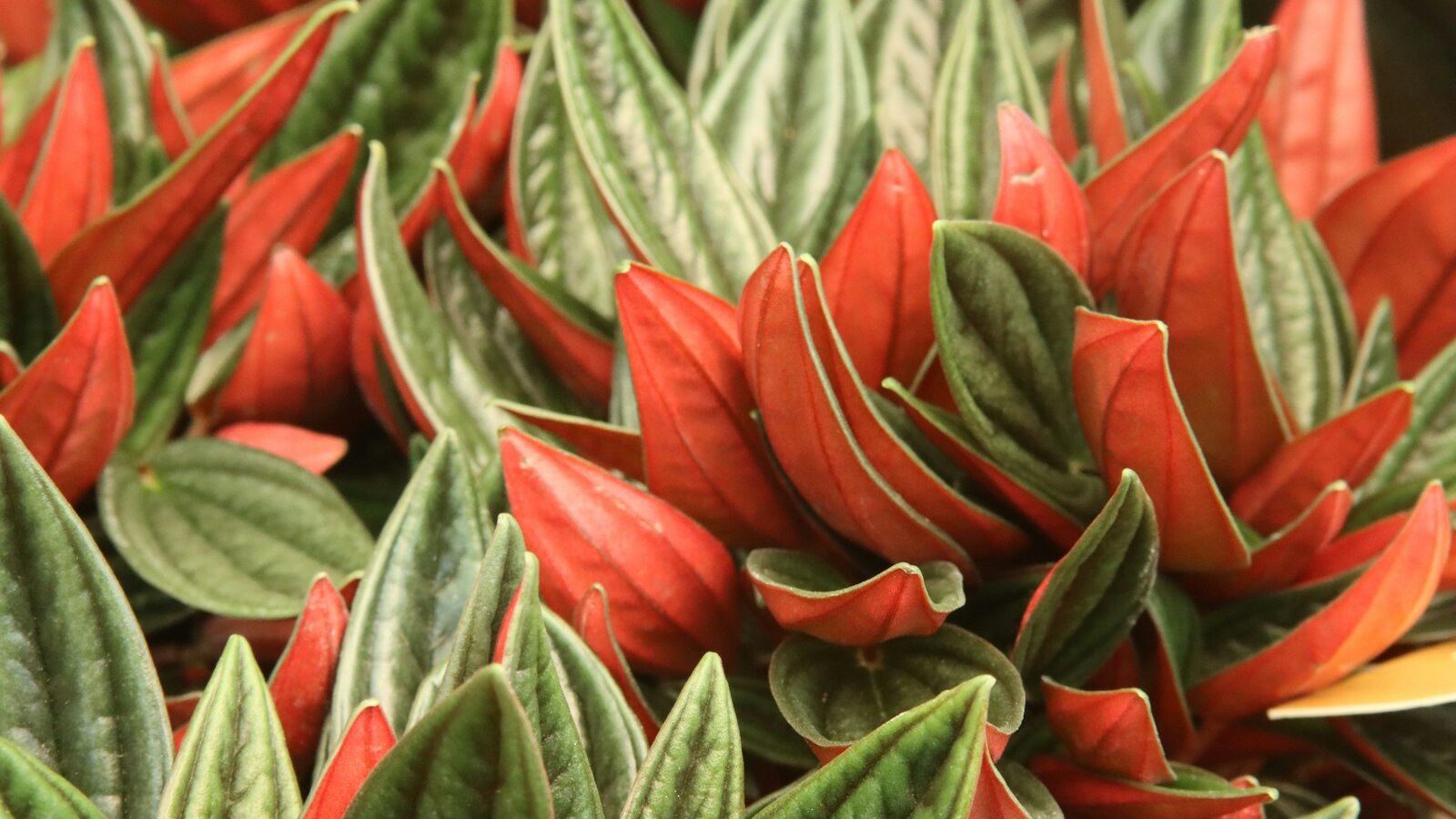
Peperomias are some of the most forgiving houseplants you can own, which is exactly why they are a smart pick for a beginner or anyone short on time. There are more than a thousand species in the genus, from the rippled-leaf Peperomia caperata (ripple peperomia) to the trailing Peperomia prostrata (string of turtles) and the upright, candy-striped Peperomia clusiifolia. What they share is a compact, semi-succulent habit: thick stems and fleshy leaves that store water, so they shrug off the occasional missed watering far better than a fern or a calathea ever would. Get the light, watering, and pot right and a peperomia will sit happily on a desk or shelf for years with almost no fuss.
Key Takeaways
- Light: bright, indirect light; tolerates medium light but variegated types fade in low light.
- Water: let the top 1–2 inches of soil dry out; water roughly every 7–14 days. Overwatering is the #1 killer.
- Soil: a chunky, fast-draining mix — potting soil cut with perlite and orchid bark.
- Humidity: average household humidity (40–50%) is fine; it is more drought-tolerant than tropical-looking foliage suggests.
- Pet-safe: peperomias are non-toxic to cats and dogs per the ASPCA.
Light Requirements
Peperomias do best in bright, indirect light. An east-facing windowsill that gets a couple of hours of gentle morning sun is close to ideal, as is a spot a few feet back from a south- or west-facing window where the harsh midday rays are filtered by a sheer curtain. They will also tolerate medium light, including a few feet from a bright window or under good office lighting, which is why they turn up so often on desks. What they will not tolerate is harsh, direct afternoon sun — the fleshy leaves scorch, bleach, and develop crispy brown patches surprisingly fast.
Pay extra attention to variegated and colorful cultivars. The cream-and-green variegation on a ‘Variegata’ clusiifolia, the silver bands on a watermelon peperomia (Peperomia argyreia), and the dark-with-red-undersides drama of some types all depend on adequate light. In a dim corner, variegation fades back toward plain green and growth becomes leggy, with long bare stems reaching toward the nearest window. If you only have a low-light spot, a small LED grow light running 10–12 hours a day keeps colors crisp. Rotate the pot a quarter-turn each week so the plant grows evenly instead of leaning.
How to Water a Peperomia
Because peperomias store water in their thick stems and leaves, they behave more like a semi-succulent than a thirsty tropical. The single most important rule is to let the soil dry out partway between waterings. Push a finger into the pot; when the top 1–2 inches feel dry, give the plant a thorough drink until water runs from the drainage holes, then empty the saucer so the roots never sit in standing water. In a bright spot during summer this usually works out to about once a week; in winter, or in lower light, you may stretch it to every two weeks or more.
Overwatering is by far the most common way these plants die. The early warning sign is counterintuitive: wilting, mushy, or yellowing lower leaves often signal too much water and the start of root rot, not thirst. A truly thirsty peperomia shows slightly soft, drooping leaves that perk up within hours of watering. When in doubt, wait — a peperomia recovers from a missed week far more easily than from soggy roots. Use room-temperature water, and if your tap water is heavily chlorinated, letting it sit out overnight does no harm.
Soil and Potting
Drainage is everything. Peperomias have small, fine root systems that suffocate in dense, water-retentive soil. Skip straight bagged potting mix and instead build something chunky and airy: roughly two parts standard houseplant potting mix to one part perlite, with a generous handful of orchid bark stirred in. A peat- or coir-based mix amended this way drains quickly while still holding enough moisture between waterings. Many growers have good results with a pre-made succulent or cactus mix lightened with extra perlite.
Always pot into a container with drainage holes. A decorative cachepot with no drainage is fine as a sleeve, but keep the plant in a nursery pot you can lift out to water and drain. Because the root ball is modest, peperomias actually prefer to be a little snug; an oversized pot holds too much wet soil around the roots and invites rot. For more on building the right blend for chunky-rooted plants, see our guide to choosing soil for houseplants and flowers.
Temperature and Humidity
Peperomias are happiest in the same temperatures most people keep their homes, roughly 65–80°F (18–27°C). They are not frost-hardy and suffer below about 50°F (10°C), so keep them away from cold windowpanes in winter and off unheated porches. Equally important, protect them from sudden temperature swings: a spot directly above a heating vent, in front of an air conditioner, or next to a frequently opened winter door causes leaf drop and stress.
Humidity is where peperomias pleasantly surprise people. Despite their lush, tropical look, those water-storing leaves make them far more tolerant of dry indoor air than ferns or calatheas. Average household humidity of 40–50% suits them fine. They will not object to a bit more — a bathroom with a window or a pebble tray adds a margin of comfort, especially for the thinner-leaved trailing types — but you do not need a humidifier to keep one alive. Avoid heavy misting; water pooling on the dense rosettes of types like ripple peperomia can encourage rot and fungal spots.
Fertilizing
These are light feeders. Too much fertilizer scorches the roots and causes leaf-tip burn faster than it boosts growth. During the active growing season, spring through early fall, feed with a balanced liquid houseplant fertilizer diluted to half the label strength roughly once a month. A 10-10-10 or similar balanced formula is plenty. Stop feeding entirely in late fall and winter, when growth naturally slows and the plant needs the rest. If you ever see a white crust on the soil surface or pot rim, that is fertilizer-salt buildup; flush the pot with plain water several times to leach it out.
Repotting
Peperomias are slow growers with small root systems, so they rarely need repotting more than once every two to three years. Signs it is time include roots circling the bottom or poking out of the drainage holes, water that runs straight through without wetting the soil, or the plant drying out unusually fast. Repot in spring, just as growth resumes. Choose a new pot only one size up — an inch or two wider in diameter — because going too big surrounds the roots with soggy, slow-to-dry soil.
To repot, gently lift the plant out, tease away the old spent soil from the outer roots, and inspect for any soft, brown, rotten sections, trimming those off with clean scissors. Settle the plant into fresh chunky mix at the same depth it sat before, firm lightly, and water it in. Hold off on fertilizer for about a month afterward to let any disturbed roots recover.
How to Propagate Peperomia
Propagation is one of the great joys of owning a peperomia — they root readily and the process is nearly foolproof. The most reliable method is the stem cutting. Snip a healthy stem 3–4 inches long with a couple of leaves attached, just below a node (the point where a leaf joins the stem). Let the cut end callus over for an hour or two, then either set it in a glass of water or push it into moist propagation mix. In water, roots usually appear within two to four weeks; pot the cutting up once roots are an inch long.
Many peperomias, especially the thick-leaved types like watermelon and ripple, also propagate from leaf cuttings the way an African violet does. Cut a healthy leaf with a short bit of petiole, insert the stem into moist soil at an angle, cover loosely to hold humidity, and keep it warm and bright. New plantlets emerge from the base over a couple of months. For a deeper walk-through of these techniques across many plant families, see our guide on how to propagate plants from cuttings. Spring and summer, during active growth, give the highest success rates.
Common Problems and Pests
The vast majority of peperomia troubles trace back to watering. Yellowing, mushy lower leaves and a wilting plant almost always mean overwatering and incipient root rot; let the soil dry, check the roots, and cut watering frequency. Crispy brown leaf edges or curling point to too much direct sun, very dry conditions, or fertilizer burn. Leggy, stretched stems with widely spaced leaves mean the plant needs more light. Sudden leaf drop usually follows a cold draft or a big temperature swing.
Pests are uncommon but possible. Watch for mealybugs (white cottony tufts in leaf joints), spider mites (fine webbing and stippled leaves in dry air), and fungus gnats (small flies hovering over chronically wet soil). Dab mealybugs with a cotton swab dipped in rubbing alcohol, wipe down leaves to dislodge mites, and let the soil dry out to break the fungus-gnat cycle. For persistent infestations, an insecticidal soap or neem oil spray every 7–10 days clears things up. Browse more troubleshooting in our Plants & Flowers care library.
Is Peperomia Toxic to Pets?
Good news for animal lovers: peperomias are listed as non-toxic to both cats and dogs by the ASPCA. That makes them one of the safest leafy choices for a home with curious pets or small children. As with any houseplant, nibbling on the foliage can still cause mild stomach upset simply because it is not food, so it is best to discourage chewing — but you do not have to worry about the serious poisoning risk that comes with pothos, philodendron, or dieffenbachia.
Frequently Asked Questions
Why are my peperomia leaves drooping?
Drooping is usually one of two extremes. Soft, limp leaves with dry soil mean the plant is thirsty and will perk up hours after watering. Soft, yellowing, mushy leaves with wet soil mean overwatering — let the mix dry out and check the roots for rot.
How often should I water a peperomia?
Roughly every 7–14 days, but go by the soil, not the calendar. Water thoroughly when the top 1–2 inches are dry, then let it drain fully. Expect to water more in bright summer light and much less in winter.
Do peperomias need a lot of light?
They prefer bright, indirect light but tolerate medium light. Variegated and colorful types need more light to keep their patterns; in low light they fade to green and grow leggy. Avoid harsh direct afternoon sun, which scorches the leaves.
Can I propagate peperomia in water?
Yes. Take a 3–4 inch stem cutting just below a node, set the cut end in a glass of water, and refresh the water weekly. Roots typically form in two to four weeks; pot the cutting once roots reach about an inch long.
Are peperomias safe for cats and dogs?
Yes — the ASPCA lists peperomia as non-toxic to cats and dogs, making it one of the safest houseplants for homes with pets. Chewing leaves may still cause mild stomach upset, so discourage nibbling.
Peperomias reward a hands-off approach. Give one bright indirect light, a chunky fast-draining mix, and water only when the top inch or two has dried, and it will thrive on benign neglect for years — multiplying easily from cuttings whenever you want more. Resist the urge to overwater and overpot, and this compact, pet-safe little plant will be among the easiest green things you ever grow.