

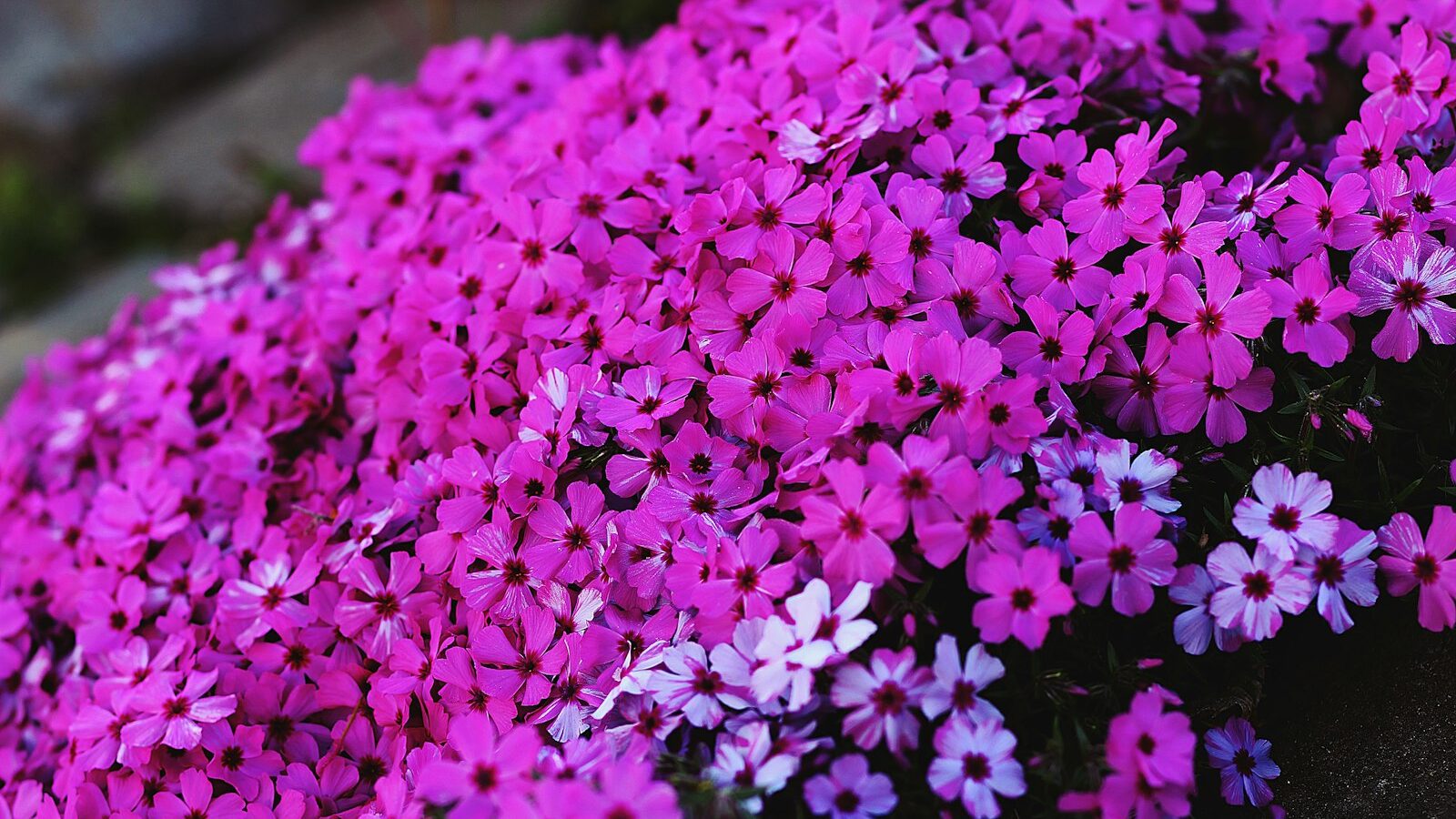
Few groundcovers light up a spring garden quite like creeping phlox (Phlox subulata). For a few weeks in mid to late spring, this low, mat-forming perennial blankets slopes, rock walls, and tired bare patches in a carpet of pink, purple, white, or blue blooms so dense you can barely see the foliage. The rest of the year it stays a tidy, evergreen-to-semi-evergreen mat that asks for very little. If you want big seasonal color with minimal fuss, creeping phlox earns its spot.
Creeping phlox quick facts
- Light: full sun
- Soil: well-drained
- USDA zones: 3-9
- Bloom: spring
- Height: 4-6 in
As an Amazon Associate we earn from qualifying purchases.
Where to plant creeping phlox
Creeping phlox is a spreader, not a clump. A single healthy plant will fan out 18 to 24 inches across over a couple of seasons, hugging the ground at just 4 to 6 inches tall. That growth habit is the whole point: it knits together into a solid living carpet that suppresses weeds and softens hard edges. Choose a spot where that low, wide spread is an asset rather than a problem.
Best uses in the landscape
- Slopes and banks — its shallow, spreading roots help hold soil and reduce erosion on grades that are awkward to mow.
- Spilling over walls — plant at the top of a retaining wall or raised bed so the stems cascade down the face in a curtain of bloom.
- Rock gardens and crevices — the tight, fine-textured mat looks at home tucked between boulders and along gravel paths.
- Front-of-border edging — it makes a clean, weed-smothering ribbon in front of taller perennials.
- Between stepping stones — it tolerates light foot traffic and fills gaps in informal paving.
For a relaxed, plant-it-and-forget-it scheme, pair creeping phlox with other tough, sun-loving spreaders. See our low-maintenance landscaping ideas for combinations that fill space without constant attention.
Light and soil requirements
Light
Creeping phlox wants full sun — at least six hours of direct light a day — to flower heavily and stay dense. In too much shade it stretches, blooms sparsely, and develops thin, gappy patches that invite weeds. In hot Southern US gardens and in Singapore’s intense equatorial sun, a little afternoon shade is welcome and helps the mat hold up through the heat, but morning sun is non-negotiable for good bloom.
Soil and drainage
Drainage is the single most important factor. Creeping phlox evolved on rocky, lean slopes and will rot in heavy, soggy ground. It prefers a light, gritty, well-drained soil with a slightly acidic to neutral pH (roughly 6.0 to 7.0). Rich, fertile soil is not required and can actually produce floppy, disease-prone growth.
- On heavy clay, work in coarse sand, fine gravel, or compost to open up the texture before planting.
- On slopes, the natural runoff usually provides the sharp drainage phlox loves.
- In Singapore, raised beds or mounded planting greatly improve survival during the wet monsoon months, when constant rain can drown a flat planting.
How to plant and space it
The best planting windows are early spring or early fall, when temperatures are mild and roots can establish before extreme heat or cold. In Singapore’s year-round growing climate you can plant almost any time, though the start of a drier stretch gives the steadiest establishment. Buy small starts or order creeping phlox plants in flats — they fill in quickly and are more economical than large pots when you’re covering ground.
Planting steps
- Loosen the soil and amend for drainage if needed; remove existing weeds completely.
- Dig holes the same depth as the root ball and slightly wider.
- Set each plant so the crown sits right at soil level — never buried, which encourages rot.
- Backfill, firm gently, and water in well to settle the roots.
- Apply a thin layer of grit or fine mulch around (not over) the crowns to conserve moisture.
Spacing
Space plants 12 to 18 inches apart. Closer spacing (around 12 inches) gives a solid carpet faster; wider spacing saves money but takes an extra season to close the gaps. On a slope where you want quick erosion control, lean toward the tighter spacing. Stagger the plants in a triangular pattern rather than straight rows for the most natural-looking coverage.
Watering and feeding
Watering
During the first growing season, water regularly to keep the root zone evenly moist while plants establish — about once or twice a week, more in heat. Once established, creeping phlox is notably drought tolerant and usually gets by on rainfall, needing supplemental water only during prolonged dry spells. Overwatering is far more likely to kill it than underwatering. Water at the base in the morning so the foliage dries quickly, which reduces disease risk in humid climates like Singapore’s.
Feeding
This is a lean-soil plant that needs very little feeding. One application of a slow-release balanced fertilizer in early spring as growth resumes is plenty. Avoid heavy nitrogen, which pushes leafy growth at the expense of flowers and can make the mat soft and floppy. A light topdressing of compost in spring is a gentler alternative that also improves soil structure.
Pruning and shearing after bloom
The single most valuable maintenance task for creeping phlox is shearing it back right after the spring flowers fade. As blooms finish, the stems can look ragged and the center may start to thin out. Cutting back rejuvenates the plant, encourages dense branching, and keeps the mat tight and youthful for years.
- Wait until the main flush of bloom is clearly done — usually late spring to early summer.
- Using clean garden shears, trim the entire plant back by about one-third to one-half.
- Removing the spent flower stems often prompts a light second flush of bloom later in the season.
- Rake out any dead, brown, or matted material from the center to improve airflow.
If a patch has gone bare and woody in the middle — a common sign of an aging clump — that is the cue to divide it, covered next.
Propagation by division
Creeping phlox is easy and cheap to multiply, which makes it ideal for covering large areas over time. Division is the simplest method and also revitalizes older plants that have died out in the center.
- Divide in early spring or early fall, when temperatures are mild.
- Dig up an established clump, keeping as many roots intact as possible.
- Pull or cut it into several sections, each with healthy roots and stems; discard any dead woody center.
- Replant the divisions at the same depth, spacing them as you would new plants, and water in.
You can also propagate by tip cuttings taken in early summer, or by layering — pinning a trailing stem to the soil until it roots, then severing it. For more on dividing and multiplying perennials, see our main plant & flower care guide.
Varieties, colors, and good companions
Colors and named varieties
Creeping phlox comes in a cheerful range of colors, so you can match it to almost any scheme or mass several together for a patchwork effect.
- ‘Emerald Blue’ — soft lavender-blue flowers over rich green foliage.
- ‘Emerald Pink’ — clear bright pink, a reliable classic.
- ‘Candy Stripe’ — pink-and-white bicolor petals.
- ‘Snowflake’ — crisp white, lovely for cooling down hot color combinations.
- ‘Purple Beauty’ — deep purple with a contrasting darker eye.
Companion plants
Because creeping phlox finishes blooming in late spring, it pairs well with plants that carry the season forward. Try it alongside early bulbs like daffodils and tulips for a layered spring show, then let summer bloomers take over. Catmint is a particularly good neighbor — its long-running blue-purple haze starts up just as phlox winds down, extending the color in the same sunny, well-drained conditions.
Common problems and how to fix them
Creeping phlox is tough, but a handful of issues come up — almost all tied to moisture, air circulation, or age.
- Powdery mildew — a white, dusty film on leaves in humid weather. Improve airflow, avoid overhead watering, and shear back affected growth. This is the most common complaint in muggy climates like Singapore.
- Root and crown rot — caused by poor drainage or planting too deep. Prevent it with gritty soil, raised planting on heavy ground, and keeping crowns at soil level.
- Bare, woody center — a natural sign of an aging clump. Shear hard after bloom and divide every few years to renew it.
- Spider mites — tiny pests that cause stippling and webbing in hot, dry spells. Rinse foliage and treat with insecticidal soap if needed.
- Sparse flowering — usually too little sun or too much nitrogen. Move to a sunnier spot and ease off the feeding.
- Weeds invading the mat — happens where spacing is too wide or the mat has thinned. Tighten spacing and shear to encourage dense regrowth.
Frequently asked questions
How long does creeping phlox bloom?
The main display lasts roughly three to four weeks in mid to late spring. Shearing the plant back right after this flush sometimes triggers a lighter second round of flowers later in the season.
Does creeping phlox come back every year?
Yes. It is a hardy perennial in USDA zones 3 to 9, returning and spreading wider each spring. The foliage stays evergreen to semi-evergreen through winter in milder climates.
How fast does creeping phlox spread?
Moderately fast. A single plant typically widens to 18 to 24 inches within a season or two. Planting at 12-inch spacing closes the gaps into a solid carpet in about one to two growing seasons.
Can creeping phlox grow in Singapore’s climate?
It can, but it needs help. Give it full morning sun with light afternoon shade, plant it in raised, gritty, fast-draining soil, and water at the base to avoid the powdery mildew that humidity encourages. Mounded or raised beds are strongly recommended for the wet season.
Should I cut back creeping phlox in fall or spring?
The key cutback is right after spring bloom, not in fall. A light spring tidy-up of any winter-damaged growth is fine, but avoid hard cutting in fall, which can leave crowns exposed over winter.