

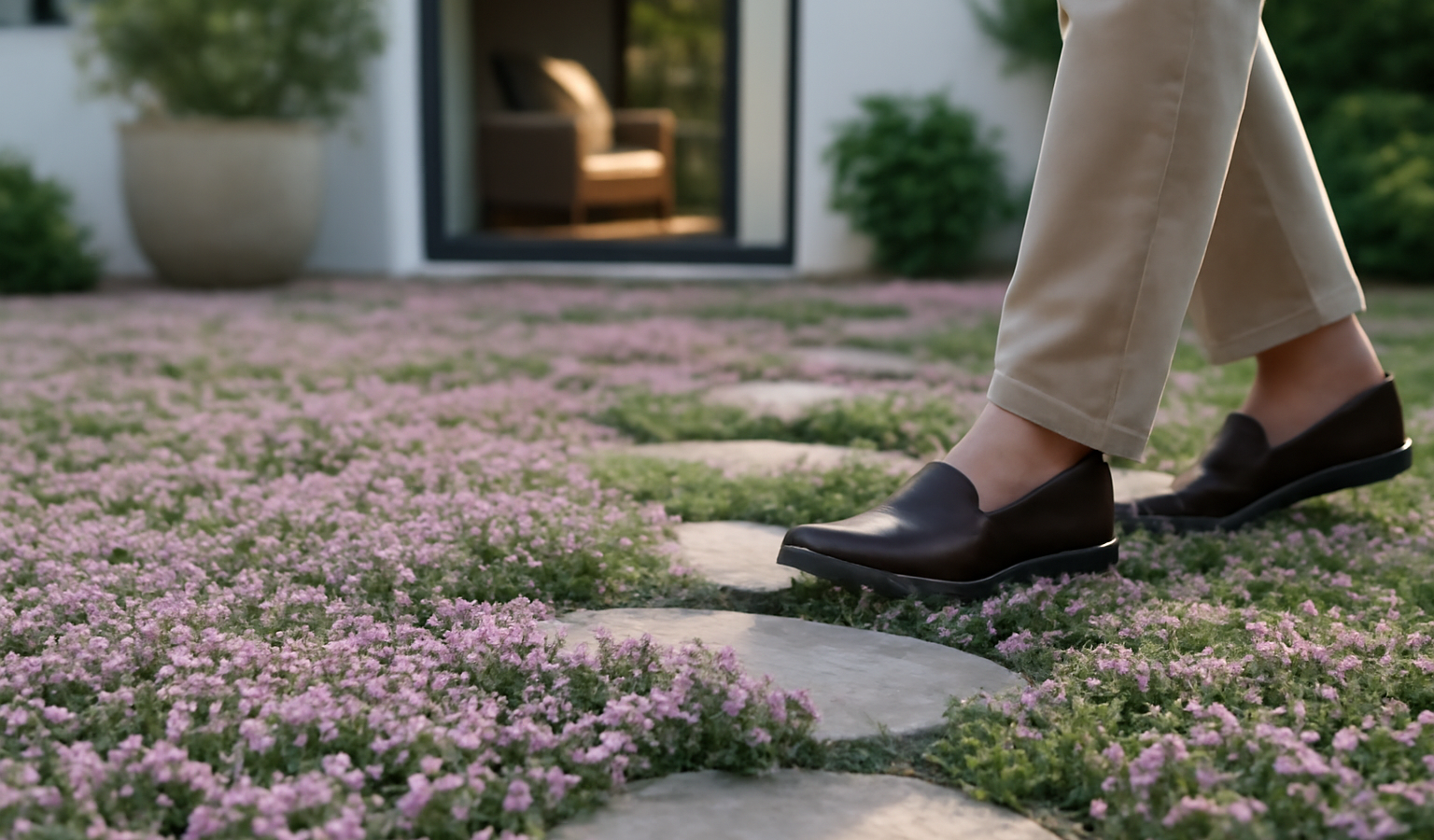
Creeping thyme is the answer to a question many gardeners eventually ask: what can I plant between stepping stones, in cracks between pavers, or as a tough, low groundcover that I can actually walk on? This low, mat-forming herb spreads into a dense carpet just an inch or two high, smothers weeds, releases a wonderful herbal fragrance when you step on it, and bursts into a haze of tiny pink, purple, or white flowers in early summer that bees adore. Best of all, it’s genuinely walkable — it tolerates light foot traffic that would destroy most plants — and it’s exceptionally drought-tolerant once established, thriving in hot, dry, poor-soil spots where grass and other groundcovers fail. It’s a relative of culinary thyme and is edible, though it’s grown mainly for looks and durability. This guide covers where to use it, sun and soil, planting and spacing, watering, and keeping the carpet dense and healthy.
Key Takeaways
- Walkable groundcover: a dense, 1–2 inch mat that tolerates light foot traffic — perfect between pavers and stepping stones.
- Drought-tolerant: once established it needs little water and thrives in hot, dry, poor, well-drained soil.
- Full sun and sharp drainage: wants at least six hours of sun; soggy soil is the one thing that kills it.
- Pollinator magnet: covered in tiny pink, purple, or white flowers in early summer that bees love.
- Low-maintenance: needs little feeding and only a light shear after flowering to stay dense and tidy.
Where to Use Creeping Thyme
Creeping thyme (most often Thymus serpyllum or the woolly Thymus praecox) shines in spots that defeat other plants. The classic use is between pavers and stepping stones, where it fills the gaps with soft, fragrant green and releases its scent underfoot. It’s superb cascading over and softening the edges of walls, raised beds, and rock gardens, and it knits beautifully into the cracks of a dry-stone path or patio. On a larger scale, it makes a low-water lawn alternative or “thyme lawn” for sunny areas with light traffic — not a sports lawn, but a walkable, mowing-free, flowering carpet. It’s also a natural for hot, dry, neglected strips: the sun-baked edge of a driveway, a parking-strip hell-strip, or a slope where you want erosion control without irrigation. Because it stays so low and spreads steadily without becoming a thug, it’s one of the most useful and best-behaved groundcovers you can plant in a sunny, dry site.
Sun and Soil
Creeping thyme is a Mediterranean plant at heart, and its needs follow from that: lots of sun and excellent drainage. Give it full sun — at least six hours a day, and the more the better. In shade it grows thin, leggy, and sparse, flowers poorly, and is prone to rot. Soil is where most failures happen, and the rule is counterintuitive: thyme prefers lean, poor, gritty, well-drained soil and actively dislikes rich, fertile, moisture-retentive ground. Sandy or rocky soils are ideal; heavy clay is its enemy because it holds water around the crown and roots, leading to rot. If your soil is heavy, amend it generously with coarse sand or gravel and grit, or build a raised bed, before planting. A neutral to slightly alkaline pH suits it. The watchword throughout is drainage — get that right and creeping thyme is nearly indestructible. It’s hardy in USDA zones 4 through 9, depending on the species.
Planting and Spacing
You can grow creeping thyme from small nursery plants or plugs, from divisions, or from seed, though plants and plugs give the fastest, most even cover. Plant in spring after the last frost or in early fall, spacing plants 6 to 12 inches apart — closer for quicker coverage, wider if you’re patient and budget-minded, since each plant spreads outward and they’ll knit together within a season or two. When planting between pavers or in path cracks, tuck small plugs or divisions into pockets of gritty soil in the gaps and water them in. Set plants at the same depth they were in their pots, firm the soil gently, and water to settle them. A top-dressing of fine gravel or grit around the crowns improves drainage right where it matters and keeps the foliage off wet soil. After planting, keep the young plants watered while they establish, then ease off as they take hold. To start a thyme lawn from seed, sow into a well-prepared, weed-free, gritty bed and keep lightly moist until germination.
Watering and Feeding
Watering creeping thyme is mostly about restraint. While it’s establishing in the first season, water regularly but moderately to help the roots get going — let the surface dry between waterings rather than keeping it constantly damp. Once established, it’s remarkably drought-tolerant and usually needs no supplemental water at all except in extended drought; in fact, overwatering is the most common way to kill it, since soggy conditions rot the crowns. If in doubt, water less. Feeding is equally minimal: thyme thrives on poor soil, so it needs little or no fertilizer, and rich feeding produces soft, floppy, disease-prone growth and fewer flowers. Skip the feed entirely in average soil, or give at most a very light dose of a balanced fertilizer in spring on truly impoverished ground. This low-input nature is exactly what makes creeping thyme such a sustainable, water-wise choice for hot, dry, sunny gardens.
Keeping the Carpet Dense and Tidy
Creeping thyme is low-maintenance, but a little care keeps it looking its best. After the early-summer flowering finishes, give the whole planting a light shearing or trim to remove the spent flower stems; this keeps the mat dense, neat, and compact, and prevents the centers from going woody and bare with age. You can do this with shears, a string trimmer on a large patch, or even by mowing a thyme lawn on a high setting. Over several years, established plants may develop woody, less attractive centers — when that happens, you can rejuvenate them by digging up, dividing, and replanting the vigorous outer portions, or simply tuck in a few new plugs to fill thin spots. In cold-winter areas the foliage may brown or partially die back, greening up again in spring; don’t be alarmed. Pull any weeds that sneak in before the thyme fully knits together, after which it does a good job of suppressing them itself.
Common Problems
The overwhelming majority of creeping thyme failures come down to one thing: too much moisture. Soggy soil, poor drainage, overwatering, or a shady damp site cause root and crown rot, the plant’s main killer — so if yours is dying, thinning, or going black in the center, suspect wet feet first and improve drainage. Sparse, leggy, flowerless growth almost always means too much shade or too-rich soil. Woody, bare centers on older plants are a natural aging process, fixed by trimming and periodic division. Foot traffic that’s too heavy (a busy walkway used constantly) can wear it thin, so reserve it for light to moderate traffic and use stepping stones for the heaviest-used lines. Pests and diseases are otherwise rare on this tough herb. For more drought-tolerant, low-water planting ideas, see our guide to growing creeping Jenny, and browse the Plants & Flowers hub for more groundcover and herb guides.
Frequently Asked Questions
Can you walk on creeping thyme?
Yes — it’s one of the best walkable groundcovers, tolerating light to moderate foot traffic and releasing a pleasant fragrance when stepped on. It’s ideal between pavers and stepping stones. It won’t survive constant heavy traffic, so use stepping stones for the busiest paths and let thyme fill the gaps.
How far apart should I plant creeping thyme?
Space plants or plugs 6 to 12 inches apart — closer for faster coverage, wider if you’re patient. Each plant spreads outward and they knit together into a solid mat within a season or two. Between pavers, tuck small plugs into pockets of gritty soil in the gaps.
Why is my creeping thyme dying in the middle?
Two common causes. Excess moisture and poor drainage cause crown and root rot, so check that the soil isn’t staying soggy and improve drainage with grit. Alternatively, older plants naturally develop woody, bare centers — rejuvenate them by trimming, dividing, and replanting the vigorous outer growth.
Does creeping thyme need a lot of water?
No. Once established it’s very drought-tolerant and usually needs no supplemental water except in extended drought. Overwatering is the most common cause of death, since soggy soil rots the crowns. Water moderately only while it’s establishing in the first season, then largely leave it alone.
Should I fertilize creeping thyme?
Rarely. Thyme thrives in poor soil and needs little or no fertilizer. Rich feeding produces soft, floppy, disease-prone growth and fewer flowers. Skip feeding in average soil, or give at most a very light dose of balanced fertilizer in spring on truly impoverished ground.