

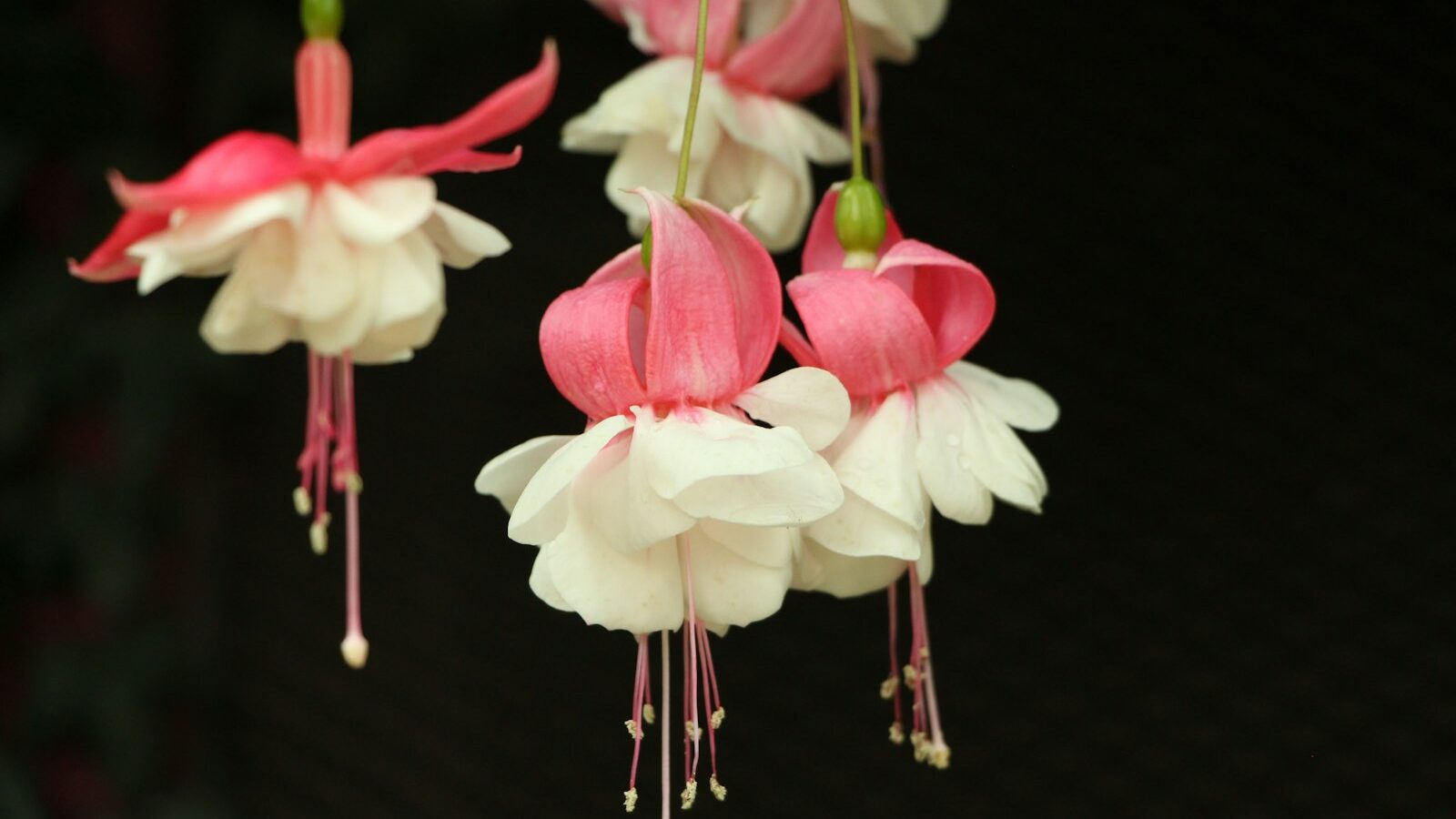
Few plants put on a show quite like the fuchsia, with its dangling, two-toned blooms that look like tiny ballerinas suspended over a cascade of foliage. Whether you garden on a cool, shaded balcony in Singapore or a temperate porch in the United States, fuchsias reward a little attention with months of nonstop colour. This guide covers everything from choosing trailing or upright types to watering, feeding, pinching, deadheading, overwintering, and tackling the pests that bother them most.
Fuchsia quick care
- Light: part shade
- Water: keep evenly moist
- Feed: every 1-2 weeks in season
- USDA zones: 6-11 (hardy types)
- Bloom: spring-fall
As an Amazon Associate we earn from qualifying purchases.
Trailing vs upright fuchsias: choosing the right type
Before you buy, it helps to know which growth habit suits your space. Fuchsias are loosely grouped into two camps, and the type you pick determines whether you reach for a hanging basket, a patio pot, or a spot in a border. You can browse a wide range of fuchsia plants online, but read the label for “trailing” or “upright” before adding to cart.
Trailing (cascading) types
Trailing fuchsias send out long, lax stems that spill over the edges of a container, making them the classic choice for hanging baskets and window boxes. Varieties such as ‘Swingtime’, ‘Dark Eyes’, and ‘Trailing Queen’ can drape 30 to 60 cm or more, dripping with blooms all summer.
Upright (bush) types
Upright fuchsias hold themselves up on stiffer stems and form a tidy mound or shrub. They suit patio pots, mixed borders, and being trained into a standard “lollipop” on a single stem. Hardy garden fuchsias such as Fuchsia magellanica are almost all upright and can be grown as small flowering shrubs in milder climates.
- Choose trailing for baskets, raised planters, and balcony railings where stems can cascade.
- Choose upright for borders, standards, and any spot where you want height and structure.
- Mix both in a large container, with an upright at the centre and trailers around the rim.
Light and placement
Fuchsias are woodland-edge plants at heart, so they dislike harsh midday sun. The sweet spot is part shade: bright, filtered light or a few hours of gentle morning sun, with protection from the fierce afternoon rays that scorch leaves and wilt flowers.
Getting light right by climate
- Cooler US zones: morning sun with afternoon shade is ideal; full sun is tolerable only where summers stay mild and humidity is high.
- Hot, humid Singapore: stick to bright shade or an east-facing balcony. Fuchsias struggle above roughly 27 to 29°C, so a cool, airy, shaded spot is essential and many gardeners treat them as cool-season or shade-house plants.
- Indoors: a north or east window with steady light works for short stints, but fuchsias generally resent the heat and dry air of most interiors long term.
If your leaves yellow and flowering stalls in summer heat, the plant is telling you it is too hot. Move it somewhere cooler and shadier before assuming a watering or feeding problem. For more on matching plants to your conditions, see our plant & flower care guide.
Watering and feeding for continuous bloom
Fuchsias are thirsty plants with shallow roots, and the single most common reason they fail is drying out. The goal is soil that stays evenly moist, like a wrung-out sponge, without ever sitting in standing water.
Watering
- Check containers daily in warm weather; baskets in wind and sun may need water twice a day at the height of summer.
- Water when the top centimetre of soil feels dry, soaking until it runs from the drainage holes.
- Avoid letting the pot dry out completely, which causes bud drop and crisp leaf edges.
- Ease off in cooler weather and during winter dormancy, keeping the soil barely moist.
Feeding
Continuous flowering takes continuous fuel. Feed actively growing fuchsias every one to two weeks through spring and summer with a high-potassium, bloom-promoting fertiliser. A balanced feed early in the season encourages leafy growth, then switch to a bloom-booster fertilizer once buds form to maximise flower production. Stop feeding in autumn as growth slows so the plant can harden off before winter.
Pinching and deadheading
Two simple habits transform a leggy, sparse fuchsia into a full, flower-smothered showpiece: pinching for shape and deadheading for stamina.
Pinching for bushiness
Pinching means removing the growing tip of a shoot, which forces the plant to branch from below and produce more stems, and therefore more flowers. On a young plant, pinch out the tip above the second or third pair of leaves. When the resulting side shoots have made another two or three pairs of leaves, pinch those too. Each pinch delays flowering by a few weeks, so stop pinching about six to eight weeks before you want peak bloom.
Deadheading and seed pods
- Remove faded flowers regularly to push the plant toward making more blooms instead of seed.
- Pinch off the small berry-like seed pod that forms behind a spent bloom, not just the petals, or the plant will divert energy into ripening seed.
- Deadhead lightly every few days during peak season; a quick once-over keeps baskets looking fresh.
Hardy vs tender fuchsias and overwintering
Not all fuchsias survive winter, and knowing which type you have decides how you treat it in the colder months. This distinction matters far more in temperate US gardens than in tropical Singapore, where the issue is heat rather than frost.
Hardy fuchsias
Hardy types, broadly suited to USDA zones 6 to 11, can stay outdoors year-round in milder regions. The top growth may die back in a hard freeze, but the roots survive and resprout in spring. Mulch the crown with a thick layer of bark or straw in autumn for insurance, and resist cutting back dead stems until new growth appears.
Tender fuchsias
- Most basket and patio varieties are tender and will be killed by frost.
- Before the first frost, move plants into a cool, frost-free space such as a garage, shed, or unheated greenhouse.
- Cut growth back by about a third, reduce watering to keep the rootball just barely moist, and stop feeding entirely.
- In late winter, increase water and warmth gradually, prune to a healthy framework, and bring the plant back into growth.
Singapore growers rarely need to overwinter, but the same principle of a “rest period” applies: give plants a cooler, lower-feed spell if they look exhausted after a long flush.
Growing fuchsias in hanging baskets
Hanging baskets are where trailing fuchsias truly shine, but the confined root space and exposure to wind make consistent care essential. Start with a generous container, at least 30 cm across, since small baskets dry out alarmingly fast. Quality hanging baskets with a built-in water reservoir take a lot of the daily stress out of summer care.
- Use a peat-free, multipurpose potting mix with added perlite for drainage, and consider mixing in water-retaining granules.
- Plant three to five trailing fuchsias per large basket, spacing them evenly around the rim.
- Hang baskets out of strong wind and harsh afternoon sun, both of which dry and damage the foliage.
- Water daily, feed weekly, and deadhead often to keep the display dense and blooming.
If you are working with limited space, fuchsias pair beautifully with other shade lovers. See our balcony garden guide for layout ideas, and our begonia care guide for another shade-tolerant bloomer that thrives in the same conditions.
Common problems and pests
Fuchsias are generally easygoing, but a handful of pests and stress symptoms crop up often enough to recognise on sight.
Fuchsia gall mite
This microscopic mite causes distorted, thickened, reddish growth at the shoot tips that looks almost like a gall or galled flower. It is hard to control and spreads easily, so prune out and bin (do not compost) affected growth promptly. Badly infested plants are often best discarded, and resistant species such as Fuchsia magellanica can be a wiser choice in areas where the mite is established.
Whitefly and other pests
- Whitefly: tiny white insects that flutter up when foliage is disturbed and leave sticky honeydew. Rinse leaves, use yellow sticky traps, and treat with insecticidal soap, paying attention to leaf undersides.
- Aphids: cluster on soft new growth; blast off with water or treat with insecticidal soap.
- Vine weevil: the grubs eat roots in containers, causing sudden collapse; check the rootball if a healthy plant wilts inexplicably.
- Rust: orange spore pustules on leaf undersides in damp, crowded conditions; improve airflow and remove affected leaves.
Stress symptoms
- Bud drop: usually from the soil drying out, sudden temperature swings, or moving the plant; keep watering steady.
- Yellowing leaves: often heat stress, overwatering, or a need for feeding.
- No flowers: too much shade, too much nitrogen, or simply needing a switch to a bloom-focused feed.
Frequently asked questions
How much sun do fuchsias need?
Fuchsias do best in part shade with bright, filtered light or gentle morning sun. They dislike intense afternoon sun, which scorches leaves and stops flowering. In hot climates like Singapore, keep them in bright shade and out of direct midday rays.
Why is my fuchsia dropping its flower buds?
Bud drop is almost always a stress response, most often from the soil drying out, sudden swings in temperature, or moving the plant. Keep the soil evenly moist, avoid relocating it during bloom, and protect it from extreme heat.
How often should I feed fuchsias?
Feed every one to two weeks during spring and summer while the plant is actively growing. Use a balanced feed early on, then switch to a high-potassium bloom-booster fertiliser once buds appear. Stop feeding in autumn as growth slows.
Can fuchsias survive winter outdoors?
Hardy fuchsias (roughly USDA zones 6 to 11) can overwinter outdoors and resprout from the roots even if the top dies back. Tender varieties must be moved to a cool, frost-free space, cut back, and kept barely moist until spring.
How do I keep my fuchsia bushy instead of leggy?
Pinch out the growing tips of young shoots above the second or third pair of leaves, then repeat on the resulting side shoots. This encourages branching and more flowers. Stop pinching about six to eight weeks before you want peak bloom.