

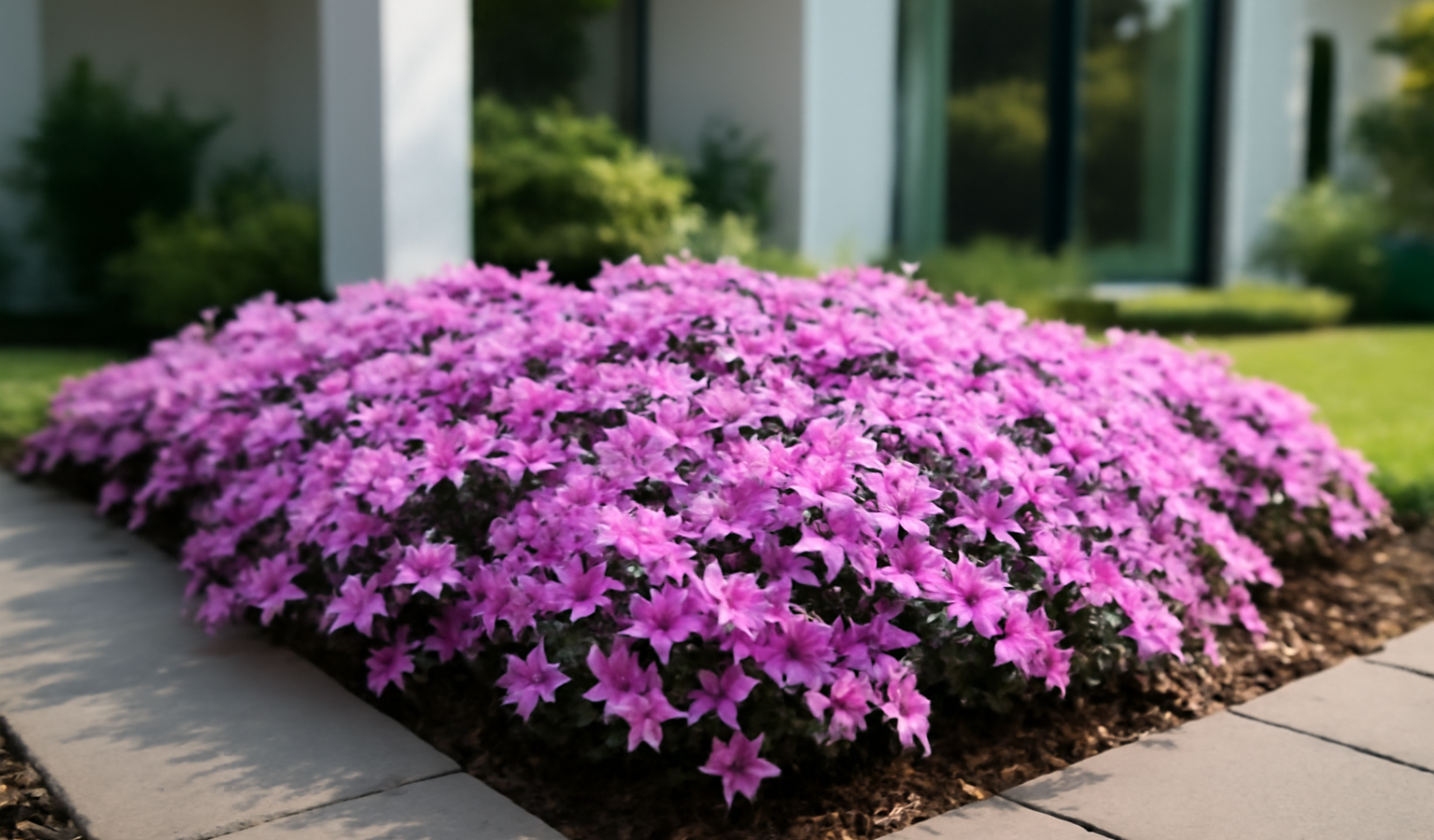
Few plants put on a spring show like creeping phlox. For two or three weeks in early to mid spring, a healthy patch erupts into a dense carpet of pink, purple, white, or blue flowers so thick you can barely see the foliage underneath. It tumbles over retaining walls, blankets dry slopes, and softens the hard edges of rock gardens. The good news is that this plant is genuinely easy once you give it what it wants: sun, sharp drainage, and a quick haircut after blooming. The catch most gardeners run into is soggy soil, which is the fastest way to kill an otherwise bulletproof groundcover. This guide walks through exactly how to grow creeping phlox well, from planting through propagation, with the specifics that actually matter.
Key Takeaways
- Plant Phlox subulata (moss phlox) in full sun with sharply drained, gritty soil; it spreads into 2-foot mats only 4 to 6 inches tall.
- Soggy soil is the number one killer. Slightly acidic to neutral, sandy or rocky ground beats rich, water-holding loam.
- Space plants 15 to 18 inches apart and expect them to knit together within a season or two.
- Shear the whole plant back by one-third to one-half right after the spring bloom to keep mats dense and tidy.
- Propagate easily by division, cuttings, or layering rooted stems; it is hardy in USDA zones 3 to 9.
- For shade, use the woodland species Phlox stolonifera instead.
Know Your Phlox: Subulata vs. Stolonifera
“Creeping phlox” is a common name that gets applied to two different low-growing species, and confusing them leads to disappointing results. The vast majority of what garden centers sell in spring as creeping or moss phlox is Phlox subulata. This is the sun-loving, mat-forming type with stiff, needle-like, semi-evergreen foliage. It thrives in hot, dry, exposed spots like slopes, rock walls, and gravelly beds, and it is hardy in USDA zones 3 through 9. When people picture a hillside drowning in pink phlox flowers in April, they are picturing subulata. This guide focuses mainly on it.
The second plant, Phlox stolonifera, is the true woodland creeping phlox. It has broader, softer leaves, spreads by above-ground runners (stolons), and prefers the dappled light and humus-rich, moist soil of a woodland edge. It is hardy in zones 5 through 9 and is the better choice for part shade under trees, where subulata would sulk and thin out. If your planting site gets only morning sun or filtered light, reach for stolonifera rather than fighting subulata‘s need for full sun. Knowing which one you have, or which one your site calls for, is half the battle.
Where to Plant: Sun and Hardiness
For Phlox subulata, give it full sun, meaning at least six hours of direct light per day, and more is better. In too much shade the mats grow loose and leggy, flowering drops off sharply, and the plant becomes prone to fungal problems. Sun also keeps the foliage tight and that signature carpet effect intact. This is a plant that genuinely enjoys baking in a south-facing rock garden or spilling down a sunny embankment that most other perennials would resent.
Because it is hardy across such a wide range, zones 3 to 9, creeping phlox suits gardeners from cold northern climates down through the warm Southeast. In the hottest zones it appreciates a touch of afternoon relief, but in most of the country it wants all the sun you can give it. The foliage holds through winter as a tired green-to-bronze mat, which is why it is often called evergreen or, more honestly, semi-evergreen. For more sun-loving groundcover ideas to pair with it, browse our plants and flowers guides.
Soil: Sharp Drainage Above All
If you remember one thing, make it this: creeping phlox hates wet feet. It evolved on rocky, lean ground, so it wants soil that is well-drained, on the sandy or gritty side, and slightly acidic to neutral in pH, roughly 6.0 to 7.0. Rich, heavy clay that stays damp is a recipe for crown rot and root rot. If your soil holds water, amend the planting area generously with coarse sand, fine gravel, or grit to open it up, and consider planting on a slope or raised berm where excess water drains away naturally.
Fertility is not a priority. Lean soil actually produces denser, more compact growth and better flowering than pampered, heavily fed plants, which tend to flop and stretch. The trade-off worth understanding is between moisture retention and drainage: phlox always sides with drainage. A spot that drains fast and dries between rains, even one that seems too poor for fussier perennials, is exactly where this plant earns its keep.
Planting and Timing
Spring and early fall are the best planting windows, giving roots time to establish in mild weather before summer heat or winter cold. Set plants at the same depth they sat in their nursery pots, never burying the crown, which invites rot. Loosen the soil in the planting hole, tease apart any circling roots, and water in well to settle the soil around them.
Through the first growing season, water often enough to keep the root zone from drying out completely while the plant establishes. After that, creeping phlox becomes notably drought tolerant and largely fends for itself. A thin layer of gravel or fine grit mulch around new plants helps suppress weeds and keeps the crown dry, which is far safer than a thick organic mulch piled against the stems. On debates over mulch choice for beds like these, see our take on mulch versus rock.
Spacing and Groundcover Uses
Space individual plants 15 to 18 inches apart. Each one spreads into a low mat roughly 2 feet across and only 4 to 6 inches tall, so at that spacing they knit into a continuous carpet within a season or two without crowding. If you want faster coverage, plant a little closer; if you are patient and budget-conscious, the wider spacing fills in eventually.
The plant’s true talent is covering ground that other plants find difficult. Its dense, spreading root system makes it excellent for erosion control on slopes and banks where mowing is a hassle and bare soil washes away. It is a classic for cascading over the face of a stone retaining wall, threading through rock gardens, and edging paths and borders with a tidy seasonal flush of color. On a sunny slope that you would rather not mow, a planting of creeping phlox is both practical and spectacular.
Watering and Feeding
Once established, creeping phlox needs little supplemental water. It tolerates drought well and generally gets by on rainfall in most climates, only wanting a deep soak during extended dry spells. Overwatering does far more harm than underwatering, since standing moisture around the crown leads directly to rot. When you do water, water at the base and let the foliage dry quickly to discourage disease.
Feeding is minimal. A single application of a balanced, slow-release fertilizer in early spring as growth resumes is plenty, and many gardeners skip even that on reasonable soil. Heavy feeding produces lush but weak, floppy growth and can reduce flowering, so err on the side of restraint. Lean and a little hungry is how this plant likes to live.
Post-Bloom Shearing
This is the one maintenance step that separates a ragged, woody-centered patch from a lush, dense mat year after year. As soon as the main flush of bloom fades, shear the entire plant back by one-third to one-half. Hedge shears make quick work of a large planting. This light haircut removes spent flowers, encourages fresh branching, and keeps the mat tight and full rather than letting it open up and go bare in the middle.
Skipping the shear is the most common reason an older phlox planting looks thin and threadbare with dead patches. The plant rebounds quickly from cutting and may even toss out a few scattered repeat blooms later in the season. Make it an annual ritual the moment the color fades, and your patch will stay handsome for many years.
Propagation: Division, Cuttings, and Layering
Creeping phlox is one of the easiest perennials to multiply, which makes filling a slope inexpensive. The simplest method is division in spring or early fall: lift an established clump, pull or cut it into sections each with roots and top growth, and replant immediately. This also rejuvenates an old, bare-centered plant.
You can also take stem cuttings in late spring or early summer from non-flowering shoots, stripping the lower leaves and rooting them in a gritty, well-drained mix kept lightly moist. Easiest of all is layering: the trailing stems often root where they touch the soil on their own, so you can pin a stem down with a small stake or stone, wait for it to root, then snip it free as a new plant. Between these three methods, a single plant can populate a whole bank over a couple of seasons.
Best Cultivars
The named varieties of Phlox subulata give you precise control over color. A few proven performers worth seeking out:
- ‘Emerald Blue’ — soft lavender-blue flowers over neat emerald foliage, a reliable standard.
- ‘Emerald Pink’ — clear rose-pink, the pink counterpart to Emerald Blue.
- ‘Candy Stripe’ — pink-and-white bicolor petals with a striped, candy-cane look.
- ‘Scarlet Flame’ — vivid magenta-red, one of the boldest colors available.
- ‘Snowflake’ — crisp white, excellent for brightening and blending in mixed plantings.
- ‘Purple Beauty’ — rich purple flowers with a darker eye.
- ‘Drummond’s Pink’ — a vigorous, free-flowering bright pink.
Mixing two or three colors in drifts down a slope creates a striking patchwork in spring. For another low, sun-loving white spring bloomer to plant alongside it, consider our guide on how to grow candytuft.
Pests and Diseases
Creeping phlox is mostly trouble-free, but a few issues show up under the wrong conditions. Spider mites are the most common pest, especially during hot, dry, dusty spells; they stipple and bronze the foliage and can be knocked back with a strong spray of water or treated with insecticidal soap. Powdery mildew can dust the leaves in crowded, poorly ventilated, or overly shaded plantings, which is one more reason to give it sun and air movement. The most serious problem, root and crown rot, comes straight from wet soil, so the best defense is the sharp drainage discussed earlier.
On the wildlife front, creeping phlox is reasonably resistant to deer and rabbits and is generally passed over in favor of tastier plants, though no plant is truly deer-proof when animals are hungry enough. Its early flowers are a welcome nectar source for bees and early butterflies, which is a quiet bonus on top of the visual display.
Seasonal and Winter Care
Through summer and fall the plant asks for little beyond the post-bloom shear and the occasional deep watering in drought. Into winter, the needle-like foliage of subulata persists as a semi-evergreen mat, often fading to a muted green or bronze in cold weather before greening up again in spring. There is no need to cut it down for winter.
In the coldest zones, a light, airy mulch of evergreen boughs or pine straw applied after the ground freezes can reduce frost heave on newly planted divisions, but avoid heavy, wet mulch that traps moisture against the crown. Come spring, clear away winter debris, freshen any gravel mulch, and watch for the buds that announce the season’s main event.
Good Companions
Creeping phlox pairs beautifully with other early-spring performers and with plants that share its taste for sun and drainage. Spring bulbs like daffodils and tulips rise up through the phlox carpet, and dwarf bearded iris, candytuft, basket-of-gold, and creeping thyme make natural rock-garden partners. For shadier transitions at the edge of the planting, a woodland perennial such as those covered in our guide on how to grow brunnera can pick up where sun-loving phlox leaves off.
Frequently Asked Questions
How far apart should I plant creeping phlox?
Space plants 15 to 18 inches apart. Each spreads into a mat about 2 feet wide and 4 to 6 inches tall, so they knit into a solid carpet within a season or two. Plant closer for faster coverage.
Why is my creeping phlox bare in the middle?
That open, woody center almost always comes from skipping the post-bloom shear. Cut the whole plant back by one-third to one-half right after flowering each year to keep growth dense, and divide old plants to rejuvenate them.
Does creeping phlox need full sun?
Phlox subulata needs full sun, at least six hours daily, for tight growth and good bloom. If your site is shady, plant the woodland species Phlox stolonifera instead, which prefers dappled light and richer, moister soil.
How do I propagate creeping phlox?
Divide established clumps in spring or fall, take stem cuttings from non-flowering shoots in early summer, or layer trailing stems by pinning them to the soil until they root, then cut them free as new plants.
Is creeping phlox deer resistant?
It is fairly resistant to both deer and rabbits and is usually passed over for tastier plants, but no plant is fully deer-proof when animals are hungry. Its early flowers are also a useful nectar source for bees.