

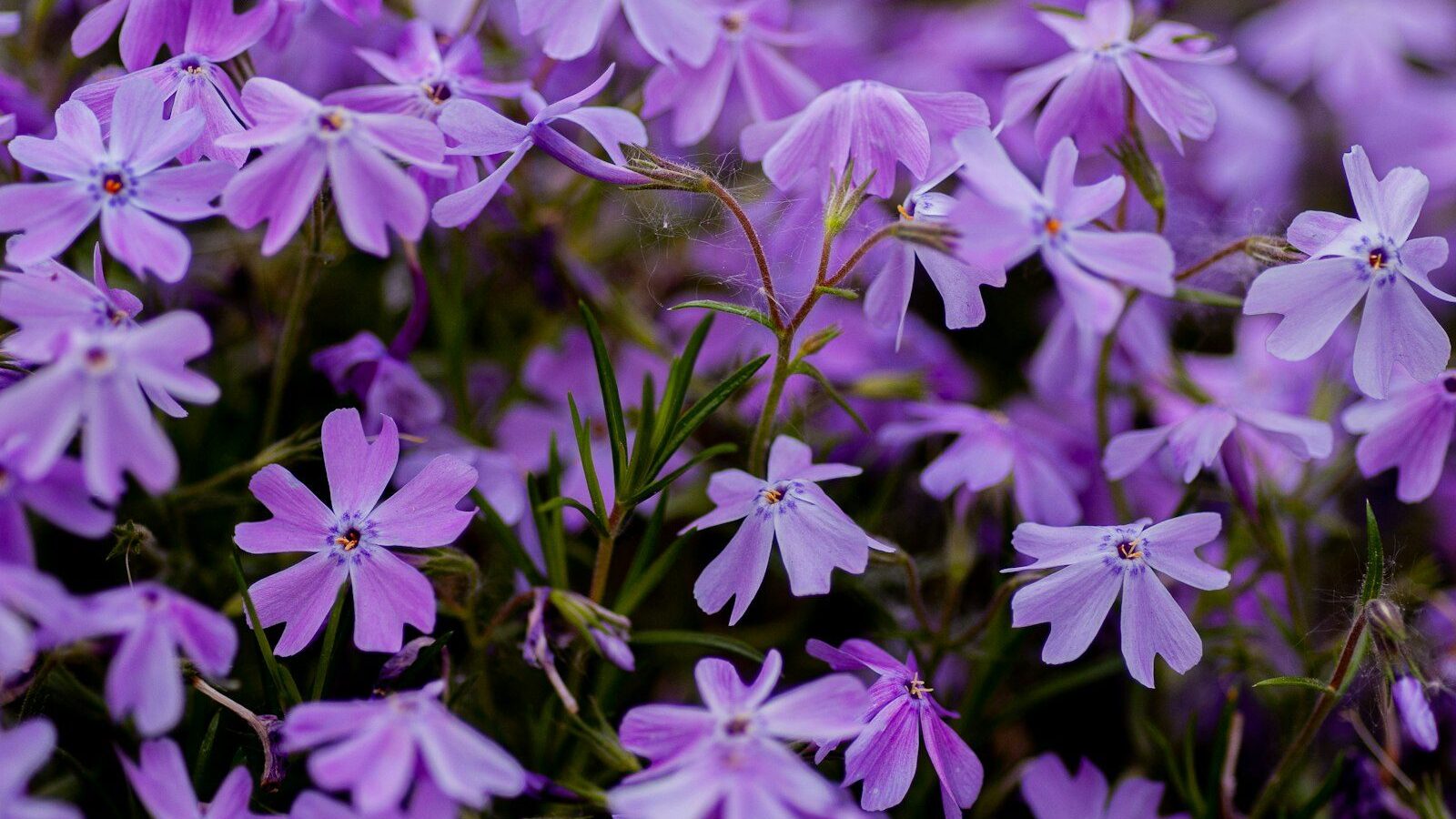
Phlox is one of the most versatile perennial genera in the garden, offering a type for nearly every spot — tall, fragrant Phlox paniculata for the summer border; carpets of Phlox subulata spilling over spring walls; and shade-loving Phlox divaricata for the woodland edge. The flowers come in clouds of pink, lavender, white, red, and bicolors, many richly scented and beloved by butterflies and hummingbirds. Most types are hardy across USDA zones 3–8. Success comes down to matching the right phlox to your light, giving it room to breathe, and managing powdery mildew on the tall garden types. This guide covers the main species, planting, spacing, watering, deadheading, division, and mildew control.
Key Takeaways
- Match the type to the site: garden phlox and creeping phlox want sun; woodland phlox wants shade. Most are hardy in zones 3–8.
- Tall garden phlox needs fertile, moist, well-drained soil and good airflow; space 18–24 inches apart to fight mildew.
- Water ~1 inch per week at the base in the morning; choose mildew-resistant cultivars like ‘David’ and ‘Jeana’.
- Deadhead spent blooms to prolong flowering and limit unwanted self-seeding.
- Divide garden phlox every 3–4 years in spring or fall to renew vigor and improve air circulation.
Know Your Phlox: The Main Types
Choosing the right species is half the battle, because they want very different conditions.
Garden phlox (Phlox paniculata) is the tall, upright summer star, 2–4 feet high, topped with large fragrant flower clusters from mid- to late summer. It wants full sun and rich, moist soil — and it’s the type most prone to powdery mildew. Creeping or moss phlox (Phlox subulata) is a low, needle-leaved evergreen mat, 4–6 inches tall, that blankets slopes and rock gardens in a sheet of color in early spring; it wants full sun and sharp drainage. Woodland phlox (Phlox divaricata) and creeping woodland phlox (Phlox stolonifera) are shade-loving spring bloomers, 8–12 inches tall, perfect under trees in moist, humus-rich soil.
For garden phlox, lean heavily toward mildew-resistant cultivars — ‘David’ (white), ‘Jeana’ (lavender-pink, exceptionally resistant and a butterfly favorite), ‘Robert Poore’ (magenta), and ‘Glamour Girl’ (coral). These transform garden phlox from a fussy plant into an easy one. The right phlox can anchor everything from a sunny border to a shaded slope; see our perennial garden ideas for placement.
Where to Plant: Sun and Soil by Type
Garden phlox wants full sun (6+ hours) and rich, consistently moist, well-drained soil with a pH around 6.0–7.0. Some afternoon shade is fine in hot zones, but too much shade reduces blooms and worsens mildew. Amend with compost at planting and mulch to keep roots cool and moist.
Creeping phlox demands full sun and excellent drainage — it grows naturally on rocky slopes and will rot in heavy, wet soil. Lean, gritty ground is ideal. Woodland phlox is the opposite: it wants partial to full shade and moist, woodsy, humus-rich soil, mimicking a forest floor. Planting any phlox in the wrong light is the most common reason it disappoints, so match the type to the spot first.
For all types, air circulation is critical to prevent powdery mildew. Give garden phlox especially plenty of room and avoid crowding it against walls.
How and When to Plant
Planting Transplants
Plant nursery transplants in spring after the last frost or in early fall. Dig a hole as deep as the root ball and twice as wide, set the crown level with the soil surface, backfill with compost-enriched soil for garden and woodland types (lean, gritty soil for creeping phlox), firm, and water in. Mulch garden and woodland phlox 2 inches deep, kept off the crown, to retain moisture.
Spacing by type: garden phlox 18–24 inches apart (wide spacing is essential for airflow and mildew prevention); creeping phlox 12–18 inches apart, where it will knit into a mat; woodland phlox 10–12 inches apart for a drift.
Propagation
Phlox is most reliably propagated by division (garden and woodland types) or by pinning down and rooting stems of the creeping types, which root where they touch soil. Named cultivars do not come true from seed. Garden phlox can also be grown from stem or root cuttings. Species phlox can be grown from seed sown in fall to allow natural cold stratification, but plants take a year or more to bloom and seed-grown garden phlox often reverts to a magenta-pink rather than its parent’s color.
Watering, Feeding, and Mulching
Garden and woodland phlox like consistent moisture — about 1 inch of water per week, more in heat, and they suffer and mildew when allowed to dry out. Always water at the base in the morning; overhead watering wets the foliage and is the fastest way to spread powdery mildew. Creeping phlox is more drought-tolerant once established and needs far less water; let it dry between waterings.
Garden phlox is a moderate feeder. A spring topdressing of compost or a single balanced feeding as growth begins supports its heavy bloom. Don’t overdo nitrogen, which encourages soft, mildew-prone growth. A steady mulch layer conserves the moisture garden phlox needs and keeps its roots cool.
Deadheading, Pinching, and Seasonal Care
Deadhead garden phlox by cutting spent flower clusters back to a leaf or side shoot. This prolongs bloom and — importantly — prevents prolific self-seeding, since seedlings rarely resemble the parent and can crowd it out with washed-out magenta volunteers. Pinching back the stems by a few inches in late spring produces bushier, more floriferous, and sturdier plants. After creeping phlox finishes its spring show, shear it back lightly to keep the mat tight and tidy.
In fall, cut garden phlox stems down and clear away the debris, removing all mildewed foliage rather than composting it to break the disease cycle. Leave creeping phlox alone — it’s evergreen and provides winter cover. Good fall sanitation is one of the most effective mildew controls available.
Dividing Phlox
Garden phlox benefits from division every 3–4 years to maintain vigor, prevent crowded centers, and — crucially — improve air circulation within an aging clump. Division also lets you thin congested stems, a direct mildew defense. Woodland phlox can be divided to spread it into a larger drift; creeping phlox rarely needs dividing but can be split to propagate.
Divide in early spring as shoots emerge, or in early fall. Lift the clump, split it into sections each with several healthy shoots and roots, discard any dead woody center, and replant at the original depth with the proper spacing. Water in well and keep new divisions moist until re-established. A useful related task is thinning a single clump — removing about a third of the weakest stems at the base in spring opens it up to airflow. The full splitting method is in our guide on how to divide perennials.
Pests and Diseases
Powdery mildew is garden phlox’s chronic problem — a white coating on leaves, worst in humid, crowded, or dry-stressed conditions. The defense is cultural: resistant cultivars (‘David’, ‘Jeana’), wide spacing, thinning of stems, full sun, even moisture, morning base watering, and thorough fall cleanup. For active outbreaks, remove affected leaves and apply horticultural oil or a potassium-bicarbonate spray.
Spider mites can attack in hot, dry weather, stippling and bronzing the leaves — keep plants watered and hose off the mites. Phlox plant bugs cause speckled, distorted foliage. Aphids wash off with water or yield to insecticidal soap. Stem nematodes cause swollen, twisted stems; there’s no cure, so remove and destroy infected plants. Deer and rabbits will browse phlox, so protect it where they’re a problem.
Designing With Phlox
Phlox earns a place in nearly every garden. Tall garden phlox is a fragrant pillar of the midsummer border, gorgeous with coneflowers, bee balm, daylilies, and ornamental grasses, and a magnet for butterflies and hummingbird moths. Creeping phlox blankets slopes, rock gardens, and the front edge of a sunny garden border with sheets of spring color. Woodland phlox naturalizes under trees and among ferns and hostas for a soft, blue-lavender spring carpet. With the right type in the right place and a mildew-resistant cultivar where needed, phlox delivers fragrance, color, and pollinators with little fuss.
Frequently Asked Questions
What’s the difference between garden phlox and creeping phlox?
Garden phlox (Phlox paniculata) is a tall, upright summer bloomer for full sun and rich, moist soil. Creeping phlox (Phlox subulata) is a low, evergreen spring-blooming mat for full sun and sharp drainage on slopes and rock gardens. Woodland phlox is a shade-loving spring type.
How do I stop powdery mildew on garden phlox?
Plant mildew-resistant cultivars like ‘David’ and ‘Jeana’, space plants 18–24 inches apart, thin out a third of the stems in spring for airflow, water at the base in the morning, keep soil evenly moist, and remove all diseased foliage in fall.
How much sun does phlox need?
It depends on the type. Garden phlox and creeping phlox want full sun (6+ hours), though garden phlox tolerates a little afternoon shade. Woodland phlox is the exception — it wants partial to full shade and moist, woodsy soil under trees.
Should I deadhead phlox?
Yes. Deadheading garden phlox prolongs bloom and prevents heavy self-seeding, since seedlings rarely match the parent and can crowd it out. Pinching stems back in late spring also makes plants bushier and sturdier. Shear creeping phlox lightly after its spring bloom.
When and how do I divide garden phlox?
Divide every 3–4 years in early spring or early fall. Lift the clump, split it into sections each with healthy shoots and roots, discard the dead center, and replant 18–24 inches apart. Division renews vigor and improves the air circulation that prevents mildew.