

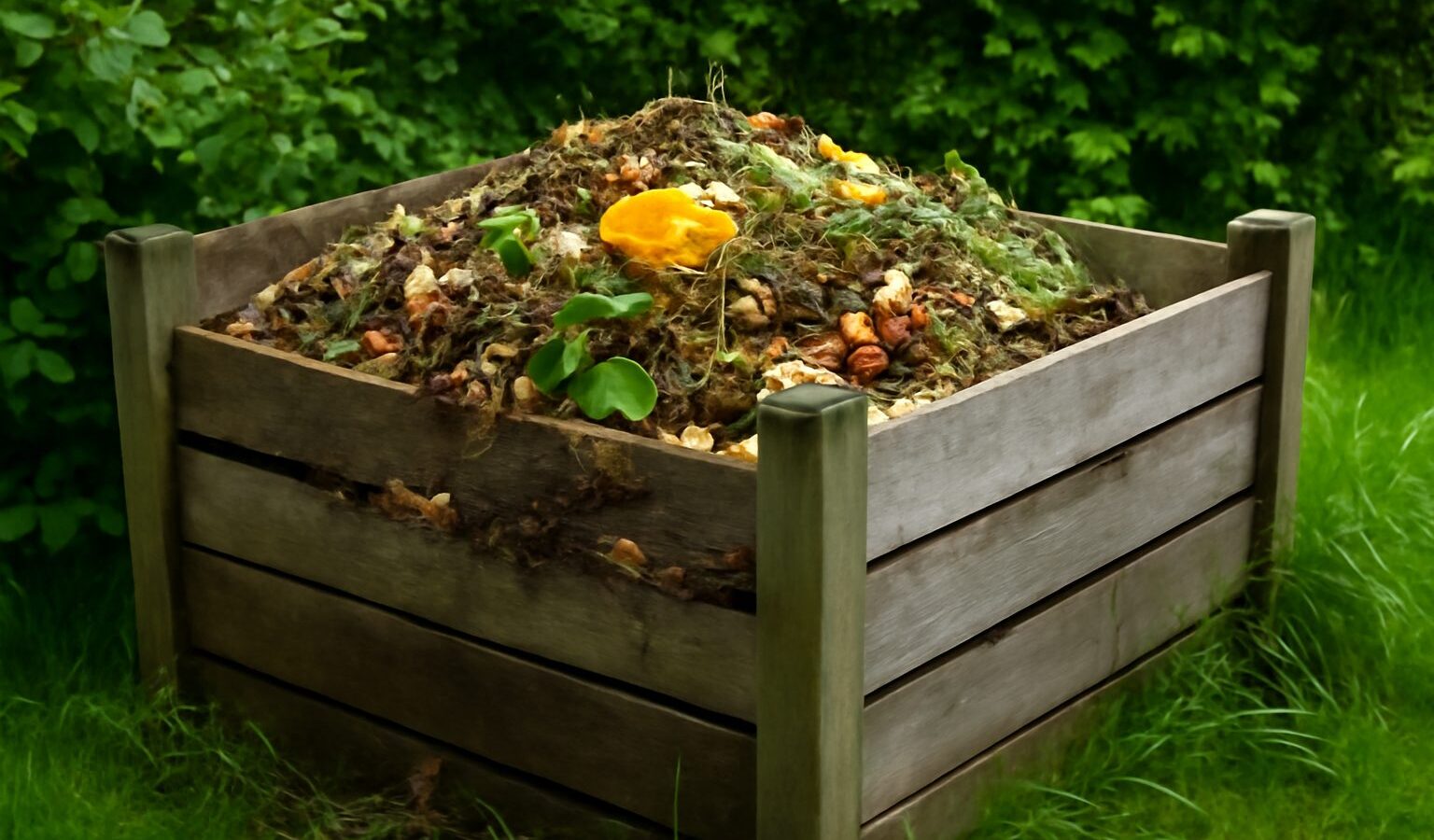
A compost starter is a shot of nitrogen, beneficial microbes, or both, meant to kick a sluggish pile into active decomposition faster. It is not magic — a well-balanced pile with the right carbon-to-nitrogen mix, moisture, and air will heat up on its own — but a starter can rescue a stalled bin, jump-start a cold-weather pile, or break down stubborn material like woody stems and dry leaves. The honest question is whether you need one at all, and which type. Below are seven of the most-recommended granular and microbial starters, with a buyer’s guide that explains what each actually does so you do not waste money on a problem you do not have.
As an Amazon Associate we earn from qualifying purchases. This page contains affiliate links at no extra cost to you.
Key Takeaways
- Most starters work by adding nitrogen and microbes; a balanced pile with green material often does not need one at all.
- Jobe’s Organics Compost Starter (4-4-2 with its Biozome microbes) is the best all-round pick for visible results in a few weeks.
- Espoma Organic Traditions is excellent for breaking down tough, woody material and stubborn leaves.
- Granular products are easiest to apply; sprinkle in layers as you build the pile, then water in.
- Heat, moisture, turning, and a good carbon-to-nitrogen balance matter more than any product — a starter only helps if the basics are right.
| Product | Best For | Key Spec |
|---|---|---|
| Jobe’s Organics Compost Starter | Overall fast results | 4-4-2, Biozome microbes, 4 lb granular |
| Espoma Organic Traditions Compost Starter | Tough woody material | All-natural, 4 lb bag |
| Jobe’s Organics Compost Starter 3-Pack | Large or multiple piles | Three 4 lb bags |
| Espoma CS4 Compost Starter | Branches and stalks | 4 lb, made in USA |
| Dr. Earth Compost Starter | Organic microbe blend | Probiotic microbe formula |
| Ringer / Safer Compost Plus | Microbial activator | Microbe + nutrient blend |
| Roebic Compost Accelerator | Liquid / concentrate users | Bacterial concentrate |
Jobe’s Organics Compost Starter
Jobe’s Organics Compost Starter is our overall pick because it pairs a balanced 4-4-2 nutrient profile with the brand’s Biozome — a blend of three microorganisms including mycorrhizal fungi, beneficial bacteria, and a unique Archaea species. That combination feeds the pile and seeds it with the microbes that drive decomposition, and Jobe’s notes users typically see positive results within about three weeks of application. It ships as an easy-to-spread granular in a 4-pound bag.
Application is simple: sprinkle a layer over the pile as you build it, especially over carbon-heavy material like dry leaves, then water it in and turn. It is OMRI-style organic, so it suits gardeners who want their finished compost to stay organic for the vegetable bed. For most home composters fighting a slow pile, this is the first thing to try.
Pros
- Balanced 4-4-2 plus Biozome microbes
- Visible results in about three weeks
- Easy granular application, organic
Cons
- Has a noticeable organic odor
- One 4 lb bag covers only a modest pile
Espoma Organic Traditions Compost Starter
Espoma’s Organic Traditions Compost Starter is the pick for piles loaded with tough material. It is an all-natural composting aid built to help break down organic matter, and Espoma’s CS4 formula is noted for tackling stubborn stuff like branches and woody stems that resist quick decomposition. Espoma is a long-standing US maker with deep roots in organic gardening products, so the quality and ingredient sourcing are reliable.
It comes in a 4-pound bag and applies like the Jobe’s product — layered through the pile and watered in. If your compost is heavy on autumn leaves, prunings, and other high-carbon debris that just sits there, the Espoma starter is the one to reach for. For a balanced kitchen-scrap-and-grass pile, either this or the Jobe’s will do the job.
Pros
- Excellent on woody, stubborn material
- All-natural, trusted US maker
- Straightforward layered application
Cons
- Results slower on very dry piles
- Needs adequate moisture to activate
Jobe’s Organics Compost Starter (3-Pack)
If you run multiple bins or a large pile, the Jobe’s Organics 3-pack — three 4-pound bags — is the more economical way to buy the same well-balanced 4-4-2 Biozome formula. There is no difference in the product itself; you simply get enough to treat a season’s worth of layering across several piles or one big heap without reordering mid-season.
For serious composters who build new piles in spring and fall, having stock on hand means you can dose each fresh layer of leaves and scraps as you go rather than waiting for a delivery. Store the extra bags sealed and dry. This is the practical choice for gardeners who already know Jobe’s works for them and want the volume discount.
Pros
- Better value per pound
- Same proven Biozome formula
- Enough for multiple or large piles
Cons
- Overkill for a single small bin
- Store sealed to keep microbes viable
Espoma CS4 Compost Starter
The Espoma CS4 is the specific 4-pound formulation in the Organic Traditions line, called out for its ability to tackle tough materials like branches. If your compost challenge is a brush pile, hedge prunings, or thick stalks rather than soft kitchen waste, the CS4 is engineered for exactly that, made in the USA by a company with a long history of organic products.
Use it the same way as any granular starter: layer it through the woody material, ideally after chopping or shredding the larger pieces to give microbes more surface area, then keep the pile moist and turn it. Shredding plus the CS4 is far more effective than the product alone — no starter will quickly break down a whole un-chopped branch.
Pros
- Targets branches and tough debris
- Made in USA, organic ingredients
- Pairs well with shredded material
Cons
- Woody material still needs chopping
- Slower than on soft green waste
Dr. Earth Compost Starter
Dr. Earth’s compost starter leans heavily on a probiotic microbe blend, marketed around its multi-strain beneficial bacteria and fungi that colonize the pile and accelerate breakdown. Dr. Earth is a well-known organic brand, and this product appeals to gardeners who care most about the biological side — seeding a fresh pile with a diverse microbial community rather than just adding nitrogen.
It works best on a pile that already has decent green-to-brown balance and moisture, where the extra microbes simply speed colonization. Layer it in and water as usual. If your pile is biologically dead — say a heap of nothing but dry leaves — pairing a microbial product like this with a nitrogen source gives the microbes something to eat.
Pros
- Diverse probiotic microbe blend
- Trusted organic brand
- Good for seeding fresh piles
Cons
- Needs a nitrogen source to feed microbes
- Less effective on dry, dead piles alone
Ringer / Safer Compost Plus
Ringer Compost Plus (sold under the Safer brand) is a long-running microbial compost activator that combines decomposing microbes with a nutrient blend to feed them. It has been a staple for gardeners who want a dedicated activator rather than a fertilizer that doubles as a starter, and it is formulated specifically to raise pile temperature and speed the hot-composting cycle.
Apply it in layers as you build, water it in, and turn the pile to distribute heat and air. It shines on piles that have the carbon-nitrogen balance roughly right but are slow to heat up — the activator pushes them into the thermophilic range where decomposition accelerates. As with all starters, it cannot fix a pile that is too dry, too wet, or all-carbon.
Pros
- Dedicated microbial activator
- Helps the pile reach hot-composting temps
- Long-trusted formula
Cons
- Will not fix moisture or balance problems
- Best as a supplement, not a cure-all
Roebic Compost Accelerator
Roebic’s compost accelerator is the option for gardeners who prefer a bacterial concentrate over a granular powder. It is a strain-selected bacterial product you mix and apply to the pile, aimed at quickly establishing a working microbial population. The concentrate format makes it easy to treat a large pile evenly with a watering can, distributing microbes through the whole heap rather than just the surface.
Because it is concentrated, a little goes a long way, which makes it economical for big piles. Follow the dilution instructions, apply over freshly turned material, and keep the pile moist so the bacteria stay active. It is a tidy alternative to granules if you do not want to handle powdered product, and it pairs well with a nitrogen-rich green layer.
Pros
- Concentrate distributes evenly via watering can
- Economical for large piles
- No powder to handle
Cons
- Requires mixing and dilution
- Still needs nitrogen and moisture to work
What to Look For in a Compost Starter
Do you even need one? Be honest first. A pile with a good mix of greens (kitchen scraps, grass, manure) and browns (leaves, straw, cardboard), kept moist and turned, will heat up and decompose without any product. Starters earn their keep on stalled piles, cold-season composting, all-leaf piles, and woody debris.
Nitrogen vs. microbes. Some starters are mainly a nitrogen source that feeds existing microbes; others are microbial inoculants that add the decomposers themselves; the best, like Jobe’s, do both. If your pile is all carbon, you need nitrogen. If it is biologically dead, you need microbes. Match the product to the problem.
Format and organic status. Granular products are the easiest to layer and water in; concentrates suit large piles and even distribution. If your compost feeds a vegetable garden, choose an organic-listed starter so the finished product stays organic.
The fundamentals still rule. No starter substitutes for moisture, air, turning, and a balanced carbon-to-nitrogen ratio (aim for roughly 25-30 parts carbon to 1 part nitrogen). For the rest of the system, our growing vegetables in pots guide shows where finished compost pays off, and the urban gardening hub covers small-space composting. For more soil and garden gear, browse the tools and gear hub.
Frequently Asked Questions
Do I really need a compost starter?
Not always. A balanced pile with greens and browns, moisture, and regular turning will decompose on its own. Starters help most with stalled piles, cold-weather composting, all-leaf piles, and woody material that resists breaking down.
How fast does a compost starter work?
Granular products like Jobe’s Organics often show visible results within about three weeks, provided the pile has enough moisture and is turned. Speed depends far more on heat, moisture, and balance than on the product alone.
Can I use regular fertilizer instead of a compost starter?
A nitrogen source such as blood meal, fresh grass clippings, or manure can substitute for the nitrogen part of a starter. Dedicated starters add beneficial microbes too, which fertilizer alone does not.
How do I apply a granular compost starter?
Sprinkle it in layers as you build the pile, concentrating it over carbon-heavy material like dry leaves, then water it in and turn the pile to distribute it. Keep the pile moist as it works.
Will a starter break down woody branches?
It helps, but only if you chop or shred the branches first to expose more surface area. The Espoma CS4 is formulated for tough material, yet no starter will quickly decompose whole, un-chopped wood.